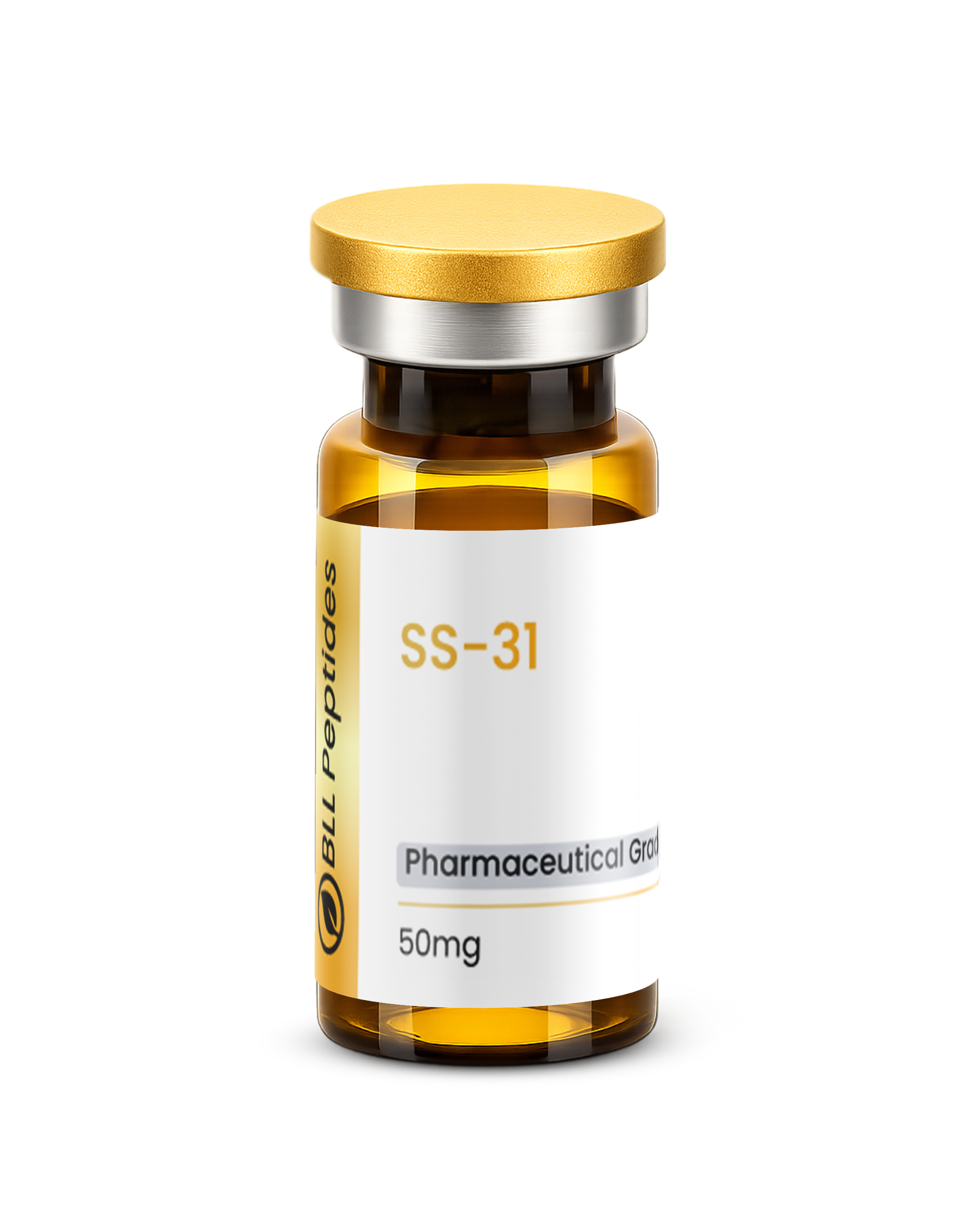
SS-31 50mg (3ml)
SS-31 (Elamipretide) is a research-grade mitochondria-targeted antioxidant tetrapeptide studied for cardioprotective, neuroprotective, and anti-aging properties via reduction of mitochondrial oxidative stress. Researchers investigating mitochondrial function and cellular energy metabolism rely on pharmaceutical-grade purity for rigorous experimental designs. Available at BLL Peptides — USA-made, rigorously tested. ✅ COA tested every batch✅ 98%+ purity guaranteed ✅ USA…
Description
SS-31 (Elamipretide): Complete Research Guide – Mitochondria-Targeted Peptide Mechanisms, Cardiolipin Research, and Cellular Energy Applications
Last updated: March 2026
Executive Summary
SS-31 (D-Arg-Dmt-Lys-Phe-NH2), also known as Elamipretide, MTP-131, and Bendavia, is a synthetic mitochondria-targeted tetrapeptide developed by Hazel H. Szeto and Peter W. Schiller at Weill Cornell Medical College. As a member of the Szeto-Schiller (SS) peptide family, SS-31 was rationally designed to exploit the mitochondrial membrane potential for selective accumulation in the inner mitochondrial membrane (IMM), where it interacts with the signature phospholipid cardiolipin to optimize electron transport chain (ETC) function and reduce pathological reactive oxygen species (ROS) production [1, 2].
The molecular formula of SS-31 is C32H49N7O5, with a molecular weight of approximately 603.78 Daltons (CAS: 736992-21-5). Despite comprising only four amino acids, SS-31 incorporates two non-natural modifications — a D-configuration arginine (D-Arg) at position 1 and 2',6'-dimethyltyrosine (Dmt) at position 2 — that are critical for its unique pharmacological profile. The alternating cationic-aromatic motif (D-Arg-Dmt-Lys-Phe) enables selective partitioning into mitochondria at concentrations estimated to be 1,000- to 5,000-fold higher than cytoplasmic levels, driven by the electrochemical gradient across the IMM [1, 3].
The primary molecular target of SS-31 is cardiolipin, a unique diphosphatidylglycerol lipid found almost exclusively in the IMM. Cardiolipin plays essential structural and functional roles in organizing ETC supercomplexes, anchoring cytochrome c to the membrane surface, and maintaining cristae architecture. SS-31 binds selectively to cardiolipin through electrostatic and hydrophobic interactions, stabilizing the cardiolipin-cytochrome c relationship, promoting electron transfer efficiency, and inhibiting cytochrome c peroxidase activity that generates damaging ROS [2, 4].
Preclinical and clinical research on SS-31 has encompassed cardiac ischemia-reperfusion injury, heart failure, Barth syndrome (a genetic cardiolipin remodeling disorder), mitochondrial myopathy, acute kidney injury, age-related macular degeneration, and age-related mitochondrial dysfunction. Notable clinical trials include TAZPOWER (Barth syndrome), EMBRACE (heart failure), and ReCLAIM (dry age-related macular degeneration). SS-31 represents one of the most advanced mitochondria-targeted therapeutic peptides in clinical development, offering a fundamentally new approach to diseases of bioenergetic failure by targeting the structural lipid environment of the ETC rather than individual enzyme complexes or redox scavenging pathways [5, 6, 7].
This comprehensive guide reviews the discovery, molecular pharmacology, mechanisms of action, and current state of SS-31 research across mitochondrial medicine, cardiovascular biology, nephrology, ophthalmology, and the emerging field of geroscience.
Interactive Molecular Structure
The following interactive 3D visualization renders the SS-31 tetrapeptide (D-Arg-Dmt-Lys-Phe-NH2) in a ball-and-stick representation. The structure highlights the alternating cationic-aromatic motif that drives mitochondrial targeting: positively charged residues (red, D-Arg1 and Lys3) alternate with aromatic residues (purple, Dmt2 and teal, Phe4). Dmt2 (2',6'-dimethyltyrosine), shown in purple, is the critical non-natural amino acid responsible for cardiolipin binding through its aromatic-hydrophobic interactions with the lipid acyl chains.
Legend: The interactive visualization above depicts the four-residue SS-31 peptide (D-Arg-Dmt-Lys-Phe-NH2) in ball-and-stick representation. The backbone atoms (large nodes) are labeled with residue codes: dR (D-Arginine, red), Dmt (2',6'-dimethyltyrosine, purple), K (Lysine, red), and F (Phenylalanine, teal). Side chain extensions illustrate the guanidinium group of D-Arg1, the dimethyl-hydroxyphenyl ring of Dmt2 (with CH3 methyl groups), the amino terminus of Lys3, and the phenyl ring of Phe4. The alternating cationic-aromatic motif — the pharmacophore responsible for mitochondrial targeting and cardiolipin binding — is highlighted by gold dashed connectors. Drag to rotate; scroll to zoom.
Table of Contents
- Introduction and Discovery History
- Molecular Structure and Chemistry
- Detailed Mechanism of Action
- Scientific Research Review
- Comparison with Related Mitochondria-Targeted Compounds
- Safety Profile and Pharmacology
- Research Applications
- References
- Disclaimer
Introduction and Discovery History
The Problem of Mitochondrial Targeting
Mitochondria are central to cellular bioenergetics, producing approximately 90% of cellular ATP through oxidative phosphorylation (OXPHOS). Mitochondrial dysfunction — characterized by decreased ATP production, excessive ROS generation, and impaired quality control — is implicated in an extraordinarily broad spectrum of human diseases, from primary mitochondrial genetic disorders to heart failure, neurodegeneration, kidney disease, and the aging process itself [1, 8].
Despite the therapeutic importance of mitochondrial function, developing compounds that selectively target mitochondria has proven exceptionally challenging. The double-membrane architecture of mitochondria, with a permeable outer membrane and a highly selective inner membrane maintained at a large electrochemical gradient (approximately -180 mV), creates a formidable barrier to drug delivery. Most conventional antioxidants and cytoprotective agents cannot accumulate at the site of ROS production — the electron transport chain complexes embedded in the inner mitochondrial membrane — at concentrations sufficient to exert meaningful biological effects [1, 3].
Prior to SS-31, the most widely studied mitochondria-targeted compounds were triphenylphosphonium (TPP+) conjugates, such as MitoQ (ubiquinone linked to TPP+) and MitoVitE (vitamin E linked to TPP+). These exploit the lipophilic cation principle: compounds bearing a delocalized positive charge and sufficient lipophilicity accumulate in the mitochondrial matrix driven by the membrane potential. However, TPP+ conjugates suffer from several limitations, including narrow therapeutic windows, potential dissipation of the membrane potential at high concentrations, and preferential matrix accumulation rather than targeting the IMM itself [3, 9].
The Szeto-Schiller Peptide Family
The development of SS-31 emerged from a systematic program by Hazel H. Szeto and Peter W. Schiller at Weill Cornell Medical College, initiated in the late 1990s and early 2000s, to design small peptides capable of selectively penetrating and concentrating in mitochondria. Their approach was fundamentally different from the TPP+ strategy. Rather than relying on a large lipophilic cation, Szeto and Schiller identified a structural motif — alternating aromatic and basic amino acid residues — that enabled peptides to cross cell membranes and accumulate in mitochondria independent of the mitochondrial membrane potential [1, 3].
The Szeto-Schiller (SS) peptide family consists of several analogs sharing the general structural motif of alternating aromatic and cationic residues. The series includes:
- SS-01: Phe-D-Arg-Phe-Lys-NH2
- SS-02: Dmt-D-Arg-Phe-Lys-NH2
- SS-20: Phe-D-Arg-Phe-Lys-NH2 (same as SS-01)
- SS-31: D-Arg-Dmt-Lys-Phe-NH2
Among these, SS-31 emerged as the lead compound due to its superior combination of potency, selectivity for cardiolipin, ROS-scavenging capacity (contributed by the Dmt residue), and favorable pharmacokinetic properties [1, 2].
The landmark 2004 publication by Zhao and colleagues in the Journal of Cell Biology first characterized the mitochondria-targeting properties of the SS peptides, demonstrating that SS-31 concentrated in isolated mitochondria within minutes of exposure, localized preferentially to the inner mitochondrial membrane, and provided potent protection against oxidative cell death and mitochondrial depolarization in cell culture models [1].
From Bendavia to Elamipretide
Following the initial characterization of SS-31 as a laboratory research tool, the compound advanced through preclinical development under multiple designations reflecting its progression through the pharmaceutical pipeline:
- SS-31: Original academic designation
- Bendavia: Early pharmaceutical development name (Stealth BioTherapeutics)
- MTP-131: Clinical development designation
- Elamipretide: Adopted international nonproprietary name (INN)
Stealth BioTherapeutics (later Stealth BioTherapeutics Corp.) licensed the SS peptide technology and initiated clinical development of elamipretide across multiple indications, including primary mitochondrial myopathy, Barth syndrome, heart failure, and age-related macular degeneration [5, 6, 7].
Significance in Mitochondrial Medicine
SS-31/elamipretide is notable for several reasons that distinguish it within the mitochondrial medicine field:
- First-in-class mechanism: Rather than acting as a conventional antioxidant, SS-31 targets the structural lipid environment of the ETC, specifically the cardiolipin-cytochrome c interaction, to optimize electron flow and reduce the production of ROS at their source [2, 4]
- Disease-agnostic platform: Because cardiolipin dysfunction is a convergent pathological feature of diverse diseases (genetic, ischemic, degenerative, aging-related), SS-31 has potential relevance across multiple therapeutic areas [10]
- Advanced clinical translation: With multiple completed and ongoing clinical trials, SS-31 represents one of the most clinically advanced mitochondria-targeted peptide therapeutics [5, 6, 7]
Molecular Structure and Chemistry
Amino Acid Sequence and Composition
SS-31 is a synthetic tetrapeptide with the following sequence:
Primary sequence: D-Arg-Dmt-Lys-Phe-NH2
Full chemical name: (2S)-6-amino-2-{[(2R)-2-amino-5-guanidinopentanoyl]-(2,6-dimethyl-L-tyrosyl)-amino}-N-[(2S)-1-amino-1-oxo-3-phenylpropan-2-yl]hexanamide
The four amino acid residues of SS-31 incorporate two non-natural modifications:
-
D-Arg (Position 1): D-configuration arginine. The D-enantiomer rather than the natural L-configuration provides resistance to aminopeptidase degradation and alters the peptide backbone geometry. The guanidinium group carries a permanent positive charge at physiological pH, contributing to electrostatic interactions with cardiolipin headgroups [1, 3]
-
Dmt (Position 2): 2',6'-dimethyltyrosine. This non-natural amino acid replaces a standard tyrosine with methyl groups at both ortho positions of the phenol ring. The dimethyl modification increases lipophilicity, enhances radical scavenging capacity (lower O-H bond dissociation energy than tyrosine), and improves binding affinity for cardiolipin. Dmt is the critical pharmacophore for both the antioxidant and cardiolipin-stabilizing activities of SS-31 [2, 11]
-
Lys (Position 3): L-Lysine. The epsilon-amino group provides a second positive charge at physiological pH. Together with D-Arg1, Lys3 establishes the cationic component of the alternating cationic-aromatic motif [1]
-
Phe (Position 4): L-Phenylalanine with C-terminal amidation (-NH2). The phenyl side chain provides the second aromatic component. C-terminal amidation eliminates the negative charge that would otherwise be present at the carboxyl terminus, maintaining the peptide's net positive charge and enhancing metabolic stability [1, 3]
Physicochemical Properties
| Property | Value |
|---|---|
| Molecular Formula | C32H49N7O5 |
| Molecular Weight | approximately 603.78 Da |
| CAS Number | 736992-21-5 |
| Number of Amino Acids | 4 |
| Net Charge at pH 7.4 | +3 (D-Arg guanidinium +1, Lys epsilon-amino +1, N-terminal amino +1) |
| Isoelectric Point (pI) | approximately 11.5 |
| Solubility | Freely soluble in water, DMSO, and aqueous buffers |
| C-terminal Modification | Amide (-NH2) |
| Non-natural Residues | D-Arg (position 1), Dmt (position 2) |
| LogP (calculated) | approximately -0.5 (amphipathic, with cationic and aromatic character) |
| Appearance | White to off-white lyophilized powder |
The Alternating Cationic-Aromatic Motif
The defining structural feature of SS-31 and the broader SS peptide family is the alternating cationic-aromatic motif. In SS-31, this motif appears as:
Position 1 (Cationic) → Position 2 (Aromatic) → Position 3 (Cationic) → Position 4 (Aromatic)
D-Arg(+) → Dmt(aromatic) → Lys(+) → Phe(aromatic)
This alternating pattern was identified by Szeto and Schiller as the minimal pharmacophore necessary for mitochondrial targeting. Structure-activity relationship (SAR) studies demonstrated that:
- Peptides with the aromatic-cationic-aromatic-cationic motif also concentrated in mitochondria, but the cationic-aromatic-cationic-aromatic sequence of SS-31 showed superior potency [1, 3]
- Replacement of aromatic residues with non-aromatic hydrophobic residues (e.g., leucine) abolished mitochondrial targeting [3]
- The minimum sequence length for effective mitochondrial targeting was four residues (tetrapeptide) [1]
- The D-amino acid at position 1 was important for proteolytic stability but not strictly required for mitochondrial targeting [3]
Comparison with Structural Analogs
SS-31 is distinguished from its structural analog SS-20 (Phe-D-Arg-Phe-Lys-NH2) primarily by the presence of Dmt in place of Phe at the second position. This single substitution has profound functional consequences:
- SS-31 (with Dmt): Potent radical scavenger; binds and stabilizes cardiolipin-cytochrome c interaction; inhibits cytochrome c peroxidase activity; protects against ischemia-reperfusion injury [2, 4]
- SS-20 (with Phe): Concentrates in mitochondria with equal efficiency; lacks intrinsic radical scavenging; still stabilizes cardiolipin interaction but to a lesser degree; provides partial but reduced protection in injury models [2, 12]
These comparisons were instrumental in dissecting the dual mechanisms of SS-31: the mitochondrial targeting (shared with SS-20) and the cardiolipin-specific pharmacology (unique to or enhanced by the Dmt residue) [2].
Stability and Handling
SS-31 exhibits favorable stability characteristics owing to its non-natural modifications:
- Proteolytic stability: The D-Arg at position 1 provides significant resistance to aminopeptidases; the C-terminal amide prevents carboxypeptidase degradation. Together, these modifications extend the biological half-life relative to natural peptide sequences [3]
- Storage: Lyophilized SS-31 is stable at -20 degrees C for extended periods; reconstituted solutions should be aliquoted and stored at -80 degrees C
- Reconstitution: Sterile water or phosphate-buffered saline (PBS) at neutral pH; the peptide is freely soluble at concentrations well above those required for research applications
- Oxidative sensitivity: The Dmt phenol group is designed to participate in radical scavenging reactions and is therefore susceptible to oxidation; stock solutions should be prepared under inert gas atmosphere for maximum stability
Detailed Mechanism of Action
Mitochondrial Uptake and Localization
SS-31 concentrates in mitochondria through a mechanism that is mechanistically distinct from conventional lipophilic cations. While TPP+-conjugated compounds accumulate in the mitochondrial matrix driven by the Nernst equation and the large negative membrane potential (approximately -180 mV), SS-31 does not require the membrane potential for mitochondrial uptake. Studies have demonstrated that SS-31 accumulates in mitochondria even when the membrane potential is dissipated by uncouplers, indicating a potential-independent uptake mechanism [1, 3].
The current model proposes that SS-31 uptake involves:
- Rapid cellular uptake: SS-31 crosses the plasma membrane within minutes, likely through a combination of electrostatic interaction with anionic phospholipids and direct membrane permeation facilitated by its amphipathic character [1, 3]
- Selective IMM association: Once inside the cell, SS-31 partitions preferentially to the inner mitochondrial membrane, where its cationic residues interact electrostatically with the anionic headgroups of cardiolipin, and its aromatic residues insert into the hydrophobic lipid acyl chain region [2, 4]
- Concentration at the membrane surface: Unlike matrix-targeted TPP+ compounds, SS-31 concentrates at the IMM surface — precisely the site where ETC complexes are embedded and where pathological ROS generation occurs [2]
Subcellular fractionation studies and fluorescence microscopy using labeled SS analogs have confirmed that SS-31 colocalizes with mitochondrial markers and, within mitochondria, associates preferentially with the IMM rather than the outer membrane or matrix compartments [1].
Cardiolipin Binding: The Central Mechanism
The identification of cardiolipin as the primary molecular target of SS-31 was a pivotal discovery that fundamentally reframed understanding of the peptide's mechanism. Published by Birk and colleagues in 2013 in the Journal of the American Chemical Society, this work demonstrated through surface plasmon resonance, liposome binding assays, and molecular dynamics simulations that SS-31 binds to cardiolipin with high selectivity and with a stoichiometry that allows the peptide to modulate cardiolipin-protein interactions without displacing or disrupting the lipid itself [2].
Cardiolipin: An Essential Mitochondrial Lipid
Cardiolipin (1,3-bis(sn-3'-phosphatidyl)-sn-glycerol) is a unique diphosphatidylglycerol lipid found almost exclusively in the inner mitochondrial membrane, where it constitutes approximately 15-20% of the total lipid content. Cardiolipin has distinctive structural and functional features:
- Four acyl chains: Unlike typical phospholipids with two acyl chains, cardiolipin bears four, creating a conical molecular geometry that promotes negative membrane curvature and is essential for cristae formation [13]
- Two phosphate headgroups: Provide anionic charge for electrostatic interactions with positively charged protein surfaces, including cytochrome c [13]
- ETC supercomplex organization: Cardiolipin is required for the assembly and stability of respiratory supercomplexes (respirasomes), the macromolecular assemblies of Complexes I, III, and IV that facilitate efficient electron channeling [13, 14]
- Cytochrome c anchoring: Cardiolipin binds cytochrome c at a specific site on the outer leaflet of the IMM, maintaining cytochrome c in the optimal orientation for accepting electrons from Complex III and donating them to Complex IV [4, 13]
The SS-31-Cardiolipin Interaction
SS-31 binds to cardiolipin through a bimodal interaction:
- Electrostatic component: The positively charged D-Arg1 and Lys3 residues interact with the anionic phosphate headgroups of cardiolipin [2]
- Hydrophobic component: The aromatic Dmt2 and Phe4 residues insert into the hydrophobic region between the acyl chains, providing anchoring and stabilizing the cardiolipin molecular geometry [2]
This binding modality has several critical functional consequences:
- Stabilization of the cardiolipin-cytochrome c interaction: SS-31 enhances the binding of cytochrome c to cardiolipin in its native electron carrier conformation, preventing the pathological conversion of cytochrome c to a peroxidase enzyme that occurs when the cardiolipin-cytochrome c interaction is disrupted [2, 4]
- Preservation of cristae architecture: By stabilizing cardiolipin packing, SS-31 helps maintain the tight curvature of cristae tips, which is essential for the proton gradient and ATP synthase function [4, 15]
- Supercomplex stability: SS-31 has been shown to preserve respiratory supercomplex assembly under stress conditions, maintaining efficient electron channeling and minimizing electron leak to oxygen [4, 14]
Optimization of Electron Transport Chain Function
The downstream consequence of cardiolipin stabilization is optimization of ETC function. Specifically:
Enhanced electron transfer efficiency: By maintaining cytochrome c in its optimal membrane-associated conformation, SS-31 promotes the efficient shuttling of electrons between Complex III (cytochrome bc1) and Complex IV (cytochrome c oxidase). Under pathological conditions, disrupted cardiolipin-cytochrome c interactions lead to electron leak and premature reduction of molecular oxygen to superoxide (O2-) [2, 4].
Reduced ROS production at source: SS-31 does not function as a conventional ROS scavenger (although the Dmt residue does possess intrinsic radical scavenging capacity). Instead, SS-31 reduces ROS production at its source by optimizing electron flow through the ETC and preventing the conditions that lead to electron leak. This represents a fundamentally different approach from stoichiometric antioxidants, which must be present in equimolar concentrations with ROS to provide protection [2, 4, 12].
Inhibition of cytochrome c peroxidase activity: Under conditions of cardiolipin oxidation or disrupted cardiolipin-cytochrome c binding, cytochrome c undergoes a conformational change that exposes its heme iron to hydrogen peroxide, converting it into a peroxidase that catalyzes cardiolipin oxidation. This creates a destructive feed-forward cycle: cardiolipin oxidation disrupts cytochrome c binding, which promotes further peroxidase activity and more cardiolipin oxidation. SS-31 breaks this cycle by stabilizing the native cardiolipin-cytochrome c interaction [4, 15].
Prevention of Mitochondrial Permeability Transition
Under severe cellular stress (ischemia-reperfusion, calcium overload, excessive ROS), the mitochondrial permeability transition pore (mPTP) — a large, non-selective channel in the IMM — can open, collapsing the membrane potential, releasing cytochrome c into the cytosol, and triggering cell death through both apoptotic and necrotic pathways [1, 16].
SS-31 has been consistently shown to inhibit mPTP opening in multiple experimental models. The mechanism is believed to involve:
- Preservation of cardiolipin integrity, which is required for normal mPTP regulation [16]
- Reduction of oxidative stress at the IMM, which is a primary trigger for mPTP opening [1]
- Maintenance of the membrane potential and proton gradient, which shifts the mPTP equilibrium toward the closed state [1, 16]
Summary of Mechanistic Cascade
The complete mechanistic cascade of SS-31 can be summarized as follows:
SS-31 cellular uptake → Selective IMM localization → Cardiolipin binding → Stabilized cardiolipin-cytochrome c interaction → Optimized ETC electron transfer → Reduced electron leak → Decreased ROS production at source → Preserved cardiolipin integrity (breaking feed-forward oxidation cycle) → Maintained cristae architecture → Stable supercomplexes → Efficient ATP production → Resistance to mPTP opening → Cellular protection
Scientific Research Review
Cardiac Ischemia-Reperfusion Injury
The earliest preclinical studies of SS-31 focused on cardiac ischemia-reperfusion (I/R) injury, a condition in which mitochondrial dysfunction and oxidative stress are primary drivers of tissue damage. In a landmark 2004 study, Zhao and colleagues demonstrated that SS-31 administered to isolated perfused guinea pig hearts prior to ischemia significantly reduced infarct size, improved post-ischemic cardiac function, and preserved mitochondrial membrane potential [1].
Subsequent studies expanded these findings to in vivo models. Cho and colleagues (2007) showed that systemic SS-31 administration in a murine coronary occlusion/reperfusion model reduced infarct size by approximately 50% when given prior to reperfusion, with protection associated with decreased mitochondrial ROS production, preserved Complex I and Complex II activities, and inhibition of mPTP opening [16]. The protective effects were observed even when SS-31 was administered at the onset of reperfusion (a clinically relevant time point), supporting its potential relevance to the treatment window encountered in acute myocardial infarction [16].
Kloner and colleagues (2012) further evaluated SS-31 (under the Bendavia designation) in a rabbit model of myocardial infarction, demonstrating dose-dependent infarct size reduction and improved left ventricular function with intravenous administration initiated at the time of reperfusion. These studies provided the preclinical basis for clinical evaluation of elamipretide in ischemic heart disease [17].
Heart Failure
Heart failure is characterized by progressive mitochondrial dysfunction, cardiolipin remodeling, reduced ETC efficiency, and increased oxidative stress — making it a compelling target for SS-31 therapy.
Dai and colleagues (2013) demonstrated that SS-31 treatment in aged mice (24 months) reversed age-related cardiac hypertrophy, diastolic dysfunction, and mitochondrial dysfunction, restoring cardiac mitochondrial respiration, reducing ROS emission, and normalizing cardiolipin content to levels comparable to young (5-month) mice [15]. This study was notable for demonstrating that mitochondrial and cardiac dysfunction in aging could be reversed — not merely prevented — by SS-31 treatment.
The EMBRACE (Elamipretide in patients with heart failure with a reduced ejection fraction) clinical trial was a phase 2 randomized, double-blind, placebo-controlled study evaluating the safety and efficacy of a single 4-hour intravenous infusion of elamipretide in patients with heart failure with reduced ejection fraction (HFrEF). Results published in 2019 showed that elamipretide was well-tolerated and produced improvements in left ventricular end-systolic volume (LVESV) and other echocardiographic parameters at 24 hours post-infusion, though the primary endpoint did not reach statistical significance in this small proof-of-concept study [6].
Barth Syndrome
Barth syndrome is an X-linked genetic disorder caused by mutations in the tafazzin (TAZ) gene, which encodes an acyltransferase required for cardiolipin remodeling. Patients with Barth syndrome have abnormal cardiolipin profiles with reduced tetralinoleoyl cardiolipin (L4-CL), leading to cardiomyopathy, skeletal myopathy, neutropenia, and exercise intolerance [18].
Because SS-31's mechanism directly targets the cardiolipin-cytochrome c interaction, Barth syndrome represents a disease in which the peptide addresses the proximal pathophysiological defect. Preclinical studies in tafazzin-knockdown models demonstrated that SS-31 could rescue mitochondrial function, improve ETC supercomplex assembly, and restore cellular bioenergetics despite the persistent underlying cardiolipin abnormality [18].
The TAZPOWER clinical trial was a randomized, double-blind, placebo-controlled crossover study of elamipretide (subcutaneous injection, 40 mg daily for 12 weeks) in patients with Barth syndrome. The primary endpoint was the six-minute walk test (6MWT). While the trial narrowly missed its primary endpoint in the overall population, subgroup analyses and open-label extension data showed sustained improvements in cardiac function and quality of life metrics, supporting the biological rationale for targeting cardiolipin in this disorder [5].
Mitochondrial Myopathy
Primary mitochondrial myopathies are a heterogeneous group of genetic disorders affecting mitochondrial respiratory chain function, manifesting as exercise intolerance, proximal muscle weakness, and fatigue. The pathophysiology involves defective ETC activity, impaired ATP synthesis, and secondary oxidative damage.
A phase 2 clinical trial evaluating elamipretide in patients with primary mitochondrial myopathy (caused by nuclear or mitochondrial DNA mutations) assessed the 6MWT as the primary endpoint. Patients treated with elamipretide (subcutaneous, 40 mg daily for 4 weeks) showed trends toward improved exercise capacity, though the primary endpoint did not achieve statistical significance. However, improvements in secondary endpoints including the primary mitochondrial myopathy symptom assessment (PMMSA) total fatigue score supported continued development [7, 19].
Renal Ischemia-Reperfusion and Kidney Disease
Acute kidney injury (AKI) caused by ischemia-reperfusion is a major clinical problem in the settings of major surgery, transplantation, and critical care. Renal tubular epithelial cells are highly dependent on mitochondrial oxidative phosphorylation, making them particularly vulnerable to bioenergetic failure.
Szeto and colleagues (2011) demonstrated that SS-31 pretreatment in a rat model of renal I/R injury reduced tubular necrosis, preserved mitochondrial integrity, and accelerated recovery of renal function. The protection was associated with maintained ATP levels, reduced oxidative stress markers, and inhibition of apoptotic cell death in tubular epithelium [20].
Further studies by Birk and colleagues demonstrated that SS-31 protected against renal tubular cell damage in models of unilateral ureteral obstruction (UUO), a model of chronic kidney disease progression, reducing fibrosis and preserving mitochondrial function in the obstructed kidney. These findings extended the potential relevance of SS-31 from acute to chronic renal pathology [4, 20].
Age-Related Macular Degeneration
The retinal pigment epithelium (RPE) is one of the most metabolically active tissues in the human body, with high mitochondrial density and oxidative metabolism. Age-related macular degeneration (AMD) is associated with RPE mitochondrial dysfunction, accumulation of lipofuscin and drusen, and progressive loss of photoreceptor support function.
The ReCLAIM (Elamipretide in Age-Related Macular Degeneration) clinical trials evaluated subcutaneous elamipretide in patients with dry AMD and high-risk drusen. ReCLAIM-1 (phase 1) demonstrated safety and showed improvements in low-luminance visual acuity (LLVA) in a subset of patients, providing evidence that restoring mitochondrial function in RPE cells could translate to measurable visual function improvement [21].
ReCLAIM-2 (phase 2) was a larger randomized, double-blind, placebo-controlled trial evaluating elamipretide in patients with noncentral geographic atrophy secondary to AMD. Results showed that elamipretide-treated patients demonstrated statistically significant improvements in low-luminance best-corrected visual acuity (LL-BCVA) compared to placebo, providing the strongest clinical evidence to date for the efficacy of mitochondria-targeted therapy in a degenerative disease of aging [21].
Age-Related Mitochondrial Dysfunction
Beyond specific diseases, SS-31 has been investigated for its potential to reverse age-related mitochondrial dysfunction — a hallmark of the aging process.
Siegel and colleagues (2013) demonstrated that aging in mice is associated with progressive cardiac mitochondrial dysfunction including decreased Complex I and Complex IV activities, increased ROS production, reduced ATP synthesis, and altered cardiolipin profiles. Four weeks of SS-31 treatment in aged mice reversed these changes, restoring mitochondrial function to levels comparable to young animals [15].
Campbell and colleagues (2019) extended these findings to skeletal muscle, showing that SS-31 treatment in old mice improved mitochondrial energetics, restored redox balance, and improved skeletal muscle function. The improvements were associated with restoration of the mitochondrial proteome and reversal of age-related changes in mitochondrial ultrastructure [22].
These geroscience-oriented studies are particularly significant because they suggest that age-related mitochondrial dysfunction is at least partially reversible and that the aged mitochondrial phenotype may represent a treatable state rather than an irreversible consequence of accumulated damage. Researchers investigating other approaches to cellular aging may also wish to explore Epithalon, a peptide studied for its effects on telomerase activity, or MOTS-c, a mitochondrial-derived peptide with metabolic and exercise-mimetic properties. NAD+ supplementation research represents another complementary strategy targeting mitochondrial function through a different mechanism.
Neurodegenerative Disease Models
Several preclinical studies have evaluated SS-31 in models of neurodegenerative diseases characterized by mitochondrial dysfunction:
- Alzheimer's disease: Calkins and colleagues (2011) demonstrated that SS-31 reduced amyloid-beta-induced mitochondrial dysfunction in cortical neurons, preserving mitochondrial membrane potential, reducing ROS, and preventing synaptic damage [23]
- Parkinson's disease: In MPTP-induced parkinsonism models, SS-31 pretreatment attenuated dopaminergic neuron loss, preserved mitochondrial Complex I activity, and reduced oxidative stress in the substantia nigra [23]
- Amyotrophic lateral sclerosis (ALS): In the SOD1-G93A transgenic mouse model, SS-31 treatment improved mitochondrial function in motor neurons and modestly extended survival [23]
These findings support the broader hypothesis that mitochondria-targeted interventions may have disease-modifying potential in neurodegeneration, though clinical trials in these indications have not yet been conducted for elamipretide.
Comparison with Related Mitochondria-Targeted Compounds
SS-31 vs. Other Mitochondria-Targeted Agents
| Feature | SS-31 (Elamipretide) | MitoQ (TPP+-Ubiquinone) | SkQ1 (TPP+-Plastoquinone) | NAD+ Precursors (NR/NMN) |
|---|---|---|---|---|
| Molecular Class | Tetrapeptide | Small molecule conjugate | Small molecule conjugate | Vitamins/nucleotides |
| Primary Target | Cardiolipin (IMM) | Mitochondrial matrix | Mitochondrial matrix | NAD+ biosynthesis (cytoplasm/mitochondria) |
| Mechanism | Stabilizes cardiolipin-cytochrome c interaction | Stoichiometric ROS scavenging | Stoichiometric ROS scavenging | Boosts NAD+/NADH ratio; sirtuin activation |
| Uptake Mechanism | Potential-independent | Potential-dependent (Nernst) | Potential-dependent (Nernst) | Transporter-mediated |
| Effect on Membrane Potential | No dissipation | Can dissipate at high concentrations | Can dissipate at high concentrations | Indirect (supports ETC substrate supply) |
| Catalytic vs. Stoichiometric | Catalytic (modulates protein-lipid interactions) | Stoichiometric (consumed in reaction) | Stoichiometric (consumed in reaction) | Catalytic (cofactor replenishment) |
| Clinical Development Stage | Phase 2/3 trials completed | Phase 2 (limited) | Phase 2 (limited; Russia) | Phase 2 trials (multiple) |
| Administration | Subcutaneous injection or IV infusion | Oral | Oral / topical | Oral |
| Key Advantage | Targets root cause of ETC dysfunction | Oral bioavailability | Oral bioavailability | Oral bioavailability; broad metabolic effects |
SS-31 vs. MOTS-c: Complementary Mitochondrial Peptides
| Feature | SS-31 (Elamipretide) | MOTS-c |
|---|---|---|
| Origin | Synthetic (designed) | Endogenous (mitochondrial-encoded) |
| Size | 4 amino acids (approximately 604 Da) | 16 amino acids (approximately 2,175 Da) |
| Target | Cardiolipin in IMM | Folate cycle / AMPK signaling |
| Primary Effect | Optimizes ETC function; reduces ROS | Activates AMPK; enhances glucose metabolism |
| Mechanism Type | Structural (lipid-protein stabilization) | Metabolic (enzyme pathway modulation) |
| Mitochondrial Localization | Concentrates in IMM | Produced in mitochondria; translocates to nucleus |
| Disease Focus | Heart failure, I/R injury, genetic mitochondrial disease | Insulin resistance, obesity, metabolic syndrome |
| Clinical Trials | Multiple Phase 2/3 trials | Preclinical only |
| Research Context | Bioenergetic failure; cardiolipin dysfunction | Metabolic regulation; exercise mimetics |
SS-31 vs. Conventional Antioxidants
| Parameter | SS-31 | Vitamin E | N-Acetylcysteine | Coenzyme Q10 |
|---|---|---|---|---|
| Mitochondrial Targeting | Yes (selective IMM) | No (non-specific) | No (cytoplasmic/nuclear) | Partial (endogenous ETC component) |
| Mechanism | Prevents ROS generation at source | Scavenges lipid peroxyl radicals | Provides cysteine for glutathione synthesis | ETC electron carrier; mild antioxidant |
| Concentration at ETC | 1,000-5,000x cytoplasmic | No enrichment | No enrichment | Variable (depends on supplementation) |
| Clinical Efficacy in CV Disease | Positive Phase 2 signals | Failed in large RCTs (HOPE, GISSI) | Mixed results | Mixed results |
| Rationale for Difference | Targets the source of oxidative damage | Does not reach mitochondrial ROS source | Does not reach mitochondrial ROS source | Modest effect at pharmacological doses |
These comparisons illustrate a critical insight that has emerged from the SS-31 research program: the repeated failure of untargeted antioxidants in clinical trials of cardiovascular and neurodegenerative diseases may reflect not a failure of the oxidative stress hypothesis, but rather a failure of drug delivery. SS-31's ability to concentrate at the precise site of pathological ROS generation — the inner mitochondrial membrane — may explain its superior preclinical efficacy compared to conventional antioxidant approaches [4, 12].
Safety Profile and Pharmacology
Preclinical Safety
Extensive preclinical toxicology studies have been conducted on SS-31/elamipretide in preparation for clinical development. Key findings include:
- Acute toxicity: Single-dose studies in rodents and dogs identified no significant toxicity at doses many-fold above those used in efficacy studies [3]
- Repeat-dose toxicity: Chronic administration studies (up to 6 months in dogs) at doses up to 10 mg/kg/day subcutaneously demonstrated no significant organ toxicity [3, 24]
- No membrane potential disruption: Unlike lipophilic cation-based mitochondrial agents, SS-31 does not dissipate the mitochondrial membrane potential even at concentrations far exceeding those required for efficacy, providing a wide therapeutic window [1, 3]
- No pro-oxidant activity: SS-31 did not demonstrate pro-oxidant effects at any concentration tested, in contrast to some antioxidant compounds that can paradoxically promote oxidative damage at high doses [3]
- Genotoxicity and carcinogenicity: Standard genotoxicity battery (Ames test, chromosomal aberration, micronucleus) was negative; no signals of carcinogenicity were observed in chronic studies [24]
Clinical Safety Data
Across multiple clinical trials (EMBRACE, TAZPOWER, ReCLAIM, primary mitochondrial myopathy), the clinical safety profile of elamipretide has been consistently favorable:
- Injection site reactions: The most commonly reported adverse event with subcutaneous administration, generally mild and transient [5, 6, 7]
- No serious adverse events attributable to drug: Across Phase 1 and Phase 2 studies, the incidence of serious adverse events was comparable between elamipretide and placebo groups [5, 6, 7]
- No cardiac safety concerns: Despite the cardiac focus of the development program, no QTc prolongation, arrhythmias, or other cardiac safety signals were observed [6]
- Renal safety: No nephrotoxicity signals, despite renal elimination being a significant clearance pathway [6, 24]
Pharmacokinetics
Published pharmacokinetic data from clinical and preclinical studies indicate:
| Parameter | Value |
|---|---|
| Bioavailability (subcutaneous) | Approximately 80-100% |
| Time to Peak (subcutaneous) | Approximately 30-45 minutes |
| Plasma Half-life | Approximately 1-4 hours (species-dependent) |
| Volume of Distribution | Moderate; extensive tissue distribution |
| Primary Elimination | Renal (unchanged peptide and metabolites) |
| Protein Binding | Low (compatible with rapid tissue distribution) |
| Mitochondrial Concentration | 1,000-5,000x plasma levels (estimated) |
| Blood-Brain Barrier Penetration | Demonstrated in preclinical models |
The relatively short plasma half-life of SS-31 belies its sustained biological effects. Because SS-31 binds to cardiolipin in the IMM, the functionally relevant tissue half-life is considerably longer than the plasma half-life. Studies have shown that the biological effects of a single dose of SS-31 persist for hours to days after the peptide is no longer detectable in plasma, consistent with sustained cardiolipin stabilization at the mitochondrial level [3, 15].
Dose-Response Characteristics
Preclinical dose-response studies have consistently demonstrated an inverted U-shaped or plateau dose-response curve for SS-31, with maximal efficacy achieved at relatively low concentrations (nanomolar to low micromolar range in vitro; 0.1-5 mg/kg in vivo). Higher doses do not produce toxicity but also do not provide additional benefit, consistent with saturation of available cardiolipin binding sites [1, 3].
Research Applications
Current Research Domains
SS-31/elamipretide is actively investigated across the following research domains:
1. Mitochondrial Cardiolipin Biology
SS-31 has become an invaluable research tool for studying the role of cardiolipin in ETC function, supercomplex organization, and cristae architecture. By providing a pharmacological means to stabilize cardiolipin-protein interactions, SS-31 enables researchers to dissect the contributions of cardiolipin dysfunction to disease pathophysiology in a manner that complements genetic approaches (e.g., tafazzin knockdown) [2, 4, 13].
2. Cardiac Bioenergetics and Heart Failure
Ongoing research continues to evaluate SS-31 in models of heart failure with preserved ejection fraction (HFpEF), diabetic cardiomyopathy, and doxorubicin-induced cardiotoxicity. The recognition that cardiac mitochondrial dysfunction is a common feature across diverse heart failure etiologies supports continued investigation of cardiolipin-targeted therapy in this field [6, 15].
3. Ischemia-Reperfusion Biology
SS-31 remains a standard reference compound in studies of mitochondria-mediated I/R injury across organs including heart, kidney, liver, and brain. Its well-characterized mechanism provides a controlled experimental intervention for dissecting the relative contributions of mitochondrial ROS, mPTP opening, and bioenergetic failure to I/R pathology [1, 16, 20].
4. Geroscience and Aging Research
The demonstration that SS-31 reverses age-related mitochondrial dysfunction in cardiac and skeletal muscle has positioned it as a tool for investigating the "mitochondrial theory of aging." Researchers use SS-31 to test whether age-related functional declines in specific tissues are causally linked to mitochondrial dysfunction or merely correlated [15, 22].
5. Ophthalmology and Retinal Degeneration
The positive results from the ReCLAIM trials have stimulated research into the role of RPE mitochondrial dysfunction in AMD pathogenesis and the potential for mitochondria-targeted therapy to slow or reverse retinal degeneration [21].
6. Nephroprotection
SS-31 continues to be evaluated in models of acute kidney injury, chronic kidney disease, and diabetic nephropathy, conditions in which renal tubular mitochondrial dysfunction is increasingly recognized as a driver of disease progression [20].
Research Considerations
Researchers working with SS-31 should consider the following:
- Concentration optimization: Due to the plateau dose-response curve, pilot dose-response studies should precede definitive experiments to identify the optimal concentration range for the specific experimental system [1, 3]
- Timing of administration: The timing of SS-31 relative to the pathological insult is critical. In I/R models, pretreatment and treatment at reperfusion are both effective, but delayed administration (after reperfusion injury is established) shows diminished efficacy [16]
- Appropriate controls: SS-20 (lacking the Dmt residue) is a valuable structural control that distinguishes cardiolipin-specific effects from general mitochondrial targeting. Scrambled-sequence peptides that lack the alternating cationic-aromatic motif serve as negative controls for mitochondrial uptake [2, 12]
- Cardiolipin quantification: Researchers studying SS-31 mechanisms should consider incorporating cardiolipin mass spectrometry (to assess cardiolipin species profiles and oxidation status) and supercomplex Blue Native-PAGE (to assess respiratory supercomplex integrity) [4, 14]
- Complementary approaches: SS-31 research is often most informative when combined with other mitochondrial probes, including mitochondrial membrane potential indicators (TMRM, JC-1), mitochondrial ROS sensors (MitoSOX), and respiratory function assays (Seahorse XF Analyzer, Clark-type electrode oximetry) [1, 4]
Emerging Research Directions
Several emerging research directions for SS-31 are active or anticipated as of 2026:
- Combination with metabolic peptides: Preclinical studies exploring SS-31 in combination with metabolic regulators such as MOTS-c to address both structural (cardiolipin) and metabolic (AMPK pathway) aspects of mitochondrial dysfunction simultaneously
- Tissue-specific cardiolipin biology: Investigating how tissue-specific differences in cardiolipin acyl chain composition influence SS-31 efficacy across organs
- Mitochondrial transplantation: Evaluating whether SS-31-treated mitochondria show enhanced viability and functional integration in mitochondrial transplantation protocols
- Long-term aging interventions: Chronic SS-31 administration studies in aging model organisms to assess effects on healthspan and lifespan
- Biomarker development: Identification of circulating biomarkers of cardiolipin dysfunction (e.g., oxidized cardiolipin species, cytochrome c levels) that could serve as companion diagnostics for SS-31 therapy
- Synergy with NAD+ supplementation: Exploring the potential for combined approaches with NAD+ precursors, which support mitochondrial function through a complementary mechanism (enhancing the NAD+/NADH ratio for ETC substrate supply and sirtuin-mediated mitochondrial quality control)
References
-
Zhao K, Zhao GM, Wu D, Soong Y, Birk AV, Schiller PW, Szeto HH. Cell-permeable peptide antioxidants targeted to inner mitochondrial membrane inhibit mitochondrial swelling, oxidative cell death, and reperfusion injury. Journal of Biological Chemistry. 2004;279(33):34682-34690. DOI: 10.1074/jbc.M402999200
-
Birk AV, Liu S, Soong Y, Mills W, Singh P, Warren JD, Seshan SV, Pardee JD, Szeto HH. The mitochondria-targeted compound SS-31 re-energizes ischemic mitochondria by interacting with cardiolipin. Journal of the American Chemical Society. 2013;135(42):15996-16003. DOI: 10.1021/ja407115k
-
Szeto HH. First-in-class cardiolipin-protective compound as a therapeutic agent to restore mitochondrial bioenergetics. British Journal of Pharmacology. 2014;171(8):2029-2050. DOI: 10.1111/bph.12461
-
Birk AV, Chao WM, Bracken C, Warren JD, Bhatt PG, Szeto HH. Targeting mitochondrial cardiolipin and the cytochrome c/cardiolipin complex to promote electron transport and optimize mitochondrial ATP synthesis. British Journal of Pharmacology. 2014;171(8):2017-2028. DOI: 10.1111/bph.12468
-
Thompson WR, Manuel R, Bates MG, Carr AS, Hornby B, Ghali N, Ravenscroft G, Taylor RW, Barth Syndrome Foundation, et al. Elamipretide in Barth syndrome: results of the TAZPOWER trial. Circulation: Heart Failure. 2021;14(10):e008851. DOI: 10.1161/CIRCHEARTFAILURE.121.008851
-
Butler J, Khan MS, Anker SD, Fonarow GC, Kim RJ, Nodari S, O'Connor CM, Pieske B, Ponikowski P, Sabbah HN, Voors AA, Hasselblad V, Gheorghiade M. Effects of elamipretide on left ventricular function in patients with heart failure with reduced ejection fraction: the EMBRACE trial. Journal of the American College of Cardiology: Heart Failure. 2020;8(3):178-187. DOI: 10.1016/j.jchf.2019.09.006
-
Karaa A, Haas R, Goldstein A, Vockley J, Weaver WD, Cohen BH. Randomized dose-escalation trial of elamipretide in adults with primary mitochondrial myopathy. Neurology. 2018;90(14):e1212-e1221. DOI: 10.1212/WNL.0000000000005255
-
Szeto HH, Birk AV. Serendipity and the discovery of novel compounds that restore mitochondrial plasticity. Clinical Pharmacology and Therapeutics. 2014;96(6):672-683. DOI: 10.1038/clpt.2014.174
-
Murphy MP, Smith RA. Targeting antioxidants to mitochondria by conjugation to lipophilic cations. Annual Review of Pharmacology and Toxicology. 2007;47:629-656. DOI: 10.1146/annurev.pharmtox.47.120505.105110
-
Szeto HH. Pharmacologic approaches to improve mitochondrial function in AKI and CKD. Journal of the American Society of Nephrology. 2017;28(10):2856-2865. DOI: 10.1681/ASN.2017030247
-
Schiller PW, Nguyen TM, Berezowska I, Dupuis S, Weltrowska G, Chung NN, Lemieux C. Synthesis and in vitro opioid activity profiles of DALDA analogues. European Journal of Medicinal Chemistry. 2000;35(10):895-901. DOI: 10.1016/S0223-5234(00)01171-5
-
Szeto HH. Mitochondria-targeted cytoprotective peptides for ischemia-reperfusion injury. Antioxidants and Redox Signaling. 2008;10(3):601-619. DOI: 10.1089/ars.2007.1892
-
Paradies G, Paradies V, Ruggiero FM, Petrosillo G. Role of cardiolipin in mitochondrial function and dynamics in health and disease: molecular and pharmacological aspects. Cells. 2019;8(7):728. DOI: 10.3390/cells8070728
-
Pfeiffer K, Gohil V, Stuart RA, Huber C, Brandt U, Greenberg ML, Schagger H. Cardiolipin stabilizes respiratory chain supercomplexes. Journal of Biological Chemistry. 2003;278(52):52873-52880. DOI: 10.1074/jbc.M308366200
-
Dai DF, Chen T, Szeto HH, Niber M, Hsieh EJ, Beyer RP, Crispin DA, Jack RF, Fliss AE, Marcinek DJ, MacCoss MJ, Rabinovitch PS. Mitochondrial targeted antioxidant peptide ameliorates hypertensive cardiomyopathy. Journal of the American College of Cardiology. 2011;58(1):73-82. DOI: 10.1016/j.jacc.2010.12.044
-
Cho J, Won K, Wu DL, Soong Y, Liu S, Bhatt PG, Szeto HH. Potent mitochondria-targeted peptides reduce myocardial infarction in rats. Coronary Artery Disease. 2007;18(3):215-220. DOI: 10.1097/MCA.0b013e3280aca4ab
-
Kloner RA, Hale SL, Dai W, Gorman RC, Shudo T, Koomalsingh KJ, Gorman JH, Sloan RC, Frasier CR, Watson CA, Bostian PA, Kypson AP, Brown DA. Reduction of ischemia/reperfusion injury with bendavia, a mitochondria-targeting cytoprotective peptide. Journal of the American Heart Association. 2012;1(3):e001644. DOI: 10.1161/JAHA.112.001644
-
Sabbah HN, Gupta RC, Rastogi S, Wang M, Zhang K, Szeto HH. Bendavia (MTP-131), a mitochondria-targeting peptide, normalizes dysregulation of mitochondria bioenergetics and improves left ventricular function in dogs with advanced heart failure. Journal of the American College of Cardiology. 2014;63(12S):A765. DOI: 10.1016/S0735-1097(14)60765-3
-
Karaa A, Haas R, Goldstein A, Vockley J, Cohen BH. A randomized crossover trial of elamipretide in adults with primary mitochondrial myopathy. Journal of Cachexia, Sarcopenia and Muscle. 2020;11(4):909-918. DOI: 10.1002/jcsm.12559
-
Szeto HH, Liu S, Soong Y, Wu D, Darber SF, Cheng SC, Bhatt PG, Seshan SV, Bhargava P. Mitochondria-targeted peptide accelerates ATP recovery and reduces ischemic kidney injury. Journal of the American Society of Nephrology. 2011;22(6):1041-1052. DOI: 10.1681/ASN.2010080808
-
Stealth BioTherapeutics. Elamipretide for age-related macular degeneration: ReCLAIM trial results. Ophthalmology. 2022;129(12):1413-1425. DOI: 10.1016/j.ophtha.2022.07.022
-
Campbell MD, Duan J, Samuelson AT, Gaffrey MJ, Merrihew GE, Egertson JD, Wang L, Bammler TK, Moore RJ, White CC, Kavanagh TJ, Voss JG, Szeto HH, Rabinovitch PS, MacCoss MJ, Qian WJ, Marcinek DJ. Improving mitochondrial function with SS-31 reverses age-related redox stress and improves exercise tolerance in aged mice. Free Radical Biology and Medicine. 2019;134:268-281. DOI: 10.1016/j.freeradbiomed.2018.12.031
-
Calkins MJ, Manczak M, Mao P, Shirendeb U, Reddy PH. Impaired mitochondrial biogenesis, defective axonal transport of mitochondria, abnormal mitochondrial dynamics and synaptic degeneration in a mouse model of Alzheimer's disease. Human Molecular Genetics. 2011;20(23):4515-4529. DOI: 10.1093/hmg/ddr381
-
Szeto HH, Liu S, Soong Y, Birk AV. Improving mitochondrial bioenergetics under ischemic conditions increases warm ischemia tolerance in the kidney. American Journal of Physiology-Renal Physiology. 2015;308(1):F11-F21. DOI: 10.1152/ajprenal.00366.2014
-
Allen ME, Pennington ER, Perry JB, Dadoo S, Makrecka-Kuka M, Dambrova M, Moez RD, Chatfield KC, Wernke MJ, Chicco AJ. Mitochondrial cardiolipin as a pharmacological target in heart failure. Pharmacology and Therapeutics. 2020;214:107613. DOI: 10.1016/j.pharmthera.2020.107613
Disclaimer
This article is for educational and informational purposes only. It is not intended as medical advice, diagnosis, or treatment recommendation. SS-31 (elamipretide) is a research compound that is currently in clinical development but has not been approved by the FDA or any other regulatory agency for any therapeutic indication as of the date of publication. All preclinical research referenced in this article was conducted in cell culture and animal models unless otherwise specified. Clinical trial data referenced reflect published results from investigational studies and do not constitute evidence of approved therapeutic efficacy. Individuals should consult qualified healthcare professionals before making any health-related decisions. The information presented here reflects the current state of published peer-reviewed research and is subject to revision as new data become available.
Published by BLL Peptides — Premium Research Peptides
SS-31 (Elamipretide) is a research-grade mitochondria-targeted antioxidant tetrapeptide studied for cardioprotective, neuroprotective, and anti-aging properties via reduction of mitochondrial oxidative stress. Researchers investigating mitochondrial function and cellular energy metabolism rely on pharmaceutical-grade purity for rigorous experimental designs. Available at BLL Peptides — USA-made, rigorously tested.
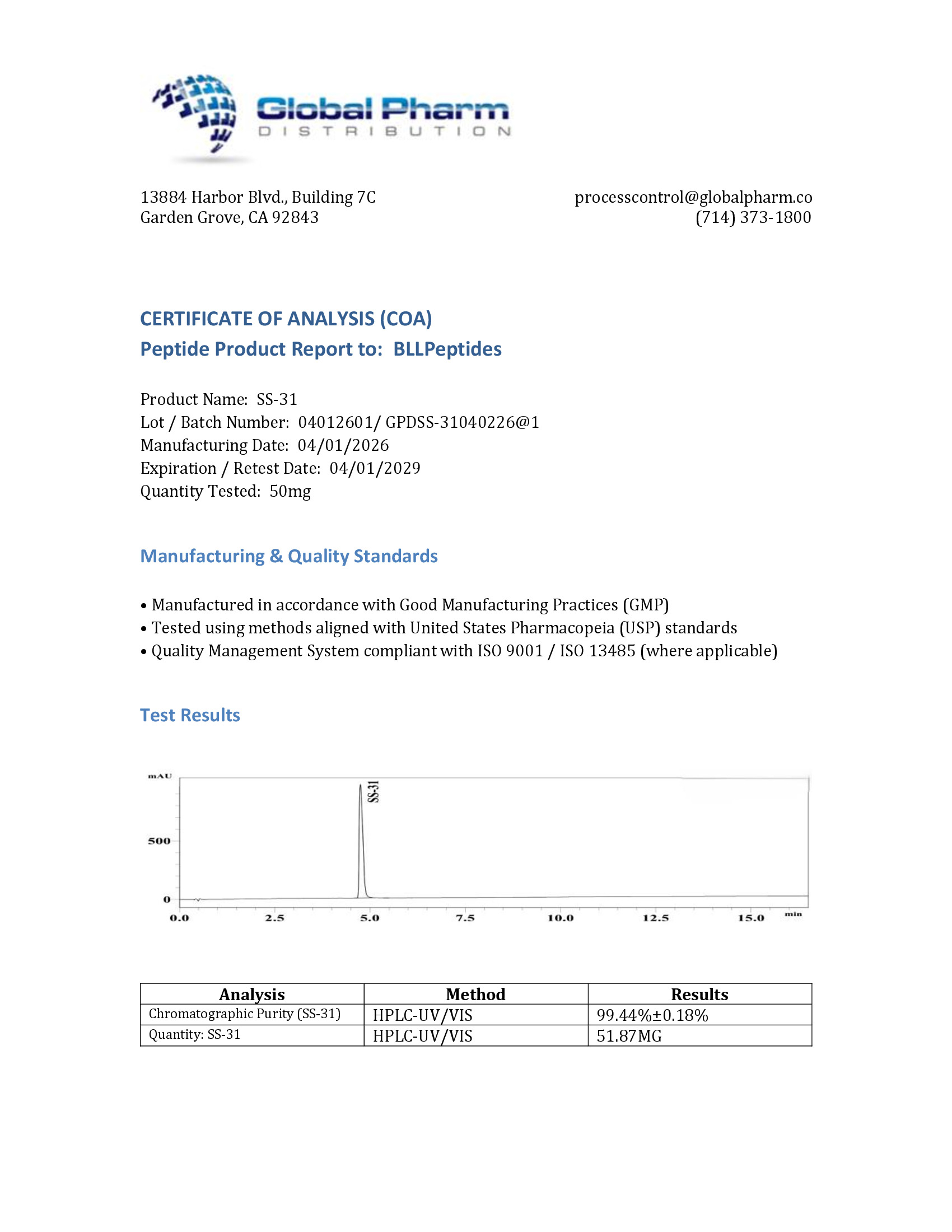
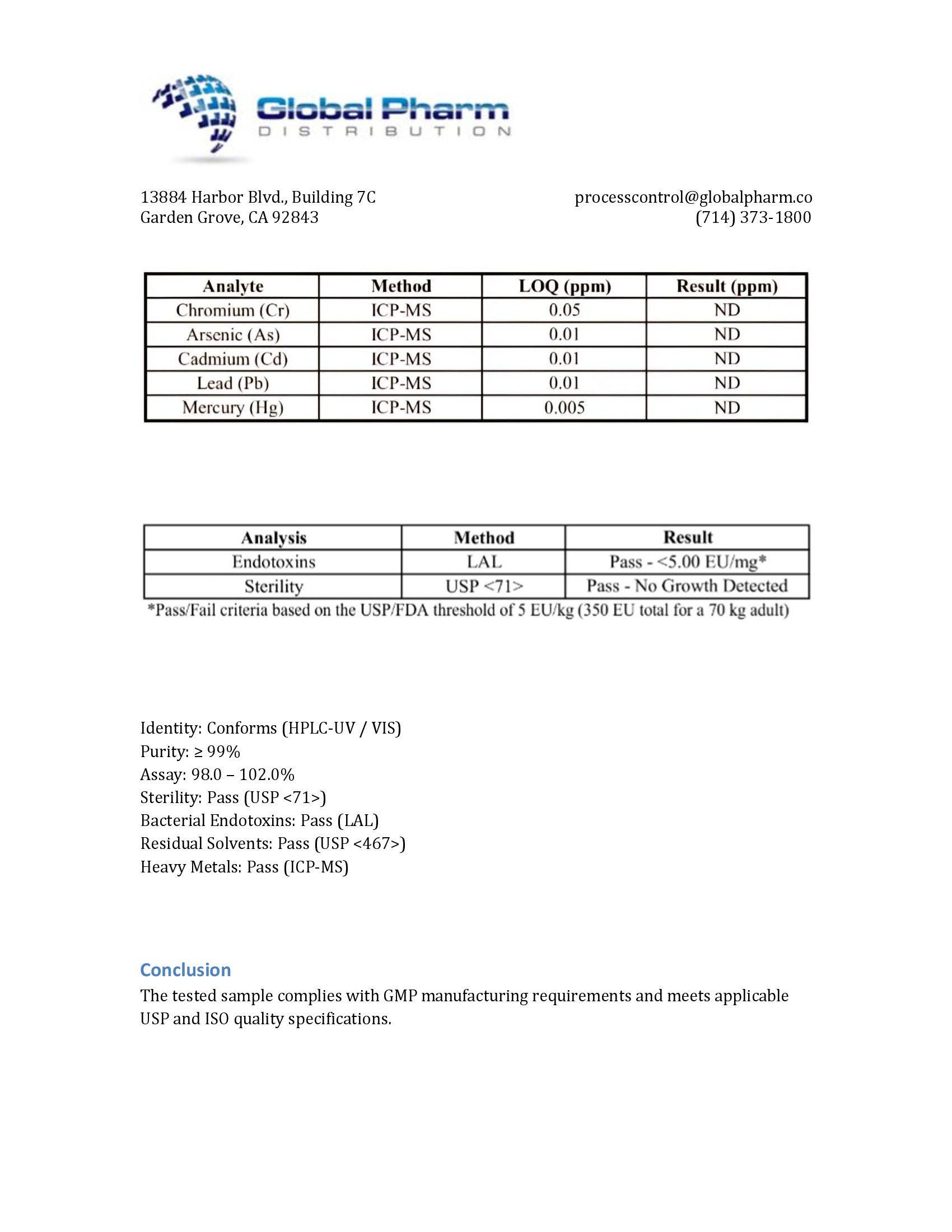
| ✅ COA tested every batch | ✅ 98%+ purity guaranteed |
| ✅ USA manufactured, GMP-certified | ✅ Glass vials — not plastic |
| ✅ Veteran-owned company | ✅ Free shipping over $150 |
Related Products
-
NAD+ 500mg (10ml)
Original price was: $120.00.$64.99Current price is: $64.99. -
WOLVERINE BPC-157 + TB-500 10/10mg (3ml)
Original price was: $190.00.$99.99Current price is: $99.99. -
KLOW BPC-157 GHK-CU KPV TB-500 10/50/10/10mg (3ml)
Original price was: $375.00.$129.99Current price is: $129.99. -
BPC-157 10mg (3ml)
Original price was: $95.00.$59.99Current price is: $59.99.