

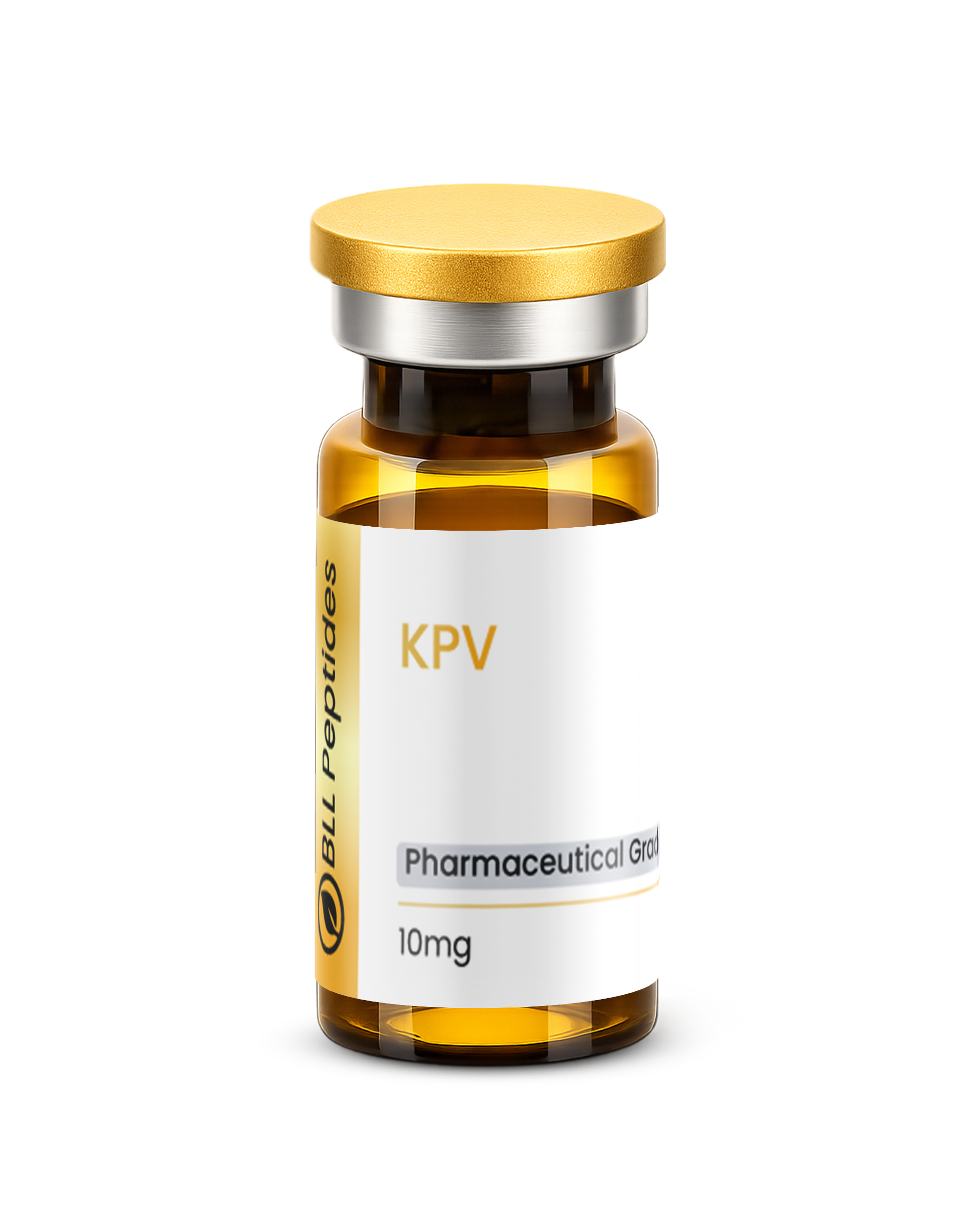
Gut inflammation is one of medicine’s most complicated problems — not because we don’t understand what’s happening, but because what’s happening involves so many overlapping systems. The intestinal immune system is the largest immune organ in the body, constantly making decisions about what’s foreign and dangerous versus what’s food and microbiome. When that decision-making breaks down, you get conditions like inflammatory bowel disease that are difficult to treat, prone to relapse, and deeply disruptive to quality of life. KPV is a small peptide that has attracted research interest because it appears to intervene in this inflammatory cascade at a fundamental regulatory level.
KPV (Lysine-Proline-Valine) is a C-terminal tripeptide derived from alpha-MSH (alpha-melanocyte stimulating hormone), specifically the last three amino acids of that 13-amino-acid neuropeptide. Alpha-MSH has well-documented anti-inflammatory properties, primarily through melanocortin receptor activation — particularly MC1R and MC3R, which are expressed in immune cells and intestinal epithelium. KPV retains much of alpha-MSH’s anti-inflammatory signaling capacity in a dramatically smaller molecular form, which has significant implications for research models and potential delivery approaches.
KPV and Gut Inflammation Research: The Mechanism
The intestinal epithelium — the single-cell-layer barrier between the gut lumen and the body’s interior — is the frontline of gut immune regulation. It expresses pattern recognition receptors (toll-like receptors, NOD receptors) that detect microbial signals and initiate inflammatory responses when microbial translocation occurs. It also expresses melanocortin receptors that regulate this inflammatory response through negative feedback.
KPV’s primary mechanism in gut research involves activation of MC1R on intestinal epithelial cells and lamina propria immune cells (macrophages, dendritic cells), producing inhibition of NF-κB — the master transcription factor that drives expression of pro-inflammatory cytokines including TNF-α, IL-1β, IL-6, and IL-8. By downregulating this central inflammatory signaling hub, KPV reduces the expression of the cytokine cascade that drives intestinal inflammation.
A key advantage of KPV’s mechanism compared to many anti-inflammatory interventions is that it acts on a receptor-mediated signaling pathway rather than broadly suppressing the immune response — which means it modulates inflammation rather than eliminating it, preserving normal immune surveillance function.
Research has also identified KPV’s effects on tight junction proteins — the molecular structures that maintain intestinal barrier integrity. In models of intestinal permeability (often described informally as “leaky gut”), KPV administration has been associated with restored expression of claudin, occludin, and ZO-1, the three primary tight junction proteins. Restoring barrier function has significant downstream effects on systemic inflammatory burden, since barrier disruption allows microbial products to enter systemic circulation and trigger broader immune activation.
Key Research Findings: IBD Models and Mucosal Healing
The most developed research data for KPV comes from colitis models. In experimental colitis (both DSS-induced chemical colitis and TNBS-induced models), KPV administration has consistently produced reduced colonic inflammation scores, decreased pro-inflammatory cytokine levels, reduced mucosal damage, and accelerated mucosal healing (PMID: 16614419). These effects were observed with both local (intracolonic) and systemic delivery, suggesting KPV’s anti-inflammatory effects are not limited to direct local contact with inflamed tissue.
The oral delivery research has generated particular interest. KPV’s small molecular size and relative stability allow it to survive gastrointestinal conditions well enough to reach intestinal tissue — making it a candidate for orally bioavailable approaches to intestinal inflammation research. Several studies have explored nanoparticle encapsulation of KPV to further enhance its colonic delivery and retention.
In models of intestinal permeability combined with colitis, KPV treatment addressed both the inflammatory cascade and the barrier disruption simultaneously — suggesting it operates on multiple nodes of intestinal pathophysiology rather than a single target.
The microbiome dimension is an emerging aspect of KPV research. Intestinal inflammation profoundly disrupts microbiome composition, and dysbiosis (abnormal microbiome) in turn perpetuates inflammation — a vicious cycle. Preliminary research has examined whether KPV’s anti-inflammatory effects secondarily restore a more healthy microbiome composition, but this remains an early-stage area of investigation.
For intestinal and immune inflammation researchers, BLL Peptides carries KPV for laboratory research. Complementary research subjects include BPC-157, which has its own body of research on gut healing and intestinal permeability through a distinct mechanism, and TB-500 for its anti-inflammatory tissue repair properties.
Frequently Asked Questions About KPV and Gut Inflammation Research
- What is KPV and where does it come from biologically?
- KPV is a tripeptide (Lysine-Proline-Valine) derived from the C-terminal sequence of alpha-MSH (alpha-melanocyte stimulating hormone). It retains much of alpha-MSH’s anti-inflammatory signaling capacity in a three-amino-acid form.
- How does KPV reduce gut inflammation at the molecular level?
- KPV activates melanocortin receptors (MC1R, MC3R) on intestinal epithelial cells and immune cells, inhibiting NF-κB signaling and reducing downstream expression of pro-inflammatory cytokines including TNF-α, IL-1β, and IL-6.
- What intestinal barrier research has been done with KPV?
- Studies have found KPV restores expression of tight junction proteins (claudin, occludin, ZO-1) in models of increased intestinal permeability — suggesting effects on barrier integrity in addition to inflammatory suppression.
- How does KPV compare to BPC-157 in gut inflammation research?
- Both peptides have been studied in colitis models, but through different mechanisms. KPV acts through melanocortin receptor/NF-κB inhibition; BPC-157 acts through NO synthesis, VEGF, and growth factor pathways. They represent complementary research approaches to gut inflammation.
Dr. James Nguyen is a neurosurgeon and research advisor at BLL Peptides. His work focuses on peptide research, neurological recovery, and longevity science. All content is for educational and research purposes only.
This content is intended for research purposes only. BLL Peptides products are not intended for human consumption.