
Thymosin Alpha-1 Research: What This Thymic Peptide Reveals About Immune Modulation and T-Cell Activation
·

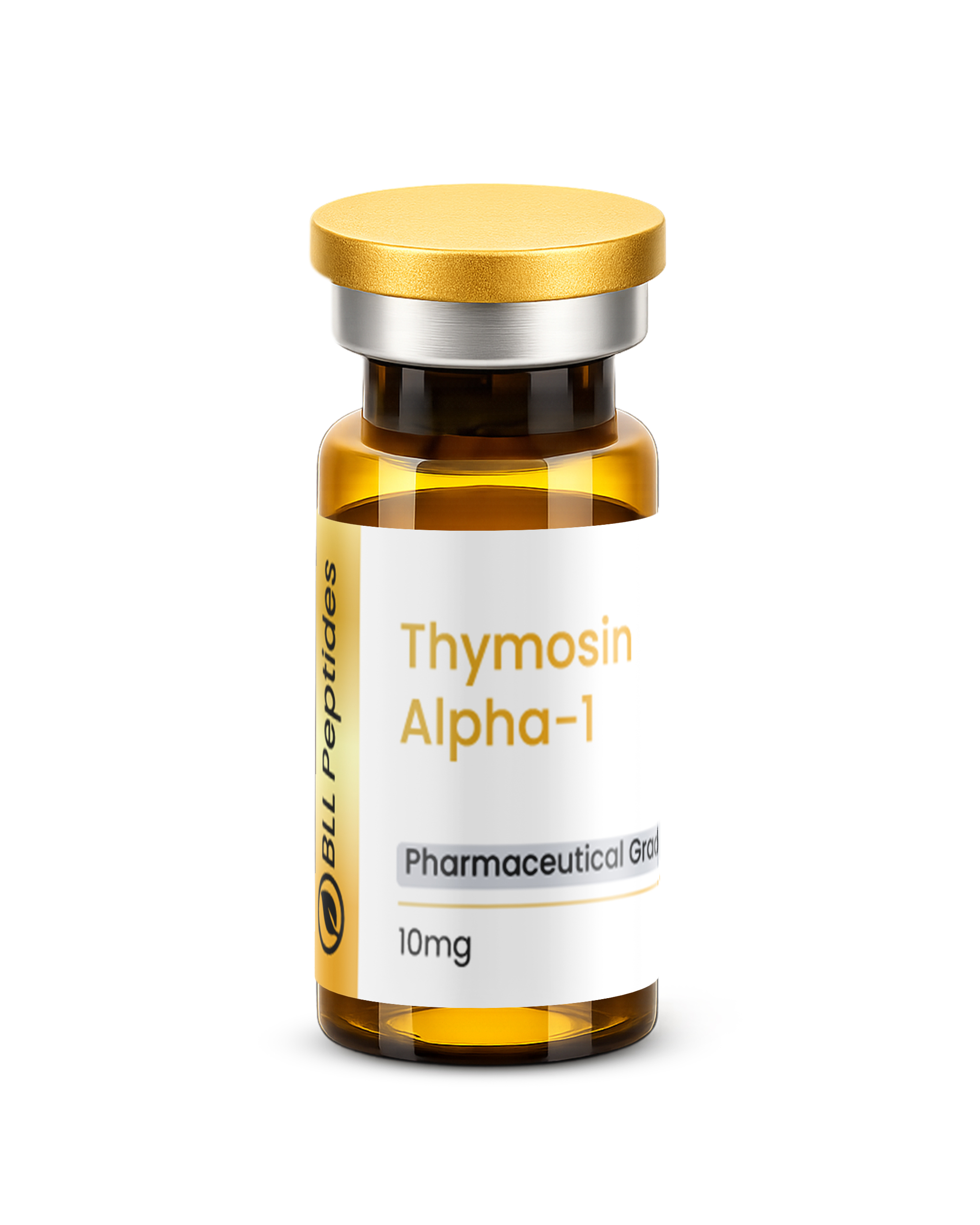
A patient I treated last year had a textbook-perfect surgical outcome — and then stalled. His wound healed slowly, his white cell counts were sluggish, and follow-up after follow-up showed an immune system that seemed almost reluctant to engage. He wasn’t sick in any diagnosable way. He was just… underperforming immunologically. That case pushed me deep into the literature on thymic peptides, and one compound kept appearing at the center of everything: Thymosin Alpha-1.
In the decades since its isolation from thymic tissue, Thymosin Alpha-1 (Tα1) has become one of the most extensively studied immunomodulatory peptides in biomedical research. It is a 28-amino acid peptide produced naturally by the thymus gland, and research consistently points to its role in T-cell maturation, immune surveillance, and the coordination of the body’s adaptive immune responses. This is a compound that serious researchers and clinicians in immunology keep coming back to — and the reasons why are worth understanding.
What Is Thymosin Alpha-1?
Thymosin Alpha-1 was first isolated in 1977 by Dr. Allan Goldstein and colleagues at George Washington University, extracted from a fraction of thymic tissue called thymosin fraction 5. It is derived from the N-terminus of a larger precursor protein called prothymosin alpha, and its amino acid sequence is remarkably conserved across mammalian species — a signal, in evolutionary biology, that something is doing important work.
The thymus is often underappreciated as an immune organ. Most people associate immunity with the spleen or lymph nodes, but the thymus is where T lymphocytes are literally trained — educated to distinguish self from non-self, to activate against pathogens, and to modulate inflammatory responses. Tα1 appears to be one of the key peptide signals that coordinates that process.
As a neurosurgeon, I deal with immune dysfunction in a surprisingly direct way — neuroinflammation, post-surgical immune depression, and the relationship between CNS injury and systemic immune response are all areas where understanding thymic signaling matters. That clinical lens has informed my interest in what the research on Tα1 actually shows.
How Thymosin Alpha-1 Works: The Mechanism Research Has Identified
Preclinical and translational research points to several mechanisms through which Tα1 may exert its immunomodulatory effects:
- T-cell differentiation: Tα1 appears to promote the maturation of immature thymocytes into functional T lymphocytes, particularly the Th1 phenotype associated with cell-mediated immunity.
- Cytokine upregulation: Studies have demonstrated that Tα1 may stimulate production of interleukin-2 (IL-2) and interferon-gamma (IFN-γ), key signaling molecules that amplify immune response to intracellular pathogens and tumor cells.
- MHC class I expression: Research has shown Tα1 may upregulate major histocompatibility complex (MHC) class I surface expression on dendritic cells and other antigen-presenting cells — essentially improving how well the immune system can display and recognize threats.
- Natural killer (NK) cell activation: Several preclinical studies have noted enhanced NK cell cytotoxicity in models treated with Tα1, suggesting a role in innate immune surveillance.
- Anti-inflammatory modulation via IL-10: At the same time, Tα1 appears capable of upregulating IL-10 in certain inflammatory contexts, suggesting a dual calibrating function — amplifying immune response where needed, moderating excess inflammation where it’s counterproductive.
In essence, Tα1 doesn’t simply turn the immune system up — it appears to help calibrate it. That nuance is what makes it so interesting to researchers across multiple disease models.
What the Research Shows About Thymosin Alpha-1
The research base for Tα1 is unusually broad for a peptide compound. It has been investigated in models ranging from viral hepatitis to cancer immunotherapy to sepsis — and the data is worth examining closely.
A comprehensive review published in Expert Opinion on Biological Therapy examined over three decades of Tα1 research across hepatitis B, hepatitis C, HIV, and malignant disease models. The authors concluded that Tα1 demonstrated consistent immunoenhancing activity across these varied contexts, with a particularly strong signal in restoring T-cell function in immunocompromised states.
A 2012 PubMed-indexed study (PMID: 22264298) demonstrated significant enhancement of T-cell-dependent immune responses in immunosuppressed animal models treated with Tα1, with measurable improvements in both T-cell proliferation and cytokine output. The researchers noted that effects were most pronounced in hosts with baseline immune dysfunction.
Of particular interest to me from a clinical standpoint: observational data from elderly populations suggests Tα1 may improve vaccine responsiveness — a finding consistent with the known decline in thymic function with age (thymic involution), which progressively reduces the pool of naïve T cells available to mount responses to new antigens.
Tα1 is currently approved as a pharmaceutical (marketed as Zadaxin) in over 35 countries for treatment of hepatitis B, hepatitis C, and as an adjunct to cancer chemotherapy — making it one of the few peptides that has crossed the line from preclinical research into approved clinical use in multiple regulatory jurisdictions.
Key Findings from Thymosin Alpha-1 Research
- Enhanced NK cell cytotoxicity observed in multiple preclinical tumor models
- Improved Th1/Th2 balance in models of chronic immune dysregulation
- Synergistic effects noted when Tα1 is combined with antiviral agents in hepatitis models
- Evidence of reduced immunosuppression in post-surgical models
- Potential neuroprotective effects via neuroinflammation modulation (an area I find personally fascinating)
For researchers exploring immune peptide biology alongside musculoskeletal recovery research, it’s also worth noting the mechanistic overlap and contrast between Tα1 and other well-studied peptides. Our research catalog includes compounds across multiple biological axes — BPC-157, for instance, operates primarily through angiogenic and gut-mucosal mechanisms, while TB-500 (Thymosin Beta-4) — despite the naming overlap — is a structurally distinct peptide operating through actin-binding and angiogenic pathways. Understanding where Tα1 sits in this landscape requires understanding those distinctions. Researchers interested in peptide biology broadly may also find our NAD+ research compounds relevant for the overlapping themes of cellular resilience and immune-metabolic function.
Frequently Asked Questions About Thymosin Alpha-1 Research
What is Thymosin Alpha-1 and where does it come from?
Thymosin Alpha-1 is a 28-amino acid peptide naturally produced in the thymus gland. It was first isolated in 1977 and is derived from the N-terminal sequence of prothymosin alpha. It plays a role in T-lymphocyte maturation and immune system regulation.
How does Thymosin Alpha-1 affect T-cell function?
Research indicates that Tα1 promotes T-cell differentiation, enhances IL-2 and IFN-γ production, and may improve MHC class I expression on antigen-presenting cells. The net effect in preclinical models is enhanced T-cell-mediated immune responses, particularly in immunocompromised states.
Is Thymosin Alpha-1 the same as Thymosin Beta-4 (TB-500)?
No — these are structurally and functionally distinct peptides. Thymosin Alpha-1 is a 28-amino acid immunomodulatory peptide; Thymosin Beta-4 (the basis for TB-500) is a 43-amino acid peptide that works primarily through G-actin sequestration. The naming similarity is a historical artifact of their shared origin in thymosin research fractions.
What diseases has Thymosin Alpha-1 been studied in?
Tα1 has been researched in contexts including hepatitis B, hepatitis C, HIV, cancer immunotherapy, sepsis, and vaccine response modulation. It is approved as Zadaxin in over 35 countries for certain viral hepatitis indications.
Where can researchers source Thymosin Alpha-1 for study?
BLL Peptides offers research-grade peptide compounds for laboratory and preclinical research purposes. All products are for research use only and not intended for human consumption. Browse our catalog at bllpeptides.com.
A Note from Dr. James
What drew me to Thymosin Alpha-1 research wasn’t just the immunology — it was the systems thinking behind it. The thymus is a gland we tend to forget about after childhood, yet it continues to influence immune competence throughout life. Tα1 appears to be one of the signals keeping that system calibrated. In a research landscape increasingly focused on immunomodulation, this peptide deserves more attention than it often gets.
This content is intended for research purposes only. BLL Peptides products are not intended for human consumption.
About the Author
Dr. James is a board-certified neurosurgeon and member of the BLL Peptides scientific advisory team. His clinical focus spans neuro-oncology, complex spine surgery, and neuroinflammation. He brings a first-principles approach to peptide biology research, with particular interest in immunomodulatory and neuroprotective compounds. All content authored by Dr. James is for educational and research purposes only.