
PT-141 Research: What the Melanocortin Peptide Data Reveals About Central Arousal Pathways
·

I still remember the patient — mid-forties, in excellent cardiovascular health, no medications, and yet reporting a complete loss of sexual desire that had quietly dismantled his relationship over three years. Every conventional workup came back normal. Testosterone was fine. No structural issues. That case stuck with me, because it made me question whether we were looking at the problem through entirely the wrong lens. That question eventually led me down a research rabbit hole into PT-141 — and what I found genuinely surprised me.
PT-141 (bremelanotide) is a synthetic cyclic heptapeptide that activates melanocortin receptors in the central nervous system — specifically MC3R and MC4R — triggering arousal pathways in the brain rather than acting peripherally on the vascular system. This mechanism makes it categorically different from PDE5 inhibitors, and it’s precisely what has made it a point of fascination in peptide research over the past decade.
What Is PT-141?
PT-141 is derived from Melanotan II, itself an analog of alpha-melanocyte-stimulating hormone (α-MSH). The peptide was originally developed in research contexts studying melanocortin receptor activity, but investigators noticed early on that MC3R and MC4R activation had pronounced effects on sexual arousal — independent of hormonal status or vascular function.
Unlike traditional approaches that increase blood flow mechanically, PT-141 engages the brain’s own arousal circuitry. Researchers note it acts on the hypothalamus and limbic system, areas deeply involved in motivated behavior, desire, and emotional responsiveness. As a neurosurgeon who has spent years studying how neural circuits shape behavior, this central mechanism is what I find most compelling about the existing data.
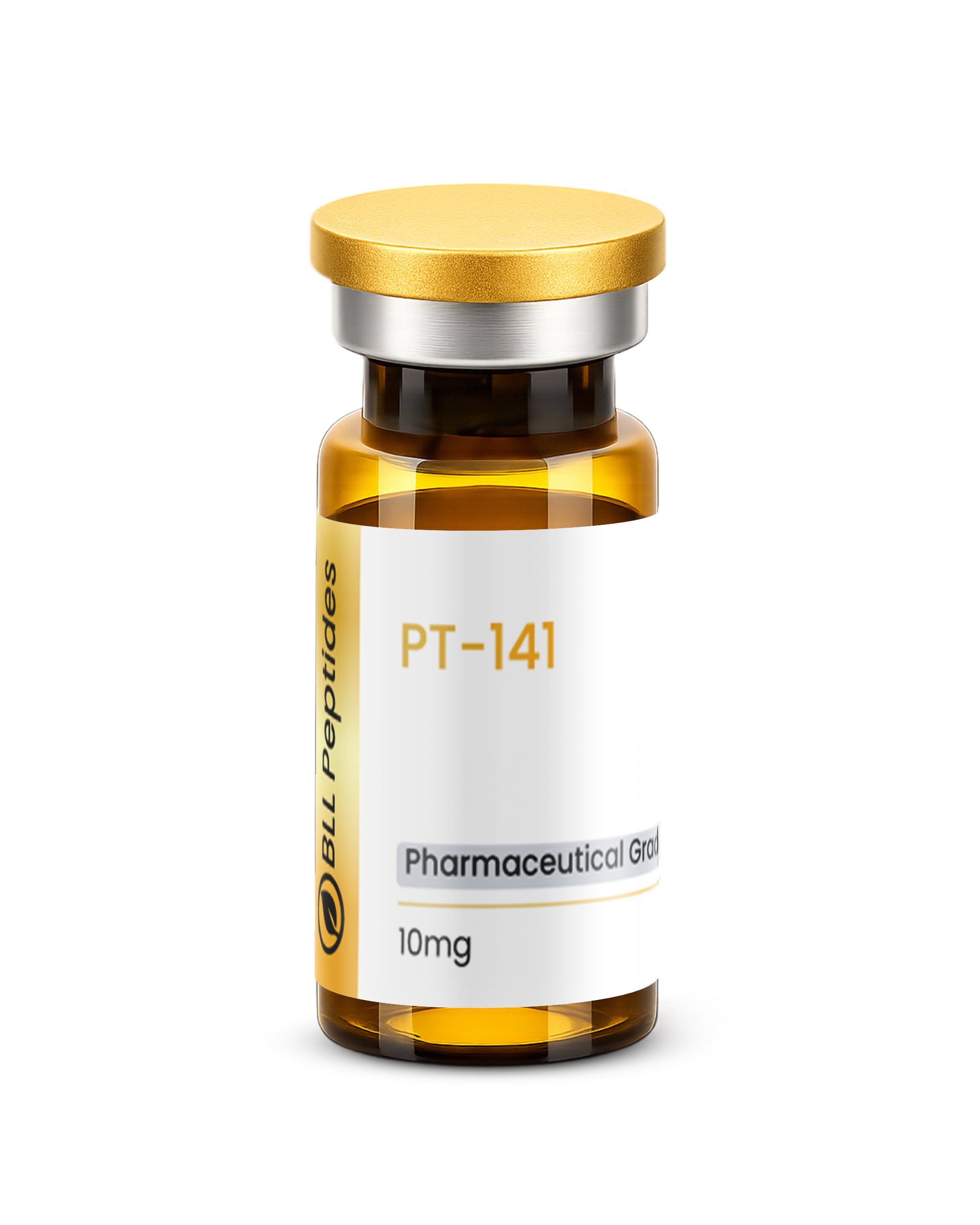
For research on related peptides, the BLL Peptides catalog includes PT-141 (10mg/3ml) for investigative purposes.
How PT-141 Works: The Melanocortin Pathway
The melanocortin system is a network of neuropeptides and receptors distributed throughout the brain and peripheral tissues. Five receptor subtypes have been identified (MC1R–MC5R), each with distinct tissue expression and functional roles.
MC4R, expressed densely in the paraventricular nucleus of the hypothalamus, appears to be the primary driver of PT-141’s centrally mediated arousal effects. Activation of this receptor has been linked in preclinical models to increased motivation, spontaneous erection in males, and pro-sexual behavioral shifts in females — without corresponding changes in serum testosterone or estrogen.
MC3R activation appears to modulate energy balance and autonomic signaling, potentially contributing to the hemodynamic observations (mild blood pressure changes, flushing) noted in some research subjects.
The cyclic heptapeptide structure of PT-141 confers greater receptor binding stability than linear analogs, which may explain its more sustained receptor engagement in research protocols. This is a structural feature that distinguished it early from Melanotan II in translational research settings.
What the Research Shows
A landmark study published in the Journal of Sexual Medicine (Safarinejad, 2008) examined PT-141 in a randomized, double-blind, placebo-controlled trial and reported statistically significant improvements in desire and satisfaction measures among participants. The researchers attributed these findings specifically to central melanocortin activation rather than peripheral vascular effects — a distinction that makes this mechanism uniquely relevant for cases where desire, not mechanics, is the primary concern.
A PubMed-indexed review of melanocortin receptor agonists highlighted that MC4R agonism in the hypothalamus produces reliable pro-arousal effects in multiple species, lending cross-species validity to the mechanistic claims.
Preclinical data also suggests PT-141 may upregulate oxytocin release in the hypothalamus, a neuropeptide associated with bonding, reward, and prosocial behavior. The implication — that arousal and relational motivation share common neurochemical roots — is one that I find particularly thought-provoking from a clinical neuroscience standpoint.
Research teams have also noted that PT-141’s effects do not appear to depend on circulating sex hormones, which opens research questions about its utility in hypogonadal models — a population where desire disorders are notoriously difficult to address with testosterone supplementation alone.
Key Research Findings at a Glance
- Central mechanism: PT-141 activates MC3R and MC4R in the hypothalamus and limbic system — no peripheral vascular dependency
- Hormone-independent activity: Research models show arousal effects persist regardless of testosterone or estrogen levels
- Oxytocin interaction: Preclinical data suggests hypothalamic oxytocin release may mediate prosocial and reward components of the response
- Cross-sex applicability: Studies have examined PT-141 in both male and female research models with consistent MC4R-driven findings
- Structural stability: Cyclic heptapeptide architecture provides enhanced receptor binding vs. linear melanocortin analogs
For researchers exploring melanocortin peptides, BLL Peptides also offers BPC-157 and TB-500 for comparative peptide investigations.
Frequently Asked Questions About PT-141 Research
What receptor does PT-141 primarily activate in research models?
PT-141 primarily activates MC4R (melanocortin-4 receptor) in the hypothalamus, along with MC3R. These central nervous system receptors are associated with arousal circuitry, motivated behavior, and autonomic regulation in preclinical research.
How does PT-141 differ from PDE5 inhibitors mechanistically?
PDE5 inhibitors act peripherally by increasing nitric oxide-mediated vasodilation. PT-141 acts centrally on melanocortin receptors in the brain, engaging desire pathways at the level of the CNS rather than modulating blood flow mechanics. This makes them functionally distinct in research contexts.
Does PT-141 require normal hormone levels to show effects in research models?
Preclinical research suggests PT-141’s arousal effects can occur independent of serum testosterone or estrogen. This hormone-independent pathway is a key point of differentiation that researchers are currently investigating in hypogonadal models.
What is the role of oxytocin in PT-141’s mechanism?
Some preclinical data indicates that MC4R activation by PT-141 stimulates oxytocin release in the paraventricular nucleus of the hypothalamus. Oxytocin is associated with bonding, reward processing, and prosocial behavior — suggesting PT-141’s research profile extends beyond simple arousal signaling.
Where can I find PT-141 for research purposes?
BLL Peptides offers PT-141 (10mg/3ml) for research use. All products are manufactured in the USA under GMP-certified conditions. BLL Peptides is a veteran-owned company committed to research-grade quality.
About the Author
Dr. James is a neurosurgeon with extensive clinical and research experience in central nervous system function, neural circuit modulation, and the intersection of brain biology and behavior. His research interests include neuropeptide signaling, melanocortin receptor pharmacology, and translational models of motivated behavior. He contributes to BLL Peptides as a scientific advisor and researcher.
This content is intended for research purposes only. BLL Peptides products are not intended for human consumption.