
Sermorelin Research: What This GHRH Analog Reveals About Growth Hormone Pulsatility and Brain Function
·

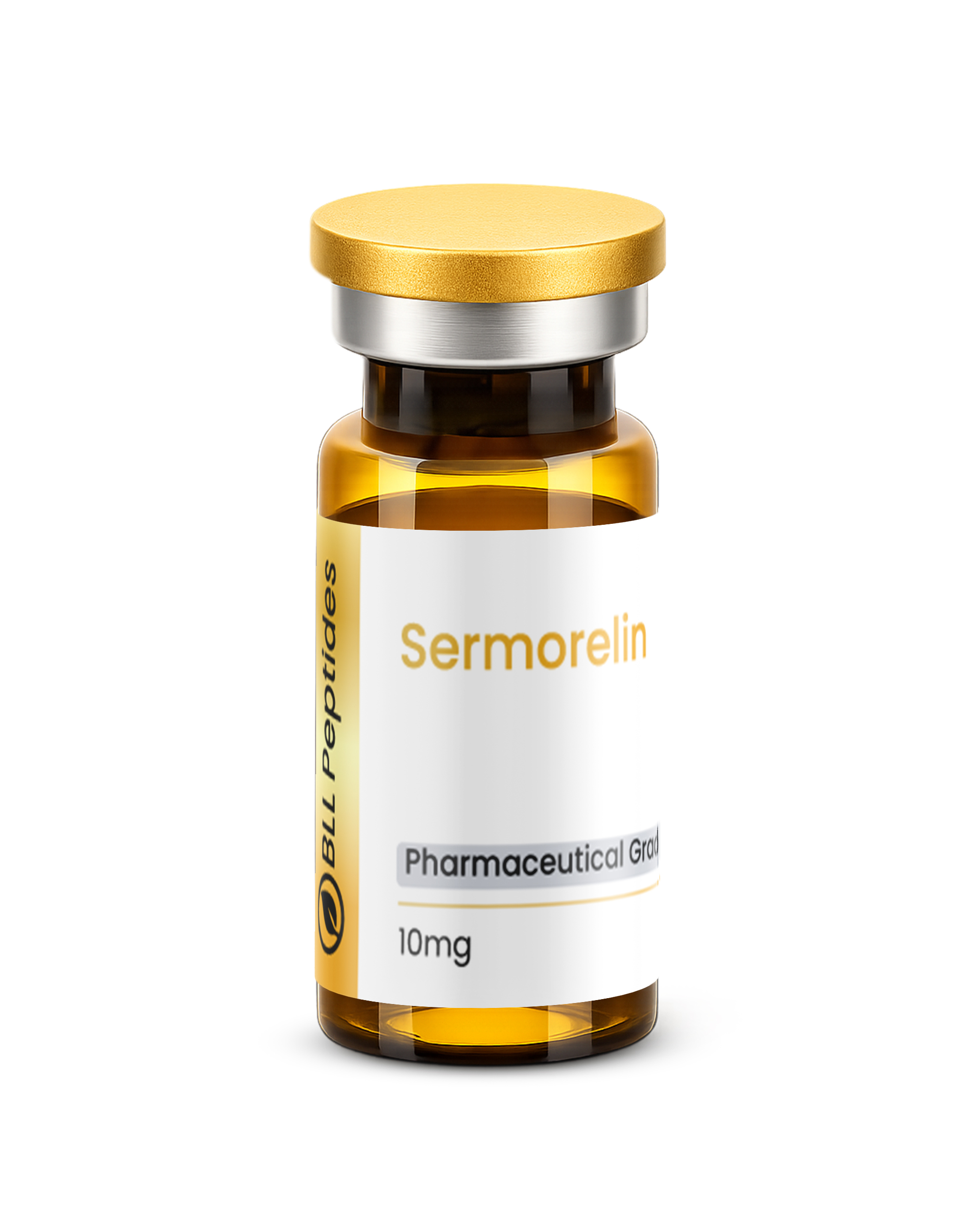
There’s a moment in the OR that still sticks with me — a 58-year-old patient, sharp as a tack before surgery, who spent months post-op in a fog he couldn’t shake. Cognition, energy, sleep — all derailed. Nothing in the obvious workup explained it. It wasn’t until I started digging into neuroendocrine literature that sermorelin research caught my attention, and I haven’t stopped reading since.
Sermorelin research centers on a synthetic 29-amino acid peptide that mirrors the first 29 amino acids of endogenous growth hormone-releasing hormone (GHRH). In preclinical models, it acts on pituitary somatotroph cells to stimulate the pulsatile release of growth hormone (GH), which then drives downstream IGF-1 production. What makes it particularly interesting from a neurological standpoint is its relationship with the hypothalamic-pituitary axis — the same axis that governs stress response, sleep architecture, and metabolic regulation.
What Is Sermorelin?
Sermorelin (GHRH 1–29 NH₂) is a truncated analogue of the 44-amino acid growth hormone-releasing hormone produced naturally by the hypothalamus. Unlike synthetic GH itself, sermorelin operates upstream — prompting the pituitary to release GH in its natural pulsatile pattern rather than flooding the system with exogenous hormone. In research models, this distinction has implications for receptor sensitivity and the body’s own regulatory feedback loops.
The peptide was synthesized specifically because the full 44-residue GHRH molecule proved difficult to work with in research settings. The shorter 1–29 fragment retains full biological activity at the pituitary receptor, making it a well-studied tool for exploring GH axis dynamics.
How Sermorelin Works: The Pituitary-Hypothalamic Connection
Sermorelin binds to GHRH receptors (GHRHR) on somatotroph cells of the anterior pituitary. This receptor interaction triggers a cAMP-mediated signaling cascade that ultimately drives transcription of the GH gene and promotes GH secretion. Critically, the pituitary’s own somatostatin-mediated inhibitory feedback remains intact — meaning the system self-regulates in a way that mimics natural physiology more closely than direct GH supplementation.
As a neurosurgeon, what I find genuinely fascinating is the bidirectional relationship between GH/IGF-1 signaling and the central nervous system. IGF-1 receptors are densely expressed throughout the hippocampus and prefrontal cortex — regions critical for memory consolidation and executive function. Animal studies have shown that GHRH receptor knockout models exhibit accelerated cognitive aging, suggesting this axis plays a role far beyond body composition.
What Sermorelin Research Shows About Sleep and Cognition
Preclinical and early clinical research on sermorelin has generated a compelling body of data.
GH Pulsatility Restoration: A landmark study in the Journal of Clinical Endocrinology and Metabolism demonstrated that GHRH administration significantly increased mean GH concentrations and pulse amplitude in older subjects versus placebo — consistent with the hypothesis that declining GH in aging is partly driven by reduced hypothalamic GHRH output, not pituitary failure. (PubMed PMID: 8182282)
Sleep Architecture: Research has repeatedly shown that GHRH administered during sleep increases slow-wave (deep) sleep duration, with GH secretion naturally peaking during these same deep sleep phases. The synchrony between slow-wave sleep and GH pulsatility is one of the most consistent findings in sleep endocrinology. This bidirectional relationship makes the GHRH axis a compelling target for research into sleep-related cognitive maintenance and glymphatic clearance.
Cognitive Correlates: In aged rodent models, GHRH administration has been associated with improvements in spatial memory tasks and markers of hippocampal neuroplasticity. Some human trials using GHRH analogues have observed improvements in cognitive composite scores versus placebo — a finding that, as a neurosurgeon focused on brain aging, I think deserves far more attention than it currently receives.
Body Composition Research: Multiple randomized controlled trials have documented reductions in visceral fat of approximately 10–15% and increases in lean mass in subjects receiving GHRH analogues over 6-month periods, mediated through IGF-1 upregulation and improved metabolic signaling.
Key Research Findings at a Glance
- GHRH stimulation preserves pulsatile GH release even in aged pituitary tissue
- Slow-wave sleep enhancement is among the most replicated findings in GHRH research
- IGF-1 receptor expression throughout hippocampus links GH axis directly to cognitive function
- GHRH receptor knockout models show accelerated hippocampal aging in preclinical studies
- The hypothalamic-pituitary-GH axis is increasingly recognized as a key node in brain aging research
- Visceral fat reductions of ~10–15% observed in multiple 6-month RCTs using GHRH analogues
Sermorelin in the Context of Broader Peptide Research
What I appreciate about the sermorelin literature is how it connects to adjacent research areas. Studies on NAD+ and mitochondrial function suggest that cellular energy metabolism and GH signaling may converge on shared downstream targets in metabolic aging. Similarly, researchers interested in tissue repair have explored synergies between GH axis activation and repair-focused peptides like BPC-157 in preclinical models.
For researchers at the intersection of neuroinflammation and brain aging, the GH/IGF-1 axis represents an underexplored node. I’ve been particularly interested in whether GHRH receptor signaling in the hippocampus might interact with glymphatic clearance mechanisms now central to Alzheimer’s research — but that’s a hypothesis waiting for the right experimental model.
BLL Peptides offers research-grade NAD+ (500mg/10ml) and BPC-157 (10mg/3ml) for researchers investigating metabolic aging and peptide interactions in preclinical models.
Frequently Asked Questions About Sermorelin Research
What is sermorelin used for in research?
In research settings, sermorelin is used as a tool to study the hypothalamic-pituitary-GH axis. It allows researchers to stimulate endogenous GH secretion in a pulsatile, physiologically-regulated manner, making it valuable for studies on aging, sleep architecture, body composition, and neuroendocrine function in preclinical and early clinical models.
How does sermorelin differ from synthetic growth hormone in research models?
Sermorelin operates upstream of GH itself, stimulating the pituitary to produce GH endogenously rather than introducing exogenous hormone. This preserves the normal pulsatile secretion pattern and maintains somatostatin-mediated feedback regulation, making it a more physiologically representative model for studying GH axis dynamics.
What does sermorelin research reveal about sleep?
GHRH has been shown in multiple studies to enhance slow-wave deep sleep, with GH secretion naturally peaking during these phases. This bidirectional relationship suggests the GHRH axis plays a significant role in sleep architecture regulation — a finding with potential implications for research into cognitive maintenance and glymphatic clearance during sleep.
Is there research connecting sermorelin to cognitive function?
Yes. IGF-1 receptors are highly expressed in the hippocampus and prefrontal cortex, and animal models with disrupted GHRH signaling show accelerated cognitive aging. Some human trials using GHRH analogues have observed improvements in cognitive composite scores compared to placebo. The GH/IGF-1 axis is increasingly relevant to brain aging research.
Where can I find peer-reviewed sermorelin research?
PubMed is the primary resource. Searching “GHRH sermorelin aging,” “GHRH slow-wave sleep,” and “IGF-1 hippocampus cognition” will surface the most relevant literature. Key journals include JCEM, Endocrinology, and Neurobiology of Aging.
About the Author: Dr. James Nguyen is a board-certified neurosurgeon and member of the BLL Peptides research team. His clinical background in neuroendocrine tumor surgery and brain trauma led him to the intersection of peptide biology and neurological health. He writes from a research and educational perspective, not a clinical treatment standpoint.
This content is intended for research purposes only. BLL Peptides products are not intended for human consumption.