
Tirzepatide vs Semaglutide: What the Current Research Shows
·

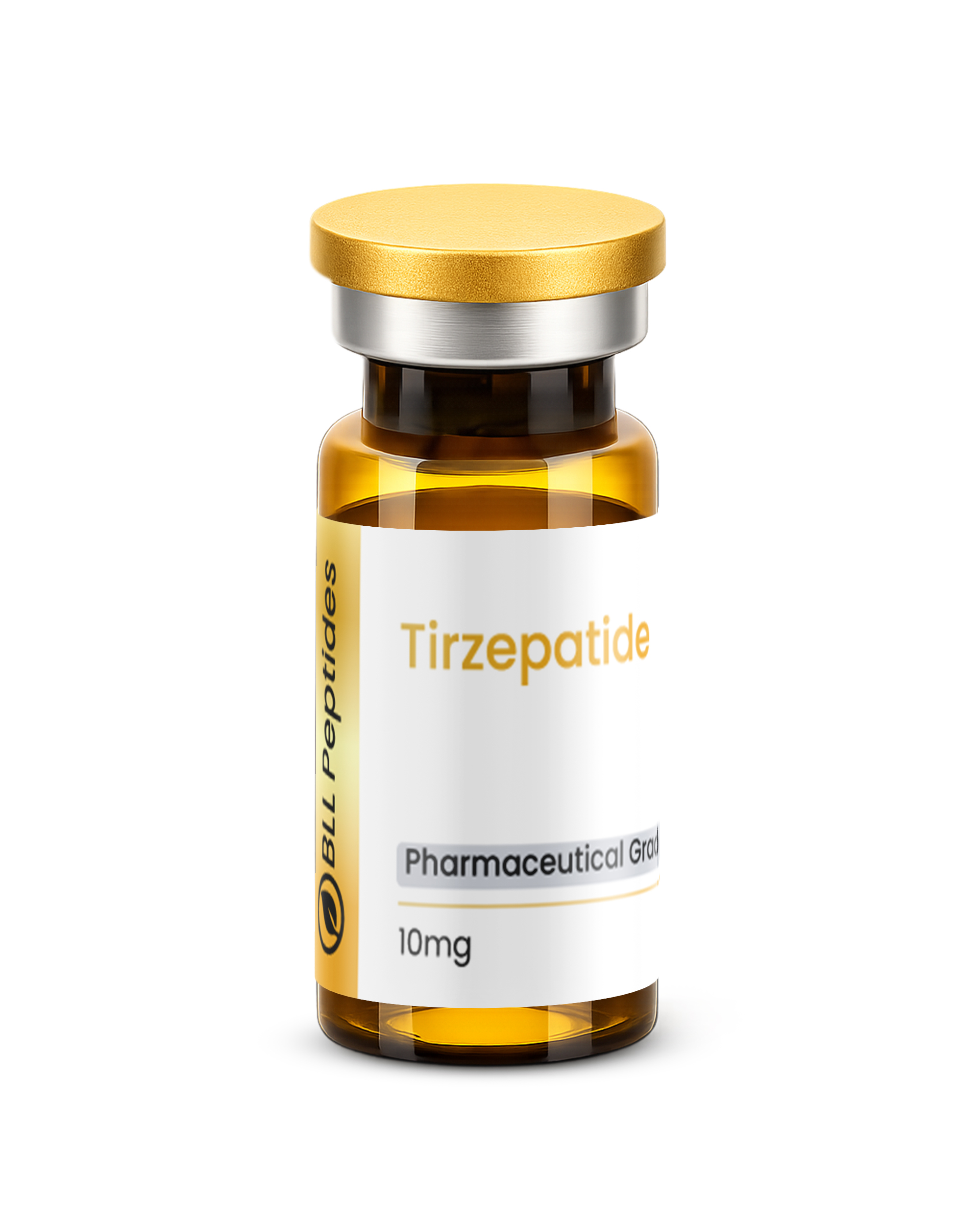
The SURPASS and SURMOUNT trial data on tirzepatide arrived at a moment when GLP-1 monotherapy was already considered a major therapeutic advance, and the weight loss numbers from tirzepatide’s phase 3 program — mean reductions of 20-22% of body weight in the highest dose arms — were substantially larger than anything semaglutide had produced. The explanation lies in the GIP receptor axis. Adding GIP receptor agonism to GLP-1 signaling creates a synergistic insulin-secretory effect that persists even when GLP-1 receptors begin to desensitize, and emerging data suggests GIP receptor activation in adipose tissue may independently augment lipolysis. Whether the glucagonergic activity of molecules like retatrutide can push these effects further is the logical next question the field is working through. This review examines what the trial data on tirzepatide versus semaglutide actually shows.
Research-Grade Compounds Available at BLL Peptides
For researchers studying incretin receptor biology, BLL Peptides offers the following research-grade compounds:
Dr. James is a board-certified neurosurgeon trained at Yale University and medical advisor to BLL Peptides.
This content is intended for research purposes only. BLL Peptides products are not intended for human consumption.
What Are Tirzepatide and Semaglutide?
Semaglutide is a glucagon-like peptide-1 (GLP-1) receptor agonist. It is a synthetic analog of the endogenous GLP-1 hormone, engineered with structural modifications — including fatty acid side chain conjugation — that significantly extend its half-life compared to native GLP-1. GLP-1 receptors are expressed broadly across multiple tissues, including pancreatic beta cells, the gastrointestinal tract, the central nervous system, and the cardiovascular system. Research models utilizing semaglutide have explored its influence on insulin secretion, gastric emptying, appetite-regulating neural circuits, and inflammatory pathways.
Tirzepatide represents a structurally distinct molecule: a dual agonist designed to activate both GLP-1 receptors and glucose-dependent insulinotropic polypeptide (GIP) receptors simultaneously. GIP is the other major incretin hormone and plays complementary roles in postprandial metabolic regulation, adipose tissue biology, and bone metabolism. Tirzepatide’s single-peptide, dual-receptor architecture — sometimes referred to as a “twincretin” — makes it pharmacologically unique among the peptide agents currently under scientific investigation.
Research Overview: Mechanisms and Model Findings
The foundational mechanistic difference between the two compounds lies in receptor selectivity. Semaglutide acts exclusively through GLP-1 receptor pathways, while tirzepatide engages both GLP-1 and GIP receptor signaling simultaneously. This distinction has important implications for understanding downstream effects observed in research models.
In preclinical studies, GLP-1 receptor activation has been associated with enhanced glucose-stimulated insulin secretion, suppression of glucagon release, deceleration of gastric emptying, and modulation of hypothalamic satiety circuits via vagal afferent pathways. Research using semaglutide in animal models has consistently demonstrated reductions in body mass and improvements in markers of glycemic control, alongside emerging data on neuroinflammatory modulation — an area of particular interest given the peptide’s reported central nervous system penetration.
Tirzepatide’s GIP receptor activity adds a second layer of complexity. GIP receptors in adipose tissue appear to facilitate lipid uptake and storage under euglycemic conditions, yet paradoxically, GIP receptor agonism in the context of tirzepatide’s dual mechanism seems to enhance rather than oppose metabolic outcomes in research models. Some investigators hypothesize that this is attributable to GIP receptor sensitization effects or synergistic interactions between the two incretin pathways. Additionally, GIP receptor signaling in bone tissue and the CNS has begun to attract research attention, with preliminary data suggesting roles in neuroprotection and synaptic plasticity — areas with obvious relevance to neuroendocrine research.
Key Findings from Comparative Research
Head-to-head data comparing tirzepatide and semaglutide in controlled research settings has produced several noteworthy observations:
- Body composition outcomes: Published comparative trials, including the SURMOUNT and SUSTAIN trial programs, report that tirzepatide-treated subjects demonstrated greater reductions in body mass than semaglutide-treated cohorts at equivalent treatment durations. Researchers attribute this in part to the additive metabolic effects of dual incretin receptor engagement.
- Glycemic markers: Both compounds produced significant reductions in HbA1c and fasting glucose in research participants, with tirzepatide demonstrating numerically superior reductions in several published analyses. Researchers have proposed that GIP receptor co-activation may enhance pancreatic beta cell responsiveness, contributing to the observed difference.
- Cardiovascular research signals: Semaglutide has an extensive cardiovascular outcomes research record (SUSTAIN-6, PIONEER-6, SELECT trials), demonstrating reductions in major adverse cardiovascular events in high-risk populations. The SURPASS-CVOT trial program is currently generating comparative data for tirzepatide, with initial publications indicating favorable cardiovascular research signals consistent with the GLP-1 class effect.
- Nausea and gastrointestinal tolerability: Both peptides are associated with dose-dependent gastrointestinal effects in research subjects, consistent with GLP-1-mediated slowing of gastric motility. Comparative analyses suggest broadly similar tolerability profiles, though titration protocols and individual subject variability make direct comparisons complex.
- CNS and neuroendocrine research: Emerging preclinical data for both compounds points to significant neurological activity — including effects on dopaminergic circuits, neuroinflammatory markers, and reward pathway modulation. This axis of research is still early but holds considerable scientific interest, particularly for researchers studying metabolic-neurological crosstalk.
A notable area of ongoing inquiry involves the differential expression of GIP receptors in CNS tissue. Early data from rodent models suggests that central GIP receptor agonism may contribute to anorectic effects and potentially to neuroprotective signaling cascades — findings that, if replicated in higher-order model systems, could expand the scientific relevance of dual-incretin compounds significantly beyond their currently understood mechanisms.
Conclusion
The comparative research landscape for tirzepatide and semaglutide continues to evolve rapidly. What is clear from the published literature is that both peptides represent sophisticated tools for studying incretin biology, metabolic regulation, and — increasingly — central nervous system physiology. The dual-receptor architecture of tirzepatide introduces a layer of pharmacological complexity that distinguishes it mechanistically from semaglutide and opens new avenues of scientific investigation around GIP receptor biology.
For researchers seeking to understand the molecular basis of metabolic signaling, incretin receptor crosstalk, and their downstream systemic effects, both tirzepatide and semaglutide offer valuable experimental utility. The next phase of research will likely clarify whether the observed differences in outcome magnitude reflect additive receptor mechanisms, receptor sensitization phenomena, or as-yet-uncharacterized signaling pathways.
Further Reading
- Retatrutide: Inside the Research on a Triple Hormone Receptor Agonist
- Athletic Performance & Recovery: A Complete Guide to Peptides
This content is intended for research purposes only. BLL Peptides products are not intended for human consumption.
BLL Peptides offers research-grade tirzepatide and semaglutide for qualified researchers. Learn more at bllpeptides.com.