
Sermorelin vs CJC-1295: Comparing Two GHRH Analogs in Research
·

Introduction
Half-life is not a neutral pharmacological variable — it determines the shape of the hormone pulse a compound produces, and for GHRH analogs that distinction has physiological consequences. Sermorelin replicates the first 29 amino acids of endogenous GHRH and is cleared rapidly, producing a short, pulsatile GH release that roughly mimics the patterns generated by the hypothalamus in healthy young adults. CJC-1295 with DAC uses drug affinity complex technology to bind albumin, extending its half-life to approximately 6-8 days and producing a sustained, blunted GH elevation rather than a pulse. Whether that difference matters depends on what the research question is — pulsatile GH release has different downstream effects on IGF-1 and receptor desensitization than tonic elevation. This review examines both compounds through that lens.
| Feature | Sermorelin | CJC-1295 |
|---|---|---|
| Structure | GHRH(1-29) — 29 amino acids | Modified GHRH analog with DAC |
| Half-Life | ~10–20 minutes | ~6–8 days (with DAC) |
| Receptor Binding | Pulsatile, physiologic | Sustained, continuous stimulation |
| GH Release Pattern | Mimics natural pulsatile release | Elevated baseline GH/IGF-1 |
| Research Application | GH deficiency, somatotropic axis | Metabolic, body composition research |
| Combination Research | Studied with GHRP peptides | Studied with Ipamorelin |
Sermorelin Overview
Sermorelin is a truncated analog of endogenous GHRH, comprising the first 29 amino acids of the native 44-amino acid molecule. This segment represents the biologically active core responsible for binding to and activating the GHRH receptor (GHRHR) on pituitary somatotrophs. Because Sermorelin retains a short half-life (~10–20 minutes), its receptor activation closely mirrors the pulsatile nature of endogenous GHRH secretion.
This pulsatile action is significant from a research standpoint: it preserves the body’s natural feedback regulation of GH release. Studies have explored Sermorelin in models of somatotropic axis deficiency, pediatric growth disorders, and adult-onset GH insufficiency. Its relatively short duration of action means it can be studied in contexts where tightly controlled GH pulsatility is desired.
CJC-1295 Overview
CJC-1295 is a modified GHRH analog engineered for extended half-life through the incorporation of a Drug Affinity Complex (DAC) — a technology that enables covalent binding to albumin in the bloodstream. This modification dramatically extends the peptide’s circulating half-life to approximately 6–8 days, resulting in sustained GHRH receptor activation and prolonged elevation of GH and IGF-1 levels.
Research on CJC-1295 has focused primarily on its metabolic effects, including changes in body composition, lean mass, and fat metabolism in animal models. A key study published in the Journal of Clinical Endocrinology & Metabolism demonstrated dose-dependent increases in GH and IGF-1 levels with CJC-1295 administration. The sustained nature of its action makes it a useful tool in research models where continuous somatotropic stimulation is desired.
Head-to-Head Comparison
The most striking difference between Sermorelin and CJC-1295 is their pharmacokinetic profile. Sermorelin produces discrete, short-lived GH pulses that closely resemble physiological patterns. CJC-1295 (with DAC) maintains elevated GH and IGF-1 for days after a single dose. For researchers, this distinction matters enormously depending on the study design.
In terms of receptor binding selectivity, both peptides are highly specific for the GHRHR. However, CJC-1295’s extended occupation of the receptor means downstream signaling is qualitatively different from the pulsatile pattern induced by Sermorelin. From a neuroendocrine perspective, prolonged receptor stimulation may have implications for receptor downregulation — a factor of interest in long-duration research protocols.
Research Findings
Combination protocols involving GHRH analogs and growth hormone secretagogues (GHSs) have been studied extensively. Sermorelin has been investigated in combination with GHRP-2 and GHRP-6 in rodent models, demonstrating synergistic GH pulse amplitudes. CJC-1295 has been most frequently combined with Ipamorelin in research settings, where the complementary mechanisms of GHRH receptor activation (CJC-1295) and ghrelin receptor stimulation (Ipamorelin) appear to produce enhanced GH output compared to either compound alone.
Research into the long-term somatotropic effects of these peptides continues to grow, with particular interest in metabolic and cognitive function models where GH/IGF-1 signaling plays a regulatory role.
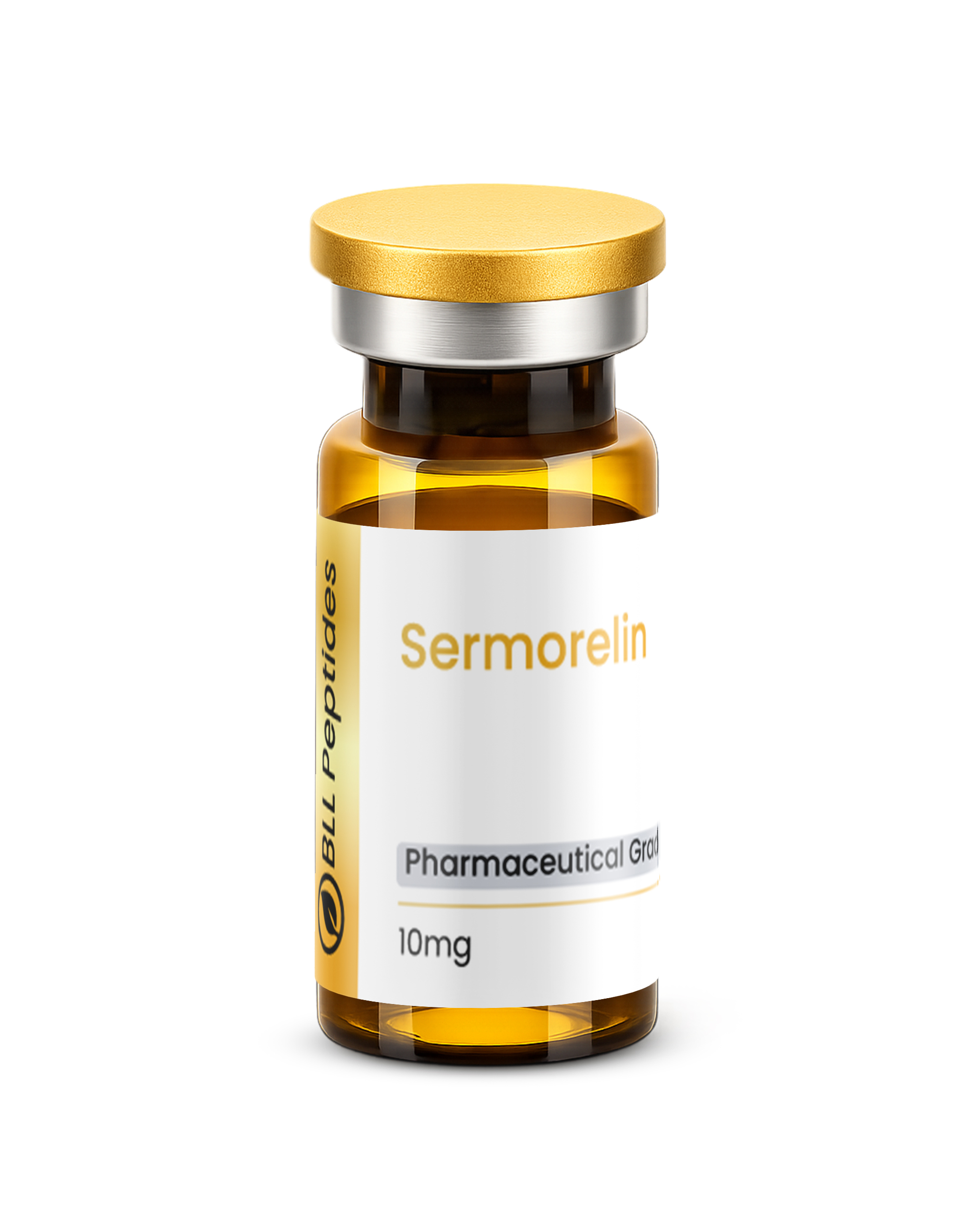
Research-Grade Sermorelin and CJC-1295 at BLL Peptides
BLL Peptides offers research-grade formulations of both GHRH analogs for qualified researchers:
Conclusion
Sermorelin and CJC-1295 represent two distinct approaches to GHRH receptor stimulation in research — one physiologic and pulsatile, the other sustained and continuous. The choice between them depends on specific research objectives. Both have well-documented receptor mechanisms and are supported by published preclinical and clinical study data. Researchers should consult the primary literature and source only verified, high-purity compounds for their investigations.
Further Reading
- Ipamorelin vs GHRP-6: Two Growth Hormone Secretagogues Compared
- Athletic Performance & Recovery: A Complete Guide to Peptides
About the Author: Dr. James is a board-certified neurosurgeon trained at Yale University and medical advisor to BLL Peptides.
Related Research
- CJC-1295: What Research Reveals About This Growth Hormone Releasing Hormone Analog
- Ipamorelin vs GHRP-6: Two Growth Hormone Secretagogues Compared
- Athletic Performance & Recovery: A Complete Guide to Peptides
- Research-grade Sermorelin at BLL Peptides
Research Disclaimer: All content on this page is intended for informational and educational purposes only. Sermorelin and CJC-1295 are research compounds and are not approved by the FDA for use outside of specific clinical contexts. This article does not constitute medical advice. All research must comply with applicable laws and institutional review protocols.