
Ipamorelin vs GHRP-6: Two Growth Hormone Secretagogues Compared
·

Introduction
The growth hormone secretagogue class is not uniform, and the differences between compounds in it carry real experimental significance. Ipamorelin is a third-generation GH secretagogue designed specifically to eliminate the cortisol and prolactin elevation seen with earlier compounds like GHRP-6 — it achieves this through receptor subtype selectivity that was mapped out in the mid-1990s by Novo Nordisk’s research group. GHRP-6, by contrast, acts on GHSR-1a with less discrimination, producing a GH pulse alongside measurable increases in cortisol and ghrelin-mediated appetite stimulation. For researchers designing experiments that isolate GH axis effects, that selectivity difference is not a minor footnote — it determines which confounding variables enter the data. This review works through both compounds with that methodological context in view.
| Feature | Ipamorelin | GHRP-6 |
|---|---|---|
| Class | Pentapeptide GHS | Hexapeptide GHS |
| GHS-R1a Selectivity | Highly selective | Less selective (ACTH, cortisol effects) |
| GH Pulse Characteristics | Clean, selective GH pulse | Strong GH pulse, broader hormonal response |
| Cortisol/ACTH Effect | Minimal to none in research | Notable elevation observed |
| Appetite Stimulation | Minimal in research models | Significant (ghrelin-like effects) |
| Combination Research | Widely studied with CJC-1295 | Studied with GHRH peptides |
Ipamorelin Overview
Ipamorelin is a synthetic pentapeptide and selective agonist of the growth hormone secretagogue receptor (GHS-R1a). Developed in the late 1990s, it was designed to provide clean GH stimulation with minimal effects on other pituitary hormones. Research has consistently highlighted Ipamorelin’s exceptional selectivity: unlike earlier GHSs, it does not significantly elevate ACTH, cortisol, prolactin, or LH at GH-stimulating doses in animal models.
The GH pulse produced by Ipamorelin is characterized by a sharp, discrete peak that closely resembles physiological pulsatile secretion. This makes Ipamorelin particularly useful in research designs where isolated somatotropic axis stimulation is desired without confounding neuroendocrine effects. It has been studied extensively in combination with CJC-1295 (no DAC), where their synergistic effects on GH amplitude have been well-documented.
GHRP-6 Overview
GHRP-6 (Growth Hormone Releasing Peptide-6) is a synthetic hexapeptide that was among the first GHSs developed and remains one of the most studied. Like Ipamorelin, it binds to GHS-R1a, but with less selectivity — studies have documented concurrent elevations in ACTH and cortisol following GHRP-6 administration, as well as significant appetite stimulation due to its structural similarity to ghrelin.
Despite its broader hormonal footprint, GHRP-6 produces robust GH pulses in research models and has been studied across a wide range of applications including body composition, wound healing, and cardioprotection. Its effects on appetite and GI motility are attributable to ghrelin receptor stimulation in the hypothalamus and enteric nervous system — pathways that have themselves become subjects of independent research interest.
Head-to-Head Comparison
The selectivity gap between Ipamorelin and GHRP-6 is the most clinically and scientifically significant distinction between the two compounds. Ipamorelin’s inability to significantly stimulate cortisol or ACTH release makes it the preferred GHS in research models where stress hormone confounders must be minimized. GHRP-6’s broader activation profile, while potentially limiting in some designs, may be advantageous in research specifically targeting appetite regulation, gut motility, or multi-hormonal interactions.
From a GH pulse standpoint, both peptides produce measurable, dose-dependent GH responses. GHRP-6 may produce somewhat larger pulses in some model systems, but the cleaner hormonal profile of Ipamorelin typically makes it the preferred GHS in contemporary research protocols where data interpretation clarity is paramount.
Research Findings
A landmark study by Raun et al. (1998) established Ipamorelin’s selectivity profile, demonstrating that unlike GHRP-6 and GHRP-2, it did not significantly elevate cortisol, ACTH, or prolactin at doses producing robust GH secretion. This finding positioned Ipamorelin as a benchmark for GHS selectivity research.
GHRP-6 research has produced interesting findings outside the traditional somatotropic axis. Studies in cardiac ischemia models have suggested potential cytoprotective properties, and its effects on GI function have been explored in motility disorder models. The appetite-stimulating properties of GHRP-6 have also made it a useful research tool in cachexia and metabolic wasting models.
Importantly, GHRP-6 is not currently available in the BLL Peptides research catalog. Researchers interested in the GHS-R1a agonist class currently have access to Ipamorelin as the primary compound in this category.
Research-Grade Ipamorelin at BLL Peptides
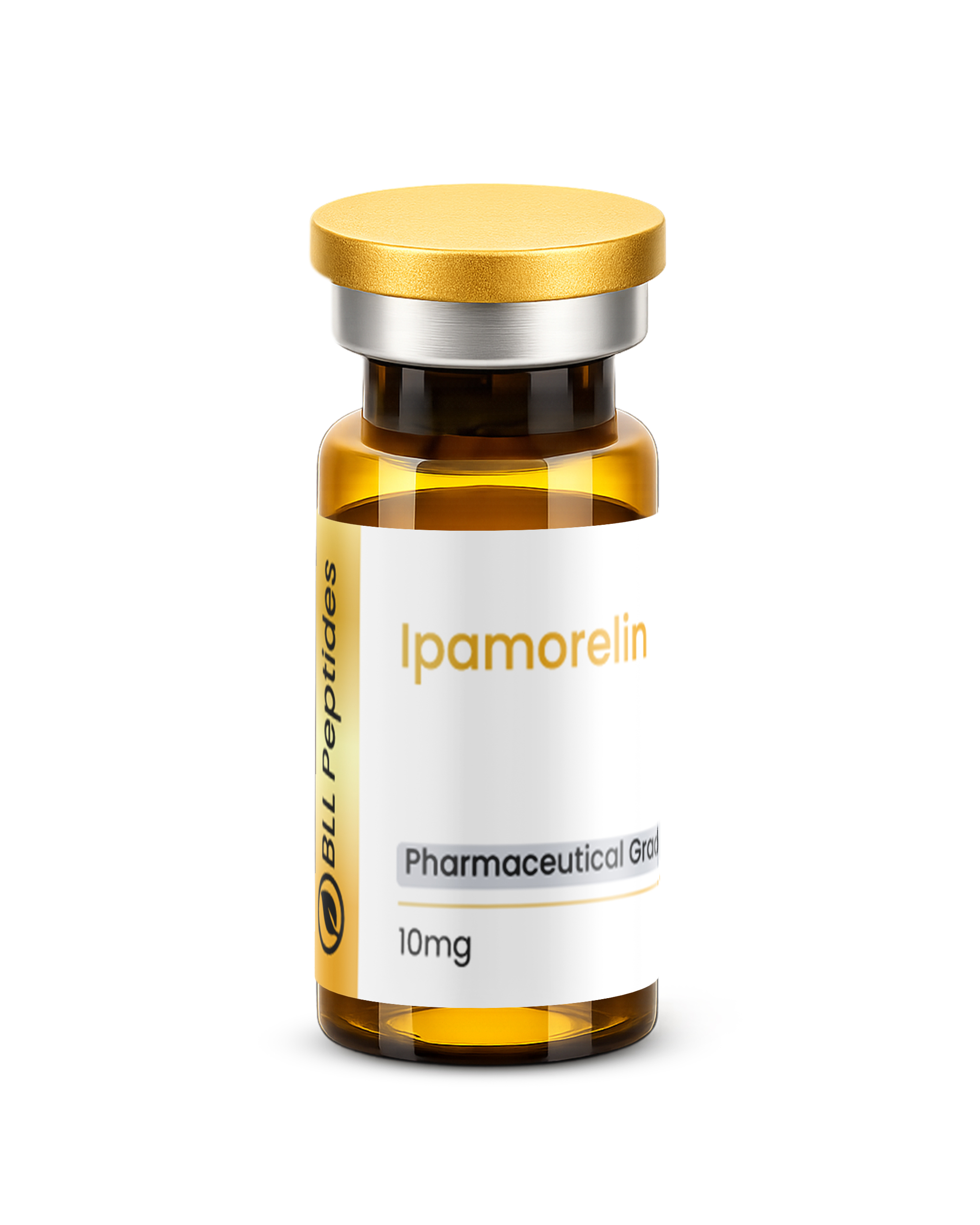
For researchers studying growth hormone secretagogues, BLL Peptides offers research-grade Ipamorelin:
Note: GHRP-6 is not currently available in our research catalog. Please check back for catalog updates.
Conclusion
Ipamorelin and GHRP-6 represent two generations of GHS peptide research, with Ipamorelin’s superior selectivity profile making it the preferred compound in most contemporary research designs requiring isolated somatotropic stimulation. GHRP-6’s broader pharmacological footprint, while a liability in some contexts, provides unique research value in appetite, GI, and cardioprotection models. Researchers should select compounds based on specific study objectives and the known receptor selectivity profiles of each peptide.
Further Reading
- Sermorelin vs CJC-1295: Comparing Two GHRH Analogs in Research
- Athletic Performance & Recovery: A Complete Guide to Peptides
About the Author: Dr. James is a board-certified neurosurgeon trained at Yale University and medical advisor to BLL Peptides.
Related Research
- CJC-1295: What Research Reveals About This Growth Hormone Releasing Hormone Analog
- Sermorelin vs CJC-1295: Comparing Two GHRH Analogs in Research
- Athletic Performance & Recovery: A Complete Guide to Peptides
- Research-grade Ipamorelin at BLL Peptides
Research Disclaimer: All content on this page is intended for informational and educational purposes only. Ipamorelin and GHRP-6 are research compounds not approved by the FDA for human use. This article does not constitute medical advice. All research use must comply with applicable laws, ethical guidelines, and institutional protocols.