
Retatrutide: Inside the Research on a Triple Hormone Receptor Agonist
·

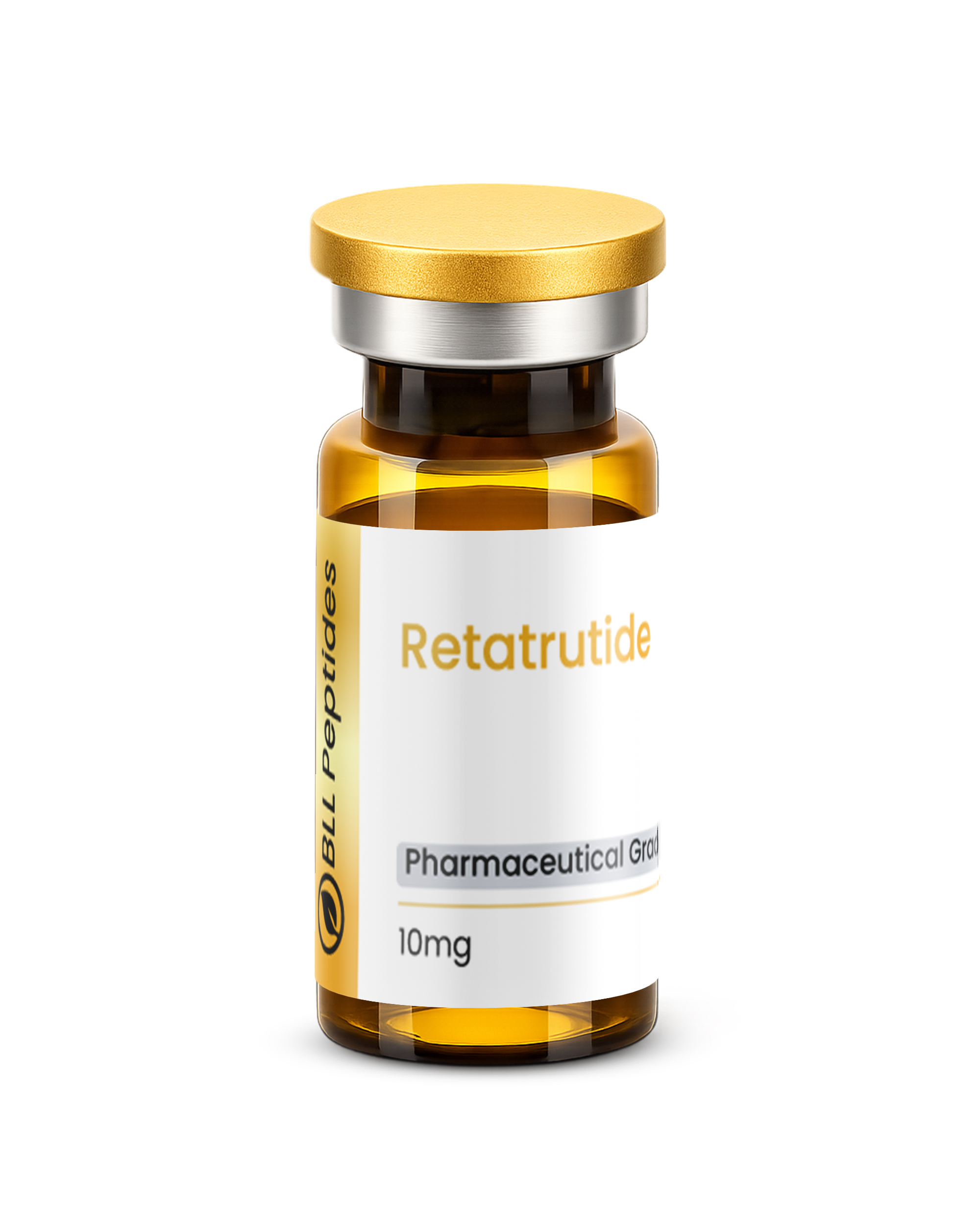
The GLP-1 receptor agonist class transformed metabolic medicine, but the limiting factor was always the ceiling on weight reduction and glycemic control achievable through a single receptor. Retatrutide was designed to test whether adding GIP and glucagon receptor co-agonism could push past that ceiling, and the phase 2 data published in the New England Journal of Medicine in 2023 produced some of the largest weight loss numbers reported in any pharmacological obesity trial. The triple receptor mechanism creates distinct metabolic effects at each axis: GLP-1 for satiety and gastric motility, GIP for potentiating insulin secretion, and glucagon for driving hepatic glucose output and thermogenesis. Understanding how those three signals interact is the central scientific question this review addresses.
What Is Retatrutide?
Retatrutide (also designated LY3437943) is a synthetic peptide developed as a triple agonist at three distinct hormone receptors: the glucose-dependent insulinotropic polypeptide (GIP) receptor, the glucagon-like peptide-1 (GLP-1) receptor, and the glucagon receptor. This positions it in a different mechanistic category from dual agonists like tirzepatide (GIP/GLP-1) or monoagonists like semaglutide (GLP-1 only).
The logic behind triple agonism is straightforward in theory: each receptor axis contributes to energy balance through distinct but complementary pathways. GLP-1 receptor activation suppresses appetite and slows gastric emptying. GIP receptor activation appears to modulate fat deposition and enhance insulin sensitivity. Glucagon receptor activation increases hepatic glucose output and energy expenditure. Combining all three into a single molecule is a genuinely novel pharmacological strategy.
Mechanisms Under Investigation
Preclinical research helped establish the rationale for this approach. In rodent models, triple agonism showed additive effects on body weight reduction and metabolic markers that exceeded what was observed with dual or single receptor targeting alone. Glucagon receptor activation, which might seem counterintuitive given its role in glucose elevation, appears to drive thermogenesis and lipolysis in ways that complement rather than oppose the GLP-1 and GIP axes when all three are co-activated.
From a neurological perspective — my specialty — there is also emerging interest in how GLP-1 and related receptors function in the central nervous system. GLP-1 receptors are expressed in hypothalamic nuclei involved in appetite regulation, as well as in reward-related circuits. Whether triple agonism meaningfully engages these central pathways differently than dual agonism is an active area of investigation.
Retatrutide is a long-acting molecule, engineered for extended half-life through fatty acid conjugation — similar to the design strategy used in semaglutide. This allows for once-weekly administration in human study designs, which is practically significant for research compliance and potential real-world utility.
Key Research Findings
The Phase 2 clinical data for retatrutide, published in The New England Journal of Medicine in 2023, drew significant attention from the research community. The trial enrolled adults with obesity and evaluated multiple dose cohorts over 48 weeks.
Key findings from that research included:
- Body weight reduction: Participants in the highest dose cohort achieved mean body weight reductions in the range of 17–24% from baseline — numbers that were notably higher than those reported in comparable Phase 2 trials for other agents in this class.
- Metabolic markers: Reductions in fasting insulin, HOMA-IR (a measure of insulin resistance), triglycerides, and waist circumference were observed across dose groups.
- Hepatic fat: MRI-based assessments in a substudy suggested meaningful reductions in liver fat content, which is relevant to the growing research focus on non-alcoholic fatty liver disease (NAFLD) and its metabolic co-morbidities.
- Tolerability profile: Gastrointestinal adverse events — nausea, vomiting, diarrhea — were the most frequently reported, consistent with the class effect seen with GLP-1-based compounds. These were generally dose-dependent and transient.
It is worth noting that Phase 2 data, while promising, is inherently limited in scope. Larger, longer Phase 3 trials are necessary to characterize efficacy, safety, and tolerability in broader populations. As of this writing, Phase 3 investigation is ongoing.
The glucagon receptor component adds complexity to long-term safety analysis. Glucagon agonism raises theoretical questions about bone density (glucagon receptors are expressed in osteoblasts), cardiovascular effects, and potential effects on hepatic glycogen. These are among the variables being tracked in ongoing research.
Research-Grade Retatrutide at BLL Peptides
For researchers studying triple receptor agonism, metabolic peptide pharmacology, or the comparative biology of incretin-class compounds, BLL Peptides offers high-purity retatrutide and related peptides for laboratory use:
- — research-grade retatrutide for in vitro and preclinical applications
- — GIP/GLP-1 dual agonist for comparative research
- — GLP-1 monoagonist for receptor pathway studies
All products are manufactured under GMP-compliant conditions and are supplied strictly for research purposes.
Further Reading
- Tirzepatide vs Semaglutide: What the Current Research Shows
- Athletic Performance & Recovery: A Complete Guide to Peptides
Related Research
- Tirzepatide vs Semaglutide: What the Current Research Shows
- NAD+ vs NMN: Understanding the Research on Nicotinamide Pathways
- Anti-Aging & Longevity: A Complete Guide to Peptides and Compounds
- Research-grade Retatrutide at BLL Peptides
This content is intended for research purposes only. BLL Peptides products are not intended for human consumption.
About the Author: Dr. James is a board-certified neurosurgeon trained at Yale University and medical advisor to BLL Peptides.