
SS-31: Mitochondrial Protection Research and the Science of Cardiolipin Targeting
·

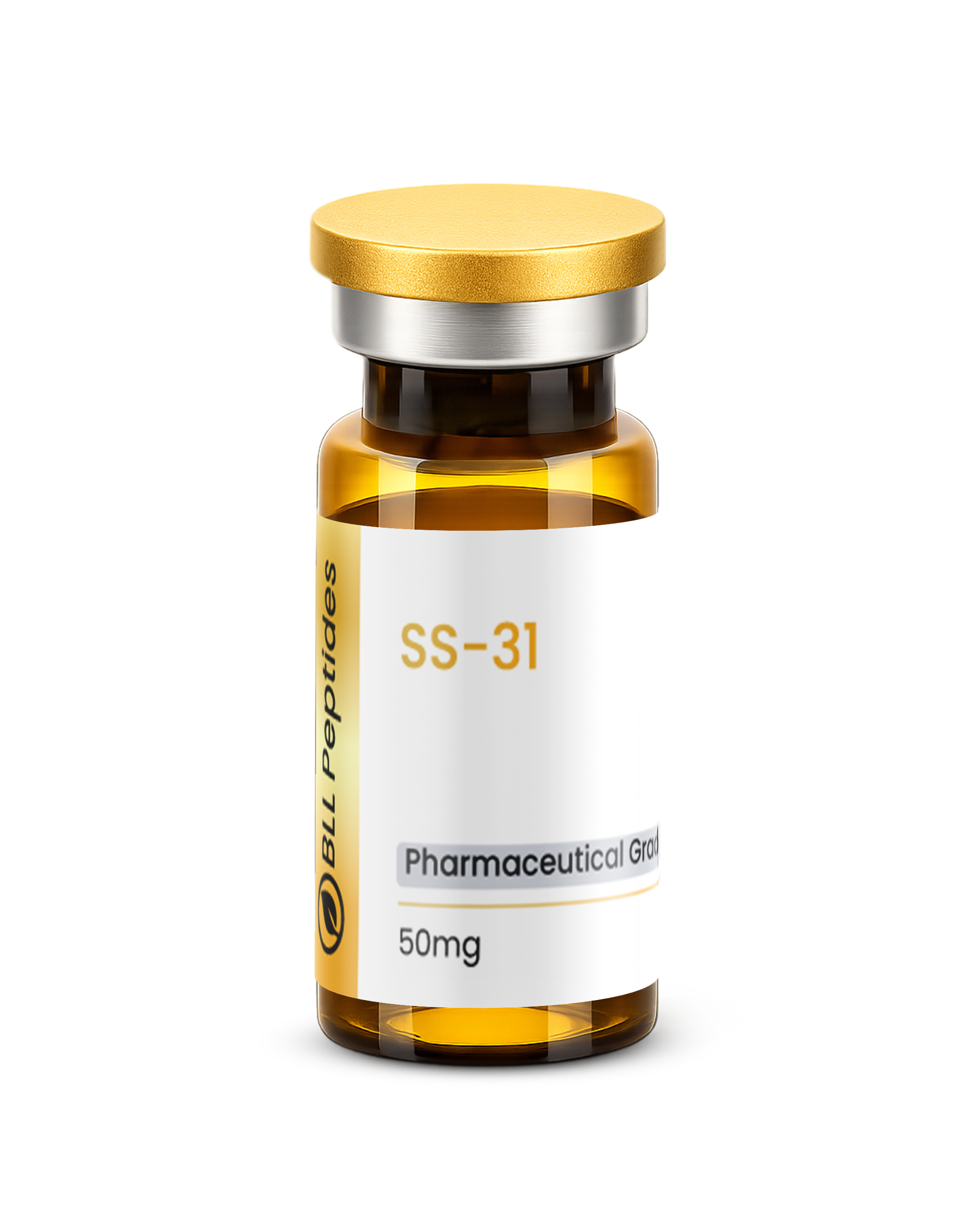
The mitochondrial inner membrane is one of the most selectively permeable structures in human biology, and SS-31 exploits this specificity in a way that most peptide researchers find worth studying closely. Unlike compounds that bind to surface receptors, SS-31 targets cardiolipin — a phospholipid concentrated almost exclusively in the inner mitochondrial membrane — stabilizing it against oxidative damage and preserving the electrochemical gradient essential for ATP production. My interest in this peptide stems from its neurological implications: neurons are among the most metabolically demanding cells in the body, and mitochondrial dysfunction is increasingly recognized as a driver of neurodegenerative pathology. What the preclinical literature reveals about SS-31 is both mechanistically specific and, in some respects, clinically suggestive.
What Is SS-31?
SS-31 (also known as Elamipretide, MTP-131, or Bendavia) is a synthetic tetrapeptide with the sequence D-Arg-Dmt-Lys-Phe-NH₂. The “SS” designation comes from the Szeto-Schiller peptide family, named after the researchers who developed this class of mitochondria-targeted compounds. What distinguishes SS-31 from other research peptides is its ability to selectively concentrate within the inner mitochondrial membrane — a property driven by the alternating aromatic and basic amino acids in its structure.
The compound was developed initially to study mitochondrial dysfunction in the context of ischemia-reperfusion injury, a pathological process in which tissues suffer damage not only during oxygen deprivation but also — paradoxically — when blood flow is restored. This phenomenon is well-established in cardiac and neurological contexts, and the role of mitochondrial dysfunction in driving that injury has made compounds like SS-31 valuable research tools for investigators studying oxidative stress and energy metabolism.
Mechanisms of Action: Cardiolipin Targeting and Electron Transport
The mechanistic profile of SS-31 centers on its interaction with cardiolipin — a unique phospholipid found almost exclusively in the inner mitochondrial membrane. Cardiolipin serves as a structural scaffold for the electron transport chain (ETC) complexes, particularly Complexes I, III, IV, and the ATP synthase. Under normal conditions, cardiolipin maintains the supramolecular organization of these complexes — what researchers call respirasomes or supercomplexes — which are critical for efficient electron transfer and ATP production.
When cells undergo oxidative stress, ischemic injury, or aging-related damage, cardiolipin is particularly vulnerable. Peroxidation of cardiolipin disrupts supercomplex architecture, slows electron transport, increases electron leak, and shifts mitochondrial metabolism toward reactive oxygen species (ROS) production rather than ATP synthesis. The result is a feed-forward cycle of oxidative damage that can precipitate cell death.
SS-31’s aromatic-cationic structure allows it to bind directly to cardiolipin. Preclinical research suggests this interaction may:
- Stabilize cardiolipin against peroxidation — acting as a structural protector within the membrane rather than a conventional antioxidant scavenger
- Restore electron transport chain efficiency — by preserving the organization of ETC supercomplexes dependent on intact cardiolipin
- Reduce ROS generation — by tightening electron coupling and reducing electron leak at Complexes I and III
- Support cytochrome c retention — cardiolipin normally anchors cytochrome c to the inner membrane; when oxidized, it releases cytochrome c into the cytosol, initiating apoptosis. SS-31 may modulate this release under stress conditions
This mechanism distinguishes SS-31 from general antioxidants. Rather than scavenging ROS after they form, the proposed mechanism involves stabilizing the primary site of ROS generation within the mitochondria — a fundamentally different approach to studying oxidative stress biology.
Research Overview: Ischemia, Aging, and Neurological Models
Cardiac and Renal Ischemia-Reperfusion Research: The bulk of SS-31 preclinical research has been conducted in cardiac and renal ischemia-reperfusion models. Studies in rodents and larger animal models documented significant reductions in infarct size, improved cardiac function metrics, and reduced markers of oxidative damage following SS-31 treatment. These findings have been replicated across multiple independent laboratories and form the strongest preclinical evidence base for the compound.
Skeletal Muscle and Aging Research: A growing body of work has examined SS-31 in skeletal muscle aging models. Studies in aged rodents reported improvements in mitochondrial respiration, reduced oxidative damage in muscle fibers, and preserved muscle force generation in SS-31-treated animals compared to controls. This line of research connects to the biology of sarcopenia — age-related muscle loss — and has generated interest from investigators studying interventions targeting mitochondrial dysfunction in muscle aging models.
Neurological Models: The CNS research on SS-31 is particularly compelling from a neurosurgical perspective. Preclinical studies have examined the compound in models of traumatic brain injury, spinal cord injury, and neurodegenerative disease. In rodent TBI models, SS-31 treatment has been associated with reduced neuronal loss, decreased neuroinflammation markers, and improved behavioral outcomes. Studies in Alzheimer’s disease models have noted SS-31’s effects on synaptic mitochondria — a particularly relevant target, as synaptic mitochondria are among the first structures to show dysfunction in early-stage neurodegeneration. The intersection of mitochondrial biology and neuronal survival is precisely the kind of mechanism that deserves sustained scientific attention.
Aging and Longevity Research: Investigators studying the biology of cellular aging have used SS-31 as a research tool to probe the causal role of mitochondrial dysfunction in aging phenotypes. Studies in naturally aged mice showed that SS-31 treatment was associated with improved mitochondrial respiration in multiple tissues, reduced systemic oxidative stress markers, and in some paradigms, improvements in physical function measures. These findings have positioned SS-31 as a useful investigational tool for researchers examining mitochondrial contributions to the aging process at a cellular and systems level.
Key Findings from the Research Literature
Reviewing the SS-31 preclinical literature, several consistent themes emerge:
- Cardiolipin protection: Direct binding to cardiolipin with documented protection against peroxidative damage across multiple cell and tissue models
- ETC supercomplex stabilization: Preservation of respiratory supercomplex organization under oxidative stress conditions, with improved electron transport efficiency
- Ischemia-reperfusion protection: Reduced infarct size and improved functional recovery in cardiac and renal ischemia models across independent laboratories
- Neurological protection: Reduced neuronal loss and improved behavioral outcomes in TBI and neurodegeneration preclinical models
- Muscle aging effects: Improved mitochondrial respiration and preserved contractile function in aged rodent skeletal muscle models
- ROS reduction: Decreased oxidative stress markers across multiple tissue types and experimental model systems
It is essential to emphasize that the vast majority of SS-31 research remains preclinical. While Phase II clinical studies have been conducted in some cardiovascular contexts, the broader research literature continues to evolve, and preclinical findings do not directly establish clinical applications. Researchers using SS-31 work within controlled laboratory contexts designed to advance understanding of mitochondrial biology, cardiolipin chemistry, and oxidative stress pathways — not for human therapeutic use.
Research-Grade SS-31 at BLL Peptides
For investigators studying mitochondrial biology, ischemia-reperfusion injury, neurodegeneration models, or cellular aging, BLL Peptides offers research-grade SS-31 manufactured under GMP-certified conditions in the USA:
- SS-31 50mg / 3mL — Research-grade Elamipretide tetrapeptide for laboratory and preclinical research applications
All BLL Peptides products are USA-manufactured and third-party tested for purity and consistency, meeting the quality standards that rigorous preclinical research demands.
Conclusion
SS-31 occupies a genuinely distinctive position in the peptide research landscape. The mechanistic specificity — targeting cardiolipin within the inner mitochondrial membrane rather than acting as a general antioxidant scavenger — gives it scientific coherence that many compounds lack. For researchers studying the upstream drivers of oxidative injury in ischemia, neurodegeneration, or aging, the ability to probe cardiolipin biology with a well-characterized research tool is scientifically meaningful.
From my perspective in neurosurgery, where ischemic injury and mitochondrial dysfunction in neurons represent central unsolved problems, the SS-31 research literature is worth following closely. The consistency of ischemia-reperfusion findings across independent labs — and the emerging neurological data — make this a compound that serious investigators in mitochondrial biology and neuroprotection research should have on their radar.
Dr. James is a board-certified neurosurgeon trained at Yale University and medical advisor to BLL Peptides.
Related Research
- NAD+ and Mitochondrial Function: What the Research Reveals
- Epithalon and Telomere Research: What Science Reveals About This Tetrapeptide Bioregulator
- Energy & Cellular Health: A Complete Guide to NAD+ Optimization
- Research-grade SS-31 at BLL Peptides
This content is intended for research purposes only. BLL Peptides products are not intended for human consumption.