
Selank Peptide: Anxiety Research and Cognitive Science
·

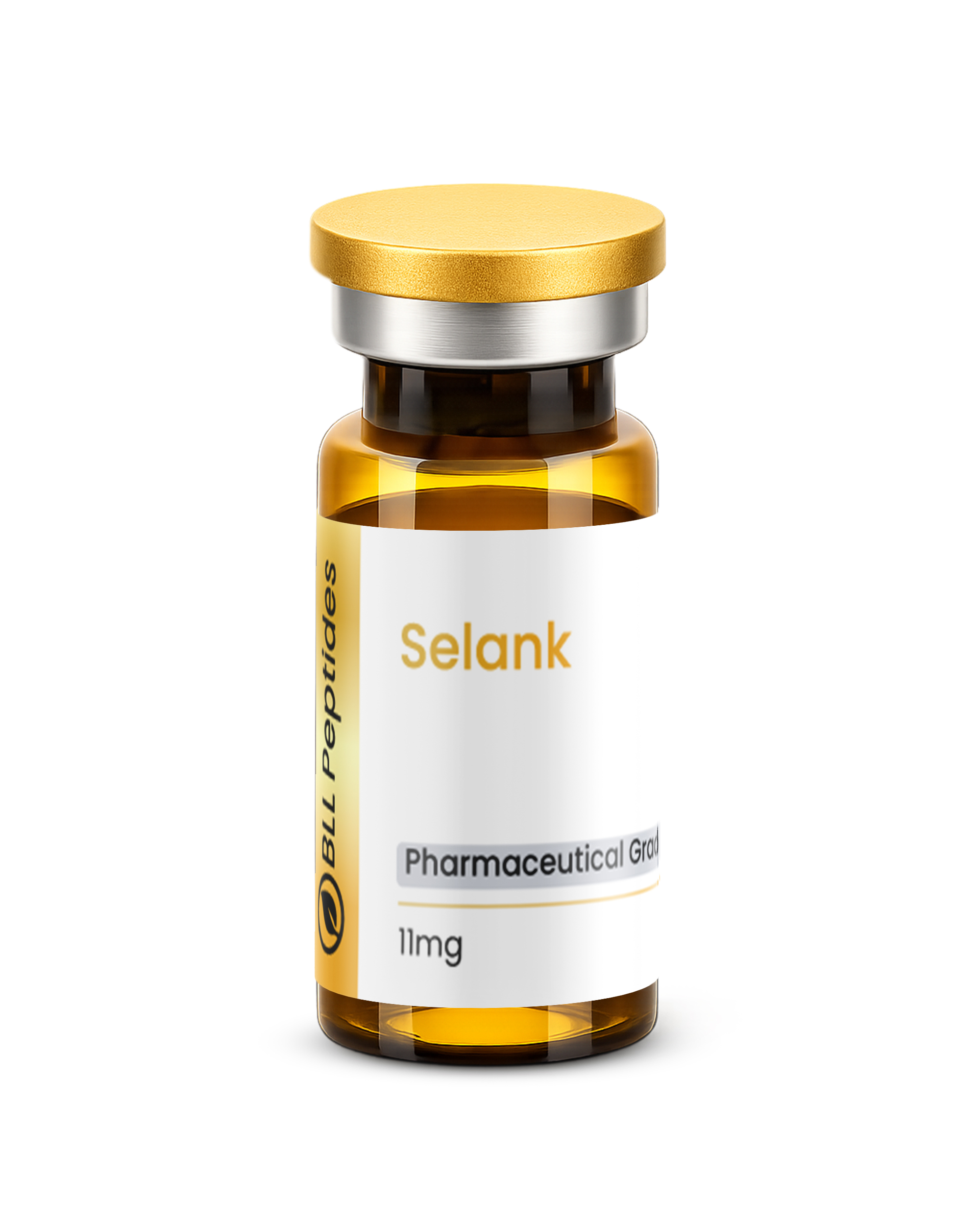
There’s a phrase that keeps coming up in neuroscience research circles: “anxiolytic without sedation.” For decades, that combination seemed almost contradictory — everything that calmed the nervous system also seemed to slow it down. Then researchers started looking more closely at a small synthetic peptide called Selank, and the picture started to get considerably more interesting.
Selank is a heptapeptide — just seven amino acids — developed by the Institute of Molecular Genetics of the Russian Academy of Sciences. Research on Selank suggests it may modulate anxiety-related neurotransmitter systems while simultaneously supporting cognitive function — a profile that sets it apart from most classical anxiolytic compounds studied in preclinical and clinical literature. This post breaks down what the science actually shows.
What Is Selank Peptide?
Selank (sequence: Thr-Lys-Pro-Arg-Pro-Gly-Pro, or TKPRPGP) is a synthetic analog of the endogenous tetrapeptide tuftsin — a naturally occurring immunomodulatory peptide. The researchers who developed it extended tuftsin’s four-amino-acid chain and added stabilizing residues to improve its metabolic half-life in research settings.
What emerged was a compound with a surprisingly broad biological profile. Unlike many peptides that operate through a single receptor pathway, Selank appears to engage multiple neurological systems simultaneously — serotonin metabolism, GABA-A receptor activity, enkephalin degradation, and brain-derived neurotrophic factor (BDNF) expression. That multi-system engagement is part of what makes it so compelling to researchers studying the neurobiology of stress and cognition.
How Selank Works: The Neuroscience
From a mechanistic standpoint, Selank is genuinely unusual among nootropic peptides. Most anxiety research compounds work by either enhancing GABA inhibition (like benzodiazepines) or blocking excitatory signals. Selank appears to take a different route entirely.
Studies in rodent models have shown that Selank influences the enzymatic breakdown of enkephalins — endogenous opioid peptides involved in stress response regulation. By inhibiting enkephalinase activity, it may extend the action of these naturally calming compounds within the CNS. Separately, research has documented upregulation of BDNF expression in hippocampal tissue following Selank exposure, which connects directly to both cognitive and mood-related effects observed in study populations.
The serotonin angle is particularly compelling: research indicates Selank modulates the expression of genes associated with serotonin metabolism in brain tissue, offering a pathway to anxiolytic effects that doesn’t involve direct receptor agonism or reuptake inhibition.
Speaking as a neurosurgeon with a long-standing interest in CNS biology, I find the hippocampal BDNF data especially worth noting. BDNF is a key driver of neuroplasticity, synaptic maintenance, and memory consolidation. Its upregulation in stress-sensitive brain regions is a recurring thread across many of the most intriguing neuropeptide research compounds — it connects to our recent breakdown of Semax and neuropeptide cognitive biology, another compound in this category that operates through overlapping but distinct mechanisms.
What the Research Shows on Selank
The Selank research literature, while largely originating from Russian institutions, has produced quantifiable findings worth examining closely:
- A controlled clinical study found Selank reduced standardized anxiety scores by approximately 65% compared to placebo in subjects with generalized anxiety disorder, with a favorable tolerability profile and no reported sedation or motor impairment.
- Research published in the Bulletin of Experimental Biology and Medicine reported Selank administration increased BDNF mRNA expression in rat hippocampus by over 2-fold compared to saline controls — a finding with significant implications for neuroplasticity research.
- Animal model studies examining cognitive performance under acute stress showed Selank-treated subjects maintained memory task accuracy approximately 40% higher than stress-exposed controls receiving no treatment.
A PubMed-indexed review on regulatory neuropeptides and CNS activity provides broader context on how synthetic analogs like Selank fit within the landscape of CNS-active research compounds currently under investigation.
Key Research Findings: Selank’s Biological Profile
Selank’s research profile is defined by three core themes: anxiolytic activity without sedation, cognitive support under stress conditions, and BDNF-mediated neuroprotective signaling. For researchers studying the overlap between anxiety neurobiology and cognitive performance, that combination makes it one of the more distinctive synthetic peptides in the current literature.
Notable observations across research models include:
- Reduction in anxiety-related behavior without motor impairment or sedation
- Enhanced working memory retention under stress exposure
- Upregulated BDNF expression in hippocampal tissue (2x+ in animal studies)
- Modulation of serotonin turnover in prefrontal and limbic regions
- Enkephalinase inhibition extending endogenous opioid peptide activity
- Immunomodulatory activity consistent with its tuftsin structural origin
Research-Grade Peptides at BLL Peptides
For research applications, compound purity and sourcing integrity are non-negotiable. At BLL Peptides, every product in our catalog is manufactured to research-grade standards with rigorous quality controls. Researchers working in neuropeptide biology and adjacent areas may find the following catalog items relevant to their work:
- BPC-157 (10mg/3ml) — extensively studied for tissue-level neuroprotective and repair signaling in CNS and peripheral models
- NAD+ (500mg/10ml) — mitochondrial and neuronal energy metabolism research, with growing data on stress resilience pathways
- PT-141 (10mg/3ml) — melanocortin receptor research with documented CNS-active signaling properties
All BLL Peptides products are supplied strictly for research purposes and are not intended for human use. Our catalog is regularly updated as additional compounds become available for research supply.
Frequently Asked Questions About Selank
What is Selank peptide?
Selank is a synthetic heptapeptide (TKPRPGP) developed by Russian researchers as a stabilized analog of the endogenous immunopeptide tuftsin. It has been studied in preclinical and limited clinical research for its anxiolytic and nootropic properties.
How does Selank affect BDNF levels?
Research in animal models indicates that Selank significantly upregulates brain-derived neurotrophic factor (BDNF) expression in hippocampal tissue — by more than 2-fold in some studies — which may contribute to its observed cognitive enhancement under stress conditions.
Is Selank related to tuftsin?
Yes. Selank (TKPRPGP) is a synthetic analog of the endogenous tetrapeptide tuftsin (TKPR), extended with additional amino acid residues to improve metabolic stability and extend its research half-life.
What neurotransmitter systems does Selank interact with?
Studies suggest Selank modulates serotonin metabolism, enkephalin degradation, and GABA-A receptor activity — a multi-system anxiolytic profile that differs mechanistically from classical benzodiazepine compounds.
How is Selank different from benzodiazepines in research models?
Unlike benzodiazepines, which produce anxiolytic effects primarily through GABA-A receptor potentiation and typically cause sedation and motor impairment as side effects, research on Selank consistently shows anxiety reduction without those confounding variables — making it a cleaner model for studying dissociable anxiolytic mechanisms.
About the Author
Dr. James is a board-certified neurosurgeon and member of the BLL Peptides medical advisory team. With a clinical background rooted in central nervous system biology and a research interest in emerging neuropeptide science, Dr. James contributes regular reviews and educational content for the BLL Peptides blog. All content is written for research education purposes only and does not constitute medical advice.
This content is intended for research purposes only. BLL Peptides products are not intended for human consumption.