
Epithalon Research: What Scientists Are Discovering About This Telomere-Activating Peptide
·

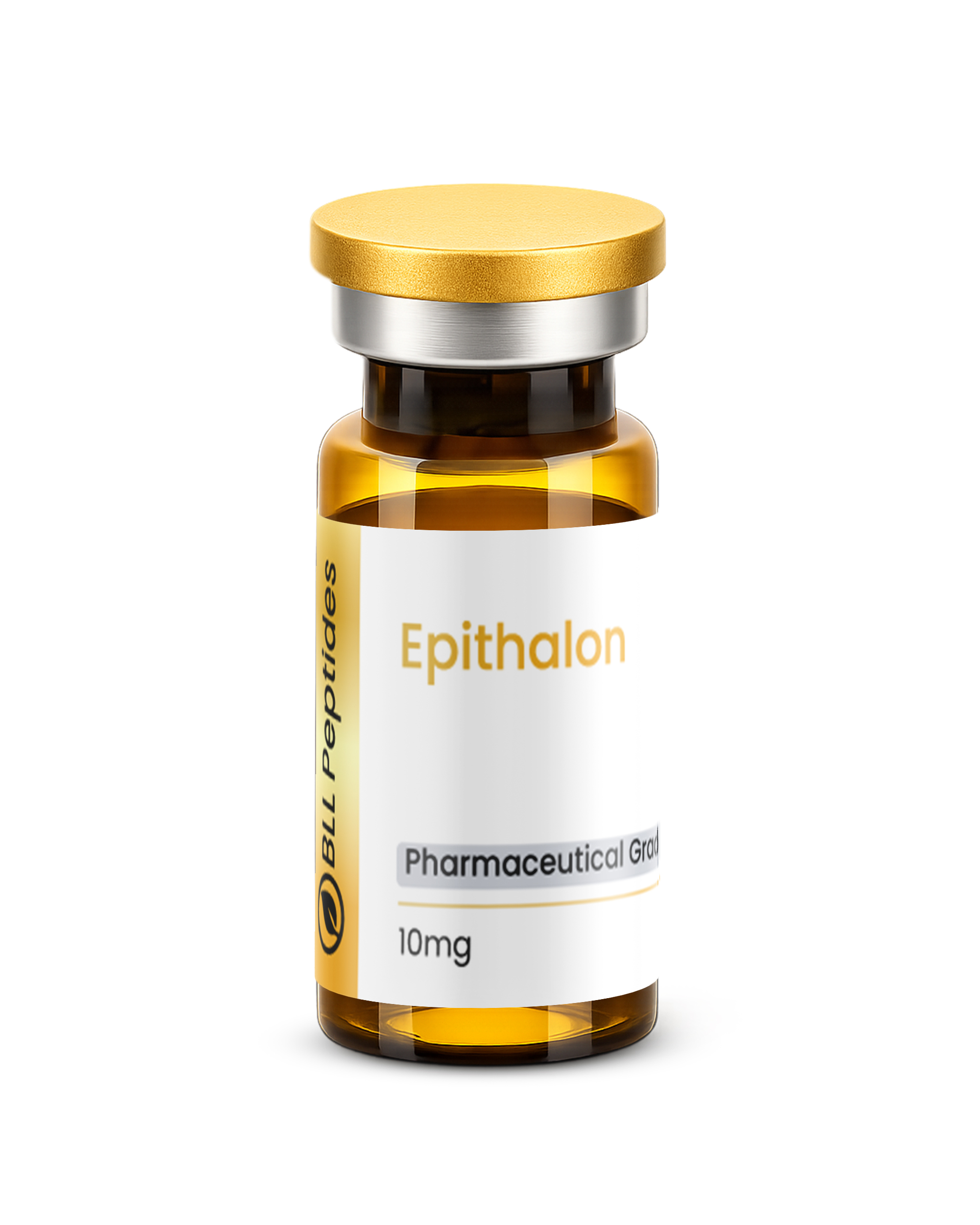
If there’s one question that has quietly defined the outer edge of longevity science over the past thirty years, it’s this: can we do anything about telomeres? As a neurosurgeon who spends a significant amount of time in the aging biology literature, I’ve watched the telomere story evolve from theoretical curiosity to active research frontier — and Epithalon research sits right at the center of it.
Epithalon research centers on a synthetic tetrapeptide (Ala-Glu-Asp-Gly) originally derived from the pineal gland peptide fraction epithalamin. First developed by Russian gerontologist Dr. Vladimir Khavinson, Epithalon has been studied for over three decades — primarily for its proposed ability to activate telomerase, the enzyme responsible for maintaining and potentially extending telomere length in aging cells. The breadth of what researchers have found is, to put it plainly, remarkable.
What Is Epithalon?
Epithalon (also spelled Epitalon) is a synthetic tetrapeptide composed of four amino acids: alanine, glutamic acid, aspartic acid, and glycine (Ala-Glu-Asp-Gly). It was synthesized as an analog of epithalamin — a natural polypeptide extract isolated from the bovine pineal gland — which had itself been studied in Soviet-era research for anti-aging and immunomodulatory properties.
The pineal gland connection matters scientifically. This small neuroendocrine organ — best known for producing melatonin — plays a central regulatory role in circadian rhythms, seasonal hormonal biology, and several aging-related cascades. Researchers have long observed that pineal function declines with age, and Epithalon emerged from efforts to isolate the bioactive component responsible for epithalamin’s observed effects in animal studies. The result was a four-amino-acid peptide small enough to synthesize reliably but apparently potent enough to produce measurable biological effects across multiple organ systems.
How Does Epithalon Work? The Telomerase Mechanism
The primary mechanism studied in Epithalon research involves telomerase activation. Telomeres — the protective caps at the ends of chromosomes — shorten with each cell division. When telomeres reach critically short lengths, cells enter senescence or apoptosis, contributing to the progressive tissue aging phenotype we observe in aging organisms. Telomerase is the enzyme that can add telomeric DNA sequences back onto shortened telomeres, potentially extending a cell’s replicative lifespan.
In vitro research has shown Epithalon can upregulate telomerase activity in human cells. A study published in the Bulletin of Experimental Biology and Medicine found that Epithalon increased telomerase activity and telomere length in human fetal fibroblast cultures — one of the first reports linking a short synthetic peptide to measurable telomerase induction. This finding positioned Epithalon as a genuinely unusual research tool in the longevity space.
Beyond telomerase, Epithalon research has examined several related mechanisms:
- Melatonin regulation: Studies in aged animals show Epithalon can restore pineal melatonin secretion toward more youthful circadian patterns — a finding with implications for oxidative stress management, sleep regulation, and immune timing.
- Antioxidant signaling: Epithalon has demonstrated antioxidant activity in preclinical models, reducing oxidative damage markers in aging tissues — consistent with telomere-protective biology.
- Tumor suppressor gene expression: Some research has examined Epithalon’s influence on gene expression patterns associated with oncogenesis and cellular senescence, with observed upregulation of p53 activity in some models.
What the Epithalon Research Shows
Much of the primary Epithalon literature comes from the Institute of Bioregulation and Gerontology in St. Petersburg — the institute founded by Dr. Khavinson. While this concentration has appropriately drawn calls for independent replication, the body of work is substantial and mechanistically coherent across multiple study types.
Key findings across the Epithalon literature include:
- In rat and fruit fly models, Epithalon treatment was associated with mean lifespan extensions of 13–33% versus controls — among the more striking longevity findings reported for any peptide in animal research.
- In vitro studies on human somatic cells demonstrated telomere elongation and extended cell division capacity in Epithalon-treated cultures compared to controls.
- In aged female rats, Epithalon restored estrous cyclicity and normalized reproductive hormonal markers — suggesting effects on the hypothalamic-pituitary-gonadal axis extending beyond simple telomerase activation.
- Retinal photoreceptor studies found Epithalon preserved retinal architecture in aging and degenerating retinas in rodent models — a finding of particular interest given the retina’s direct relationship to central nervous system aging.
Key Research Findings
“Epithalon’s ability to activate telomerase in human somatic cells — documented in peer-reviewed literature — makes it one of the most pharmacologically specific tools available to aging researchers studying the telomere hypothesis.”
As a neurosurgeon, I find the retinal and CNS implications particularly compelling. The retina is neurological tissue — essentially a direct extension of the brain — and the finding that a four-amino-acid peptide appears to preserve photoreceptor architecture in aging models is worth following closely in future research.
“The convergence of telomerase activation, melatonin restoration, and antioxidant signaling in a single tetrapeptide is unusual in the peptide literature — and explains why Epithalon remains an active area of geroscience inquiry.”
It’s also worth acknowledging Epithalon’s relatively clean preclinical safety profile across decades of animal research. For a compound with this breadth of proposed mechanisms, the absence of significant toxicity signals in the literature is notable — though it remains an unclassified research compound outside clinical contexts.
“For researchers working at the intersection of telomere biology, neuroendocrine aging, and longevity science, Epithalon offers one of the most coherent mechanistic stories in the peptide research space.”
Explore Related Research Compounds at BLL Peptides
Researchers studying longevity and cellular aging often examine Epithalon alongside compounds targeting energy metabolism, cellular repair, and mitochondrial function. BLL Peptides carries several related research compounds for licensed research use:
- NAD+ (500mg/10ml) — Studied extensively for sirtuin activation, mitochondrial function, and DNA repair — key adjacent pathways in cellular aging research. See our full NAD+ research breakdown for mechanistic context.
- BPC-157 (10mg/3ml) — Researched for tissue regeneration, cytoprotection, and gut-brain axis mechanisms
- TB-500 (10mg/3ml) — Thymosin Beta-4 analog, studied for tissue remodeling and angiogenesis pathways
All BLL Peptides products are USA manufactured and GMP-certified, supplied for research purposes only.
Frequently Asked Questions About Epithalon Research
What is Epithalon made of?
Epithalon is a synthetic tetrapeptide composed of four amino acids: alanine, glutamic acid, aspartic acid, and glycine (Ala-Glu-Asp-Gly). It was developed as a synthetic analog of epithalamin, a natural polypeptide isolated from bovine pineal gland tissue and studied originally in Soviet-era gerontology research.
How does Epithalon relate to telomeres and aging?
In vitro research published in peer-reviewed journals has shown Epithalon can activate telomerase — the enzyme responsible for adding protective DNA sequences to chromosome ends — in human somatic cell cultures. Treated cells showed measurable increases in telomere length and extended replicative capacity compared to controls, making it one of the few small peptides with documented telomerase-activating activity in the literature.
What did animal studies find about Epithalon and lifespan?
In rodent and invertebrate models, Epithalon treatment was associated with mean lifespan extensions ranging from approximately 13% to 33% depending on study design and species. These are among the more striking longevity findings in peptide research, though the primary literature comes from a single research institute and independent replication remains an important open question.
Is there research on Epithalon and the nervous system?
Yes. Studies have examined Epithalon in the context of retinal photoreceptor preservation in aging and degenerating retinas in rodent models, finding structural benefits in treated animals. Since the retina is neurological tissue — a direct extension of the central nervous system — these findings are of interest to researchers studying neurological aging, retinal degeneration, and neuroendocrine biology.
What is the current research status of Epithalon?
Epithalon remains a research compound. The primary research base originates from the work of Dr. Vladimir Khavinson and the Institute of Bioregulation and Gerontology in St. Petersburg. It is not approved for clinical use and is studied in preclinical settings, in vitro cell culture models, and animal longevity experiments. The mechanistic literature is coherent, but broader independent replication is needed.
About the Author
Dr. James is a board-certified neurosurgeon and member of the BLL Peptides research team. His clinical background spans over a decade in surgical neurology, with research interests in neuroprotection, neuroregeneration, and the biology of cellular aging. He contributes to the BLL Peptides blog to bridge the gap between frontier peptide science and rigorous, accessible public understanding.
Related Research
If you found this research overview helpful, explore our related guides:
This content is intended for research purposes only. BLL Peptides products are not intended for human consumption.