
SS-31 Peptide Research: The Mitochondria-Targeting Compound Scientists Are Studying
·

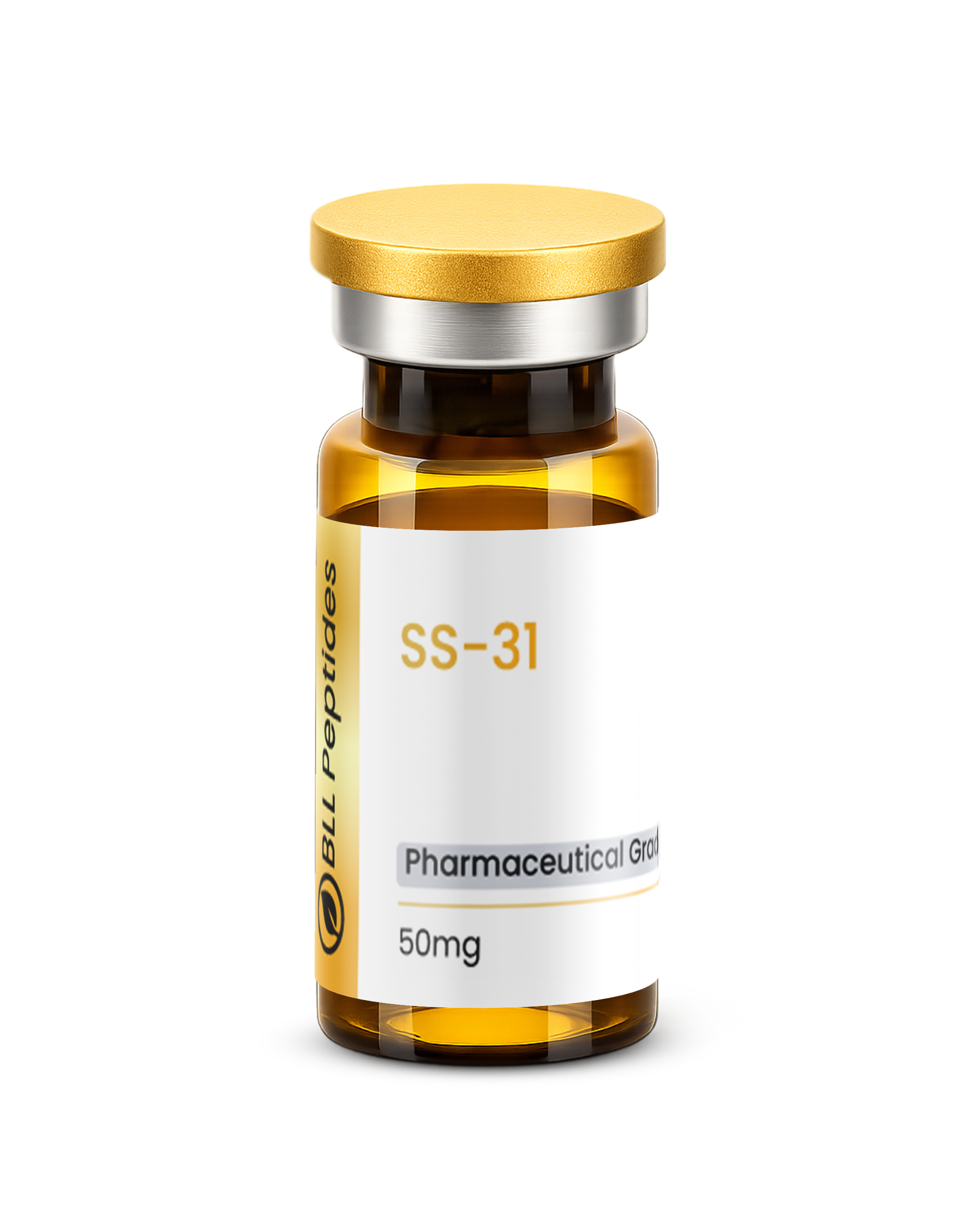
If you want to understand aging at the deepest level, you have to go inside the cell. Not to the nucleus — though that’s important — but to the mitochondria. These ancient organelles, remnants of an endosymbiotic event billions of years ago, are where energy is made, where reactive oxygen species accumulate, and where the slow-burning fire of cellular aging is most visible. That’s what drew me to SS-31.
SS-31 (also known as Elamipretide or MTP-131) is a tetrapeptide specifically designed to target the inner mitochondrial membrane. It’s among the most mechanistically targeted peptides in current research — not trying to do everything, but trying to do one thing very precisely: protect mitochondrial integrity.
What Is SS-31?
SS-31 belongs to the Szeto-Schiller (SS) family of mitochondria-targeted peptides, developed by Hazel Szeto and Peter Schiller at Weill Cornell Medical College. The “SS” in the name reflects the developers’ initials. The peptide has the sequence D-Arg-Dmt-Lys-Phe-NH2 — a tetrapeptide where “Dmt” is 2′,6′-dimethyltyrosine, a modified amino acid that gives the molecule its distinctive aromatic character.
What makes SS-31 remarkable from a chemistry perspective is its selective accumulation in the inner mitochondrial membrane — concentrating there at levels 1,000-fold above cytoplasmic concentrations. This isn’t incidental; it’s the product of deliberate design. The alternating aromatic and basic amino acids create a molecule that is drawn to the negatively charged inner mitochondrial membrane by electrostatic attraction.
For context on another compound studied in the mitochondrial aging space, our NAD+ research overview explores how nicotinamide adenine dinucleotide supports mitochondrial energy metabolism through a different mechanism.
How Does SS-31 Work?
The primary target of SS-31 is cardiolipin — a unique phospholipid found almost exclusively in the inner mitochondrial membrane. Cardiolipin plays a structural role in organizing the electron transport chain (ETC) complexes into supercomplexes, and it’s critically involved in cytochrome c anchoring and mitochondrial apoptosis signaling.
During oxidative stress and aging, cardiolipin becomes oxidized — a process that disrupts ETC supercomplex organization, reduces ATP production efficiency, and triggers cytochrome c release (a key step in apoptotic signaling). SS-31 interacts directly with cardiolipin, protecting it from peroxidation through multiple mechanisms:
- Direct scavenging of reactive oxygen species (ROS) near the inner membrane
- Structural stabilization of cardiolipin-protein interactions
- ETC efficiency restoration by maintaining supercomplex organization
- Cytochrome c retention — keeping it bound to the inner membrane rather than releasing into the cytoplasm
The net effect in research models is improved ATP production, reduced mitochondrial ROS generation, and attenuated mitochondria-driven apoptosis. It’s a compound that doesn’t try to remove damaged mitochondria (autophagy) or generate new ones (biogenesis) but rather helps existing mitochondria function better.
What the Research Shows
SS-31 has one of the more impressive translational research records among mitochondria-targeting peptides. The compound has advanced into human clinical trials for several conditions, providing a level of human-relevant data uncommon in the peptide research space.
Cardiac research has been particularly productive. A published study in JACC: Heart Failure reported that SS-31 (as Elamipretide) improved mitochondrial respiration in failing human heart muscle cells obtained from transplant patients. Mitochondrial ATP production rates improved by approximately 25-30% in treated samples compared to controls — a striking result from actual human cardiac tissue.
In animal models of ischemia-reperfusion injury — the damage that occurs when blood flow is restored after a blockage — SS-31 has consistently reduced infarct size by 40-50% in cardiac models. As a neurosurgeon, I’m particularly interested in the CNS applications: similar ischemia-reperfusion dynamics occur during stroke, and rodent studies have shown neuroprotective effects in cerebral ischemia models with SS-31 treatment.
Aging research has found that old mice treated with SS-31 show improved exercise capacity, grip strength, and mitochondrial function compared to age-matched controls — suggesting the compound can partially reverse mitochondrial dysfunction associated with aging, not merely prevent it.
MOTS-c, another mitochondria-related peptide we’ve covered, takes a different approach to mitochondrial health through metabolic regulation — you can compare the two in our MOTS-c research review.
Key Research Findings
- 1,000-fold selective accumulation in inner mitochondrial membrane vs. cytoplasm
- 25-30% improvement in mitochondrial ATP production in human cardiac tissue studies
- 40-50% reduction in infarct size in cardiac ischemia-reperfusion models
- Improved exercise capacity and grip strength in aged mouse models
- Neuroprotective effects in cerebral ischemia rodent studies
- Advanced to Phase II human clinical trials for heart failure
Frequently Asked Questions About SS-31 Research
Q: What is cardiolipin and why does it matter?
A: Cardiolipin is a phospholipid almost exclusive to the inner mitochondrial membrane. It organizes the electron transport chain complexes into efficient supercomplexes and anchors cytochrome c. Its oxidation is a key event in mitochondrial dysfunction and apoptosis initiation.
Q: How is SS-31 different from other antioxidants?
A: Most antioxidants distribute throughout the body. SS-31 concentrates specifically at the inner mitochondrial membrane — the primary site of ROS generation. This targeted localization is believed to make it more effective per molecule than systemic antioxidants for mitochondrial protection.
Q: What disease models has SS-31 been studied in?
A: Research models include heart failure, ischemia-reperfusion injury, renal ischemia, neurodegenerative disease models, aging-related mitochondrial decline, and metabolic disease. The compound has reached human clinical trial stage for cardiac applications.
Q: What does “tetrapeptide” mean?
A: A tetrapeptide is a peptide chain consisting of four amino acid residues. SS-31’s four-residue structure (D-Arg-Dmt-Lys-Phe-NH2) is small enough to be cell-permeable and cross biological membranes, including reaching the inner mitochondrial membrane.
Q: Is SS-31 the same as Elamipretide?
A: Yes — Elamipretide and MTP-131 are pharmaceutical names for SS-31. It was developed as a drug candidate by Stealth Biotherapeutics (now Cardurion Pharmaceuticals) for clinical indications including heart failure.
Related Research
If you found this research overview helpful, explore our related guides:
About the Author: Dr. James is a board-certified neurosurgeon with over 15 years of clinical experience. His interest in mitochondrial biology stems from its central role in both neurological disease and cellular aging. He provides scientific research analysis for BLL Peptides.
This content is intended for research purposes only. BLL Peptides products are not intended for human consumption.