

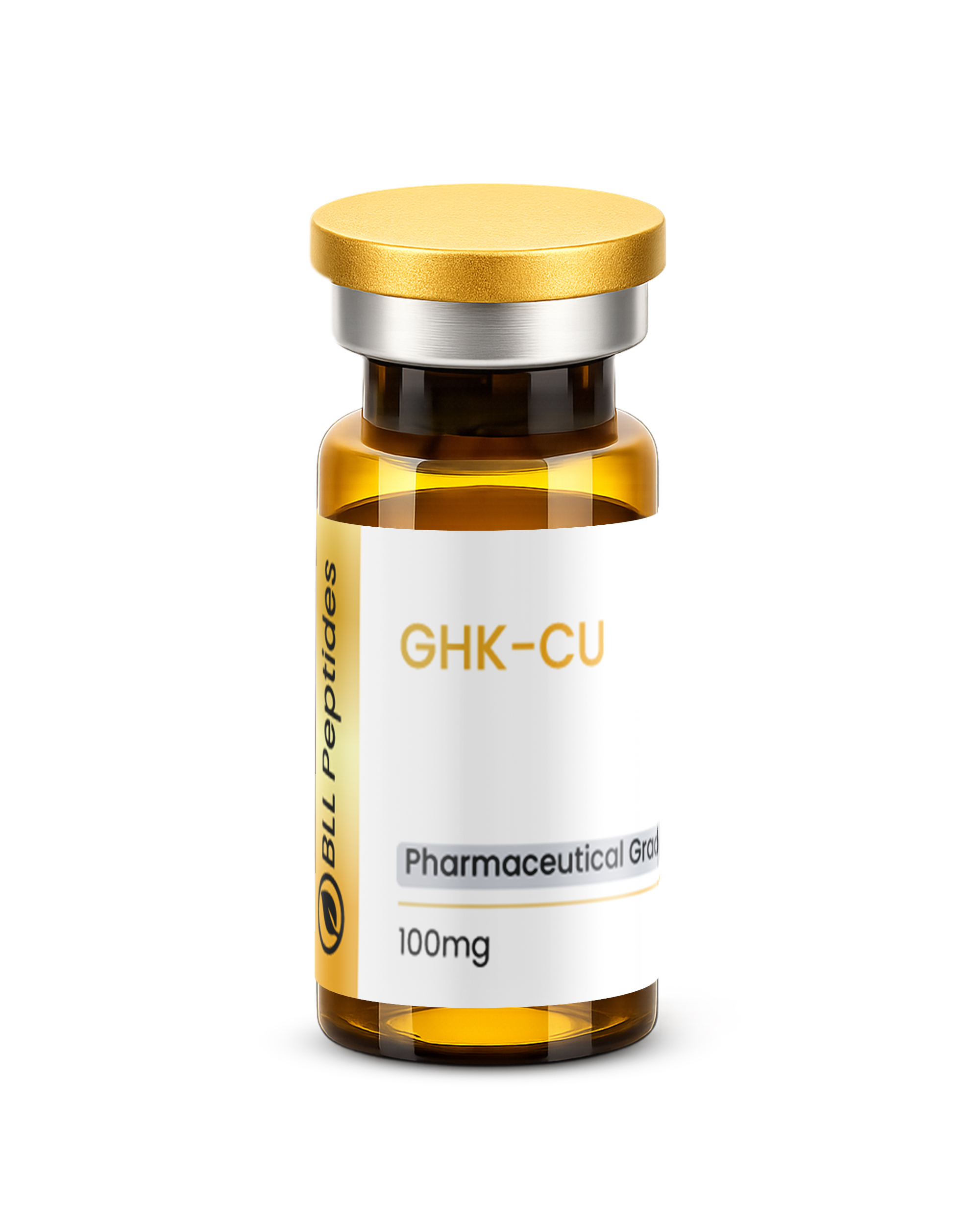
A few days ago, a post on r/Peptides documenting someone’s 5-week experience with GHK-Cu hit 471 upvotes. I noticed it because my inbox lit up — researchers, colleagues, and a few curious patients all sending me the same link. That kind of signal in the peptide community doesn’t happen by accident. It happens when something is actually interesting. So I figured it was time to sit down and write up what the science says about GHK-Cu peptide research — not the anecdotes, but the actual published literature.
What Is GHK-Cu?
GHK-Cu stands for glycyl-L-histidyl-L-lysine, a naturally occurring tripeptide that has a high affinity for copper ions — hence the “Cu.” It was first isolated from human plasma in the early 1970s by Dr. Loren Pickart, who noticed it had a remarkable ability to stimulate liver cell growth in culture. That early observation launched decades of research into what this small peptide could do at the cellular level.
What makes GHK-Cu particularly interesting from a research standpoint is its endogenous nature. It’s not a synthetic molecule invented in a lab — it’s something the body already makes. Plasma concentrations of GHK are measurably higher in younger individuals (around 200 ng/mL in young adults) and decline significantly with age, dropping toward 80 ng/mL by age 60. That age-dependent decline has made it a subject of serious inquiry in aging biology and tissue repair research.
Why GHK-Cu Peptide Research Has Researchers Fascinated
I’ve spent my career in neurosurgery, where tissue healing and cellular signaling are everything. What drew me to GHK-Cu peptide research wasn’t the Reddit posts — it was the breadth of the biological pathways this molecule appears to touch. It modulates gene expression, promotes antioxidant defenses, stimulates collagen and glycosaminoglycan synthesis, and appears to regulate inflammatory signaling. That’s an unusually wide biological footprint for a three-amino-acid peptide.
The research also shows that GHK-Cu doesn’t just act locally — it seems to influence systemic gene regulation. A 2012 analysis by Pickart and Margolina identified over 4,000 human genes that GHK-Cu modulates, including genes related to inflammation, collagen production, and antioxidant response. For a molecule this small to exert that kind of regulatory influence is, frankly, remarkable — and it’s why the scientific interest has never really faded since the 1970s.
What the Studies Show
Skin repair and collagen synthesis. Some of the most robust GHK-Cu peptide research has been conducted in dermatology. A landmark study published in the Journal of Investigative Dermatology found that topical application of GHK-Cu significantly increased collagen synthesis in human fibroblasts. Follow-up work confirmed increases in skin thickness, elasticity, and dermal density in aged tissue models. The mechanism appears to involve stimulation of TGF-β pathways and direct upregulation of collagen I and III genes — the structural proteins that give skin its firmness and resilience.
Wound healing. GHK-Cu’s role in wound healing has been studied since the 1980s. Research published in PubMed-indexed journals documented accelerated wound closure and tissue remodeling in animal models treated with GHK-Cu. The peptide appears to stimulate the migration and proliferation of keratinocytes and fibroblasts — the two cell types most critical for wound repair — while also promoting angiogenesis (new blood vessel formation), which is essential for delivering oxygen and nutrients to healing tissue. This multi-mechanism approach to wound repair is part of why researchers have remained interested for decades.
Anti-inflammatory effects. Chronic inflammation is a driver of nearly every major degenerative condition I see clinically. GHK-Cu peptide research has consistently shown that the molecule downregulates pro-inflammatory cytokines — including TNF-α and IL-6 — while upregulating antioxidant enzymes like superoxide dismutase and catalase. A 2015 study in Oxidative Medicine and Cellular Longevity reviewed GHK-Cu’s capacity to reset inflammatory gene expression toward a more youthful profile, describing it as a potential “reset switch” for aged or damaged tissue. That framing resonated with me — not because it’s hype, but because the underlying gene-level data supported the hypothesis.
The Copper Connection
The copper component of GHK-Cu isn’t incidental — it’s mechanistically significant. Copper is a cofactor for several critical enzymes, including lysyl oxidase, which is essential for collagen cross-linking and connective tissue integrity. GHK’s high-affinity copper chelation means it can transport and deliver copper to sites where it’s needed for enzymatic activity. This copper-chaperoning function may explain some of GHK-Cu’s wound healing and tissue remodeling effects that go beyond what the peptide alone could achieve. It’s a two-for-one molecule — and that biological elegance is part of what makes it so interesting to study alongside other research peptides like Epithalon, which similarly targets fundamental aging mechanisms at the cellular level.
GHK-Cu at BLL Peptides
For researchers interested in exploring GHK-Cu peptide research further, BLL Peptides carries GHK-Cu 50mg/3ml vials manufactured in the USA under GMP-certified conditions. As with everything in our catalog — which also includes compounds like CJC-1295 for those studying growth hormone signaling — these are research-grade materials intended for laboratory and scientific investigation only.
Frequently Asked Questions
What is GHK-Cu peptide research focused on?
GHK-Cu peptide research primarily investigates the tripeptide’s roles in skin repair, wound healing, collagen synthesis, anti-inflammatory signaling, and antioxidant gene regulation. It is studied across dermatology, wound care, and aging biology.
Is GHK-Cu naturally occurring in the human body?
Yes. GHK-Cu (glycyl-L-histidyl-L-lysine bound to copper) was first isolated from human plasma. Plasma concentrations are notably higher in younger individuals and decline with age, which has led researchers to study its potential role in tissue maintenance and aging biology.
What does the research say about GHK-Cu and skin repair?
Multiple peer-reviewed studies have found that GHK-Cu stimulates collagen synthesis, promotes fibroblast proliferation, and activates antioxidant genes. Research published in journals such as the Journal of Investigative Dermatology points to measurable effects on skin thickness and elasticity in preclinical models.
Where can I find GHK-Cu for research purposes?
BLL Peptides offers GHK-Cu 50mg/3ml vials for licensed researchers. All products are for research purposes only and are not intended for human consumption.
About the Author
Dr. James is a board-certified neurosurgeon with training from Yale and a longstanding interest in the biology of tissue repair and cellular aging. As part of the BLL Peptides research team, he tracks emerging peptide science and translates complex findings into accessible analysis for the research community.
This content is intended for research purposes only. BLL Peptides products are not intended for human consumption.