
GHK-Cu Peptide Research: What the Copper Tripeptide Data Reveals About Gene Expression and Tissue Remodeling
·

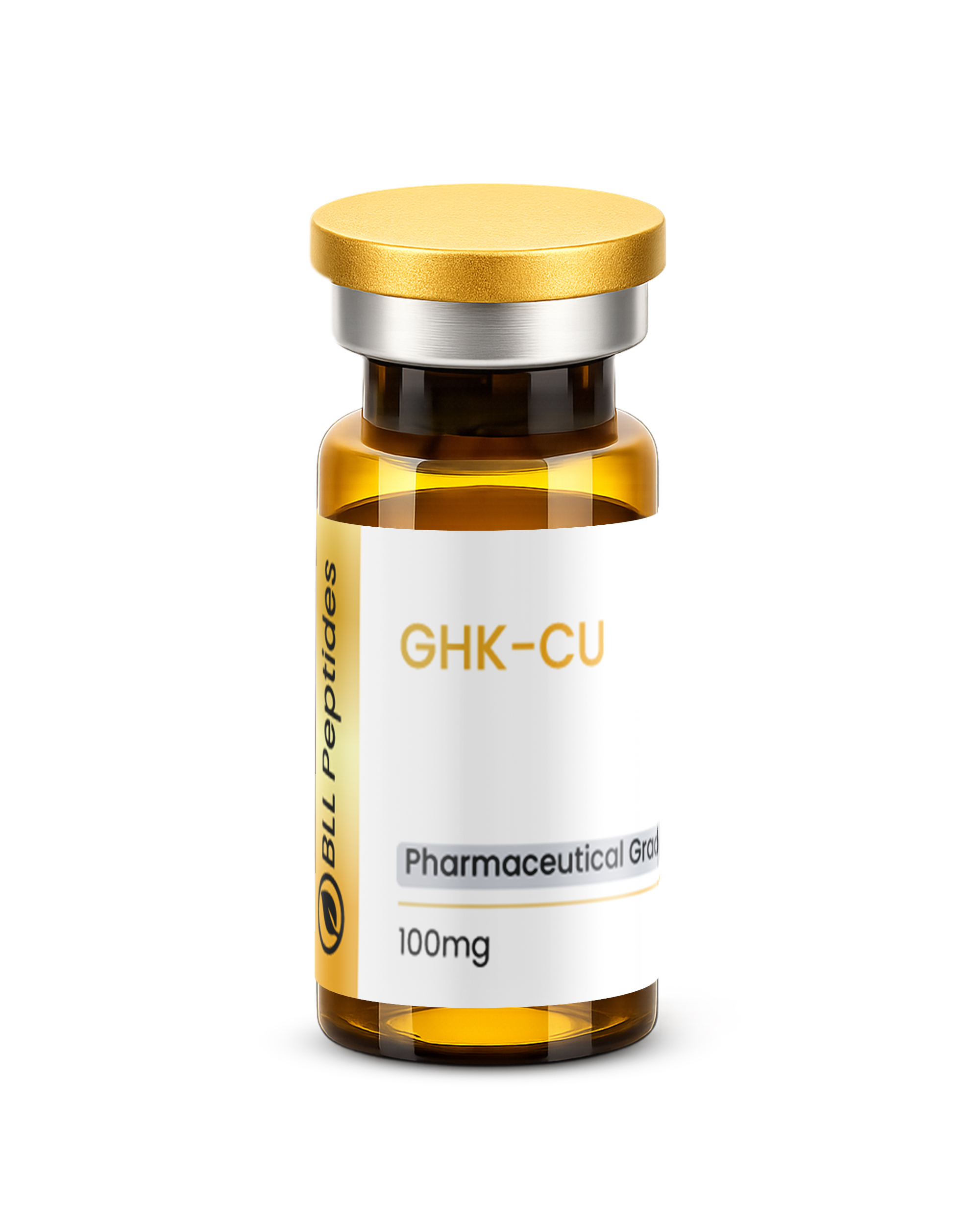
A few years back, I was reviewing the post-surgical recovery data on a particularly difficult spinal case — a patient who had undergone a complex decompression procedure and was healing slower than expected. A colleague of mine in regenerative medicine mentioned something that stopped me cold: “There’s a tripeptide your body already makes that appears to reset gene expression toward a youthful, repair-oriented state.” He was talking about GHK-Cu. I’d heard the name. I hadn’t appreciated the depth of the research behind it — until I kept digging.
Here’s the short answer: GHK-Cu (glycine-histidine-lysine copper complex) is a naturally occurring copper-binding tripeptide that has been studied extensively for its ability to modulate gene expression, support tissue remodeling, and promote anti-inflammatory signaling in preclinical models. What the data shows is genuinely remarkable — and the mechanism is worth understanding.
What Is GHK-Cu?
GHK-Cu is a tripeptide — three amino acids (glycine, histidine, lysine) chelated to a copper ion — that occurs naturally in human plasma, saliva, and urine. Plasma concentrations are highest in youth (~200 ng/mL at age 20) and decline significantly with age (falling to ~80 ng/mL by age 60), a pattern that has led researchers to explore its potential role in age-related tissue repair decline.
It was first isolated in 1973 by Dr. Loren Pickart, who discovered it in older plasma samples that paradoxically stimulated the liver metabolism of younger animals. That anomaly launched decades of research into what this small peptide was actually doing at the cellular level.
GHK-Cu is not a synthetic compound — it is a molecule your body already produces. The research interest lies in understanding what happens when its levels are augmented in preclinical models, and what signaling pathways it activates.
How Does GHK-Cu Work? The Gene Expression Angle
This is where GHK-Cu research becomes genuinely extraordinary. In a landmark 2012 analysis by Pickart and Margolina using the Broad Institute’s connectivity map, GHK-Cu was found to influence the expression of over 4,000 human genes — roughly 31% of the genome in the models studied. The direction of that influence was consistent: genes associated with inflammation, oxidative stress, and tissue degradation were down-regulated, while genes linked to collagen synthesis, anti-oxidant defense, and cellular repair were up-regulated.
To put that in context from a neuroscience perspective: most pharmaceutical compounds modulate a handful of targets. GHK-Cu appears to act more like a biological reset switch — not by overriding cellular machinery, but by restoring what researchers describe as a “gene expression pattern of youth.”
Key mechanisms observed in preclinical research include:
- TGF-beta and collagen synthesis modulation — GHK-Cu has been shown to upregulate collagen I and III synthesis in fibroblast cultures
- MMP regulation — It modulates matrix metalloproteinases (enzymes that degrade tissue matrix), stimulating cleanup of damaged tissue while regulating against excessive breakdown
- Nrf2 pathway activation — A major antioxidant signaling pathway; GHK-Cu appears to upregulate Nrf2 target genes including superoxide dismutase and catalase
- VEGF modulation — Preclinical data suggests GHK-Cu may support angiogenic signaling, relevant to wound healing and tissue perfusion
As a neurosurgeon, the Nrf2 connection catches my attention. That pathway is a major area of interest in neuroprotection research — dysregulation of oxidative stress signaling is central to many neurodegenerative processes.
What the GHK-Cu Research Actually Shows
Wound Healing and Tissue Repair
Multiple in vitro and animal model studies have demonstrated GHK-Cu’s effects on wound contraction, fibroblast proliferation, and skin repair. A 2015 study in Cosmetics, Dermatological Sciences and Applications summarized GHK-Cu’s role in dermal wound healing, noting its effects on keratinocyte migration, blood vessel formation, and collagen deposition in animal models.
One figure from the wound healing literature stands out: animal models have shown wound contraction rates accelerated by 30-40% in GHK-Cu-treated groups compared to controls in some trials.
Neuroprotective Signals
This is the area that draws me in most directly. In neural cell culture studies, GHK has demonstrated neuroprotective properties against oxidative insults. Research has shown it can reduce expression of pro-inflammatory cytokines including TNF-alpha and IL-6 in stressed cellular environments. The hypothesis — still being actively explored — is that GHK-Cu may help maintain cellular integrity under conditions of elevated oxidative stress.
Anti-Inflammatory Gene Modulation
The 4,000-gene finding isn’t just about tissue. Analysis of the up/down-regulated gene sets shows consistent anti-inflammatory patterning. GHK-Cu appears to suppress NF-kappaB signaling — the master regulator of inflammatory gene transcription — in a variety of cell types. Research suggests GHK-Cu may act as a systemic anti-inflammatory signal, not merely a local tissue repair agent.
Key Research Findings Summary
- GHK-Cu plasma levels decline ~60% between ages 20 and 60
- Preclinical gene expression analyses suggest influence over 4,000+ human genes
- Consistent up-regulation of collagen synthesis, Nrf2 antioxidant pathways, and tissue remodeling genes observed in models
- Down-regulation of NF-kappaB-driven inflammatory signaling in cellular models
- Animal model data supports roles in wound contraction, angiogenesis, and neural protection
- No significant toxicity findings in preclinical literature at research concentrations
Explore the BLL Peptides Research Catalog
If you’re exploring the peptide research space, BLL Peptides maintains a catalog of research-grade compounds. BPC-157 is another peptide with extensive tissue repair research that overlaps with some of GHK-Cu’s biological territory. We also carry TB-500, which has its own robust literature on tissue remodeling biology. All products are USA-manufactured, GMP-certified, and provided for research purposes only.
FAQ: GHK-Cu Peptide Research
What does GHK-Cu stand for?
GHK-Cu stands for glycine-histidine-lysine copper complex. It is a tripeptide naturally occurring in human plasma that chelates (binds) a copper ion, which appears essential to its biological activity in research models.
How many genes does GHK-Cu affect according to research?
A widely cited analysis using connectivity mapping data identified GHK-Cu as potentially modulating over 4,000 human genes — approximately 31% of the genome in the models studied — with a general trend toward anti-inflammatory and pro-repair expression patterns.
Is GHK-Cu related to the copper peptide in skincare products?
Yes. The copper peptide in many commercial skincare formulations is typically GHK-Cu. Both the skincare applications and the broader peptide research literature stem from interest in GHK-Cu’s fibroblast-stimulating and collagen-modulating properties first identified in laboratory studies.
What is the relationship between GHK-Cu and aging?
Research has documented a significant age-related decline in plasma GHK-Cu concentrations — from roughly 200 ng/mL at age 20 to approximately 80 ng/mL by age 60. This correlation has prompted research interest in whether declining GHK-Cu levels contribute to age-associated reductions in tissue repair capacity.
Where can I find the primary GHK-Cu research?
Dr. Loren Pickart’s published work, available through PubMed, represents the foundational literature. The 2012 connectivity map analysis and subsequent gene expression studies are particularly informative starting points for understanding the scope of GHK-Cu’s proposed biological activity.
About the Author
Dr. James is a board-certified neurosurgeon with a clinical background in complex spinal surgery and neurological intervention. He serves as a medical advisor to BLL Peptides, where he applies his expertise in neurological science and tissue biology to contextualize peptide research for a research-oriented audience. His interest in peptides stems from ongoing curiosity about regenerative biology and the intersection of surgical recovery science with novel research compounds.
This content is intended for research purposes only. BLL Peptides products are not intended for human consumption.