
The Peptide That Drops 60% by Age 60: My Deep Dive Into GHK-Cu Research
·

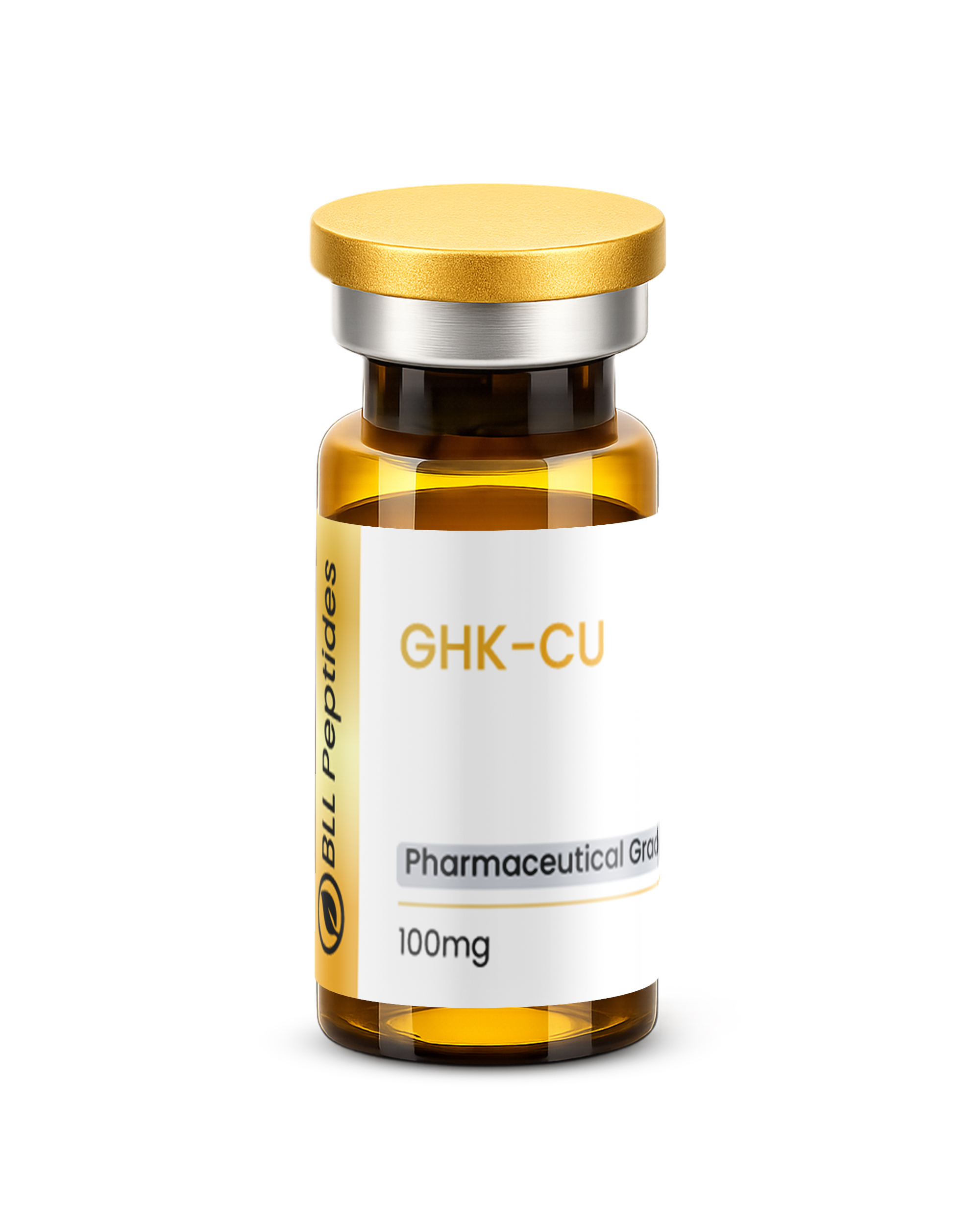
There’s a peptide circulating in your bloodstream right now that peaks in your 20s and falls by roughly 60% by the time you reach 60. When I first came across that statistic in a pharmacology review, I stopped and re-read it twice. I’d spent years focused on neurological repair, growth factors, and cellular signaling — but this tiny copper-binding tripeptide had completely flown under my radar.
That changed when a colleague forwarded me a paper on GHK-Cu and wound healing. I went down a four-hour research rabbit hole. What I found genuinely surprised me.
As a neurosurgeon, I’m always looking for compounds with credible preclinical evidence in repair and regeneration pathways. GHK-Cu checks more of those boxes than I expected from a three-amino-acid peptide discovered over 50 years ago.
What Is GHK-Cu Peptide? The Direct Answer
GHK-Cu (glycine-histidine-lysine copper) is a naturally occurring copper-binding tripeptide first isolated from human plasma in 1973 by biochemist Loren Pickart. Research suggests it plays roles in tissue repair, anti-inflammatory signaling, and gene expression regulation. Plasma concentrations of GHK-Cu peak in healthy young adults at approximately 200 ng/mL and decline to roughly 80 ng/mL by age 60 — a drop that has prompted researchers to investigate whether this age-related fall correlates with reduced repair capacity across multiple tissue types.
Its small molecular size allows GHK-Cu to cross biological barriers with relative ease, which may partly explain the breadth of biological activity documented in preclinical literature.
How GHK-Cu Works: Three Key Mechanisms From the Research
The mechanistic picture for GHK-Cu has become considerably more detailed over the past two decades. Here’s what the literature points to:
1. Collagen Synthesis and Extracellular Matrix Remodeling
GHK-Cu appears to stimulate collagen synthesis and regulate matrix metalloproteinase (MMP) activity — essentially helping remodel the extracellular matrix in damaged tissue. In fibroblast studies, GHK-Cu has been shown to upregulate genes involved in collagen production while simultaneously downregulating the matrix-degrading enzymes that become overactive in chronic wounds and aging tissue.
2. Anti-Inflammatory Signaling via NF-κB
One of the more unexpected findings in the GHK-Cu literature: this peptide appears to modulate NF-κB pathways — a central hub of inflammatory signaling in virtually every tissue type. Preclinical data suggests GHK-Cu may reduce pro-inflammatory cytokine activity without the broad immunosuppressive effects seen with many anti-inflammatory agents — a profile that’s unusual and worth taking seriously.
3. Large-Scale Gene Expression Regulation
Perhaps the most provocative mechanism: a landmark analysis by Pickart and colleagues identified that GHK-Cu appears to influence the expression of over 4,000 human genes — upregulating repair-associated genes and downregulating oncogene pathways. If this holds up at scale in future research, it would position GHK-Cu as one of the most systemically influential small peptides yet characterized.
What the Research Shows on GHK-Cu Peptide
The research base for GHK-Cu spans more than five decades and covers wound healing, neuroscience, dermatology, and oncology:
- A 2015 study published in Organogenesis found GHK-Cu accelerated wound closure in human skin models, with significant upregulation of genes tied to collagen synthesis and antioxidant defense systems.
- A foundational PubMed-indexed study (PMID: 22796011) demonstrated GHK-Cu’s effects on oxidative stress pathways in human fibroblasts, showing dose-dependent activation of antioxidant enzyme networks.
- Animal model studies have explored GHK-Cu’s potential role in peripheral nerve repair — a detail that, as a neurosurgeon, I found particularly worth tracking. In one rodent study, GHK-Cu treatment was associated with improved markers of Schwann cell activity and axonal guidance following nerve injury.
Research Stat #1: GHK-Cu has been shown to influence the expression of more than 4,000 human genes in vitro, according to bioinformatic analyses of human gene expression databases — an unusually broad footprint for a tripeptide.
Research Stat #2: Plasma GHK concentrations in healthy adults under 30 average approximately 200 ng/mL. By age 60, that figure drops to roughly 80 ng/mL — a ~60% decline that correlates chronologically with reduced wound healing speed and increased systemic inflammation in aging populations.
Key Findings That Caught My Attention as a Neurosurgeon
I want to be honest: I review a lot of peptide literature, and most of it requires careful skepticism. GHK-Cu earned a second look for three specific reasons:
First, the anti-inflammatory mechanism is unusually selective. Most anti-inflammatory compounds — from steroids to biologics — come with significant trade-offs in immune suppression or off-target effects. GHK-Cu’s preclinical profile in inflammatory pathway modulation looks considerably cleaner. That doesn’t mean it’s without complexity, but it’s a distinct mechanistic profile.
Second, the nerve regeneration signal is credible enough to follow. Peripheral nerve repair is one of the slowest and most challenging processes in surgery. Any compound with preclinical evidence supporting Schwann cell activity and axon guidance — even in animal models — is worth monitoring as the research matures.
Third, the gene expression data is genuinely unusual. If a tripeptide is influencing thousands of genes in a directionally consistent, repair-promoting pattern, that’s not a coincidence — that’s a signaling molecule the body evolved for a reason, and we’re only beginning to understand it.
GHK-Cu in Context: Related Research Peptides
GHK-Cu research doesn’t exist in isolation. Researchers studying tissue repair and regenerative signaling often examine it alongside other well-characterized peptides. Two that share overlapping preclinical territory:
- BPC-157 (10mg/3ml) — Frequently studied in wound healing, gut repair, and tendon regeneration research. Shares the collagen and fibroblast signaling space with GHK-Cu in several preclinical models.
- TB-500 (10mg/3ml) — Another peptide with preclinical tissue remodeling data, often studied in parallel with GHK-Cu in connective tissue and vascular repair research.
All BLL Peptides products are produced for research purposes only. For researchers interested in exploring the GHK-Cu pathway specifically, browse our full research-grade peptide catalog.
Frequently Asked Questions About GHK-Cu Peptide Research
What is GHK-Cu peptide?
GHK-Cu (glycine-histidine-lysine copper) is a naturally occurring tripeptide found in human plasma, saliva, and urine. It binds copper (II) ions and has been studied preclinically for roles in tissue repair, anti-inflammatory signaling, and gene expression regulation.
What does GHK-Cu do in research models?
Preclinical research indicates GHK-Cu may stimulate collagen synthesis, modulate inflammatory cytokine activity via NF-κB pathways, support wound healing processes, and influence the expression of thousands of genes associated with cellular repair and antioxidant defense.
Does GHK-Cu decline with age?
Yes. Research shows plasma GHK-Cu concentrations peak in healthy young adults at approximately 200 ng/mL and decline to around 80 ng/mL by age 60 — roughly a 60% reduction. Researchers hypothesize this decline may be relevant to age-associated changes in repair capacity.
Is GHK-Cu the same as a copper peptide?
GHK-Cu is the most studied copper peptide. While copper peptides broadly refer to any peptide-copper ion complex, GHK-Cu specifically refers to the glycyl-L-histidyl-L-lysine copper complex — the primary naturally occurring copper-binding tripeptide found in human plasma.
Where can researchers source GHK-Cu for preclinical studies?
BLL Peptides offers a range of research-grade peptides for laboratory and preclinical research. All products are strictly for research use only and are not intended for human consumption.
About the Author
Dr. James is a board-certified neurosurgeon with over two decades of clinical and research experience. His interest in peptide science grew from his surgical work in neural repair and regenerative medicine. He writes on peptide research topics for the BLL Peptides research blog. All content reflects published preclinical literature and is intended for researchers and informed readers only.
This content is intended for research purposes only. BLL Peptides products are not intended for human consumption.