

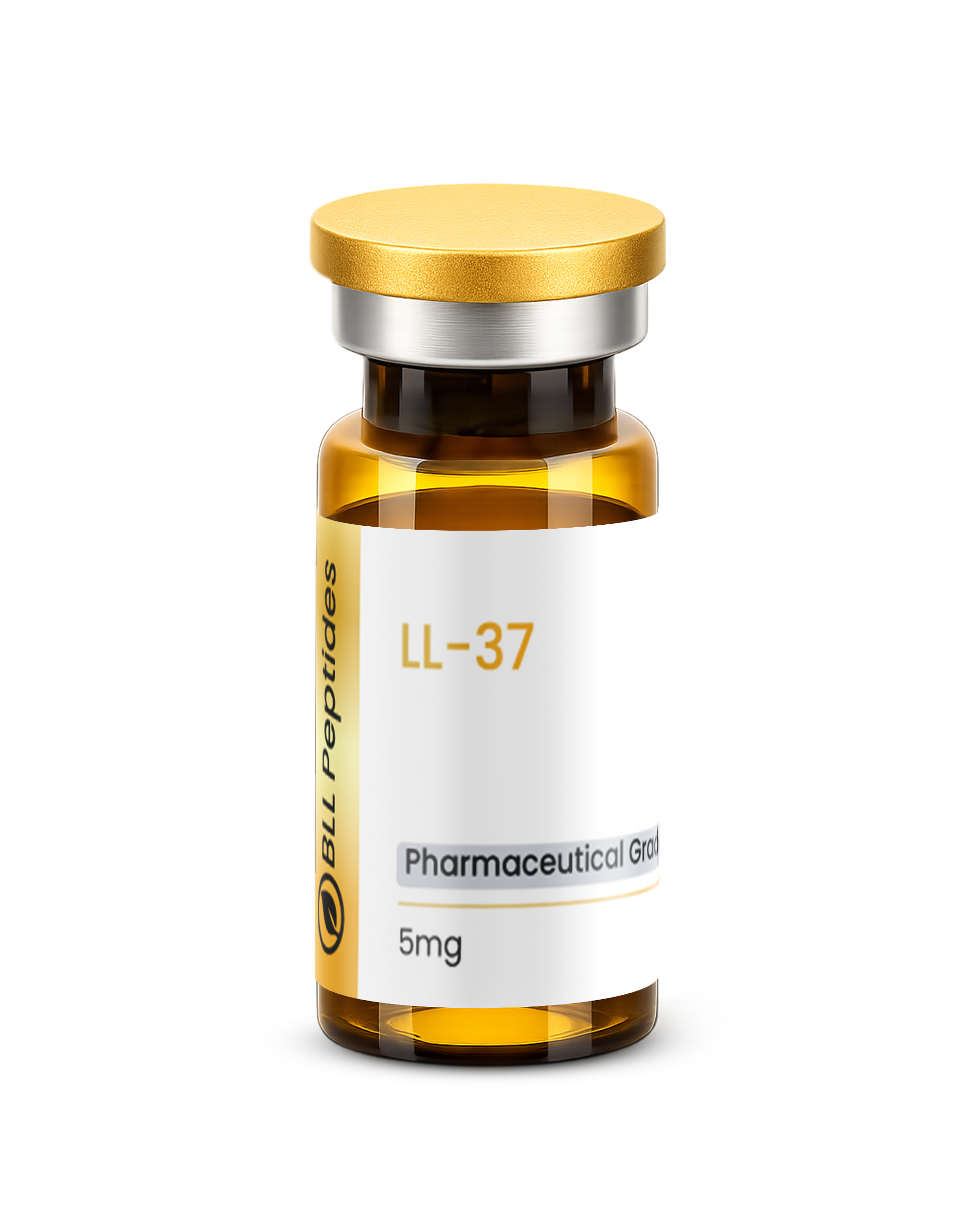
Something catches a researcher’s eye when a peptide the human body already synthesizes starts appearing across dozens of peer-reviewed studies — not for one biological role, but for several overlapping ones at once. That’s LL-37 peptide in a nutshell. As a neurosurgeon, I spend most of my time thinking about neural tissue, inflammation, and recovery. So when LL-37 crossed my radar in the context of immune signaling and tissue biology, I had to dig in.
Here’s what the research actually shows.
What Is LL-37 Peptide?
LL-37 is the only known human cathelicidin — a family of antimicrobial peptides (AMPs) that serve as frontline molecular defenders in innate immunity. It’s encoded by the CAMP gene and produced primarily by neutrophils, macrophages, epithelial cells, and keratinocytes. The name “LL-37” refers to its structure: it begins with two leucine residues (LL) and contains 37 amino acids total.
Unlike classical antibiotics, LL-37 doesn’t target a single pathogen. Research indicates it disrupts bacterial membranes, modulates inflammatory cytokine cascades, promotes wound healing signaling, and plays a role in angiogenesis — the formation of new blood vessels. That’s an unusual breadth of biological activity for a single endogenous peptide.
How LL-37 Works: The Biological Mechanisms Under Study
According to peer-reviewed research, LL-37 operates across multiple biological pathways simultaneously:
- Membrane disruption: LL-37 is amphipathic — it has both hydrophilic and hydrophobic regions — allowing it to embed in bacterial cell membranes and cause structural collapse. Studies confirm research activity against gram-positive and gram-negative bacteria, as well as certain fungi and viruses.
- Receptor engagement: LL-37 binds to host receptors including FPRL1 (formyl peptide receptor-like 1), P2X7, and EGFR. Researchers link these interactions to downstream effects on cell migration, inflammation resolution, and tissue repair signaling.
- Immunomodulation: Rather than simply “amplifying” immunity, LL-37 appears to fine-tune it. Research shows it can suppress LPS-induced cytokine storms while simultaneously enhancing chemotaxis — essentially coordinating the immune response rather than blindly amplifying it.
“LL-37 doesn’t fit neatly into the antibiotic box — it’s a biological coordinator with roles spanning defense, repair, and immune signaling all at once.”
What the Research Shows: Key Study Areas
Wound Healing and Tissue Biology
A study published in Frontiers in Immunology found that LL-37 promotes keratinocyte migration and proliferation — two key processes in skin wound closure. The peptide appears to stimulate re-epithelialization through EGFR activation, making it a significant subject of interest in dermatological and surgical recovery research. This parallels the tissue signaling work seen with other research peptides like BPC-157, which is also studied extensively in wound biology contexts.
“In wound biology research, LL-37 has repeatedly shown up as a promoter of keratinocyte activity — a finding that’s difficult to overlook from a surgical perspective.”
Gut and Mucosal Immunity Research
Research published in the Journal of Innate Immunity highlights LL-37’s expression in intestinal epithelial cells, where it helps regulate microbial balance at mucosal surfaces. Reduced LL-37 levels have been observed in patients with certain inflammatory bowel conditions, though the directional relationship remains an active area of investigation. The peptide’s role at mucosal barriers places it in an interesting position alongside NAD+, another compound with broad cellular signaling implications under study.
Lung and Respiratory Epithelium
LL-37 is expressed in airway cells and may modulate responses to pulmonary pathogens — a finding that gained renewed research attention during global discussions about respiratory immunity. According to published data, LL-37 concentrations in bronchoalveolar lavage fluid correlate with immune activation patterns in lung tissue, suggesting it may function as both a biomarker and an active participant in pulmonary defense biology.
Neurological Connections
Here’s where it gets personally compelling to me as a neurosurgeon. Some emerging research suggests LL-37 may cross the blood-brain barrier and interact with glial cells. A study in Glia found that LL-37 can influence microglial activation states — which directly connects to the broader conversation about neuroinflammation, a topic central to many of the conditions I address surgically every week. The field of neuroimmunology is watching this space closely, and I think with good reason.
Key Research Findings at a Glance
- LL-37 is the only human cathelicidin, making it unique among all known endogenous antimicrobial peptides
- Studies document its role in promoting keratinocyte proliferation and wound re-epithelialization signaling
- Research links LL-37 deficiency to altered mucosal immunity in gut and lung tissue
- Over 2,000 PubMed-indexed studies reference LL-37, reflecting its exceptionally broad scientific relevance — see one key review here
- Neurological research suggests potential microglial modulation activity — a frontier area worth tracking
LL-37 in the Broader Peptide Research Landscape
What makes LL-37 stand out is its endogenous origin — the body already makes it. Researchers studying synthetic and semi-synthetic peptides often reference it as a biological benchmark. When I look at the research coming out on compounds like TB-500 (studied for its role in cellular migration and actin binding) alongside LL-37’s receptor-driven tissue signaling, there’s a clear theme: peptides that work with biological systems — not around them — tend to generate the most robust and reproducible scientific data.
BLL Peptides offers LL-37 and a full library of research-grade peptides for qualified researchers exploring this intersection of immunology, tissue biology, and cellular signaling.
Frequently Asked Questions About LL-37 Peptide Research
Q: What type of peptide is LL-37?
A: LL-37 is a cathelicidin-derived antimicrobial peptide — the only cathelicidin found in humans. It’s produced naturally by immune cells and epithelial tissue and studied extensively for its roles in innate immunity, wound healing signaling, and inflammation modulation.
Q: What does the research say about LL-37 and wound healing?
A: Published studies suggest LL-37 promotes keratinocyte migration and proliferation via EGFR receptor activation — both central processes in wound re-epithelialization. Research highlighted in Frontiers in Immunology documented these findings in skin wound biology models.
Q: How does LL-37 interact with inflammation?
A: Interestingly, LL-37 appears to modulate inflammation bidirectionally. Research indicates it can suppress excessive cytokine activity (such as LPS-induced responses) while also supporting coordinated immune cell recruitment. It fine-tunes rather than simply escalates the inflammatory response.
Q: How is LL-37 different from synthetic antimicrobial peptides?
A: LL-37 is endogenous — the human body synthesizes it naturally. This distinguishes it from purely synthetic antimicrobial compounds. Its biological familiarity makes it an attractive subject for basic science research into how the body’s own defense signals operate at the molecular level.
Q: Is LL-37 being studied in neurological contexts?
A: Yes, and this is an area I find particularly interesting. Emerging research suggests LL-37 can influence microglial activation states in neural tissue. While the field is early-stage, the intersection of innate immunity and neuroinflammation that LL-37 represents is generating increasing research interest.
About the Author
Dr. James is a board-certified neurosurgeon with clinical expertise in neural tissue repair, inflammation biology, and surgical recovery. In addition to his surgical practice, Dr. James serves as a medical advisor to BLL Peptides, bringing evidence-based perspective to the rapidly growing field of peptide research. His focus areas include neuroinflammation, tissue recovery signaling, and the intersection of immunology and neuroscience.
This content is intended for research purposes only. BLL Peptides products are not intended for human consumption.