

During my residency, a senior surgeon told me that the brain is the most metabolically expensive organ in the body — accounting for roughly 20% of total caloric expenditure while making up only 2% of body weight. That metabolic intensity is why brain cells are among the first to show signs of aging, and why NAD+ has become one of the most intensely studied molecules in neuroscience and longevity research over the past decade.
NAD+ (nicotinamide adenine dinucleotide) is a coenzyme found in every living cell, but its role in the brain goes far beyond basic energy metabolism. In neural tissue, NAD+ sits at the intersection of mitochondrial function, DNA repair, oxidative stress management, and neurotransmitter regulation. The research trajectory of NAD+ and brain aging has accelerated dramatically since the discovery that NAD+ levels decline by approximately 50% between ages 20 and 60 — a decline with potentially profound neurological consequences.
NAD+ and the Aging Brain: What the Research Reveals
The brain’s dependence on NAD+ is multifaceted. Neurons require enormous amounts of ATP (cellular energy currency), and NAD+ is an essential electron carrier in the mitochondrial respiratory chain that produces it. But NAD+’s neurological role extends well beyond ATP production.
Sirtuins — a family of NAD+-dependent deacetylases often called “longevity proteins” — require NAD+ as a cofactor to function. SIRT1 and SIRT3, the most studied isoforms in brain tissue, regulate neuroprotection, mitochondrial biogenesis, and the modulation of stress response pathways. When NAD+ levels fall, sirtuin activity falls with them, and the protective cellular maintenance these enzymes perform begins to break down.
Research has linked declining brain NAD+ to reduced SIRT1 activity, impaired mitophagy (the clearance of damaged mitochondria), and increased neuroinflammation — a combination that features prominently in neurodegenerative disease models.
PARP enzymes (poly ADP-ribose polymerases) represent another major NAD+ consumer in neural tissue. These enzymes are activated by DNA strand breaks — which occur at a higher rate in aging and oxidatively stressed cells. In the brain, where neurons are largely post-mitotic and must survive for decades, efficient DNA repair is critical. The problem is that activated PARPs can rapidly deplete local NAD+ pools, creating a damaging feedback loop where DNA damage triggers NAD+ depletion, which then impairs the cell’s ability to mount an adequate repair response.
Key Research Findings on NAD+ and Neurological Function
A landmark animal study from the Bhanu lab at MIT found that restoring NAD+ levels in aging mice (via NMN supplementation) reversed multiple markers of vascular aging in the brain, including reduced cerebrovascular density that contributes to cognitive decline (PMID: 24905168). The study demonstrated that NAD+ repletion restored blood flow regulation in the brain — a finding with significant implications for age-related cognitive impairment research.
In models of neurodegeneration, NAD+ precursors have shown neuroprotective effects against Alzheimer’s-related tau pathology, Parkinson’s-related dopaminergic neuron loss, and traumatic brain injury. The common thread appears to be NAD+’s role in maintaining mitochondrial function — the energy backbone that keeps neurons alive under stress.
From my own neurosurgical perspective, traumatic brain injury (TBI) research has been particularly interesting. Following acute brain injury, there’s a rapid and significant depletion of NAD+ in neural tissue as PARPs are activated by the oxidative damage cascade. Pre-clinical research suggests NAD+ repletion in the acute phase may support neuronal survival and reduce secondary injury — a hypothesis now being explored in early clinical settings.
The data increasingly points to NAD+ not as a peripheral player in brain health, but as a fundamental regulator of neuronal resilience — one that tracks closely with biological age in neural tissue.
Human trials exploring NAD+ precursor supplementation have reported improvements in blood NAD+ levels (typically measured by NAD+ in peripheral blood as a proxy for tissue levels), with some studies noting cognitive performance trends, though larger controlled trials are ongoing.
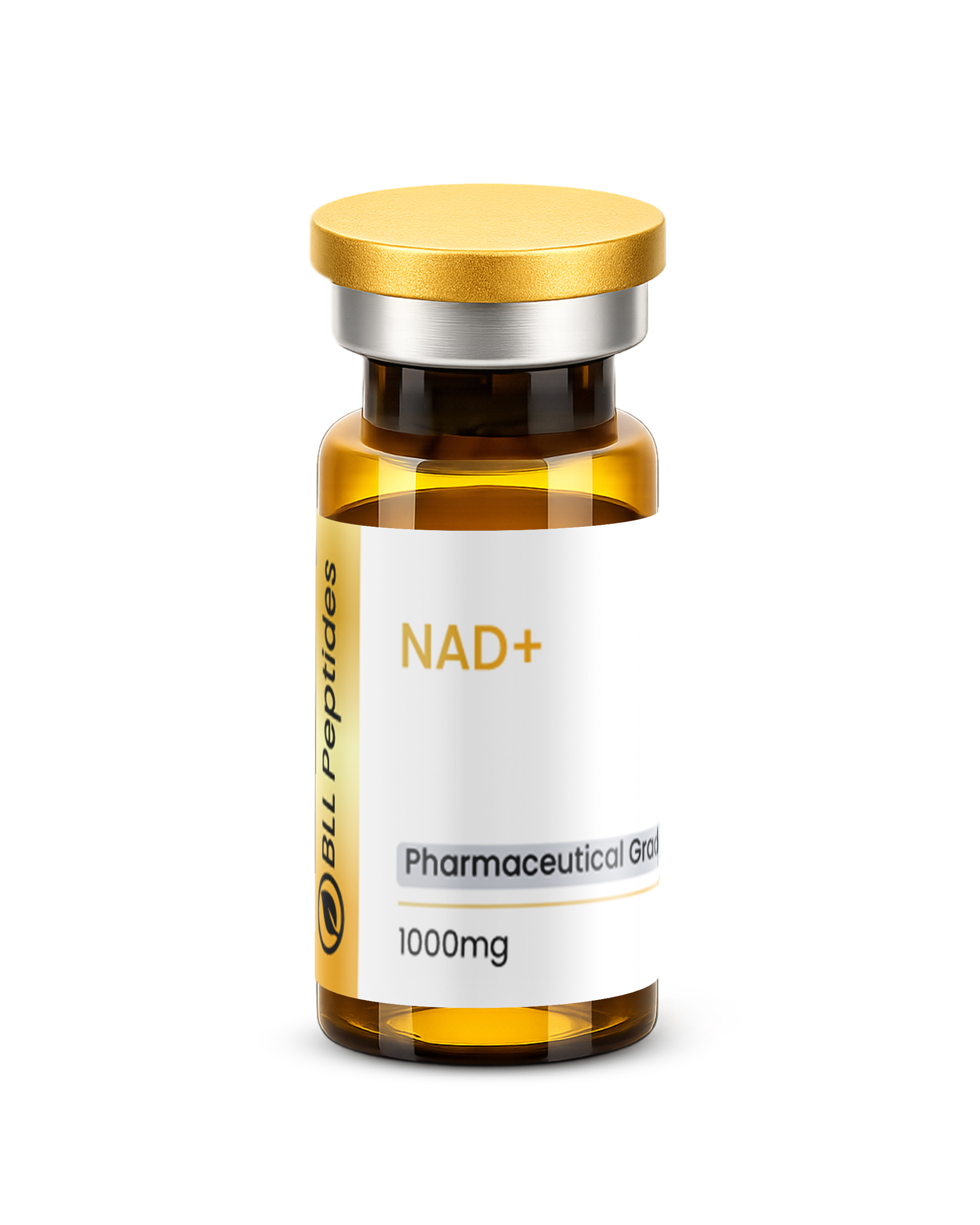
For researchers exploring this area, NAD+ is available at BLL Peptides for research use. A complementary research direction is BPC-157, which has shown parallel neuroprotective effects through nitric oxide and VEGF signaling pathways.
Frequently Asked Questions About NAD+ and Brain Research
- Why does NAD+ decline with age in the brain?
- NAD+ decline with age reflects increased consumption (by DNA-repairing PARPs and immune enzymes like CD38), reduced biosynthesis, and mitochondrial inefficiency. Brain tissue is especially sensitive because neurons have high metabolic demands and limited regenerative capacity.
- How is NAD+ different from NMN or NR as research subjects?
- NAD+ itself doesn’t cross cell membranes well — NMN (nicotinamide mononucleotide) and NR (nicotinamide riboside) are precursors that are converted intracellularly to NAD+. Direct NAD+ delivery via alternative routes is an active area of research.
- What neurological conditions is NAD+ research focused on?
- Research covers Alzheimer’s disease, Parkinson’s disease, traumatic brain injury, age-related cognitive decline, and neuroinflammation — all conditions with established links to mitochondrial dysfunction and oxidative stress where NAD+ plays a regulatory role.
- What are sirtuins and why do they matter in brain NAD+ research?
- Sirtuins are NAD+-dependent proteins that regulate cellular stress responses, DNA repair, and mitochondrial health. In the brain, SIRT1 and SIRT3 are particularly studied for their neuroprotective roles — and both require adequate NAD+ levels to function.
Dr. James Nguyen is a neurosurgeon and research advisor at BLL Peptides. His work focuses on peptide research, neurological recovery, and longevity science. All content is for educational and research purposes only.
This content is intended for research purposes only. BLL Peptides products are not intended for human consumption.