

NAD+ sits at the intersection of four distinct biological processes that matter enormously for cellular longevity: it is a cofactor for the sirtuin deacetylases, a substrate for PARP-mediated DNA repair, a regulator of the circadian clock through NAMPT, and the central electron carrier in oxidative phosphorylation. What makes the research compelling is not any one of these functions in isolation but the way NAD+ decline connects them — age-related NAD+ depletion appears to create a metabolic state in which DNA repair competes with mitochondrial function for the same limited cofactor pool. The literature on NAD+ supplementation strategies has expanded dramatically over the past decade, and parsing what is mechanistically established from what remains speculative requires working through the data carefully.
What Is NAD+?
NAD+ (nicotinamide adenine dinucleotide) is a coenzyme found in every living cell. It exists in two forms — NAD+ (oxidized) and NADH (reduced) — and cycles between them as it shuttles electrons during metabolic reactions. This redox cycling is fundamental to how cells generate ATP, the molecule that powers virtually every biological process.
What makes NAD+ particularly compelling to researchers is that its intracellular levels appear to decline significantly with age. Studies in multiple model organisms have documented this decline, and the downstream effects on mitochondrial efficiency and cellular signaling have driven considerable interest in understanding NAD+ biology at a mechanistic level.
NAD+ and the Mitochondrial Connection
The mitochondria — often called the “powerhouse of the cell” — are where the most consequential NAD+ activity takes place. Within the electron transport chain, NAD+ accepts electrons from metabolic intermediates and delivers them along a series of protein complexes, ultimately driving ATP synthesis through oxidative phosphorylation.
Beyond energy production, NAD+ serves as a substrate for a class of enzymes called sirtuins (SIRT1-SIRT7). These are NAD+-dependent deacetylases that regulate a broad range of biological pathways, including mitochondrial biogenesis, DNA repair, inflammation, and stress responses. SIRT1 and SIRT3, in particular, have been studied extensively for their roles in maintaining mitochondrial homeostasis.
NAD+ is also consumed by PARP enzymes (poly ADP-ribose polymerases), which are critical for DNA damage repair. When DNA damage is extensive — as it can be under oxidative stress — PARP activity increases sharply, rapidly depleting available NAD+ and creating a feedback loop that can impair mitochondrial function.
Research Overview: Key Pathways and Findings
Preclinical research has examined NAD+ supplementation in a variety of contexts. Landmark studies published in Cell and Cell Metabolism demonstrated that restoring NAD+ levels in aged mice improved mitochondrial function, muscle endurance, and metabolic markers. Researchers observed increased SIRT1 and SIRT3 activity alongside enhanced oxidative capacity in muscle tissue.
In neural tissue — an area I find particularly relevant given my background in neurosurgery — NAD+ has been studied for its potential role in supporting neuronal resilience. The brain is one of the most metabolically demanding organs in the body, and neurons depend heavily on efficient mitochondrial function. Research models investigating axonal degeneration have highlighted NAD+’s involvement in the SARM1 pathway, which plays a regulatory role in neuronal maintenance.
Human clinical trials have also emerged. A 2020 study in Nature Communications showed that NAD+ precursor supplementation (specifically NMN) increased blood NAD+ levels in healthy adults in a dose-dependent manner. Researchers noted improvements in muscle NAD+ metabolism and physical performance metrics in older participants, consistent with the preclinical data.
The Warburg effect — the observation that cancer cells preferentially use glycolysis even in oxygen-rich environments — has renewed interest in NAD+ metabolism as well. Tumor cells exhibit altered NAD+ biosynthesis, and several research groups are exploring whether NAD+ pathway modulation could play a role in metabolic oncology research.
Research-Grade NAD+ at BLL Peptides
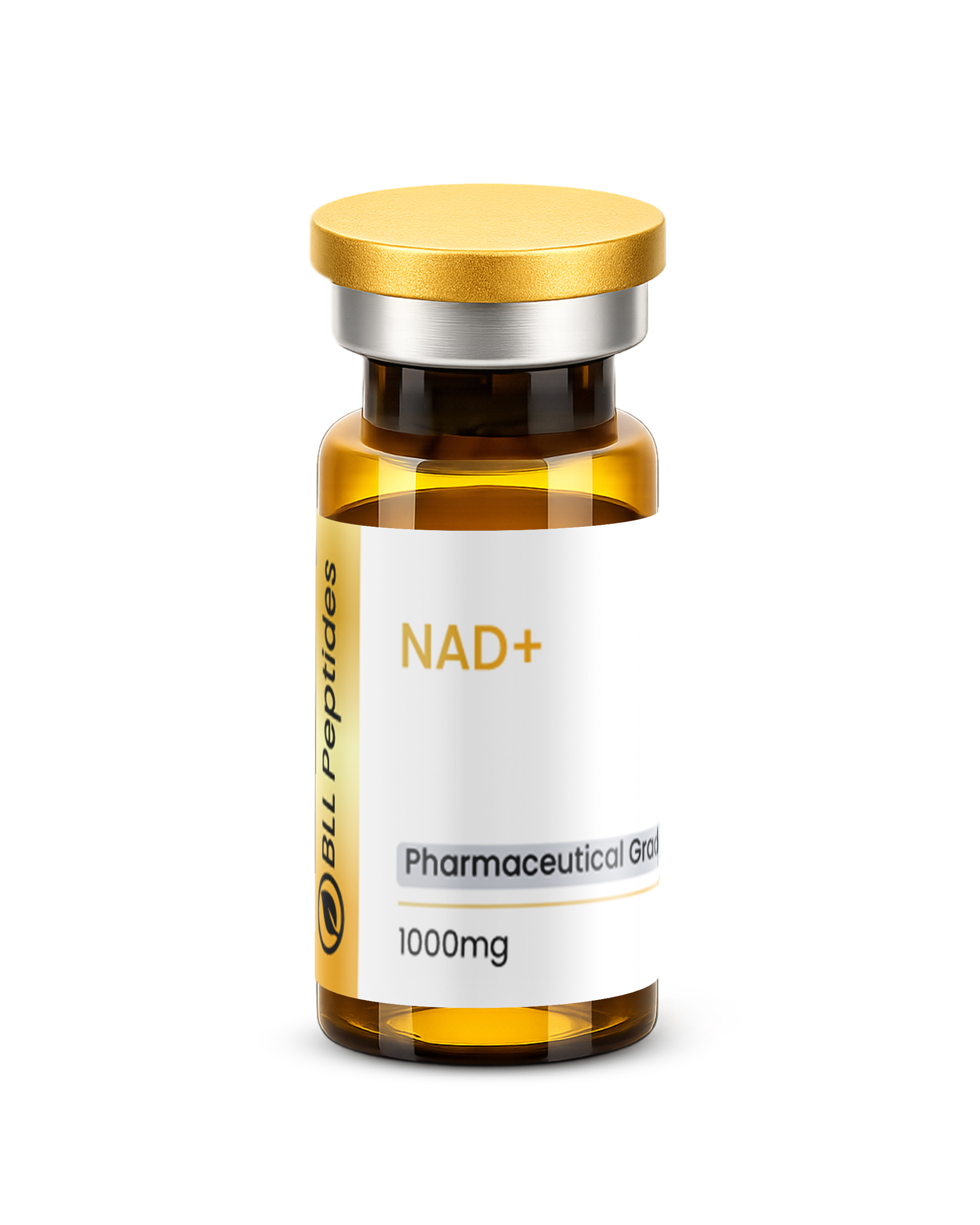
For researchers studying NAD+ biology, mitochondrial function, or age-related metabolic changes, BLL Peptides offers research-grade NAD+ in two concentrations:
All BLL Peptides products are USA-manufactured and GMP-certified, formulated specifically for research purposes.
Conclusion
NAD+ sits at the intersection of some of the most important questions in modern biology — how do cells maintain energy homeostasis under stress, why does mitochondrial function decline with age, and what molecular levers might be relevant to longevity research? The body of peer-reviewed literature has grown substantially, and NAD+ biology remains one of the most actively investigated areas in the metabolic sciences.
As research continues to mature, I expect our understanding of NAD+’s roles in sirtuin signaling, PARP activity, and neuronal metabolism will deepen considerably. It’s a molecule worth watching.
Further Reading
- NAD+ vs NMN: Understanding the Research on Nicotinamide Pathways
- Energy & Cellular Health: A Complete Guide to NAD+ Optimization
- Cognitive Function & Brain Health: A Complete Guide to Peptides
Dr. James is a board-certified neurosurgeon trained at Yale University and medical advisor to BLL Peptides.
Related Research
- NAD+: Complete Research Guide – Cellular Energy, Longevity Science, and Anti-Aging
- NAD+: A Beginner’s Guide to the Longevity Molecule
- Energy & Cellular Health: A Complete Guide to NAD+ Optimization
- Research-grade NAD+ at BLL Peptides
Disclaimer: This content is intended for research purposes only. BLL Peptides products are not intended for human consumption.