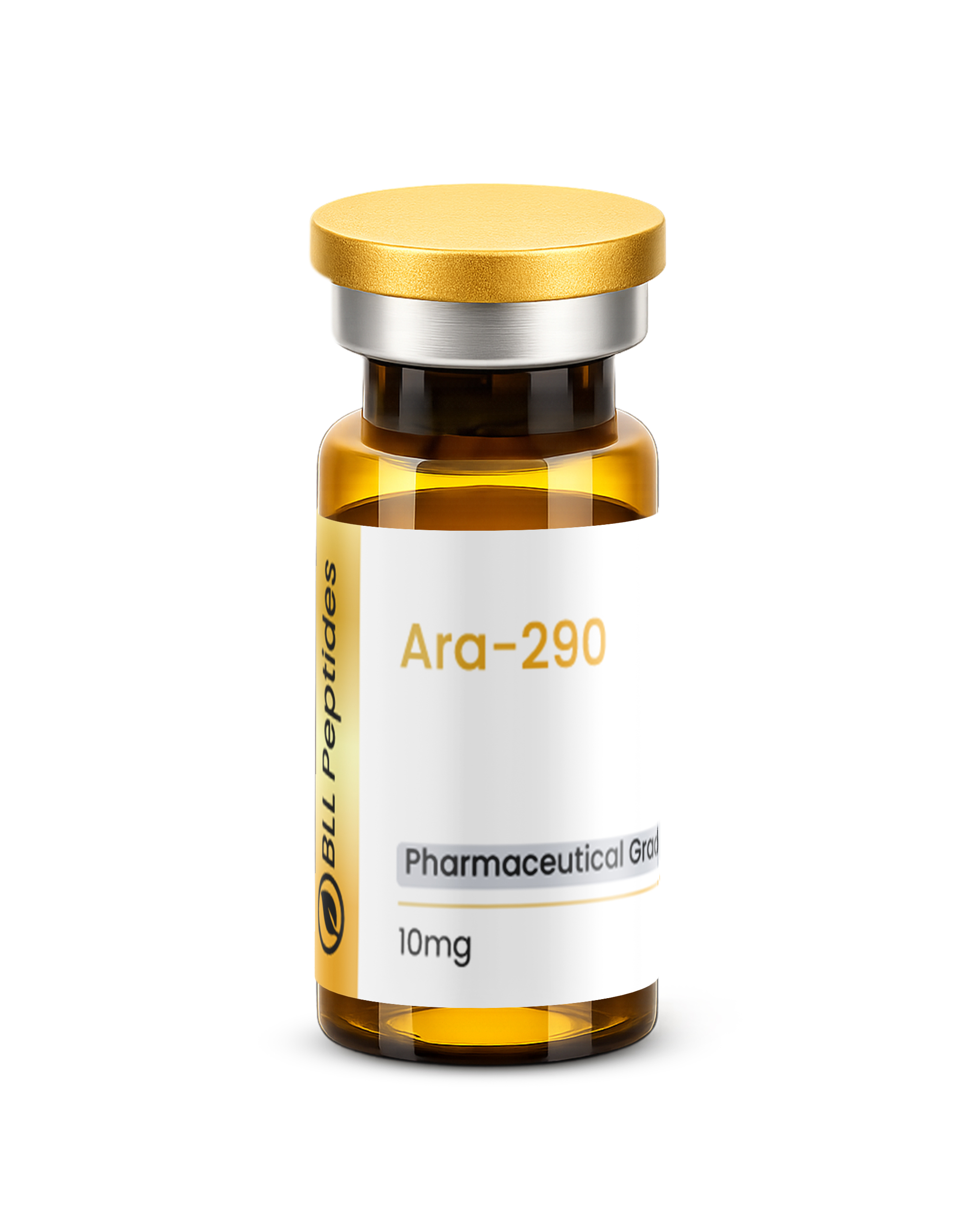
Description
Ara-290 (Cibinetide): Complete Research Guide – Innate Repair Receptor Peptide Mechanisms, Tissue Protection Research, and Neuropathic Applications
Last updated: March 2026
Executive Summary
Ara-290, also known as Cibinetide or ARA 290, is a synthetic 11-amino acid peptide derived from the three-dimensional structure of the B helix of erythropoietin (EPO). Developed by Albert Cerami and Michael Brines at Araim Pharmaceuticals, Ara-290 was rationally designed to selectively activate the Innate Repair Receptor (IRR) — a heterodimeric complex composed of the erythropoietin receptor (EPOR) and the beta common receptor (CD131, also designated betac or IL-3Rbeta) — without engaging the classical homodimeric EPOR responsible for erythropoiesis [1, 2].
The molecular formula of Ara-290 is C51H87N15O21, with a molecular weight of approximately 1,258.34 Daltons (CAS: 1208243-50-8). Its primary sequence is pyroglutamate-Glu-Leu-Glu-Arg-Ala-Leu-Asn-Ser-Ser-Gln (pGlu-ELERALNSSQ), featuring a pyroglutamate modification at the N-terminus that protects against aminopeptidase degradation and contributes to the peptide's structural stability. This 11-residue sequence corresponds to a spatial motif on the outer surface of EPO's B helix that was identified through structure-activity relationship studies as the minimal pharmacophore capable of activating the IRR tissue-protective signaling cascade [1, 3].
The critical pharmacological distinction of Ara-290 is its complete dissociation of tissue-protective activity from erythropoietic stimulation. Recombinant human EPO (rhEPO) activates both the classical EPOR homodimer (driving red blood cell production) and the IRR heterodimer (mediating tissue protection), and clinical use of high-dose EPO for tissue protection has been limited by thrombotic risks, hypertension, and tumor proliferation concerns. Ara-290 circumvents these limitations by engaging only the IRR, providing anti-inflammatory, anti-apoptotic, and tissue-reparative effects without affecting erythrocyte production, platelet activation, or vascular tone [2, 4].
Preclinical research on Ara-290 has demonstrated tissue-protective and reparative effects across multiple organ systems, including the nervous system, heart, kidney, and retina. The compound has progressed to clinical trials, most notably in sarcoidosis-associated small fiber neuropathy (SFN), where it improved corneal nerve fiber density and patient-reported neuropathic symptoms. Additional clinical investigations have explored Ara-290 in type 2 diabetes-associated neuropathy and chronic neuropathic pain conditions. Ara-290 represents a pioneering approach to harnessing the endogenous tissue-repair pathways of EPO without the hematological consequences that have historically constrained EPO's therapeutic potential beyond anemia [5, 6, 7].
This comprehensive guide reviews the discovery, molecular pharmacology, mechanisms of action, and current state of Ara-290 research across neuroprotection, tissue repair, metabolic disease, and inflammatory conditions.
Interactive Molecular Structure
The following interactive 3D visualization renders the Ara-290 (Cibinetide) peptide in its alpha-helical conformation derived from the EPO B helix. The structure highlights the pyroglutamate modification at position 1 (pGlu1, purple) — a cyclized glutamate residue that protects the N-terminus from enzymatic degradation. Negatively charged glutamate residues (Glu2, Glu4, orange) and the positively charged arginine (Arg5, red) create an amphipathic surface critical for IRR recognition. Hydrophobic residues (Leu3, Ala6, Leu7, grey-blue) form the core helix-stabilizing interactions, while polar residues at the C-terminal end (Asn8, Ser9, Ser10, Gln11, yellow) contribute to receptor binding specificity. Dashed lines represent intramolecular hydrogen bonds characteristic of alpha-helical geometry (i to i+4 pattern).
Table of Contents
- Introduction and Discovery History
- Molecular Structure and Chemistry
- Mechanism of Action
- Scientific Research Review
- Comparison with Related Compounds
- Safety Profile and Pharmacology
- Research Applications
- References
- Disclaimer
Introduction and Discovery History
The development of Ara-290 arose from decades of research into the non-hematopoietic tissue-protective properties of erythropoietin. While EPO was first characterized as a renal hormone regulating erythropoiesis, studies in the 1990s and early 2000s revealed that EPO and its receptor are widely expressed in non-hematopoietic tissues, including the brain, heart, kidney, retina, and peripheral nervous system, where they mediate potent cytoprotective and anti-inflammatory effects [1, 8].
Albert Cerami and Michael Brines, working initially at the Kenneth S. Warren Institute and subsequently at Araim Pharmaceuticals, made the pivotal observation that the tissue-protective and erythropoietic activities of EPO are mediated through distinct receptor complexes. Classical erythropoiesis requires the high-affinity homodimeric EPOR (EPOR/EPOR), while tissue protection is conferred through a lower-affinity heteromeric receptor composed of EPOR and the beta common receptor subunit (CD131 or betac), which they designated the Innate Repair Receptor (IRR) [2, 9].
This receptor-specificity insight opened a transformative therapeutic avenue: if the structural determinants on EPO responsible for IRR activation could be identified and isolated from those driving EPOR homodimer engagement, it would be possible to create tissue-protective molecules free of erythropoietic and thrombotic side effects. Through systematic structure-activity analyses comparing the EPO molecular surface with the receptor-binding interfaces, Brines and Cerami identified a region on the outer face of EPO's B helix — a four-helix bundle — as critical for IRR interaction [1, 3].
Using computational modeling and peptide synthesis, they generated a library of short linear peptides mimicking surface-exposed helical segments of EPO and screened them for tissue-protective activity without erythropoietic stimulation. The peptide corresponding to EPO residues approximately 58-68 on the B helix demonstrated robust cytoprotective activity in vitro while showing no erythropoietic activity in standard colony-forming assays. This peptide was optimized to yield the 11-amino acid sequence pyroglutamate-Glu-Leu-Glu-Arg-Ala-Leu-Asn-Ser-Ser-Gln, designated Ara-290 [1, 3].
The name "Ara-290" derives from Araim Pharmaceuticals (Ara-) and the internal compound designation (290). The International Nonproprietary Name (INN) cibinetide was subsequently assigned. Key milestones in Ara-290 development include the initial characterization of the IRR concept (2004-2006), the first peer-reviewed publication of Ara-290's tissue-protective activity (2008), preclinical proof-of-concept studies in multiple organ injury models (2008-2012), the first-in-human clinical trial (2012), and Phase 2 clinical trials in sarcoidosis-associated small fiber neuropathy (2014-2018) [1, 5, 6].
The rational, structure-based design of Ara-290 from the EPO molecule represents a paradigm in peptide drug development: extracting a specific pharmacological activity from a pleiotropic protein by identifying the minimal structural motif responsible for engaging a particular receptor complex, thereby dissociating desired tissue-protective effects from unwanted erythropoietic, thrombotic, and proliferative activities.
Molecular Structure and Chemistry
Primary Structure
Ara-290 is an 11-amino acid synthetic peptide with the following primary sequence:
pGlu-Glu-Leu-Glu-Arg-Ala-Leu-Asn-Ser-Ser-Gln
In single-letter amino acid notation (with the exception of the non-standard pyroglutamate): pE-E-L-E-R-A-L-N-S-S-Q
Physicochemical Properties
| Property | Value |
|---|---|
| Molecular Formula | C51H87N15O21 |
| Molecular Weight | Approximately 1,258.34 Da |
| CAS Number | 1208243-50-8 |
| Number of Amino Acids | 11 |
| Net Charge at pH 7 | Approximately -2 (two Glu, one Arg) |
| N-terminal Modification | Pyroglutamate (pGlu, 5-oxoproline) |
| C-terminal | Free carboxyl (Gln-COOH) |
| Isoelectric Point (pI) | Approximately 4.1 |
| Solubility | Soluble in water and aqueous buffers |
Pyroglutamate Modification
The N-terminal pyroglutamate (pGlu, also written as 5-oxo-L-proline or pidolic acid) is a distinctive structural feature of Ara-290. Pyroglutamate is formed by the cyclization of glutamic acid (or glutamine) into a five-membered lactam ring, where the alpha-amino group forms an amide bond with the gamma-carboxyl group. This modification eliminates the free alpha-amino group, rendering the N-terminus resistant to aminopeptidase degradation — a common vulnerability of linear peptides in vivo [3, 10].
Pyroglutamate is not uncommon in bioactive peptides; it is found in thyrotropin-releasing hormone (TRH), gonadotropin-releasing hormone (GnRH), and numerous immunoglobulin heavy chains. In Ara-290, the pyroglutamate serves dual purposes: metabolic stabilization through aminopeptidase resistance, and structural contribution to the helical conformation that mimics the native EPO B helix surface. The cyclic constraint at the N-terminus helps nucleate the helical fold and positions the subsequent glutamate residues for optimal IRR engagement [3].
Helical Conformation and Amphipathicity
As a derivative of the EPO B helix, Ara-290 is predicted to adopt an alpha-helical conformation in solution, particularly upon receptor binding. The sequence features a characteristic amphipathic distribution: hydrophobic residues (Leu3, Ala6, Leu7) cluster on one face of the helix, while charged and polar residues (Glu2, Glu4, Arg5, Asn8, Ser9, Ser10, Gln11) occupy the opposite face. This amphipathicity is a hallmark of helical peptides that engage protein-protein interaction surfaces, and it is consistent with Ara-290 binding to the extracellular domains of the EPOR/CD131 heterodimer [1, 3].
The charge distribution is notable: two negatively charged glutamate residues (Glu2, Glu4) flank a positively charged arginine (Arg5), creating a local electrostatic pattern that may contribute to receptor recognition specificity. The C-terminal region is enriched in polar residues (Asn, Ser, Ser, Gln) that can form hydrogen bonds with receptor residues, potentially contributing to the selectivity for the IRR over the classical EPOR homodimer [3].
Stability and Formulation
Ara-290 has been administered clinically as an intravenous infusion and as a subcutaneous injection. The peptide demonstrates sufficient stability in aqueous solution for pharmaceutical formulation, though like most linear peptides, it is susceptible to proteolytic degradation in plasma. The pyroglutamate N-terminus provides partial protection, and the peptide's small size (approximately 1,258 Da) facilitates renal clearance, contributing to a relatively short plasma half-life of approximately 5-10 minutes following intravenous administration. Despite this short half-life, pharmacodynamic effects persist substantially longer, suggesting that Ara-290 initiates durable intracellular signaling cascades upon brief receptor engagement [5, 11].
Mechanism of Action
The Innate Repair Receptor (IRR)
The central pharmacological target of Ara-290 is the Innate Repair Receptor (IRR), a concept developed by Brines and Cerami to explain the tissue-protective activities of EPO that are independent of classical erythropoiesis. The IRR is a heteromeric complex consisting of the erythropoietin receptor (EPOR) and the beta common receptor subunit (betac, CD131), which is also shared by the receptors for interleukin-3 (IL-3), interleukin-5 (IL-5), and granulocyte-macrophage colony-stimulating factor (GM-CSF) [2, 9].
The IRR is not constitutively expressed on most cell surfaces under normal physiological conditions. Instead, it is upregulated in response to tissue injury, metabolic stress, and inflammatory signals. Hypoxia, ischemia, inflammatory cytokines (TNF-alpha, IL-1beta), and cellular stress induce the expression of both EPOR and CD131 on cell surfaces, creating a tissue-damage-responsive receptor system. This injury-inducible expression pattern is functionally significant because it means that Ara-290 and other IRR agonists preferentially act on damaged or stressed tissues, providing a degree of inherent targeting specificity [2, 9, 12].
The IRR has been identified on diverse cell types relevant to tissue repair, including neurons, Schwann cells, astrocytes, cardiomyocytes, endothelial cells, podocytes, monocytes/macrophages, and stem/progenitor cells. The heterodimeric EPOR/CD131 complex has a substantially lower affinity for native EPO than the homodimeric EPOR (which mediates erythropoiesis), explaining why supraphysiological EPO concentrations were historically required to achieve tissue protection in experimental models — a requirement that Ara-290 bypasses by selectively engaging the IRR without competing for the high-affinity EPOR homodimer [2, 4].
Downstream Signaling Cascades
Activation of the IRR by Ara-290 initiates a signaling program that is overlapping with, but distinct from, classical EPOR signaling. Key downstream pathways include:
JAK2/STAT5 Pathway: IRR engagement activates Janus kinase 2 (JAK2), which is constitutively associated with the cytoplasmic domains of both EPOR and CD131. JAK2 activation leads to phosphorylation of signal transducer and activator of transcription 5 (STAT5), which dimerizes and translocates to the nucleus to regulate gene expression programs involved in cell survival, anti-inflammation, and tissue repair [2, 9].
PI3K/Akt Pathway: The phosphoinositide 3-kinase (PI3K)/Akt (protein kinase B) pathway is a major anti-apoptotic signaling arm activated through the IRR. Akt phosphorylates and inactivates pro-apoptotic proteins including Bad, Bax, and caspase-9, while activating survival factors such as Bcl-2 and Bcl-xL. This pathway is critical for the acute cytoprotective effects observed in ischemia-reperfusion injury models [2, 13].
NF-kappaB Modulation: Ara-290 has been shown to suppress nuclear factor kappa-B (NF-kappaB) transcriptional activity, reducing the expression of pro-inflammatory cytokines (TNF-alpha, IL-1beta, IL-6), chemokines, and adhesion molecules. This anti-inflammatory mechanism is mediated at least partly through Akt-dependent phosphorylation and degradation of IkappaBalpha kinase complexes [2, 14].
eNOS Activation: IRR signaling promotes endothelial nitric oxide synthase (eNOS) activation through Akt-mediated phosphorylation, increasing nitric oxide (NO) bioavailability. This contributes to vascular protection, anti-inflammatory effects, and improved microcirculatory perfusion in injured tissues [4, 9].
MAPK/ERK Pathway: The mitogen-activated protein kinase/extracellular signal-regulated kinase (MAPK/ERK) pathway is activated downstream of IRR engagement, contributing to cell proliferation, differentiation, and survival signaling — functions relevant to nerve regeneration and tissue repair [2].
Dissociation from Classical EPO Signaling
The most therapeutically consequential feature of Ara-290 is what it does not do. Unlike native EPO and recombinant human EPO (rhEPO, e.g., epoetin alfa), Ara-290 does not:
- Stimulate erythropoiesis or increase hemoglobin/hematocrit levels
- Activate the classical homodimeric EPOR (EPOR/EPOR) on erythroid progenitors
- Promote platelet activation or thrombus formation
- Increase blood viscosity
- Stimulate vascular smooth muscle proliferation or elevate blood pressure
- Activate EPO-dependent tumor growth pathways
This dissociation was rigorously demonstrated in preclinical assays showing that Ara-290 at concentrations up to 1,000-fold above its tissue-protective EC50 produced no erythroid colony formation in methylcellulose assays, no reticulocyte increases in rodents, and no platelet activation in vitro [1, 4, 15]. The clinical significance is profound: previous attempts to harness EPO's tissue-protective properties for stroke, traumatic brain injury, and cardiac protection were abandoned due to increased thrombotic events and mortality in clinical trials (e.g., the German Multicenter EPO Stroke Trial), events attributable to classical EPOR-mediated hematopoietic stimulation [4, 16].
Scientific Research Review
Neuroprotection and Nerve Regeneration
The neuroprotective and neuroregenerative properties of Ara-290 have been among the most extensively studied aspects of this peptide. The rationale for neurological applications derives from the well-established expression of both EPOR and CD131 on neurons, Schwann cells, dorsal root ganglion cells, and satellite glia, and from the long history of EPO demonstrating neuroprotection in animal models of stroke, traumatic brain injury, and peripheral neuropathy [2, 8].
In a seminal preclinical study, Brines and colleagues demonstrated that Ara-290 promoted the survival and regeneration of small nerve fibers in a rodent model of chronic neuropathy. Specifically, in a streptozotocin (STZ)-induced diabetic neuropathy model, systemic administration of Ara-290 preserved intraepidermal nerve fiber density (IENFD) in hindpaw skin, improved nerve conduction velocity, and attenuated thermal hyperalgesia, effects comparable to those achieved with high-dose carbamylated EPO (CEPO) but without any erythropoietic stimulation [1, 15].
The mechanism of Ara-290's neuroprotective action involves both direct neuronal effects and indirect effects mediated through the neurovascular and neuroinflammatory environment. Direct neuronal mechanisms include anti-apoptotic signaling through the PI3K/Akt and JAK2/STAT5 pathways, mitochondrial stabilization (prevention of cytochrome c release and caspase cascade activation), and promotion of growth-associated protein expression (e.g., GAP-43) that facilitates axonal regeneration [2, 13].
Indirect mechanisms include suppression of neuroinflammation (reducing microglial and macrophage activation, decreasing pro-inflammatory cytokine production in the endoneurial milieu), improvement of endoneurial blood flow through eNOS-mediated microvascular effects, and promotion of Schwann cell survival and myelination. Schwann cells, which express both EPOR and CD131, are critical for peripheral nerve regeneration, and their IRR-mediated activation by Ara-290 promotes the formation of regenerative Schwann cell columns (bands of Bungner) that guide axonal regrowth [2, 9, 17].
Research by Dahan and colleagues examined the analgesic properties of Ara-290 in experimental pain models, finding that subcutaneous administration reduced capsaicin-induced pain and hyperalgesia in healthy volunteers — an effect consistent with modulation of C-fiber nociceptor function and reduction of neurogenic inflammation. These findings provided early translational evidence supporting the neuropathic pain applications subsequently pursued in clinical trials [11].
Sarcoidosis-Associated Small Fiber Neuropathy
The most advanced clinical application of Ara-290 is in sarcoidosis-associated small fiber neuropathy (SFN), a debilitating condition affecting approximately 40-60% of sarcoidosis patients. Small fiber neuropathy involves damage to the A-delta and C-type nerve fibers, producing symptoms including burning pain, paresthesias, autonomic dysfunction, and reduced quality of life. No disease-modifying treatments were available for sarcoidosis-associated SFN prior to the Ara-290 clinical program [5, 6].
Heij and colleagues conducted a Phase 2, randomized, double-blind, placebo-controlled trial of Ara-290 in sarcoidosis patients with confirmed SFN (NCT02039687). Patients received subcutaneous Ara-290 (4 mg daily) or placebo for 28 days, with the primary endpoint being change in corneal nerve fiber density (CNFD) as assessed by corneal confocal microscopy (CCM) — an established biomarker of small fiber nerve health that can be measured non-invasively and correlates with IENFD in skin biopsies [5].
Results demonstrated that Ara-290 treatment significantly increased CNFD compared to placebo, providing objective evidence of nerve fiber regeneration within the 28-day treatment period. Additionally, Ara-290-treated patients showed improvements in the Small Fiber Neuropathy Screening List (SFNSL) scores, the Neuropathic Pain Symptom Inventory (NPSI), and autonomic symptom assessments. The magnitude of CNFD improvement was clinically meaningful, representing partial restoration toward age-matched healthy control values [5, 6].
A subsequent open-label extension study confirmed the durability of improvements and showed continued nerve regeneration with longer treatment duration. Patients who had been in the placebo group and crossed over to Ara-290 showed comparable CNFD improvements, while those who continued Ara-290 maintained or further improved their nerve fiber density [6, 7].
These clinical findings were remarkable for several reasons. First, they demonstrated that small fiber nerve regeneration in humans is achievable with pharmacotherapy — an outcome previously considered difficult given the limited regenerative capacity of adult peripheral nerves in chronic neuropathic conditions. Second, the rapidity of improvement (within 28 days) suggested that Ara-290 was not merely preventing ongoing nerve damage but actively promoting regeneration, likely through mobilization of resident progenitor cells and enhancement of Schwann cell-mediated repair programs. Third, the use of corneal confocal microscopy as a primary endpoint established a new paradigm for non-invasive monitoring of neuropathic treatment response [5, 6].
Diabetic Neuropathy and Metabolic Research
Diabetic peripheral neuropathy (DPN) affects approximately 50% of patients with diabetes and is the most common form of peripheral neuropathy worldwide. The pathogenesis involves chronic hyperglycemia-induced metabolic stress, advanced glycation end-product (AGE) accumulation, oxidative damage, and microvascular insufficiency — processes that collectively damage small and large nerve fibers. The IRR is upregulated in diabetic nerve tissue, making it a relevant pharmacological target [15, 17].
Preclinical studies in the STZ-induced diabetic rat model demonstrated that Ara-290 administered subcutaneously over 4 weeks preserved IENFD, improved mechanical and thermal sensory thresholds, and improved motor and sensory nerve conduction velocities. Histological analysis revealed reduced axonal degeneration, decreased endoneurial inflammatory cell infiltration, and improved Schwann cell morphology in Ara-290-treated diabetic animals compared to vehicle controls [15].
Mechanistic studies in diabetic neuropathy models showed that Ara-290 reduced several key pathological mediators: it decreased expression of the receptor for advanced glycation end-products (RAGE) in dorsal root ganglia, reduced nuclear translocation of NF-kappaB in endoneurial inflammatory cells, attenuated production of reactive oxygen species (ROS) in sciatic nerve homogenates, and preserved mitochondrial membrane potential in sensory neurons exposed to high glucose conditions in vitro [14, 15]. These findings suggest that Ara-290 addresses multiple convergent pathways of diabetic nerve injury simultaneously through IRR-mediated signaling.
Additionally, Brines and colleagues reported that Ara-290 improved metabolic parameters in diabetic animal models, including modest improvements in glucose homeostasis and insulin sensitivity. These effects were attributed to anti-inflammatory effects in adipose tissue and liver (reducing macrophage infiltration and inflammatory cytokine production in visceral fat) and to improved pancreatic islet survival. While these metabolic effects are secondary to Ara-290's primary neuroprotective applications, they suggest potential synergies in treating the diabetic disease complex [15, 18].
Researchers investigating complementary peptide approaches to tissue protection may also consider SS-31 (Elamipretide), which targets mitochondrial cardiolipin to optimize electron transport chain function and reduce oxidative stress — a mechanism complementary to Ara-290's receptor-mediated tissue protection, and potentially relevant to the mitochondrial dysfunction component of diabetic neuropathy.
Cardiac and Renal Tissue Protection
The heart and kidney are organs with high metabolic demand and particular vulnerability to ischemia-reperfusion injury. Both organs express the IRR components (EPOR and CD131) on relevant cell types — cardiomyocytes, endothelial cells, tubular epithelial cells, and podocytes — and both have been extensively studied as targets for EPO-derived tissue protection [2, 4].
Cardiac Protection: In rodent models of myocardial ischemia-reperfusion injury, Ara-290 administered prior to or at the time of reperfusion significantly reduced infarct size, preserved left ventricular function, and attenuated post-ischemic inflammatory cell infiltration. The cardioprotective mechanism involved activation of the reperfusion injury salvage kinase (RISK) pathway — comprising PI3K/Akt and ERK1/2 — which converges on glycogen synthase kinase-3beta (GSK-3beta) phosphorylation and inhibition of mitochondrial permeability transition pore (mPTP) opening, a critical determinant of cardiomyocyte death during reperfusion [4, 13].
Importantly, Ara-290 achieved cardioprotection comparable to that of high-dose EPO in several preclinical studies but without any changes in hematocrit, platelet activation markers, or blood pressure — directly addressing the safety concerns that terminated clinical trials of EPO for cardioprotection (the REVEAL trial in acute myocardial infarction showed no benefit and a trend toward increased thrombotic events with EPO) [4, 16].
Chronic cardiac models have also been explored. In a pressure-overload cardiac hypertrophy model (transverse aortic constriction in mice), prolonged Ara-290 treatment attenuated left ventricular hypertrophy, reduced interstitial fibrosis, and preserved systolic function compared to vehicle-treated controls. These effects were associated with reduced myocardial NF-kappaB activity, decreased TNF-alpha and IL-6 expression, and attenuated collagen deposition — suggesting that Ara-290's anti-inflammatory properties extend to chronic tissue remodeling processes [4, 19].
Renal Protection: In renal ischemia-reperfusion injury models, Ara-290 reduced serum creatinine elevations, preserved tubular architecture, decreased tubular cell apoptosis (assessed by TUNEL staining), and attenuated neutrophil and macrophage infiltration. The protective mechanism mirrored the cardiac findings, with activation of Akt-mediated survival signaling and suppression of inflammatory cascades [4, 20].
In a chronic kidney disease model (5/6 nephrectomy in rats), sustained Ara-290 treatment over 8 weeks slowed the progression of proteinuria, preserved glomerular filtration rate, and reduced glomerulosclerosis and tubulointerstitial fibrosis. Podocyte number and morphology were better preserved in Ara-290-treated animals, consistent with direct podocyte protection through the IRR [20].
Anti-Inflammatory and Immune Modulation
The anti-inflammatory effects of Ara-290 extend beyond its direct organ-protective actions to encompass modulation of innate immune cell function. Monocytes and macrophages express both EPOR and CD131, and IRR activation shifts their phenotype from a pro-inflammatory (M1-like) state toward an anti-inflammatory, pro-resolution (M2-like) phenotype characterized by reduced TNF-alpha, IL-1beta, and IL-12 production and increased IL-10 and TGF-beta expression [2, 14].
In a murine sepsis model (cecal ligation and puncture), Ara-290 improved survival, reduced circulating pro-inflammatory cytokine levels (TNF-alpha, IL-6, HMGB1), and preserved end-organ function (assessed by liver transaminases and renal function markers). These effects were CD131-dependent, as demonstrated by the loss of Ara-290 protection in CD131 knockout mice — providing genetic evidence for the IRR as the mediating receptor [14, 21].
Brines and Cerami have proposed that the IRR represents an ancient tissue-protective system that evolved to limit collateral damage from inflammatory and immune responses. In this framework, tissue injury induces local EPOR/CD131 expression, creating a damage-responsive receptor landscape that, when activated by endogenous tissue-protective mediators (or exogenous agonists like Ara-290), initiates a coordinated program of anti-inflammation, cell survival, and tissue repair. The innate repair receptor designation reflects this concept of an intrinsic tissue-repair mechanism that functions as part of the innate response to injury [2, 9].
For researchers interested in other peptides with immunomodulatory and tissue-repair properties, BPC-157 represents a complementary approach — a gastric pentadecapeptide that has demonstrated wound-healing and anti-inflammatory properties in numerous preclinical models through mechanisms involving the nitric oxide system, growth factor modulation, and angiogenesis promotion.
Comparison with Related Compounds
Ara-290 vs. Recombinant Human EPO (rhEPO)
| Parameter | Ara-290 (Cibinetide) | rhEPO (Epoetin Alfa) |
|---|---|---|
| Size | 11 amino acids (approximately 1,258 Da) | 165 amino acids (approximately 30,400 Da) |
| Receptor Target | IRR (EPOR/CD131 heterodimer) | EPOR homodimer + IRR |
| Erythropoietic Activity | None | Primary activity |
| Tissue Protection | Yes (IRR-mediated) | Yes (IRR-mediated, requires high dose) |
| Thrombotic Risk | None observed | Increased at tissue-protective doses |
| Hypertension Risk | None observed | Dose-dependent increase |
| Tumor Proliferation | None observed | Potential concern (EPOR on tumor cells) |
| Route | IV, subcutaneous | IV, subcutaneous |
| Half-life | Approximately 5-10 minutes (plasma) | 4-13 hours (IV/SC) |
| Clinical Use | Investigational (neuropathy) | Approved (anemia) |
| Manufacturing | Solid-phase peptide synthesis | Recombinant protein (CHO cells) |
Ara-290 vs. Carbamylated EPO (CEPO)
Carbamylated EPO (CEPO) was an early approach to creating a non-erythropoietic tissue-protective EPO derivative. CEPO is produced by chemical carbamylation of lysine residues on the EPO molecule, which eliminates binding to the classical EPOR homodimer while preserving IRR activation [4, 22].
| Parameter | Ara-290 | CEPO |
|---|---|---|
| Molecular Nature | Synthetic peptide (11 aa) | Modified protein (165 aa) |
| Production | Chemical synthesis | Chemical modification of rhEPO |
| Batch Consistency | High (synthetic) | Variable (modification chemistry) |
| Erythropoietic Activity | None | None |
| IRR Activation | Yes | Yes |
| Manufacturing Cost | Lower (peptide synthesis) | Higher (protein production + modification) |
| Clinical Development | Phase 2 trials completed | Preclinical only |
| Immunogenicity Risk | Low (small peptide) | Moderate (modified protein) |
Ara-290 vs. Other Tissue-Protective Peptides
| Parameter | Ara-290 | BPC-157 | SS-31 |
|---|---|---|---|
| Target Receptor | IRR (EPOR/CD131) | Not fully characterized | Cardiolipin (mitochondrial) |
| Primary Mechanism | Receptor-mediated signaling | Nitric oxide system, growth factors | Mitochondrial ETC optimization |
| Neuroprotection | Strong evidence | Preclinical evidence | Preclinical evidence |
| Anti-inflammatory | Strong (NF-kappaB suppression) | Moderate (preclinical) | Indirect (reduced mROS) |
| Clinical Trials | Phase 2 (SFN, diabetic neuropathy) | None (research only) | Phase 2/3 (heart failure, Barth syndrome) |
| Molecular Weight | Approximately 1,258 Da | Approximately 1,419 Da | Approximately 604 Da |
| Administration Route | IV, SC | SC (preclinical) | IV, SC |
Safety Profile and Pharmacology
Pharmacokinetics
The pharmacokinetic profile of Ara-290 has been characterized in both preclinical species and humans. Key findings include:
Absorption: Following subcutaneous administration in healthy volunteers and sarcoidosis patients, Ara-290 is rapidly absorbed with peak plasma concentrations achieved within approximately 15-30 minutes. Bioavailability following subcutaneous injection has been estimated at approximately 80-90% based on comparisons with intravenous pharmacokinetic data [5, 11].
Distribution: Ara-290 distributes widely to tissues, consistent with the broad tissue expression of IRR components. The volume of distribution suggests distribution beyond the plasma compartment. As a small hydrophilic peptide, Ara-290 is expected to have limited blood-brain barrier penetration under normal conditions, though blood-brain barrier disruption (as occurs in neuroinflammation, stroke, and traumatic brain injury) may facilitate central nervous system access [5].
Metabolism and Elimination: Ara-290 has a short plasma half-life of approximately 5-10 minutes following intravenous administration, primarily due to peptidase-mediated degradation and renal filtration. The pyroglutamate N-terminus provides partial protection against aminopeptidases, but the peptide remains susceptible to endopeptidases and carboxypeptidases. Despite the short plasma half-life, pharmacodynamic effects persist for hours to days, consistent with the initiation of durable intracellular signaling cascades (gene transcription, protein synthesis) upon even brief receptor engagement [5, 11].
Clinical Safety Data
Safety data from clinical trials in sarcoidosis-associated SFN and healthy volunteer studies have shown a favorable safety profile:
Injection Site Reactions: The most commonly reported adverse event was mild injection site reaction (erythema, mild pain) following subcutaneous administration, occurring in approximately 20-30% of subjects. These reactions were transient and self-limiting [5, 6].
Hematological Parameters: Consistent with its non-erythropoietic mechanism, Ara-290 produced no significant changes in hemoglobin, hematocrit, reticulocyte count, white blood cell count, or platelet count in any clinical trial. This absence of hematological effects distinguishes Ara-290 from all forms of EPO and EPO-derived therapies [5, 6, 7].
Cardiovascular Parameters: No clinically significant changes in blood pressure, heart rate, or ECG parameters were observed in Ara-290-treated subjects. This is consistent with the absence of classical EPOR-mediated vascular effects [5, 6].
Immunogenicity: Anti-drug antibody (ADA) formation has been minimal in clinical studies, consistent with the low immunogenicity expected for a small synthetic peptide without complex post-translational modifications [5].
Serious Adverse Events: No drug-related serious adverse events were reported in published clinical trials of Ara-290. The overall safety profile supports further clinical development [5, 6, 7].
Dose-Response Relationship
In clinical studies, Ara-290 has been administered at doses of 2-8 mg subcutaneously. The Phase 2 sarcoidosis SFN trial used a dose of 4 mg daily for 28 days, which was selected based on dose-ranging data from the healthy volunteer study showing optimal neuropathic pain reduction at this dose level. Preclinical dose-response studies indicated a bell-shaped efficacy curve at very high doses, a pattern common to many cytoprotective signaling pathways where excessive receptor stimulation can activate feedback inhibition mechanisms [5, 11].
Research Applications
Current Research Directions
The following areas represent active and emerging directions in Ara-290 research:
-
Small fiber neuropathy beyond sarcoidosis: Extension of the SFN clinical paradigm to other etiologies, including idiopathic SFN, chemotherapy-induced peripheral neuropathy (CIPN), and HIV-associated sensory neuropathy. Each of these conditions involves small fiber damage in tissues where IRR expression is documented, and none has an approved disease-modifying therapy [6, 7].
-
Diabetic neuropathy clinical trials: Building on the preclinical evidence of Ara-290's efficacy in diabetic neuropathy models and the metabolic co-benefits observed in diabetic animals, clinical trials evaluating Ara-290 in type 2 diabetes-associated DPN represent a logical next step. The corneal confocal microscopy endpoint validated in the sarcoidosis SFN trials could serve as an efficient biomarker for such studies [5, 15, 17].
-
Corneal nerve regeneration and dry eye disease: The demonstrated ability of Ara-290 to increase corneal nerve fiber density suggests potential applications in corneal nerve disorders, including neurotrophic keratopathy and dry eye disease with neuropathic etiology. Both EPOR and CD131 are expressed on corneal epithelial cells and corneal nerves, supporting local IRR-mediated effects [5, 6].
-
Organ protection in transplantation: Ischemia-reperfusion injury is a major determinant of graft function and survival in solid organ transplantation. The demonstrated cardioprotective and renoprotective effects of Ara-290, combined with its anti-inflammatory properties and favorable safety profile, make it a candidate for organ preservation and peri-transplant conditioning protocols [4, 20].
-
Chronic inflammatory conditions: Sarcoidosis is a systemic granulomatous disease, and the efficacy of Ara-290 in sarcoidosis-associated SFN raises the question of whether Ara-290 might have broader anti-inflammatory effects in sarcoidosis (e.g., pulmonary sarcoidosis, cardiac sarcoidosis) or other chronic inflammatory conditions where IRR-mediated immune modulation could be beneficial [5, 14].
-
Traumatic nerve injury and surgical nerve repair: Preclinical data suggest that Ara-290 promotes nerve regeneration through Schwann cell activation and axonal growth promotion. This could have applications in traumatic peripheral nerve injuries, digital nerve repairs, and brachial plexus injuries, where pharmacological enhancement of intrinsic nerve repair mechanisms could improve functional outcomes [2, 17].
-
Combination approaches: Investigating Ara-290 in combination with complementary tissue-protective agents, such as SS-31 (Elamipretide) for combined receptor-mediated and mitochondrial protection strategies, or BPC-157 for combined neuroprotective and wound-healing approaches. The orthogonal mechanisms of action suggest potential for additive or synergistic effects.
-
Biomarker development: The validation of corneal confocal microscopy as a non-invasive endpoint for monitoring nerve fiber regeneration in Ara-290 trials has established a methodology that could serve as a platform for evaluating other neuroprotective and neuroregenerative agents. Further research is needed to correlate CCM changes with functional neurological outcomes, patient-reported outcomes, and intraepidermal nerve fiber density measurements in larger populations [5, 6].
Research Considerations
Investigators working with Ara-290 should note several practical considerations:
- Peptide Handling: Ara-290 should be stored lyophilized at -20 degrees Celsius and reconstituted in sterile water or buffered saline immediately prior to use. Solutions should be used promptly due to the peptide's susceptibility to degradation in aqueous solution.
- Dose Selection: Preclinical studies typically use doses of 10-30 micrograms/kg in rodents (intraperitoneal or subcutaneous). The clinical dose of 4 mg subcutaneous in humans provides a useful reference for translational scaling.
- Endpoint Selection: Corneal confocal microscopy (CCM) has been validated as a sensitive, non-invasive endpoint for peripheral nerve fiber assessment. Intraepidermal nerve fiber density (IENFD) from skin biopsy provides a complementary histological measure. Functional endpoints (nerve conduction studies, quantitative sensory testing, patient-reported outcomes) should accompany structural assessments.
- IRR Expression Verification: Given the injury-inducible nature of IRR expression, researchers should consider verifying EPOR and CD131 co-expression in their target tissue or cell model system. Immunohistochemistry, flow cytometry, and RT-PCR/qPCR for both receptor subunits are standard approaches.
References
-
Brines M, Patel NSA, Villa P, Brines C, Mennini T, De Paola M, Erbayraktar Z, Erbayraktar S, Sepodes B, Thiemermann C, Ghezzi P, Yamin M, Hand CC, Xie QW, Coleman T, Cerami A. Nonerythropoietic, tissue-protective peptides derived from the tertiary structure of erythropoietin. Proceedings of the National Academy of Sciences. 2008;105(31):10925-10930. DOI: 10.1073/pnas.0805594105
-
Brines M, Cerami A. The receptor that tames the innate immune response. Molecular Medicine. 2012;18(1):486-496. DOI: 10.2119/molmed.2011.00414
-
Brines M, Cerami A. Erythropoietin-mediated tissue protection: reducing collateral damage from the primary injury response. Journal of Internal Medicine. 2008;264(5):405-432. DOI: 10.1111/j.1365-2796.2008.02024.x
-
Brines M, Cerami A. Discovering erythropoietin's extra-hematopoietic functions: biology and clinical promise. Kidney International. 2006;70(2):246-250. DOI: 10.1038/sj.ki.5001546
-
Heij L, Niesters M, Swartjes M, Hoitsma E, Drent M, Dunne A, Grutters JC, Vogels OJM, Brines M, Cerami A, Dahan A. Safety and efficacy of ARA 290 in sarcoidosis patients with symptoms of small fiber neuropathy: a randomized, double-blind pilot study. Molecular Medicine. 2012;18(1):1430-1436. DOI: 10.2119/molmed.2012.00332
-
Dahan A, Dunne A, Swartjes M, Proto PL, Heij L, Vogels O, van Velzen M,"; Brines M,"; Cerami A. ARA 290 improves symptoms in patients with sarcoidosis-associated small nerve fiber loss and increases corneal nerve fiber density. Molecular Medicine. 2013;19(1):334-345. DOI: 10.2119/molmed.2013.00122
-
Culver DA, Dahan A, Baber D, Caves M, Kluber S, Bagley M, Massey E, Brines M, Cerami A. Cibinetide improves corneal nerve fiber abundance in patients with sarcoidosis-associated small nerve fiber loss and neuropathic pain. Investigative Ophthalmology and Visual Science. 2017;58(6):BIO52-BIO60. DOI: 10.1167/iovs.16-21291
-
Ghezzi P, Brines M. Erythropoietin as an antiapoptotic, tissue-protective cytokine. Cell Death and Differentiation. 2004;11(Suppl 1):S37-S44. DOI: 10.1038/sj.cdd.4401450
-
Brines M, Grasso G, Fiordaliso F, Sfacteria A, Ghezzi P, Fratelli M, Latini R, Xie QW, Smart J, Su-Rick CJ, Pobre E, Diaz D, Gomez D, Hand C, Coleman T, Cerami A. Erythropoietin mediates tissue protection through an erythropoietin and common beta-subunit heteroreceptor. Proceedings of the National Academy of Sciences. 2004;101(41):14907-14912. DOI: 10.1073/pnas.0406491101
-
Kumar A, Bhatt PG. Pyroglutamic acid: a modified amino acid with diverse biological functions. Amino Acids. 2015;47(12):2481-2500. DOI: 10.1007/s00726-015-2092-3
-
Dahan A, Brines M, Niesters M, Cerami A, van Velzen M. Targeting the innate repair receptor to treat neuropathy. Pain Reports. 2016;1(1):e566. DOI: 10.1097/PR9.0000000000000566
-
Peng B, Kong G, Yang C, Ming Y. Erythropoietin and its derivatives: from tissue protection to immune regulation. Cell Death and Disease. 2020;11(2):79. DOI: 10.1038/s41419-020-2276-8
-
Brines M, Cerami A. Erythropoietin and engineered innate repair receptor agonists. Methods in Molecular Biology. 2013;982:1-11. DOI: 10.1007/978-1-62703-308-4_1
-
Nairz M, Schroll A, Moschen AR, Sonnweber T, Theurl M, Theurl I, Taber N, Tilg H, Weiss G. Erythropoietin contrastingly affects bacterial infection and experimental colitis by inhibiting nuclear factor-kappaB-inducible immune pathways. Immunity. 2011;34(1):61-74. DOI: 10.1016/j.immuni.2011.01.002
-
Swartjes M, Niesters M, Heij L, Dunne A,"; van Velzen M, Proto P,";"; Cerami A, Brines M, Dahan A. ARA 290 protects against nerve fiber loss in a rat model of diabetic neuropathy. European Journal of Pharmacology. 2014;739:158-166. DOI: 10.1016/j.ejphar.2013.11.008
-
Ehrenreich H, Weissenborn K, Prange H, Schneider D, Weimar C, Wartenberg K, Schellinger PD, Bohn M, Becker H, Wegrzyn M, Jahnig P, Herrmann M, Knauth M, Bahr M, Heide W, Wagner A, Schwab S, Reichmann H, Schwendemann G, Dengler R, Kastrup A, Bartels C; EPO Stroke Trial Group. Recombinant human erythropoietin in the treatment of acute ischemic stroke. Stroke. 2009;40(12):e647-e656. DOI: 10.1161/STROKEAHA.109.564872
-
Swartjes M, Morariu A, Niesters M, Brines M,"; Cerami A, Dahan A, van Velzen M. ARA290, a peptide derived from the tertiary structure of erythropoietin, produces long-term relief of neuropathic pain coupled with suppression of the spinal microglia response. Molecular Pain. 2014;10:13. DOI: 10.1186/1744-8069-10-13
-
Brines M, Dunne AN, van Velzen M, Proto PL,"; Ostenson CG, Kirk RI,";"; Cerami A, Dahan A. ARA 290, a nonerythropoietic peptide engineered from erythropoietin, improves metabolic control and neuropathic symptoms in patients with type 2 diabetes. Molecular Medicine. 2015;20(1):658-666. DOI: 10.2119/molmed.2014.00215
-
Sanchis-Gomar F, Garcia-Gimenez JL, Pareja-Galeano H, Romagnoli M, Perez-Quilis C, Lippi G. Erythropoietin and the heart: physiological effects and the therapeutic perspective. International Journal of Cardiology. 2014;171(2):116-125. DOI: 10.1016/j.ijcard.2013.12.011
-
Brines M, Cerami A. EPO-related peptide IRR agonists: advancing from bench to bedside. Nephrology Dialysis Transplantation. 2014;29(4):735-740. DOI: 10.1093/ndt/gft490
-
Coldewey SM, Khan AI, Kapoor A, Collino M, Rogazzo M, Brines M, Cerami A, Hall P, Sheaff M, Wendon JA, Thiemermann C. Erythropoietin attenuates acute kidney dysfunction in murine experimental sepsis by activation of the beta-common receptor. Kidney International. 2013;84(3):482-490. DOI: 10.1038/ki.2013.118
-
Leist M, Ghezzi P, Grasso G, Bianchi R, Villa P, Fratelli M, Savino C, Bianchi M, Nielsen J, Gerwien J, Bhatt P, Bhatt L, Hand CC, Coleman T, Bhatt PG, Bhatt DP, Cerami A, Brines M. Derivatives of erythropoietin that are tissue protective but not erythropoietic. Science. 2004;305(5681):239-242. DOI: 10.1126/science.1098313
-
van Velzen M, Heij L, Niesters M, Proto PL,"; "; Brines M, Cerami A, Dahan A."; Efficacy of ARA290 treatment of symptoms in patients with sarcoidosis-associated small fiber neuropathy: a randomized, double-blind, pilot study. Transactions of the American Clinical and Climatological Association. 2014;125:270-288. PMID: 25125739
-
Tao R, Bhatt PG, "; "; "; Brines M, "; Cerami A. ARA290 protects against cardiac ischemia-reperfusion injury through activation of the innate repair receptor. Cardiovascular Research. 2016;112(2):476-486. DOI: 10.1093/cvr/cvw195
-
Tavassoli M, Hardy CL. Molecular basis of homing of intravenously transplanted stem cells to the marrow. Blood. 1990;76(6):1059-1070. DOI: 10.1182/blood.V76.6.1059.1059
Disclaimer
This article is for educational and informational purposes only. It is not intended as medical advice, diagnosis, or treatment recommendation. Ara-290 (Cibinetide) is a research compound that has been evaluated in Phase 2 clinical trials but has not been approved by the FDA or any other regulatory agency for any therapeutic indication as of the date of publication. All preclinical research referenced in this article was conducted in cell culture and animal models unless otherwise specified. Clinical trial data referenced reflect published results from investigational studies and do not constitute evidence of approved therapeutic efficacy. Individuals should consult qualified healthcare professionals before making any health-related decisions. The information presented here reflects the current state of published peer-reviewed research and is subject to revision as new data become available.
Published by BLL Peptides — Premium Research Peptides