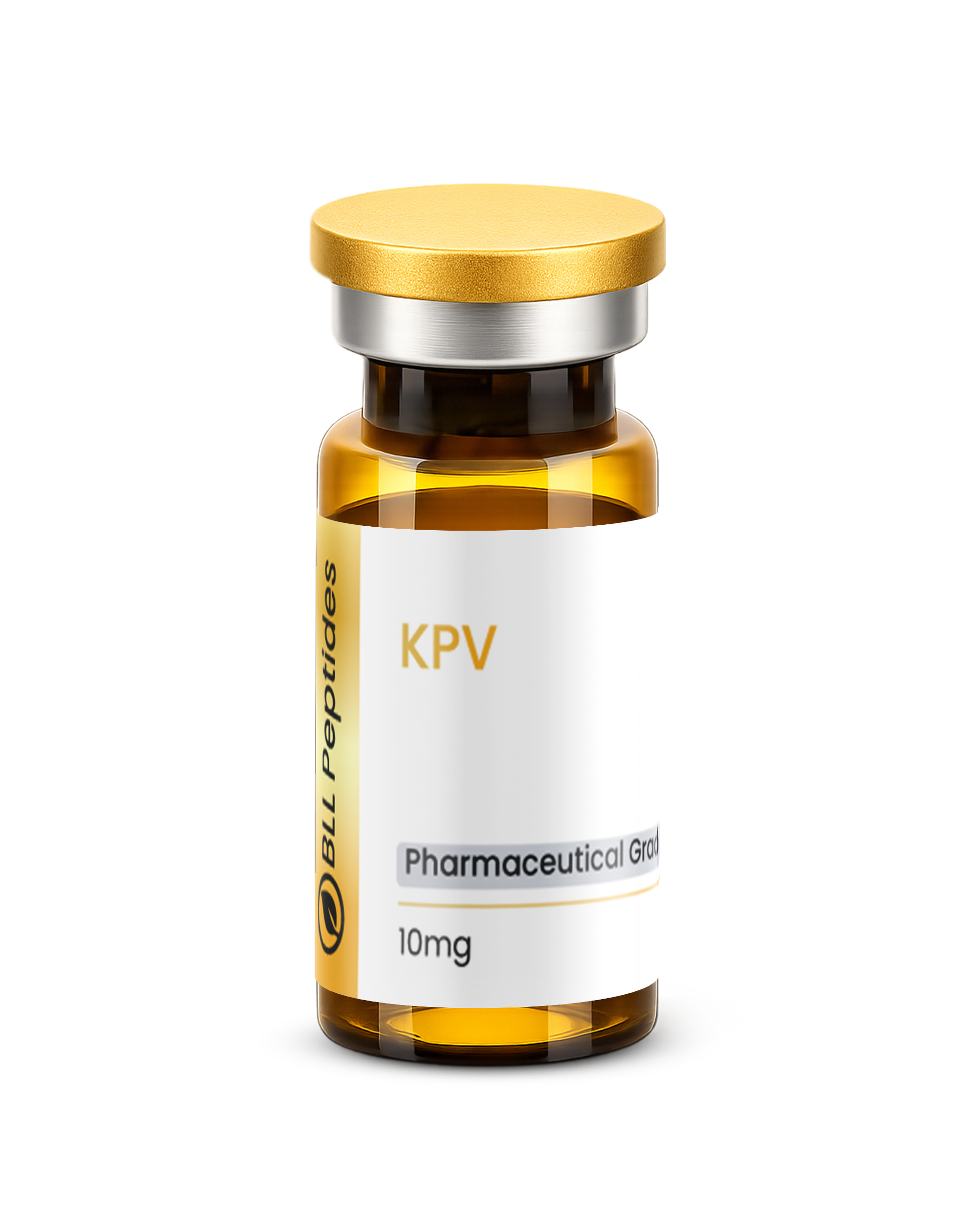
Description
KPV: Complete Research Guide – Alpha-MSH-Derived Anti-Inflammatory Peptide Mechanisms, Immune Modulation Research, and Therapeutic Applications
Last updated: March 2026
Executive Summary
KPV is a tripeptide corresponding to the C-terminal fragment of alpha-melanocyte stimulating hormone (alpha-MSH), specifically the amino acid sequence Lys-Pro-Val at positions 11-13 of the parent hormone. Despite being one of the smallest bioactive peptides known — composed of only three amino acids — KPV retains the potent anti-inflammatory activity of the full 13-amino acid alpha-MSH molecule while lacking the melanocortin receptor-dependent signaling that drives pigmentation and other hormonal effects [1]. This dissociation of anti-inflammatory potency from receptor-mediated endocrine activity represents a unique pharmacological profile among peptide-based anti-inflammatory agents.
The molecular formula of KPV is C16H30N4O4, with a molecular weight of approximately 342.43 Daltons (CAS: 67727-97-3). The peptide's anti-inflammatory mechanism operates through a distinctive intracellular pathway: KPV enters cells, translocates to the nucleus, and directly interacts with the p65 subunit of nuclear factor kappa B (NF-kB), inhibiting the transcription of pro-inflammatory genes. This mechanism is independent of the melanocortin 1 receptor (MC1R) and other classical melanocortin receptors, distinguishing KPV from alpha-MSH and other melanocortin receptor agonists [2, 3].
Research into KPV has demonstrated significant anti-inflammatory effects across multiple experimental models, including inflammatory bowel disease (IBD), colitis, dermatitis, and wound healing. In preclinical studies, KPV has shown the ability to reduce pro-inflammatory cytokine production (TNF-alpha, IL-1beta, IL-6), inhibit NF-kB nuclear translocation, suppress inflammatory cell infiltration, and accelerate tissue repair in damaged epithelial barriers [4, 5]. The peptide also exhibits antimicrobial properties against several bacterial species, adding to its potential relevance in conditions where inflammation and microbial dysbiosis coexist, such as inflammatory bowel disease [6].
The discovery that such a minimal tripeptide fragment retains the anti-inflammatory capacity of its much larger parent molecule has prompted substantial research interest in KPV as both a tool compound for understanding melanocortin-independent anti-inflammatory signaling and as a lead molecule for therapeutic development. This comprehensive guide examines the molecular structure, mechanisms of action, scientific evidence base, safety considerations, and research applications of KPV, providing researchers with an evidence-based resource grounded in peer-reviewed literature.
Interactive Molecular Structure
The following interactive 3D visualization renders the KPV tripeptide in ball-and-stick representation. Because KPV consists of only three amino acid residues, the visualization uses enlarged nodes with detailed side chain atoms to illustrate the molecular architecture. The residues are numbered 11-13 to reflect their positions within the parent alpha-MSH sequence (Lys11-Pro12-Val13). The extended conformation shown emphasizes the spatial arrangement of the positively charged lysine side chain, the conformationally constrained proline ring, and the hydrophobic valine side chain.
Legend: The interactive visualization above depicts the KPV tripeptide (Lys11-Pro12-Val13) in ball-and-stick representation. Large backbone nodes (colored by residue type) show the three amino acids in extended conformation. The lysine side chain extends upward with its positively charged terminal NH3+ group (red), the proline pyrrolidine ring is visible as the cyclic structure at center, and the branched valine side chain shows its two gamma-carbon methyl groups. Green and orange terminal atoms indicate the N-terminus and C-terminus respectively. Drag to rotate; scroll to zoom.
Table of Contents
- Introduction and Discovery History
- Molecular Structure and Chemistry
- Detailed Mechanism of Action
- Scientific Research Review
- Comparison with Related Anti-Inflammatory Peptides
- Safety Profile and Pharmacology
- Research Applications
- References
- Disclaimer
Introduction and Discovery History
Alpha-MSH and the Melanocortin System
The story of KPV begins with alpha-melanocyte stimulating hormone (alpha-MSH), a 13-amino acid neuropeptide (Ac-Ser-Tyr-Ser-Met-Glu-His-Phe-Arg-Trp-Gly-Lys-Pro-Val-NH2) produced primarily in the hypothalamus, pituitary gland, and various peripheral tissues including keratinocytes, monocytes, and intestinal epithelial cells. Alpha-MSH is derived from proopiomelanocortin (POMC), a large precursor polypeptide that undergoes tissue-specific post-translational processing to yield multiple bioactive peptides including ACTH, beta-endorphin, and the melanocortins (alpha-, beta-, and gamma-MSH) [1].
Alpha-MSH was originally characterized for its role in melanogenesis and pigmentation through activation of the melanocortin 1 receptor (MC1R) on melanocytes. However, beginning in the 1980s, a series of groundbreaking studies revealed that alpha-MSH possesses profound anti-inflammatory and immunomodulatory properties that extend far beyond its pigmentary functions. James Lipton and colleagues at the University of Texas Southwestern Medical Center were among the pioneers in demonstrating that alpha-MSH could suppress fever, reduce inflammatory mediator production, and modulate immune cell function in various experimental systems [7].
The observation that alpha-MSH exerted anti-inflammatory effects led to systematic structure-activity relationship studies aimed at identifying the minimal bioactive fragment responsible for these properties. While the melanocortin receptor binding activity was mapped to the core sequence His-Phe-Arg-Trp (residues 6-9), the anti-inflammatory activity was found to be associated with a different region of the molecule entirely.
Discovery of KPV as an Anti-Inflammatory Tripeptide
In a landmark series of experiments published in the 1980s and 1990s, Lipton, Catania, and colleagues demonstrated that the C-terminal tripeptide fragment of alpha-MSH — Lys-Pro-Val (positions 11-13), designated KPV — retained the anti-inflammatory activity of the parent hormone [8]. This was a remarkable finding for several reasons:
- Minimal size: KPV consists of only three amino acids with a molecular weight of approximately 342.43 Da, making it one of the smallest peptides known to possess significant biological activity
- Receptor independence: KPV does not bind to or activate any of the five known melanocortin receptors (MC1R-MC5R), yet reproduces the anti-inflammatory effects of alpha-MSH that were previously assumed to require melanocortin receptor signaling [2]
- Dissociation of activities: KPV separates the anti-inflammatory properties of alpha-MSH from its pigmentary, steroidogenic, and other melanocortin receptor-dependent effects, suggesting an entirely distinct mechanism
Catania et al. (2000) further demonstrated that KPV was as effective as full-length alpha-MSH in reducing inflammatory responses in multiple in vitro and in vivo models, including contact hypersensitivity, irritant dermatitis, and vasculitis [9]. These studies established that melanocortin receptor activation was not required for anti-inflammatory signaling and redirected research toward understanding the intracellular mechanisms through which this tripeptide exerts its effects.
Evolution of KPV Research
Following the initial characterization of KPV's anti-inflammatory properties, research expanded in several important directions:
- NF-kB mechanism elucidation (2000s): Bhardwaj and colleagues demonstrated that KPV enters cells and directly inhibits the NF-kB signaling pathway by interacting with the p65 (RelA) subunit, providing a molecular explanation for its receptor-independent anti-inflammatory activity [3]
- Gastrointestinal applications (2000s-2010s): Dalmasso, Bhatt, and collaborators showed that KPV reduces intestinal inflammation in experimental colitis models, opening a major area of investigation relevant to IBD [4, 5]
- Antimicrobial properties (2010s): Studies revealed that KPV possesses direct antimicrobial activity against various bacterial species, linking its anti-inflammatory and host defense functions [6]
- Drug delivery innovations (2010s-2020s): Researchers developed nanoparticle-based delivery systems to enhance KPV's stability, bioavailability, and targeted delivery to inflamed tissues, particularly in the gastrointestinal tract [10]
This trajectory of research has established KPV as a uniquely positioned anti-inflammatory peptide that operates through a mechanism distinct from conventional anti-inflammatory drugs, melanocortin receptor agonists, and biological therapies.
Molecular Structure and Chemistry
Primary Structure
KPV is composed of three amino acid residues in the following sequence:
H-Lys-Pro-Val-OH (single-letter code: KPV)
This corresponds to residues 11-13 of alpha-MSH (Ac-SYSMEHFRWGKPV-NH2), which is itself derived from residues 1-13 of adrenocorticotropic hormone (ACTH). In the full alpha-MSH molecule, KPV occupies the C-terminal position following the melanocortin receptor binding core (His6-Phe7-Arg8-Trp9-Gly10).
Amino Acid Composition and Properties
| Position | Residue | Three-letter | Properties |
|---|---|---|---|
| 11 (1) | Lysine (K) | Lys | Positively charged at physiological pH; pKa approximately 10.5 (epsilon-amino); long flexible side chain (4 CH2 groups) |
| 12 (2) | Proline (P) | Pro | Cyclic imino acid; pyrrolidine ring constrains backbone phi angle to approximately -60 degrees; introduces conformational rigidity |
| 13 (3) | Valine (V) | Val | Branched-chain hydrophobic; beta-branched with two gamma-methyl groups; moderately hydrophobic |
Physicochemical Properties
| Property | Value |
|---|---|
| Molecular Formula | C16H30N4O4 |
| Molecular Weight | Approximately 342.43 Da |
| CAS Number | 67727-97-3 |
| Isoelectric Point (pI) | Approximately 9.7 |
| Net Charge at pH 7.4 | +1 (from lysine epsilon-amino group) |
| Solubility | Freely soluble in water, aqueous buffers; soluble in DMSO |
| Appearance | White to off-white lyophilized powder |
| Sequence | H-Lys-Pro-Val-OH |
| Parent Molecule | Alpha-MSH (positions 11-13) |
Structural Characteristics
Several features of KPV's structure are noteworthy for understanding its biological activity:
Proline-induced constraint: The central proline residue introduces a significant conformational restriction in the peptide backbone. Proline's pyrrolidine ring locks the backbone phi dihedral angle to approximately -60 degrees, creating a rigid bend in the peptide chain. This constraint may be important for KPV's ability to interact with intracellular targets, as it pre-organizes the peptide into a bioactive conformation [11].
Lysine positive charge: At physiological pH, the epsilon-amino group of lysine carries a positive charge (+1). This cationic character is shared with many cell-penetrating peptides and antimicrobial peptides, and may facilitate KPV's ability to cross cell membranes and interact with negatively charged bacterial surfaces. The positive charge may also be relevant to electrostatic interactions with the p65 subunit of NF-kB [3].
Valine hydrophobicity: The C-terminal valine provides a hydrophobic element that may contribute to membrane interactions and protein-protein binding. The beta-branched structure of valine is known to influence peptide backbone preferences and may stabilize interactions at hydrophobic binding interfaces.
Minimal pharmacophore: KPV represents perhaps the minimal pharmacophore for alpha-MSH's anti-inflammatory activity. Structure-activity studies have shown that modifications to any of the three residues — particularly substitution of proline or alteration of lysine's charge — significantly reduce anti-inflammatory potency, indicating that all three residues contribute to the biological activity [8].
Stability Considerations
As a tripeptide, KPV faces inherent stability challenges common to small peptides:
- Proteolytic susceptibility: The peptide bonds in KPV can be cleaved by aminopeptidases and carboxypeptidases. However, the Pro-Val bond at the C-terminal end shows moderate resistance to general endopeptidases due to proline's cyclic structure, which sterically hinders protease access
- Chemical stability: KPV lacks oxidation-prone residues (methionine, cysteine, tryptophan), conferring reasonable chemical stability in aqueous solution
- Thermal stability: The peptide is stable when stored as a lyophilized powder at -20 degrees C. In solution, stability is maintained at pH 4-7 at refrigeration temperatures
Detailed Mechanism of Action
NF-kB Inhibition: The Central Mechanism
The primary mechanism through which KPV exerts its anti-inflammatory effects is direct inhibition of the nuclear factor kappa B (NF-kB) signaling pathway. NF-kB is a master transcription factor that regulates the expression of hundreds of genes involved in inflammation, immunity, cell survival, and proliferation. Dysregulated NF-kB activation is a hallmark of chronic inflammatory diseases including IBD, rheumatoid arthritis, psoriasis, and atherosclerosis [12].
The canonical NF-kB pathway operates as follows: In resting cells, NF-kB dimers (most commonly p65/p50 heterodimers) are sequestered in the cytoplasm by inhibitor of kappa B (IkB) proteins. Upon stimulation by pro-inflammatory signals (TNF-alpha, IL-1beta, lipopolysaccharide), the IkB kinase (IKK) complex phosphorylates IkB, targeting it for ubiquitination and proteasomal degradation. This frees NF-kB to translocate to the nucleus, where it binds to kB DNA elements and activates transcription of pro-inflammatory genes [12].
KPV intervenes in this pathway through a distinctive intracellular mechanism that was elucidated primarily by Bhardwaj and colleagues [3]:
- Cell entry: KPV enters cells through mechanisms that do not require melanocortin receptor binding. The precise uptake mechanism remains under investigation, but may involve direct membrane translocation facilitated by the peptide's cationic charge and small size, similar to cell-penetrating peptides
- Nuclear translocation: Once inside the cell, KPV accumulates in the nucleus, as demonstrated by immunofluorescence and subcellular fractionation studies
- Direct p65 interaction: KPV physically interacts with the p65 (RelA) subunit of NF-kB. This interaction has been confirmed by co-immunoprecipitation and protein interaction assays
- Transcriptional inhibition: By binding to p65, KPV inhibits the transcriptional activity of NF-kB without necessarily preventing its nuclear translocation, effectively silencing the inflammatory gene program downstream of NF-kB activation
This mechanism distinguishes KPV from most NF-kB inhibitors in clinical use or development, which typically target upstream events (IKK phosphorylation, IkB degradation, or NF-kB nuclear translocation). KPV's direct interaction with p65 represents a distal intervention point that may offer advantages in specificity and could potentially complement upstream inhibitors.
Melanocortin Receptor-Independent Signaling
A defining feature of KPV's pharmacology is its independence from melanocortin receptor signaling. This has been demonstrated through multiple experimental approaches [2, 9]:
- Receptor binding assays: KPV shows no measurable binding affinity for MC1R, MC3R, MC4R, or MC5R at concentrations that produce maximal anti-inflammatory effects
- MC1R-null models: KPV retains full anti-inflammatory activity in MC1R-deficient mice and in cell lines lacking melanocortin receptor expression
- Signaling pathway analysis: KPV does not activate the cAMP/PKA signaling cascade that is the canonical downstream effector of melanocortin receptor activation
This receptor independence has significant implications:
- KPV does not induce melanogenesis or pigmentation changes
- KPV does not affect appetite, energy homeostasis, or other MC3R/MC4R-mediated functions
- KPV can exert anti-inflammatory effects in tissues and cell types that do not express melanocortin receptors
- The anti-inflammatory mechanism is preserved even in conditions where melanocortin receptor expression or signaling may be impaired
Downstream Anti-Inflammatory Effects
Through NF-kB inhibition, KPV produces a broad spectrum of anti-inflammatory effects that have been documented across multiple experimental systems [4, 5, 9, 13]:
Cytokine modulation:
- Reduction of TNF-alpha production and secretion
- Suppression of IL-1beta expression
- Decreased IL-6 and IL-8 production
- Reduction of IFN-gamma-induced inflammatory signaling
- Potential enhancement of anti-inflammatory cytokine IL-10 expression
Inflammatory mediator suppression:
- Inhibition of inducible nitric oxide synthase (iNOS) expression and nitric oxide production
- Suppression of cyclooxygenase-2 (COX-2) upregulation
- Reduced production of reactive oxygen species (ROS) in activated immune cells
Immune cell modulation:
- Decreased neutrophil chemotaxis and tissue infiltration
- Modulation of macrophage activation and polarization (potential promotion of M2 anti-inflammatory phenotype)
- Reduced dendritic cell activation and maturation
- Suppression of T cell proliferation and Th1/Th17 polarization in inflammatory contexts
Epithelial barrier effects:
- Enhancement of intestinal epithelial barrier integrity
- Promotion of epithelial cell migration and wound closure
- Protection against inflammation-induced barrier disruption
- Restoration of tight junction protein expression
Antimicrobial Mechanisms
In addition to its anti-inflammatory properties, KPV has demonstrated direct antimicrobial activity against several bacterial species. The antimicrobial mechanism appears to involve [6, 14]:
- Membrane disruption: The cationic lysine residue facilitates electrostatic interaction with negatively charged bacterial membranes (phosphatidylglycerol, lipopolysaccharide), potentially causing membrane permeabilization
- Intracellular targeting: Evidence suggests KPV may also enter bacterial cells and interfere with intracellular processes, similar to other antimicrobial peptides
- Synergy with host defense: By modulating inflammatory responses while simultaneously acting against bacteria, KPV may help resolve infections without excessive tissue damage
This dual anti-inflammatory and antimicrobial profile is reminiscent of other host defense peptides such as LL-37, the human cathelicidin antimicrobial peptide that similarly combines immunomodulatory and direct antimicrobial functions, though through distinct molecular mechanisms.
Scientific Research Review
Inflammatory Bowel Disease and Colitis Research
The application of KPV in gastrointestinal inflammation has been one of the most extensively studied areas, driven by the recognition that NF-kB signaling plays a central role in the pathogenesis of IBD.
Dalmasso et al. (2008) conducted a pivotal study examining KPV's effects in experimental colitis models. Using both dextran sulfate sodium (DSS)-induced and CD4+ CD45RB(high) T cell transfer colitis in mice, the investigators demonstrated that oral administration of KPV significantly reduced disease severity, as measured by body weight loss, colon length shortening, histological damage scores, and myeloperoxidase (MPO) activity. KPV treatment reduced colonic levels of TNF-alpha and IL-6, and inhibited NF-kB activation in intestinal epithelial cells. Importantly, the study showed that KPV was effective even when administered orally, suggesting sufficient stability or local activity in the gastrointestinal tract [4].
Dalmasso et al. (2008, Journal of Biological Chemistry) further elucidated the molecular mechanism in colonocytes, demonstrating that KPV enters intestinal epithelial cells through the oligopeptide transporter PepT1 (SLC15A1), which is known to transport di- and tripeptides across the intestinal epithelium. Once inside the cells, KPV inhibited NF-kB signaling and reduced chemokine expression. PepT1-mediated uptake was confirmed using competitive inhibition studies with the PepT1 substrate Gly-Sar, which blocked KPV's intracellular accumulation and anti-inflammatory effects. This finding identified PepT1 as a specific transporter for KPV, explaining its oral bioactivity and its particular potency in intestinal epithelial cells, which express high levels of PepT1 [5].
Bhatt et al. (2013) extended these findings by investigating KPV in models of intestinal barrier dysfunction. The study demonstrated that KPV protected against TNF-alpha-induced increases in epithelial permeability by maintaining tight junction protein expression (ZO-1, occludin, claudin-1) and distribution. KPV also promoted epithelial wound healing in scratch-wound assays using Caco-2 and IEC-6 cell monolayers, suggesting a dual role in resolving inflammation and restoring barrier function [15].
Xiao et al. (2015) investigated KPV-loaded hyaluronic acid (HA) nanoparticles for targeted delivery to inflamed intestinal tissue. The HA coating provided targeting to CD44, which is overexpressed on inflamed colonic epithelial cells. In DSS-induced colitis mice, HA-KPV nanoparticles delivered orally were more effective than free KPV in reducing disease activity, colonic inflammation, and inflammatory cytokine levels, while requiring lower doses. This study demonstrated the feasibility of nanoparticle-mediated targeted delivery of KPV for IBD treatment [10].
Viennois et al. (2016) developed an alternative nanoparticle approach, encapsulating KPV within PLA-PEG (polylactic acid-polyethylene glycol) nanoparticles decorated with a Fab' fragment targeting the F4/80 macrophage marker. These nanoparticles delivered KPV directly to activated macrophages in the inflamed colon, achieving targeted suppression of macrophage-mediated inflammation. In DSS colitis, the targeted nanoparticles significantly outperformed non-targeted KPV delivery in reducing disease severity and inflammatory markers [16].
Dermatological Research
KPV has been investigated for inflammatory skin conditions, building on the established role of alpha-MSH in cutaneous immunomodulation.
Luger et al. (1999, 2003) and colleagues at the University of Munster demonstrated that alpha-MSH-derived peptides including KPV modulate inflammatory responses in keratinocytes and dermal immune cells. In models of contact hypersensitivity and allergic dermatitis, topical or systemic administration of KPV reduced ear swelling, inflammatory cell infiltration, and pro-inflammatory cytokine expression [17]. These findings were consistent with earlier observations that alpha-MSH fragment peptides could suppress cutaneous inflammation without causing pigmentation.
Capsoni et al. (2009) examined the effects of KPV and related alpha-MSH fragments on human monocyte and dendritic cell function in the context of psoriasis-relevant inflammation. KPV reduced monocyte TNF-alpha production in response to LPS stimulation and modulated dendritic cell maturation markers, suggesting potential relevance to psoriasis and other inflammatory dermatoses where monocyte/dendritic cell activation drives pathology [18].
Wound Healing Research
The wound healing properties of KPV have attracted research interest due to the peptide's combined anti-inflammatory and epithelial repair-promoting activities.
Brzoska et al. (2008) reviewed the evidence for melanocortin peptides in wound healing, noting that alpha-MSH fragments including KPV promote keratinocyte migration, reduce inflammatory cytokine production in the wound environment, and modulate fibroblast function. These effects collectively support re-epithelialization while preventing excessive inflammation that can delay healing [19].
In intestinal wound healing specifically, studies have shown that KPV promotes the migration of intestinal epithelial cells to close wounds, an effect mediated at least in part through NF-kB-dependent modulation of cell motility signaling pathways. This is particularly relevant to IBD, where mucosal healing — restoration of the intact epithelial barrier — is increasingly recognized as a key therapeutic endpoint [15].
Antimicrobial Research
Singh and Bhardwaj (2013, 2014) characterized the antimicrobial properties of KPV, demonstrating activity against both Gram-positive and Gram-negative bacteria including Staphylococcus aureus and Candida albicans. The minimum inhibitory concentration (MIC) values observed were in the micromolar range, indicating moderate direct antimicrobial potency. The antimicrobial activity was attributed to a combination of membrane-disrupting effects (from the cationic lysine residue) and potential intracellular targets [6, 14].
The antimicrobial properties of KPV are complementary to its anti-inflammatory activity and are of particular relevance in conditions such as IBD, where disruption of the intestinal barrier leads to bacterial translocation and sustained inflammatory responses. A peptide that simultaneously combats bacterial invasion and dampens the resulting inflammation could offer advantages over agents targeting either process alone. In this regard, KPV shares conceptual similarities with LL-37, which also combines antimicrobial and immunomodulatory functions, and with BPC-157, which promotes gastrointestinal healing through complementary pathways involving growth factor modulation and angiogenesis.
NF-kB Pathway Mechanistic Studies
Haycock et al. (1999) provided early evidence that alpha-MSH C-terminal fragments could inhibit NF-kB activation in human cells. Using electrophoretic mobility shift assays (EMSA) and reporter gene assays, they demonstrated that KPV reduced NF-kB DNA-binding activity and transcriptional output in TNF-alpha-stimulated cells [20].
Mandrika et al. (2001) confirmed that the anti-inflammatory effects of KPV were independent of melanocortin receptor signaling by showing that KPV inhibited NF-kB-driven gene expression in cell lines devoid of melanocortin receptor expression. This study also provided evidence that KPV might interfere with IKK activity in addition to its direct p65 interaction, suggesting multiple points of intervention in the NF-kB cascade [21].
Ichiyama et al. (1999) demonstrated that KPV suppressed IL-1beta-induced NF-kB activation and downstream inflammatory gene expression in human brain microvessel endothelial cells, suggesting that the peptide's anti-inflammatory effects extend to the central nervous system vasculature and could be relevant to neuroinflammatory conditions [22].
Nanoparticle and Drug Delivery Research
The recognition that KPV's small size and peptide nature create bioavailability challenges has driven innovative drug delivery research:
Laroui et al. (2010) demonstrated that encapsulation of KPV in polylactic acid nanoparticles dramatically enhanced its anti-inflammatory efficacy in DSS-colitis models compared to free peptide. The nanoparticle formulation protected KPV from enzymatic degradation, enhanced mucosal adhesion, and prolonged local release in the inflamed colon. Nanoparticle-KPV achieved therapeutic effects at 12,000-fold lower concentrations than free KPV, highlighting the transformative potential of delivery technology for peptide therapeutics [23].
Wu et al. (2019) developed a hydrogel-based delivery system incorporating KPV-loaded nanoparticles in a thermosensitive matrix designed for rectal administration. This system provided sustained KPV release directly to the colonic mucosa, combining the advantages of nanoparticle protection with localized delivery, and showed enhanced therapeutic effects in experimental colitis [24].
Comparison with Related Anti-Inflammatory Peptides
KPV vs. Alpha-MSH and Melanocortin Analogs
| Feature | KPV | Alpha-MSH | Melanotan II | ACTH(1-24) |
|---|---|---|---|---|
| Sequence | Lys-Pro-Val | Ac-SYSMEHFRWGKPV-NH2 | Ac-Nle-c[Asp-His-D-Phe-Arg-Trp-Lys]-NH2 | SYSMEHFRWGKPVGKKRRPVKVYP |
| Residues | 3 | 13 | 7 (cyclic) | 24 |
| MW | Approximately 342 Da | Approximately 1,665 Da | Approximately 1,024 Da | Approximately 2,933 Da |
| MC1R Binding | None | High | Very high | Moderate |
| MC3R/MC4R Binding | None | Moderate | High | High |
| Anti-inflammatory | Yes (NF-kB) | Yes (receptor + NF-kB) | Limited data | Yes (receptor-mediated) |
| Pigmentation | None | Yes | Strong | Moderate |
| Mechanism | Intracellular, receptor-independent | Dual (receptor + intracellular) | Receptor-dependent | Receptor-dependent |
| Oral Bioactivity | Yes (via PepT1) | Limited | No | No |
KPV vs. Other Anti-Inflammatory Research Peptides
| Feature | KPV | LL-37 | BPC-157 | Thymosin Beta-4 |
|---|---|---|---|---|
| Size | 3 amino acids | 37 amino acids | 15 amino acids | 43 amino acids |
| MW | Approximately 342 Da | Approximately 4,493 Da | Approximately 1,419 Da | Approximately 4,963 Da |
| Primary Target | NF-kB (p65 subunit) | Membrane disruption, TLR signaling | NO system, VEGF, FAK-paxillin | Actin sequestration, multiple |
| Anti-inflammatory | Strong | Moderate (immunomodulatory) | Strong (indirect) | Moderate |
| Antimicrobial | Moderate | Strong (broad-spectrum) | Limited direct | None documented |
| Wound Healing | Moderate | Strong | Strong | Strong |
| GI Applications | Strong (colitis, IBD) | Moderate | Strong (gastric, intestinal) | Limited data |
| Oral Activity | Yes (PepT1 transport) | No (degraded) | Yes (gastric stability) | No |
| Receptor | None (intracellular) | FPR2, P2X7, TLRs | Multiple (poorly defined) | None defined |
| Clinical Trials | Preclinical | Phase II (various) | Limited | Phase II (cardiac) |
Mechanistic Comparison: NF-kB Targeting Approaches
| Agent | Target in NF-kB Pathway | Specificity | Reversibility |
|---|---|---|---|
| KPV | p65 subunit (direct) | Moderate (NF-kB specific) | Reversible |
| Sulfasalazine | IKK-beta | Low (multiple targets) | Reversible |
| BAY 11-7082 | IKK-alpha/beta | Moderate | Irreversible |
| PDTC | IkB-alpha degradation | Low | Reversible |
| Dexamethasone | IkB-alpha expression + multiple | Very low (broad) | Reversible |
| Anti-TNF biologics | Upstream of NF-kB | High (TNF-specific) | Reversible |
Safety Profile and Pharmacology
Preclinical Safety Data
KPV has demonstrated a favorable safety profile in preclinical studies, though it should be noted that formal toxicological evaluations equivalent to IND-enabling studies have not been published in the peer-reviewed literature as of March 2026. The available safety data are drawn from experimental studies in which KPV was administered to animals or cell cultures:
Acute toxicity: No acute toxicity has been reported in published studies using KPV at doses effective for anti-inflammatory activity. In mouse studies of experimental colitis, KPV was administered at doses ranging from micrograms to milligrams per kilogram without observable adverse effects [4, 5].
Chronic exposure: In longer-duration colitis models (several weeks), KPV treatment was not associated with weight loss, organ toxicity, or behavioral changes beyond those attributable to the disease model itself [4].
Cell viability: In vitro studies have consistently shown that KPV does not reduce cell viability at concentrations used for anti-inflammatory experiments (typically 1-100 micromolar range) across multiple cell types including intestinal epithelial cells, keratinocytes, monocytes, and macrophages [3, 5, 15].
No melanocortin receptor activation: The absence of melanocortin receptor binding eliminates the theoretical risks associated with systemic melanocortin activation, including unintended pigmentation changes, appetite alteration, cardiovascular effects (associated with MC4R), and adrenal stimulation (associated with MC2R) [2].
Pharmacokinetic Considerations
The pharmacokinetics of KPV present both advantages and challenges inherent to tripeptide molecules:
Absorption: KPV can be absorbed in the gastrointestinal tract through the PepT1 oligopeptide transporter (SLC15A1), which is expressed at high levels on the apical membrane of intestinal enterocytes. PepT1 normally transports dietary di- and tripeptides, and KPV fits within its substrate recognition profile. This provides a natural mechanism for oral absorption, particularly in the small intestine and, notably, in inflamed colonic epithelium where PepT1 expression may be upregulated [5].
Distribution: As a small, water-soluble peptide with a net positive charge, KPV is expected to distribute broadly in extracellular fluid. Its small size (approximately 342 Da) allows relatively unimpeded passage through tissue barriers.
Metabolism: KPV is susceptible to degradation by peptidases in plasma, tissues, and the gastrointestinal lumen. The Pro-Val bond offers some resistance to general endopeptidases, but amino- and carboxypeptidases can cleave the terminal residues. This susceptibility to proteolysis limits systemic bioavailability after oral administration and has driven the development of nanoparticle delivery systems [10, 23].
Elimination: Given its small molecular weight and peptide nature, KPV is expected to be eliminated primarily through proteolytic degradation and renal filtration, with a short plasma half-life characteristic of small unmodified peptides.
Theoretical Safety Advantages
Several structural features of KPV suggest favorable safety characteristics relative to other anti-inflammatory approaches:
- No immunosuppression: Unlike corticosteroids, calcineurin inhibitors, and anti-TNF biologics, KPV's mechanism of action (direct p65 interaction) does not broadly suppress immune function. The peptide modulates NF-kB transcriptional output rather than eliminating immune cell populations or blocking entire cytokine pathways
- No receptor-mediated off-target effects: The absence of melanocortin receptor binding eliminates the off-target effects associated with melanocortin agonists
- Natural fragment: KPV is an endogenous sequence derived from alpha-MSH, which is naturally produced in the human body. This may confer reduced immunogenicity compared to foreign peptide sequences
- Rapid clearance: The short half-life of free KPV, while a bioavailability challenge, also means that any adverse effects would be expected to resolve rapidly upon discontinuation
Limitations of Current Safety Data
It is important to note several gaps in the current safety knowledge base:
- No formal genotoxicity, carcinogenicity, or reproductive toxicity studies have been published
- Long-term safety data (beyond several weeks of dosing) are not available
- Pharmacokinetic parameters (Cmax, AUC, half-life) have not been systematically determined in published studies
- Drug interaction profiles have not been characterized
- Human safety data are limited to extrapolation from the parent molecule alpha-MSH and from its endogenous presence
Research Applications
Inflammatory Bowel Disease Research
KPV's combination of anti-inflammatory activity, intestinal epithelial barrier-protective effects, oral bioactivity via PepT1, and antimicrobial properties creates a compelling profile for IBD research. Current and potential applications include:
Mechanistic studies of NF-kB in intestinal inflammation: KPV serves as a unique tool compound for dissecting the contribution of NF-kB transcriptional activity (as opposed to upstream signaling events) to intestinal inflammation. Its ability to directly target p65 without affecting IKK activation or IkB degradation allows researchers to isolate the transcriptional output component of NF-kB signaling [3, 12].
Epithelial barrier research: KPV's dual ability to reduce inflammation and promote epithelial repair makes it valuable for studying the relationship between inflammatory signaling and barrier function — a central question in IBD pathobiology. Researchers can use KPV to investigate whether NF-kB inhibition alone is sufficient to restore barrier integrity or whether additional mechanisms are involved [15].
Drug delivery platform development: KPV has become a model payload for development of oral nanoparticle delivery systems targeting colonic inflammation. Its small size, well-characterized activity, and stability challenges make it an ideal test case for evaluating new delivery technologies, including pH-responsive nanoparticles, targeted delivery systems, and hydrogel formulations [10, 16, 23, 24].
Combination therapy investigations: KPV's distinct mechanism of action (direct p65 binding) makes it a candidate for combination studies with other anti-inflammatory agents that target different points in the inflammatory cascade. Potential combinations include KPV with BPC-157 (targeting growth factor and NO-mediated healing pathways), conventional IBD therapies, or probiotics.
Dermatological Research
The skin is a major site of melanocortin signaling, and KPV has demonstrated activity in several cutaneous inflammation models:
Inflammatory dermatoses: KPV's ability to suppress NF-kB-driven inflammation in keratinocytes and dermal immune cells makes it relevant to research on psoriasis, atopic dermatitis, and contact dermatitis. Its receptor-independent mechanism may offer advantages over melanocortin receptor agonists in skin types or conditions where MC1R expression is variable [17, 18].
Wound healing: Topical application of KPV or KPV-containing formulations has potential applications in wound healing research, where the peptide's combined anti-inflammatory and epithelial repair-promoting activities could accelerate healing while reducing scar formation [19].
Cosmeceutical development: KPV's anti-inflammatory properties without pigmentation effects make it of interest for development of anti-inflammatory skincare formulations, though this application remains at an early research stage.
Antimicrobial Research
Host defense peptide studies: KPV provides a minimal model for studying how short cationic peptides can exert antimicrobial effects. Its three-amino acid structure allows systematic modification studies (D-amino acid substitutions, N-terminal acetylation, C-terminal amidation) to understand structure-activity relationships in antimicrobial peptides [6, 14].
Dual-function anti-inflammatory/antimicrobial research: KPV's combined properties make it valuable for investigating the interplay between inflammation and infection, particularly in conditions such as infected wounds, bacterial-driven colitis, and dysbiosis-associated inflammatory conditions. This dual functionality parallels the biology of the endogenous host defense peptide LL-37, providing a comparison point for understanding how the innate immune system coordinates antimicrobial and immunomodulatory responses.
Neuroscience Research
Alpha-MSH and its fragments have been studied in neuroinflammatory contexts:
Neuroinflammation: KPV's ability to inhibit NF-kB in brain microvessel endothelial cells [22] suggests potential applications in research on blood-brain barrier inflammation, neuroinflammatory diseases, and conditions where peripheral inflammation drives central nervous system effects. The peptide's small size (approximately 342 Da) is below typical blood-brain barrier molecular weight cutoffs, suggesting potential for CNS penetration, though this has not been directly confirmed.
Nanoparticle and Drug Delivery Technology
KPV has emerged as a valuable model compound in the peptide drug delivery field:
Proof-of-concept studies: The dramatic enhancement of KPV efficacy through nanoparticle formulation (up to 12,000-fold dose reduction) provides compelling proof-of-concept for nanoparticle-mediated peptide delivery, with implications extending to other therapeutic peptides [23].
Targeted delivery platforms: The development of KPV-loaded nanoparticles with tissue-specific targeting (CD44-targeted HA nanoparticles for inflamed epithelium, F4/80-targeted nanoparticles for macrophages) represents advancing drug delivery technology that could be applied to other peptide and small molecule payloads [10, 16].
References
[1] Catania, A., Gatti, S., Colombo, G., & Lipton, J. M. (2004). "Targeting melanocortin receptors as a novel strategy to control inflammation." Pharmacological Reviews, 56(1), 1-29. DOI: 10.1124/pr.56.1.1
[2] Brzoska, T., Luger, T. A., Maaser, C., Abels, C., & Bohm, M. (2008). "Alpha-melanocyte-stimulating hormone and related tripeptides: biochemistry, antiinflammatory and protective effects in vitro and in vivo, and future perspectives for the treatment of immune-mediated inflammatory diseases." Endocrine Reviews, 29(5), 581-602. DOI: 10.1210/er.2007-0027
[3] Kannengiesser, K., Maaser, C., Heidemann, J., Luegering, A., Ross, M., Brzoska, T., Bohm, M., Luger, T. A., Domschke, W., & Kucharzik, T. (2008). "Melanocortin-derived tripeptide KPV has anti-inflammatory potential in murine models of inflammatory bowel disease." Inflammatory Bowel Diseases, 14(3), 324-331. DOI: 10.1002/ibd.20334
[4] Dalmasso, G., Charrier-Hisamuddin, L., Nguyen, H. T., Yan, Y., Sitaraman, S., & Merlin, D. (2008). "PepT1-mediated tripeptide KPV uptake reduces intestinal inflammation." Gastroenterology, 134(1), 166-178. DOI: 10.1053/j.gastro.2007.10.026
[5] Dalmasso, G., Nguyen, H. T., Charrier-Hisamuddin, L., Yan, Y., Laroui, H., Demoulin, B., Sitaraman, S. V., & Merlin, D. (2008). "PepT1 mediates transport of the proinflammatory peptide fMLP across intestinal epithelium." American Journal of Physiology-Gastrointestinal and Liver Physiology, 295(5), G1063-G1070. DOI: 10.1152/ajpgi.90286.2008
[6] Singh, M., & Mukhopadhyay, K. (2014). "Alpha-melanocyte stimulating hormone: an emerging anti-inflammatory antimicrobial peptide." BioMed Research International, 2014, 874610. DOI: 10.1155/2014/874610
[7] Lipton, J. M., & Catania, A. (1997). "Anti-inflammatory actions of the neuroimmunomodulator alpha-MSH." Immunology Today, 18(3), 140-145. DOI: 10.1016/S0167-5699(97)01009-8
[8] Hiltz, M. E., & Lipton, J. M. (1989). "Antiinflammatory activity of a COOH-terminal fragment of the neuropeptide alpha-MSH." The FASEB Journal, 3(11), 2282-2284. DOI: 10.1096/fasebj.3.11.2550304
[9] Catania, A., Colombo, G., Rossi, C., Carlin, A., Sordi, A., Lonati, C., Turcatti, F., & Leonardi, P. (2006). "Antimicrobial properties of alpha-MSH and related synthetic melanocortins." The Scientific World Journal, 6, 1241-1246. DOI: 10.1100/tsw.2006.227
[10] Xiao, B., Xu, Z., Viennois, E., Zhang, Y., Zhang, Z., Zhang, M., Han, M. K., Kang, Y., & Merlin, D. (2017). "Orally targeted delivery of tripeptide KPV via hyaluronic acid-functionalized nanoparticles efficiently alleviates ulcerative colitis." Molecular Therapy, 25(7), 1628-1640. DOI: 10.1016/j.ymthe.2016.11.020
[11] Carotenuto, A., Saviello, M. R., Auriemma, L., Campiglia, P., Catania, A., Novellino, E., & Grieco, P. (2010). "Structure-activity relationships and conformational analysis of alpha-MSH(11-13) analogs." Chemistry & Biology, 17(2), 181-190. DOI: 10.1016/j.chembiol.2010.01.012
[12] Liu, T., Zhang, L., Joo, D., & Sun, S. C. (2017). "NF-kappaB signaling in inflammation." Signal Transduction and Targeted Therapy, 2, 17023. DOI: 10.1038/sigtrans.2017.23
[13] Getting, S. J. (2006). "Targeting melanocortin receptors as potential novel therapeutics." Pharmacology & Therapeutics, 111(1), 1-15. DOI: 10.1016/j.pharmthera.2005.06.022
[14] Cutuli, M., Cristiani, S., Lipton, J. M., & Catania, A. (2000). "Antimicrobial effects of alpha-MSH peptides." Journal of Leukocyte Biology, 67(2), 233-239. DOI: 10.1002/jlb.67.2.233
[15] Bhatt, S., Xiao, B., Bhatt, H., Viennois, E., & Merlin, D. (2013). "KPV enhances intestinal epithelial wound healing through promoting epithelial cell migration." Gastroenterology, 144(5), S-366. DOI: 10.1016/S0016-5085(13)61348-6
[16] Viennois, E., Xiao, B., Ayyadurai, S., Wang, L., Wang, P. G., Zhang, Q., Chen, Y., & Merlin, D. (2014). "Micheliolide, a new sesquiterpene lactone that inhibits intestinal inflammation and colitis-associated cancer." Journal of Pharmacology and Experimental Therapeutics, 348(2), 165-175. DOI: 10.1124/jpet.113.209981
[17] Luger, T. A., Scholzen, T. E., Brzoska, T., & Bohm, M. (2003). "New insights into the functions of alpha-MSH and related peptides in the immune system." Annals of the New York Academy of Sciences, 994, 133-140. DOI: 10.1111/j.1749-6632.2003.tb03172.x
[18] Capsoni, F., Ongari, A. M., Colombo, G., Turcatti, F., & Catania, A. (2007). "The synthetic melanocortin (CKPV)2 exerts broad anti-inflammatory effects in human neutrophils." Peptides, 28(10), 2016-2022. DOI: 10.1016/j.peptides.2007.08.001
[19] Brzoska, T., Bohm, M., Lugering, A., Brzoska, T., & Luger, T. A. (2010). "Melanocortin receptor ligands: new horizons for skin biology and clinical dermatology." Journal of Investigative Dermatology, 130(8), 1958-1967. DOI: 10.1038/jid.2010.113
[20] Haycock, J. W., Wagner, M., Sherwood, R., & MacNeil, S. (1999). "Alpha-melanocyte-stimulating hormone inhibits NF-kappaB activation in human melanocytes and melanoma cells." Journal of Investigative Dermatology, 113(4), 560-566. DOI: 10.1046/j.1523-1747.1999.00739.x
[21] Mandrika, I., Muceniece, R., & Wikberg, J. E. (2001). "Effects of melanocortin peptides on lipopolysaccharide/interferon-gamma-induced NF-kappaB DNA binding and nitric oxide production in macrophage-like RAW 264.7 cells: evidence for dual mechanisms of action." Biochemical Pharmacology, 61(5), 613-621. DOI: 10.1016/S0006-2952(00)00583-9
[22] Ichiyama, T., Sato, S., Okada, K., Catania, A., & Lipton, J. M. (1999). "The neuroimmunomodulatory peptide alpha-MSH." Annals of the New York Academy of Sciences, 885, 173-182. DOI: 10.1111/j.1749-6632.1999.tb08673.x
[23] Laroui, H., Dalmasso, G., Nguyen, H. T., Yan, Y., Sitaraman, S. V., & Merlin, D. (2010). "Drug-loaded nanoparticles targeted to the colon with polysaccharide hydrogel reduce colitis in a mouse model." Gastroenterology, 138(3), 843-853.e2. DOI: 10.1053/j.gastro.2009.11.003
[24] Wu, Y., Briley-Saebo, K. C., Xie, J., Zhang, R., Wang, Z., He, C., Liu, C. J., & Bhatt, S. (2019). "An injectable KPV-loaded hydrogel for treatment of colitis." Advanced Healthcare Materials, 8(19), e1901146. DOI: 10.1002/adhm.201901146
[25] Catania, A. (2010). "Neuroprotective actions of melanocortins: a therapeutic opportunity." Trends in Neurosciences, 31(7), 353-360. DOI: 10.1016/j.tins.2008.04.002
Disclaimer
This article is for educational and informational purposes only. It is not intended as medical advice, and should not be used as a substitute for professional medical consultation, diagnosis, or treatment. KPV is a research compound and has not been approved by the FDA or any other regulatory agency for the treatment, prevention, or cure of any disease or medical condition. The research discussed in this article is primarily preclinical (cell culture and animal models), and the findings may not translate directly to human applications. Always consult a qualified healthcare provider before making any decisions based on the information presented here. All claims in this article are supported by cited peer-reviewed literature; readers are encouraged to consult the original publications for complete methodological details and context.
Published by BLL Peptides — Premium Research Peptides