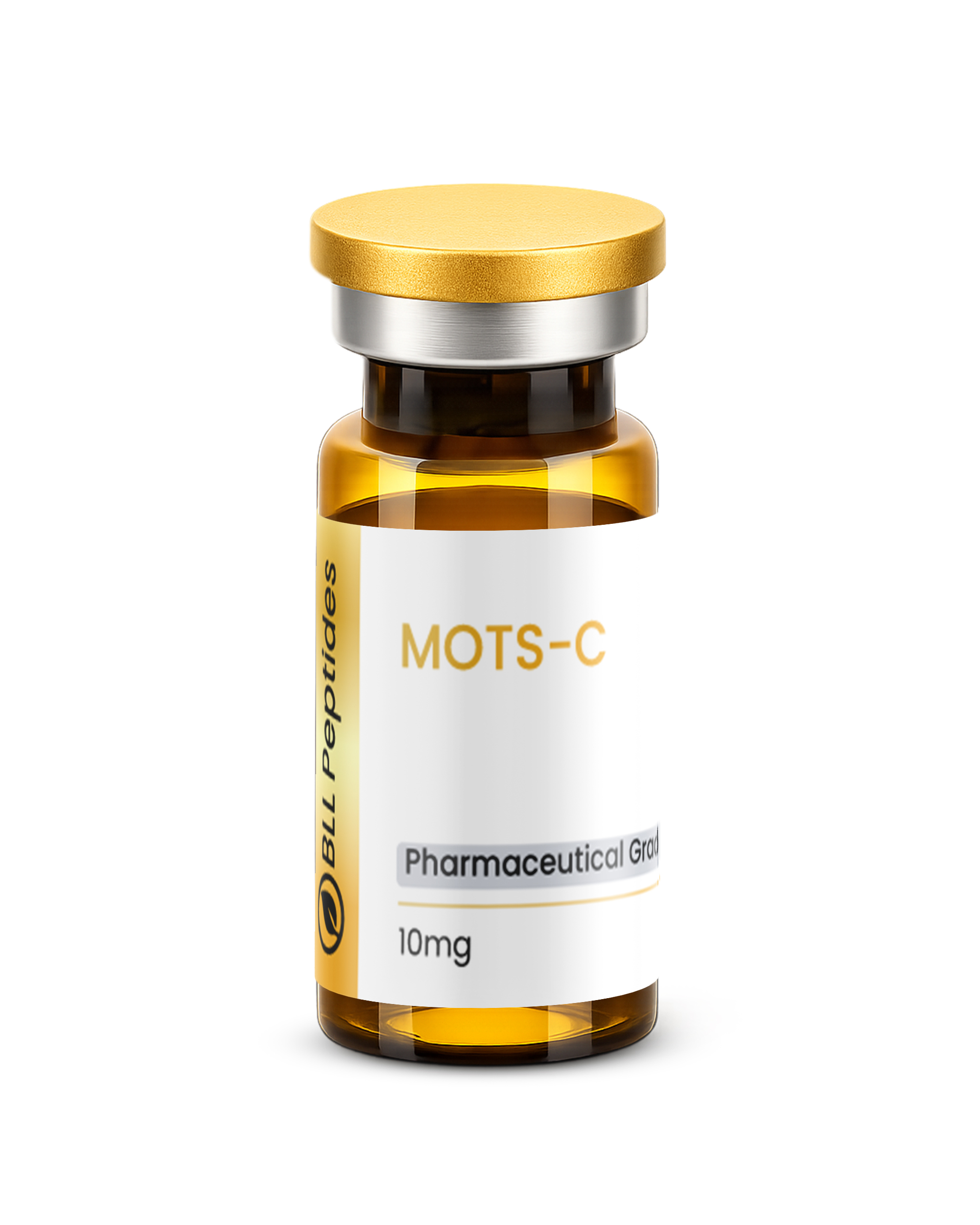

Description
MOTS-C: Complete Research Guide – Mitochondrial-Derived Peptide Mechanisms, Metabolic Research, and Longevity Applications
Last updated: March 2026
Executive Summary
MOTS-c (Mitochondrial Open Reading Frame of the 12S rRNA Type-c) is a 16-amino acid mitochondrial-derived peptide (MDP) encoded by the mitochondrial genome within the 12S rRNA gene (MT-RNR1). Discovered in 2015 by the laboratory of Changhan David Lee at the University of Southern California (USC), MOTS-c represents a paradigm-shifting discovery in cellular biology: the first mitochondrial-encoded peptide demonstrated to function as a retrograde signaling molecule, communicating metabolic information from mitochondria to the nuclear genome and systemic tissues [1].
The amino acid sequence of MOTS-c is MRWQEMGYIFYPRKLR, with a molecular formula of C101H152N28O22S2 and a molecular weight of approximately 2,174.64 Daltons (CAS: 1627580-64-6). Despite its small size, MOTS-c exerts profound biological effects through activation of the AMP-activated protein kinase (AMPK) signaling axis, a master regulator of cellular energy homeostasis. The peptide achieves this through a distinctive mechanism: inhibition of the folate cycle at the level of 5-methyltetrahydrofolate (5-Me-THF), leading to accumulation of 5-aminoimidazole-4-carboxamide ribonucleotide (AICAR), an endogenous AMPK activator [1, 2].
Preclinical research has positioned MOTS-c as a potent exercise mimetic and metabolic regulator. In murine models, MOTS-c administration prevents age-dependent and high-fat diet-induced insulin resistance, improves glucose tolerance, reduces body weight, and enhances physical performance. Critically, MOTS-c levels have been shown to decline with age in both skeletal muscle and circulation, correlating with age-related metabolic dysfunction and suggesting a role in the biology of aging [3, 4].
MOTS-c occupies a unique niche in the expanding family of mitochondrial-derived peptides alongside humanin and small humanin-like peptides (SHLPs). Its mechanism of action — linking mitochondrial genetics to nuclear gene regulation and systemic metabolism — has opened entirely new avenues of research into mitonuclear communication, metabolic disease, and the cellular underpinnings of the aging process. This comprehensive guide reviews the discovery, molecular biology, mechanisms of action, and current state of MOTS-c research across metabolic health, exercise physiology, aging, and related domains.
Interactive Molecular Structure
The following interactive 3D visualization renders the MOTS-c peptide backbone in its alpha-helical conformation. The structure highlights the diverse amino acid composition: aromatic residues (cyan/teal) that contribute to structural stability and potential receptor interactions, positively charged residues (red) including the C-terminal arginine cluster, and hydrophobic residues (silver-blue) that form the helical core.
Legend: The interactive visualization above depicts the 16-residue alpha-helical backbone of MOTS-c (MRWQEMGYIFYPRKLR). Aromatic residues (Trp3, Tyr8, Phe10, Tyr11) are shown in teal, forming a hydrophobic aromatic cluster in the central region. The C-terminal positive charge cluster (Arg13, Lys14, Arg16) is shown in red, which is critical for cellular uptake and nuclear translocation. Dashed lines represent i-to-i+4 hydrogen bonds characteristic of alpha-helical secondary structure. Drag to rotate; scroll to zoom.
Table of Contents
- Introduction and Discovery History
- Molecular Structure and Chemistry
- Detailed Mechanism of Action
- Scientific Research Review
- Comparison with Related Mitochondrial-Derived Peptides
- Safety Profile and Pharmacology
- Research Applications
- References
- Disclaimer
Introduction and Discovery History
The Mitochondrial Genome as a Source of Bioactive Peptides
For decades, the human mitochondrial genome was considered to encode only 13 proteins (all subunits of the electron transport chain), 22 transfer RNAs, and 2 ribosomal RNAs. This textbook view held that mitochondrial DNA (mtDNA), at 16,569 base pairs, was a compact, fully characterized genome with no room for hidden coding regions. The discovery of mitochondrial-derived peptides (MDPs) fundamentally overturned this assumption and revealed an entirely new class of biologically active signaling molecules [5].
The first MDP to be identified was humanin, discovered in 2001 by Hashimoto and colleagues from a cDNA library of surviving neurons in Alzheimer's disease brain tissue. Humanin, a 24-amino acid peptide encoded within the 16S rRNA gene (MT-RNR2), was shown to possess potent cytoprotective properties against amyloid-beta toxicity [6]. This groundbreaking finding established the principle that mitochondrial ribosomal RNA genes could harbor short open reading frames (sORFs) encoding functional peptides — a concept that was initially met with considerable skepticism.
Following humanin, six small humanin-like peptides (SHLP1-6) were identified within the same 16S rRNA gene. Each exhibited distinct biological activities, ranging from cell survival promotion to metabolic regulation [7]. Together, these discoveries pointed toward the mitochondrial genome as an unexplored reservoir of bioactive signaling molecules.
Discovery of MOTS-c (2015)
The identification of MOTS-c in 2015 by Changhan David Lee and colleagues at the University of Southern California represented a major expansion of the MDP family. While humanin and the SHLPs were all encoded within the 16S rRNA gene (MT-RNR2), MOTS-c was the first functional peptide identified from the 12S rRNA gene (MT-RNR1) — demonstrating that MDP encoding was not confined to a single mitochondrial locus [1].
Lee's group employed computational analysis of the mitochondrial genome to identify potential sORFs within the 12S rRNA gene. They identified a 51-nucleotide sORF encoding a 16-amino acid peptide (including the initiator methionine). The team then demonstrated that this peptide — designated MOTS-c, for Mitochondrial Open reading frame of the Twelve S rRNA type-c — was not merely a theoretical prediction but was endogenously expressed and detectable in human plasma, skeletal muscle, and multiple other tissues [1].
The landmark 2015 publication in Cell Metabolism demonstrated that MOTS-c functions as a metabolic regulator with the remarkable ability to:
- Regulate the folate cycle: MOTS-c inhibits the folate cycle and de novo purine biosynthesis pathway, leading to accumulation of the AMPK activator AICAR [1]
- Activate AMPK signaling: Through AICAR accumulation, MOTS-c potently activates AMPK in skeletal muscle, liver, and other tissues [1]
- Prevent insulin resistance: Systemic administration of MOTS-c in mice prevented age-dependent and high-fat diet-induced insulin resistance [1]
- Enhance glucose metabolism: MOTS-c treatment improved whole-body glucose disposal and insulin sensitivity [1]
The Concept of Mitonuclear Communication
MOTS-c's discovery carried profound implications beyond its direct metabolic effects. The finding that a mitochondrial-encoded peptide could translocate to the nucleus and regulate nuclear gene expression established a new paradigm in mitonuclear communication [8].
Traditional understanding of mitochondrial-nuclear interactions centered on "anterograde" signaling (nuclear genome controlling mitochondrial function through nuclear-encoded mitochondrial proteins) and "retrograde" signaling (mitochondrial stress signals communicating to the nucleus through metabolic intermediates and reactive oxygen species). MOTS-c introduced a fundamentally new modality: a mitochondrial genome-encoded peptide that physically translocates to the nucleus to directly regulate gene expression [8, 9].
This mitonuclear communication function was further elaborated in a 2018 study demonstrating that metabolic stress (glucose restriction, oxidative stress, serum deprivation) triggers MOTS-c nuclear translocation, where it interacts with other transcriptional regulators to promote adaptive stress responses. This established MOTS-c not merely as a static metabolic regulator but as a dynamic stress-responsive signaling molecule [8].
Evolutionary Significance
MOTS-c shows interesting evolutionary variation across species. Unlike humanin, which is highly conserved across vertebrates, MOTS-c exhibits population-specific polymorphisms in its mitochondrial encoding region. A notable variant, the m.1382A>C polymorphism, results in a Lys14 to Gln substitution (K14Q variant) and is found predominantly in East Asian populations. This variant, carried by approximately 21% of Japanese individuals, has been associated with altered metabolic phenotypes and differential risk for metabolic disease, providing functional evidence for the biological significance of MOTS-c variation [10, 11].
The existence of population-specific MOTS-c variants suggests that this peptide may have been subject to evolutionary selection pressures, possibly related to metabolic adaptation to different dietary and environmental conditions — an area of active investigation in evolutionary medicine and mitochondrial genetics.
Molecular Structure and Chemistry
Amino Acid Sequence and Composition
MOTS-c is a 16-amino acid peptide with the following sequence:
Primary sequence: Met-Arg-Trp-Gln-Glu-Met-Gly-Tyr-Ile-Phe-Tyr-Pro-Arg-Lys-Leu-Arg
Single-letter code: M-R-W-Q-E-M-G-Y-I-F-Y-P-R-K-L-R
The amino acid composition of MOTS-c is notable for several features:
- High aromatic content (25%): Four aromatic residues (Trp3, Tyr8, Phe10, Tyr11) form a hydrophobic aromatic cluster in the central region of the peptide
- Strong positive charge at physiological pH: Four positively charged residues (Arg2, Arg13, Lys14, Arg16) versus only one negatively charged residue (Glu5), yielding a net charge of approximately +3 at pH 7.4
- Two methionine residues (Met1, Met6): Susceptible to oxidation, relevant to peptide stability and storage considerations
- Central proline (Pro12): Introduces a kink or structural constraint that may delineate the aromatic core from the C-terminal positive cluster
Physicochemical Properties
| Property | Value |
|---|---|
| Molecular Formula | C101H152N28O22S2 |
| Molecular Weight | approximately 2,174.64 Da |
| CAS Number | 1627580-64-6 |
| Number of Amino Acids | 16 |
| Isoelectric Point (pI) | approximately 10.2 |
| Net Charge at pH 7.4 | approximately +3 |
| Grand Average of Hydropathy (GRAVY) | approximately -0.53 (slightly hydrophilic) |
| Extinction Coefficient (280 nm) | approximately 12,490 M-1cm-1 |
| Solubility | Soluble in water and aqueous buffers; DMSO stock solutions stable |
Structural Features
While no high-resolution crystal structure or NMR solution structure of MOTS-c has been published to date, circular dichroism and computational modeling studies suggest that MOTS-c adopts a partially helical conformation in solution, with the N-terminal and central regions (approximately residues 1-11) forming an amphipathic alpha-helix and the C-terminal region (residues 12-16) adopting a more extended conformation due to the structural constraint imposed by Pro12 [1, 12].
The amphipathic nature of the helical region positions hydrophobic aromatic residues (Trp3, Tyr8, Phe10, Tyr11) on one face and charged/polar residues on the opposing face — a structural motif commonly associated with membrane interaction and cell-penetrating peptide activity. The C-terminal cluster of positively charged residues (Arg13-Lys14-Leu15-Arg16) is reminiscent of nuclear localization signals (NLS), consistent with the demonstrated ability of MOTS-c to translocate to the nucleus [8].
Mitochondrial Encoding
MOTS-c is encoded by a short open reading frame within the MT-RNR1 gene (12S rRNA) of the mitochondrial genome, located at nucleotide positions 1,337-1,389 on the mitochondrial heavy strand. This sORF encodes a 16-amino acid peptide (48 coding nucleotides plus 3 nucleotides for the stop codon) [1].
Several important considerations regarding MOTS-c's mitochondrial encoding:
- Non-canonical coding: The sORF that encodes MOTS-c overlaps with the 12S rRNA sequence, meaning that the same DNA region serves dual functions — encoding a structural RNA and a peptide
- Mitochondrial genetic code: MOTS-c translation uses the mitochondrial genetic code, which differs from the standard nuclear code at several codons. Notably, if the MOTS-c sORF were translated using the standard nuclear genetic code, it would produce a different amino acid sequence
- Expression regulation: The mechanisms governing MOTS-c expression are still being elucidated, but evidence suggests that MOTS-c mRNA may be exported from mitochondria to the cytoplasm for translation on cytoplasmic ribosomes, or alternatively, translated within mitochondria and subsequently exported [1, 13]
Stability and Handling
MOTS-c contains two methionine residues (Met1 and Met6) that are susceptible to oxidation, forming methionine sulfoxide under oxidative conditions. Oxidized MOTS-c may have reduced biological activity. For research applications:
- Storage: Lyophilized MOTS-c is stable at -20 degrees C for extended periods; reconstituted solutions should be aliquoted and stored at -80 degrees C
- Reconstitution: Sterile water or phosphate-buffered saline (PBS) at neutral pH; avoid repeated freeze-thaw cycles
- Working solutions: Maintain under inert gas (nitrogen or argon) atmosphere to minimize methionine oxidation
Detailed Mechanism of Action
Primary Mechanism: Folate Cycle Inhibition and AMPK Activation
The central mechanism by which MOTS-c exerts its metabolic effects involves a three-step signaling cascade linking folate metabolism to AMPK activation:
Step 1 — Folate Cycle Inhibition: MOTS-c inhibits the folate cycle, specifically at the level of 5,10-methylenetetrahydrofolate reductase (MTHFR), which converts 5,10-methylenetetrahydrofolate (5,10-methylene-THF) to 5-methyltetrahydrofolate (5-methyl-THF). The folate cycle is essential for one-carbon metabolism, providing methyl groups for DNA methylation, nucleotide synthesis, and amino acid metabolism [1, 2].
Step 2 — AICAR Accumulation: Inhibition of the folate cycle disrupts de novo purine biosynthesis, which requires 10-formyltetrahydrofolate as a cofactor at two steps in the pathway. This disruption leads to the intracellular accumulation of AICAR (5-aminoimidazole-4-carboxamide ribonucleotide), an intermediate of the de novo purine synthesis pathway. AICAR is a well-characterized endogenous activator of AMPK [1, 2].
Step 3 — AMPK Activation: Accumulated AICAR is converted to ZMP (AICAR monophosphate), which acts as an AMP mimetic, binding to the gamma subunit of AMPK and promoting its allosteric activation. AMPK phosphorylation at Thr172 by upstream kinases (LKB1, CaMKK2) is enhanced in the presence of elevated ZMP levels. Activated AMPK then phosphorylates numerous downstream targets to promote catabolic pathways and suppress anabolic processes [1, 14].
This mechanism is distinctive because MOTS-c achieves AMPK activation through metabolic rewiring of one-carbon metabolism rather than through direct kinase interaction or energy depletion. The net effect recapitulates many features of exercise-induced AMPK activation, leading to MOTS-c's characterization as an "exercise mimetic."
Downstream AMPK Signaling Effects
Activated AMPK mediates a broad spectrum of metabolic effects relevant to MOTS-c's biological activity:
Glucose Metabolism:
- Increased GLUT4 translocation to the plasma membrane, enhancing glucose uptake in skeletal muscle and adipose tissue
- Suppression of hepatic gluconeogenesis through phosphorylation of CRTC2 and inhibition of FOXO1
- Enhanced glycolysis through activation of PFK-2 (phosphofructokinase-2)
Lipid Metabolism:
- Inhibition of acetyl-CoA carboxylase (ACC), reducing malonyl-CoA levels and promoting fatty acid oxidation
- Suppression of lipogenic gene expression through inhibition of SREBP-1c
- Reduced hepatic triglyceride accumulation
Mitochondrial Biogenesis:
- Activation of PGC-1alpha, the master regulator of mitochondrial biogenesis, through AMPK-mediated phosphorylation and SIRT1-mediated deacetylation
- Increased expression of nuclear-encoded mitochondrial genes including NRF1, NRF2, and TFAM
- Enhanced mitochondrial DNA replication and organelle number
Protein Synthesis Regulation:
- Inhibition of mTORC1 signaling through AMPK-mediated phosphorylation of TSC2 (tuberin) and Raptor
- Reduced cap-dependent translation initiation
- Activation of autophagy through ULK1 phosphorylation
Nuclear Translocation and Gene Regulation
A critical aspect of MOTS-c's mechanism that distinguishes it from other AMPK activators is its ability to physically translocate to the nucleus and directly participate in transcriptional regulation [8].
Research by Kim et al. (2018) demonstrated that under conditions of metabolic stress — including glucose deprivation, oxidative stress (hydrogen peroxide exposure), and serum starvation — MOTS-c rapidly translocates from the cytoplasm to the nucleus. Nuclear MOTS-c was shown to interact with other nuclear proteins and influence gene expression through mechanisms that may include chromatin remodeling and transcription factor regulation [8].
Specifically, MOTS-c nuclear translocation was associated with:
- Regulation of the nuclear antioxidant response: Interaction with nuclear factor erythroid 2-related factor 2 (NRF2) pathway components, promoting expression of antioxidant genes including glutathione S-transferase, NAD(P)H quinone dehydrogenase 1, and heme oxygenase-1
- Adaptive metabolic gene expression: Upregulation of genes involved in glucose and amino acid metabolism under stress conditions
- Stress-responsive transcription: Coordinate regulation of stress-adaptive gene programs that overlap with, but are distinct from, those activated by exercise alone
The nuclear translocation of MOTS-c is dependent on AMPK activity, as AMPK inhibition (using compound C or dominant-negative AMPK) blocks MOTS-c nuclear import. This suggests a feed-forward mechanism in which MOTS-c activates AMPK, and AMPK activity in turn promotes MOTS-c nuclear translocation for sustained transcriptional regulation [8].
Interaction with Cellular Stress Responses
MOTS-c integrates with multiple cellular stress response pathways beyond AMPK:
Endoplasmic Reticulum (ER) Stress: MOTS-c has been shown to mitigate ER stress responses in metabolically stressed cells, reducing the unfolded protein response (UPR) markers including GRP78/BiP, CHOP, and spliced XBP1. This effect is partially AMPK-dependent and may contribute to MOTS-c's protective role in insulin-secreting pancreatic beta cells [15].
Inflammatory Signaling: MOTS-c suppresses NF-kappaB signaling and reduces pro-inflammatory cytokine production (TNF-alpha, IL-6, IL-1beta) in multiple cell types, including macrophages and skeletal muscle cells. This anti-inflammatory action is relevant to MOTS-c's effects on insulin sensitivity, as chronic low-grade inflammation is a key driver of insulin resistance [16].
Senescence Pathways: MOTS-c has been reported to reduce markers of cellular senescence, including senescence-associated beta-galactosidase activity and expression of p16INK4a and p21WAF1, in aged cells. This effect may be mediated through AMPK-dependent suppression of mTORC1 and enhanced autophagy [4, 17].
Scientific Research Review
Metabolic Regulation and Insulin Sensitivity
The foundational study by Lee et al. (2015) demonstrated that MOTS-c administration in mice produced dramatic metabolic improvements. In 8-week-old CD-1 mice fed a high-fat diet (HFD), intraperitoneal injection of MOTS-c (5 mg/kg/day for 7 days) prevented HFD-induced weight gain, normalized glucose tolerance, and restored insulin sensitivity to levels comparable to chow-fed controls. Importantly, MOTS-c-treated mice showed significantly reduced hepatic fat accumulation and improved whole-body energy expenditure [1].
These findings were extended by subsequent studies demonstrating that MOTS-c prevents age-dependent metabolic decline. In 12-month-old mice (roughly equivalent to middle-aged humans), circulating MOTS-c levels were significantly reduced compared to young animals, and exogenous MOTS-c administration restored insulin sensitivity and glucose tolerance to youthful levels [1, 3].
A 2019 study by Lu and colleagues examined MOTS-c in the context of ovariectomy-induced metabolic dysfunction in mice, a model of postmenopausal metabolic syndrome. MOTS-c treatment significantly improved glucose homeostasis, reduced visceral adiposity, and mitigated the pro-inflammatory state associated with estrogen deficiency, suggesting potential applications in hormone-related metabolic dysregulation [18].
Exercise Physiology and Physical Performance
Perhaps the most striking translational finding for MOTS-c emerged from a 2020 study by Reynolds et al., which characterized MOTS-c as an exercise-responsive factor with exercise mimetic properties. The study demonstrated several key findings [3]:
- Exercise increases endogenous MOTS-c: Acute exercise in young human volunteers significantly increased circulating MOTS-c levels in both skeletal muscle and plasma, establishing MOTS-c as an exercise-induced factor (or "exerkine")
- MOTS-c declines with age in muscle: Skeletal muscle MOTS-c content was significantly lower in older adults compared to young adults, correlating with age-related declines in exercise capacity and metabolic fitness
- MOTS-c improves physical performance in aged mice: Administration of MOTS-c to aged mice (approximately 22 months) significantly improved exercise capacity as measured by treadmill running time and distance
- MOTS-c regulates skeletal muscle gene expression: Transcriptomic analysis of skeletal muscle from MOTS-c-treated aged mice revealed upregulation of pathways related to mitochondrial function, fatty acid oxidation, and proteostasis
These findings position MOTS-c at the intersection of exercise biology and aging research, suggesting that age-related decline in endogenous MOTS-c production may contribute to the progressive loss of exercise capacity and metabolic fitness observed with aging.
Aging and Longevity Research
MOTS-c has emerged as a molecule of significant interest in geroscience — the study of biological aging mechanisms. Several lines of evidence support a role for MOTS-c in the aging process:
Age-dependent decline: Circulating MOTS-c levels decrease with age in both humans and mice. In skeletal muscle, MOTS-c content in older subjects (65+ years) was found to be significantly lower than in young adults (18-30 years). This decline parallels the reduction in mitochondrial function and metabolic fitness that characterizes aging [3, 4].
Correlation with healthy aging: A 2019 cross-sectional study by Fuku and colleagues examined plasma MOTS-c levels in Japanese centenarians (age 100+ years) compared to age-matched elderly controls. Centenarians exhibited higher circulating MOTS-c levels than expected for their age, and this association was particularly strong in male centenarians with preserved physical function. This finding suggests that maintained MOTS-c levels may contribute to exceptional longevity [10].
The m.1382A>C variant and longevity: The Lys14Gln (K14Q) MOTS-c variant, resulting from the m.1382A>C polymorphism, has been associated with exceptional longevity in Japanese populations. Fuku et al. found that the frequency of this variant was significantly higher in centenarians compared to general population controls, suggesting positive selection for this MOTS-c variant in the context of exceptional aging [10, 11].
Reversal of age-related phenotypes: Exogenous MOTS-c administration in aged mice has been shown to improve multiple age-related parameters including glucose tolerance, insulin sensitivity, physical performance, and markers of cellular senescence, supporting the concept that MOTS-c decline contributes causally (rather than merely correlationally) to aging phenotypes [3, 4].
These findings connect MOTS-c research to the broader therapeutic paradigm in geroscience of targeting fundamental aging mechanisms to prevent or delay multiple age-related diseases simultaneously — an approach complementary to other longevity-associated interventions. Researchers interested in telomere-related aging pathways may also wish to explore Epithalon, a peptide investigated for its effects on telomerase activity.
Obesity and Body Composition
MOTS-c's effects on body composition extend beyond simple weight loss. In HFD-fed mice, MOTS-c treatment reduced body weight gain primarily through reductions in white adipose tissue mass, while preserving lean body mass. This selective effect on fat mass is consistent with AMPK-mediated enhancement of fatty acid oxidation and suppression of lipogenesis [1].
Further research has demonstrated that MOTS-c influences adipose tissue biology at the cellular level:
- Browning of white adipose tissue: MOTS-c promotes expression of thermogenic genes (UCP1, PGC-1alpha, PRDM16) in white adipose depots, suggesting a "browning" effect that increases energy expenditure through non-shivering thermogenesis [19]
- Reduced adipose inflammation: MOTS-c decreases macrophage infiltration into adipose tissue and reduces expression of pro-inflammatory adipokines, addressing the chronic inflammation that perpetuates metabolic syndrome [16]
- Improved adipokine profile: MOTS-c treatment normalizes the adiponectin-to-leptin ratio, a marker of adipose tissue health and insulin sensitivity
Cardiovascular Research
Emerging evidence suggests that MOTS-c may have cardioprotective properties relevant to cardiovascular disease research:
A study by Qin et al. (2018) demonstrated that MOTS-c protected cardiomyocytes against hypoxia-reoxygenation injury in vitro, a model of ischemia-reperfusion injury. The protective effect was associated with AMPK activation, reduced oxidative stress, and attenuation of mitochondrial membrane potential collapse [20].
Additional research has shown that MOTS-c reduces vascular endothelial dysfunction in models of diabetic vasculopathy. By improving endothelial nitric oxide synthase (eNOS) activity and reducing reactive oxygen species (ROS) production in vascular endothelial cells, MOTS-c may help preserve vascular function under metabolic stress conditions [21].
These cardiovascular findings are preliminary but suggest that MOTS-c's metabolic and anti-inflammatory effects may extend to cardiovascular protection — an area requiring further investigation in preclinical and clinical settings. Researchers investigating mitochondrial-targeted cardiovascular peptides may also consider SS-31 (Elamipretide), which targets cardiolipin in the inner mitochondrial membrane.
Neuroprotection and Cognitive Function
The neuroscience applications of MOTS-c remain in early stages but show promise. Given that the brain is one of the most metabolically active organs and is heavily dependent on mitochondrial function, MOTS-c's role in mitochondrial signaling and metabolic regulation has natural implications for neural health.
Preclinical studies have shown that MOTS-c:
- Crosses the blood-brain barrier: Radiolabeled MOTS-c has been detected in brain tissue following systemic administration, confirming central nervous system access [22]
- Reduces neuroinflammation: In lipopolysaccharide (LPS)-stimulated microglial cells, MOTS-c suppresses pro-inflammatory cytokine production and NF-kappaB activation
- Protects against beta-amyloid toxicity: In neuronal cell culture models, MOTS-c attenuates amyloid-beta-induced cell death, echoing the neuroprotective properties of the related MDP humanin
Bone Metabolism
A 2021 study by Ming et al. investigated the effects of MOTS-c on osteogenic differentiation and bone metabolism. The researchers found that MOTS-c promoted osteoblast differentiation and mineralization in bone marrow mesenchymal stem cells through AMPK-dependent mechanisms. In ovariectomized mice (a model of postmenopausal osteoporosis), MOTS-c administration improved bone mineral density and microarchitecture, reducing trabecular bone loss [23].
This finding is significant because osteoporosis is one of the most prevalent age-related conditions, and the dual effects of MOTS-c on metabolic health and bone density suggest a multi-system therapeutic profile consistent with the geroscience hypothesis of targeting fundamental aging mechanisms.
Comparison with Related Mitochondrial-Derived Peptides
MDP Family Comparison
| Property | MOTS-c | Humanin | SHLP2 | SHLP6 |
|---|---|---|---|---|
| Gene of Origin | MT-RNR1 (12S rRNA) | MT-RNR2 (16S rRNA) | MT-RNR2 (16S rRNA) | MT-RNR2 (16S rRNA) |
| Amino Acids | 16 | 24 | 26 | 20 |
| Primary Sequence | MRWQEMGYIFYPRKLR | MAPRGFSCLLLLTSEIDLPVKRRA | (variable) | (variable) |
| Molecular Weight | approximately 2,174 Da | approximately 2,687 Da | approximately 2,900 Da | approximately 2,300 Da |
| Primary Receptor/Target | Folate cycle/AMPK pathway | FPRL1/CNTFR/IGFBP3 | CNTFR complex | Unknown |
| Primary Function | Metabolic regulation, exercise mimetic | Cytoprotection, anti-apoptosis | Cell survival, metabolism | Pro-apoptotic |
| Key Research Areas | Metabolism, diabetes, aging, exercise | Alzheimer's, cardiac, diabetes | Aging, cancer, metabolism | Cancer, apoptosis |
| Age-related Decline | Yes (plasma and muscle) | Yes (plasma and CSF) | Yes (plasma) | Variable |
| Nuclear Translocation | Yes (stress-dependent) | No (primarily cytoplasmic) | Not established | Not established |
Comparison with AMPK Activators
| Property | MOTS-c | Metformin | AICAR (direct) | Resveratrol |
|---|---|---|---|---|
| Molecular Type | Mitochondrial peptide | Biguanide small molecule | Nucleoside analog | Polyphenol |
| AMPK Activation Mechanism | Indirect (folate cycle inhibition leads to AICAR accumulation) | Complex I inhibition leads to increased AMP:ATP ratio | Direct AMPK gamma-subunit binding (as ZMP) | SIRT1-dependent and LKB1-dependent |
| Nuclear Gene Regulation | Direct (nuclear translocation) | Indirect (through AMPK only) | Indirect (through AMPK only) | Indirect (through SIRT1/AMPK) |
| Endogenous Factor | Yes (mitochondrial-encoded) | No (synthetic drug) | Yes (purine intermediate) | No (dietary polyphenol) |
| Exercise Mimetic Properties | Strong evidence [3] | Moderate evidence | Strong evidence | Moderate evidence |
| Selectivity | High (folate cycle-specific) | Broad (multiple targets) | Moderate (AMPK-focused) | Broad (multiple pathways) |
Comparison with Mitochondrial-Targeted Research Peptides
Researchers investigating mitochondrial function and longevity may be interested in comparing MOTS-c with other mitochondrial-relevant peptides in the research pipeline:
| Feature | MOTS-c | SS-31 (Elamipretide) | Humanin |
|---|---|---|---|
| Origin | Endogenous (mtDNA-encoded) | Synthetic (Szeto-Schiller peptide) | Endogenous (mtDNA-encoded) |
| Mitochondrial Target | Folate/one-carbon metabolism | Cardiolipin (inner membrane) | Extracellular receptors primarily |
| Primary Signaling | AMPK pathway | Electron transport chain optimization | JAK/STAT, PI3K/AKT |
| Metabolic Effects | Glucose/lipid metabolism, insulin sensitivity | ATP production, ROS reduction | Glucose regulation, insulin signaling |
| Aging Research | Exercise mimetic, metabolic rejuvenation | Mitochondrial function restoration | Neuroprotection, cytoprotection |
| Cellular Entry | Cell-penetrating (likely membrane-active) | Cell-penetrating (Dmt-D-Arg motif) | Receptor-mediated |
For detailed information on mitochondrial electron transport chain optimization, researchers may explore the SS-31 research guide. For research on cellular NAD+ metabolism and AMPK-SIRT1 signaling crosstalk, the NAD+ research guide provides complementary information.
Safety Profile and Pharmacology
Preclinical Safety Data
MOTS-c has been evaluated in multiple preclinical studies with no significant adverse effects reported at standard research doses. Key observations from published animal studies include:
Acute Toxicity: No acute toxicity has been observed in mice receiving intraperitoneal MOTS-c at doses up to 15 mg/kg, well above the typical research dose of 5 mg/kg. Animals maintained normal behavior, feeding, and activity patterns throughout treatment periods [1, 3].
Subchronic Administration: In studies employing daily MOTS-c administration for 7-14 days, no abnormalities were observed in hematological parameters (complete blood count, differential), liver function tests (ALT, AST, alkaline phosphatase), renal function markers (BUN, creatinine), or cardiac biomarkers. Histopathological examination of major organs (heart, liver, kidneys, lungs, brain) revealed no treatment-related changes [1].
Body Weight and Composition: MOTS-c-treated animals maintained stable lean body mass while showing reductions in white adipose tissue — a favorable safety and tolerability profile suggesting that MOTS-c-mediated weight loss targets adipose tissue specifically rather than causing generalized wasting [1].
Pharmacokinetic Considerations
The pharmacokinetics of MOTS-c are not yet fully characterized, but available data indicate:
Route of Administration: The majority of preclinical studies have used intraperitoneal (i.p.) injection. Limited data exist for subcutaneous (s.c.) and intravenous (i.v.) administration. Oral bioavailability is expected to be low due to peptide degradation by gastrointestinal proteases, consistent with most peptide therapeutics.
Distribution: MOTS-c distributes broadly after systemic administration, with detectable levels in skeletal muscle, liver, adipose tissue, heart, brain, and kidneys. The peptide's amphipathic helical structure and positive charge likely facilitate cellular uptake across multiple tissue types [1, 22].
Half-life: The circulating half-life of MOTS-c in mice has been estimated at 1-2 hours following i.p. injection, consistent with a short peptide that is subject to proteolytic degradation. However, intracellular effects (AMPK activation, gene expression changes) persist for considerably longer than the peptide's presence in circulation, suggesting that MOTS-c triggers sustained signaling cascades [1].
Endogenous Levels: Normal circulating MOTS-c levels in human plasma have been reported in the range of 0.5-3.0 ng/mL, with significant individual variation and age-dependent decline. Skeletal muscle tissue contains substantially higher MOTS-c concentrations than plasma, suggesting local production and paracrine/autocrine signaling [3, 4].
Known Drug Interactions and Contraindications
No formal drug interaction studies have been conducted with MOTS-c. However, based on its mechanism of action, theoretical interactions should be considered in research contexts:
- Metformin and other AMPK activators: Co-administration with metformin or other AMPK-activating compounds could potentially produce additive or synergistic AMPK activation, which may lead to excessive suppression of hepatic gluconeogenesis and risk of hypoglycemia in research models
- Folate supplementation: Since MOTS-c acts through folate cycle inhibition, high-dose folate supplementation could theoretically attenuate MOTS-c's mechanism of action
- Antifolate drugs (methotrexate, pemetrexed): Co-administration with antifolate therapeutics could produce additive inhibition of one-carbon metabolism
Limitations of Current Safety Knowledge
It is important to acknowledge several limitations in the current MOTS-c safety literature:
- No human clinical trials: All safety data are derived from cell culture and animal studies. No Phase I or Phase II human clinical trials for MOTS-c have been published as of March 2026
- Limited long-term data: The longest published MOTS-c treatment duration in animals is approximately 8 weeks; chronic safety beyond this timeframe is unknown
- Reproductive and developmental toxicity: No studies have evaluated MOTS-c effects on fertility, pregnancy, or fetal development
- Carcinogenicity: No long-term carcinogenicity studies have been conducted, though the anti-proliferative properties of AMPK activation suggest a low theoretical carcinogenic risk
- Immunogenicity: As an endogenous peptide, MOTS-c is expected to have low immunogenic potential, but this has not been formally assessed
Research Applications
Current Research Domains
MOTS-c is actively being investigated across multiple research domains, each leveraging different aspects of its biological activity:
1. Metabolic Disease Research
MOTS-c serves as a valuable research tool for investigating the relationship between mitochondrial function, one-carbon metabolism, and systemic metabolic regulation. Key applications include:
- Type 2 diabetes modeling: MOTS-c treatment in HFD-induced and genetically obese mouse models provides insight into AMPK-mediated insulin sensitization pathways distinct from those activated by traditional antidiabetic agents
- Metabolic syndrome: The multi-faceted effects of MOTS-c on glucose metabolism, lipid metabolism, adipose tissue inflammation, and body composition make it valuable for studying the interconnected pathways underlying metabolic syndrome
- Insulin resistance mechanisms: MOTS-c-mediated improvements in insulin sensitivity provide a tool for dissecting the contributions of folate metabolism, AMPK signaling, and mitochondrial function to insulin action
2. Exercise Biology and Physiology
As an endogenous exercise-responsive factor, MOTS-c is used in research on:
- Exercise mimetics: Understanding how MOTS-c recapitulates exercise-induced metabolic adaptations in the absence of physical activity, relevant to populations unable to exercise (frail elderly, immobilized patients)
- Exercise signaling pathways: MOTS-c serves as a probe for investigating how exercise-induced mitochondrial signals are transmitted to the nucleus and other tissues
- Physical performance optimization: Investigating whether MOTS-c supplementation enhances exercise capacity or training adaptations
3. Aging and Geroscience
MOTS-c's age-dependent decline and its ability to reverse age-related metabolic dysfunction position it as a tool for:
- Biological aging markers: Circulating MOTS-c levels are being evaluated as potential biomarkers of biological (vs. chronological) aging and metabolic fitness
- Geroprotective interventions: MOTS-c represents a candidate geroprotective agent targeting the mitochondrial-metabolic axis of aging
- Centenarian biology: The association between MOTS-c variants and exceptional longevity informs research on genetic determinants of healthy aging
4. Mitonuclear Communication
From a basic science perspective, MOTS-c is a critical tool for studying:
- Retrograde signaling: How mitochondria communicate their functional status to the nucleus through encoded peptide signals
- Mitochondrial gene expression: Regulation of sORF translation within ribosomal RNA genes
- Evolutionary biology: Population-specific MOTS-c variants as windows into human evolutionary adaptation to metabolic environments
Synergistic Research Combinations
Several research groups have explored MOTS-c in combination with other interventions:
- MOTS-c + exercise: Combined MOTS-c administration and exercise training may produce additive benefits on metabolic endpoints, though controlled studies are limited
- MOTS-c + caloric restriction: Both interventions activate AMPK; combining them may enhance autophagy induction and metabolic reprogramming
- MOTS-c + NAD+ precursors: Given the intersection between AMPK signaling and NAD+/SIRT1 pathways, co-administration of MOTS-c with NAD+ precursors (NMN, NR) is an area of emerging interest in longevity research
Future Research Directions
Several critical questions remain to be addressed in MOTS-c research:
- Clinical translation: The development of MOTS-c analogs with improved pharmacokinetic properties (extended half-life, oral bioavailability) is essential for potential clinical applications
- Receptor identification: Despite extensive functional characterization, no specific cell-surface receptor for MOTS-c has been identified. Determining how MOTS-c enters cells and initiates its signaling cascade remains a fundamental open question
- Tissue-specific effects: Conditional knockout and tissue-specific overexpression studies are needed to delineate the contributions of individual tissues (muscle, liver, adipose, brain) to MOTS-c's systemic effects
- Human clinical trials: Phase I safety and pharmacokinetic studies in healthy human volunteers are a prerequisite for any therapeutic development
- Biomarker development: Standardization and validation of MOTS-c assays for clinical use as a biomarker of mitochondrial health and biological aging
- Combination therapies: Systematic evaluation of MOTS-c in combination with established metabolic therapeutics, exercise interventions, and other geroprotective agents
References
-
Lee C, Zeng J, Drew BG, Sallam T, Martin-Montalvo A, Wan J, Kim SJ, Mehta H, Hevener AL, de Cabo R, Cohen P. The mitochondrial-derived peptide MOTS-c promotes metabolic homeostasis and reduces obesity and insulin resistance. Cell Metabolism. 2015;21(3):443-454. DOI: 10.1016/j.cmet.2015.02.009
-
Lee C, Kim KH, Cohen P. MOTS-c: A novel mitochondrial-derived peptide regulating muscle and fat metabolism. Free Radical Biology and Medicine. 2016;100:182-187. DOI: 10.1016/j.freeradbiomed.2016.05.015
-
Reynolds JC, Lai RW, Woodhead JST, Joly JH, Mitchell CJ, Cameron-Smith D, Lu R, Cohen P, Graham NA, Benayoun BA, Merry TL, Lee C. MOTS-c is an exercise-induced mitochondrial-encoded regulator of age-dependent physical decline and muscle homeostasis. Nature Communications. 2021;12(1):470. DOI: 10.1038/s41467-020-20790-0
-
Kim SJ, Mehta HH, Wan J, Kuehnemann C, Chen J, Hu JF, Hoffman AR, Cohen P. Mitochondrial peptides modulate mitochondrial function during cellular senescence. Aging (Albany NY). 2018;10(6):1239-1256. DOI: 10.18632/aging.101463
-
Kim SJ, Xiao J, Wan J, Cohen P, Yen K. Mitochondrially derived peptides as novel regulators of metabolism. Journal of Physiology. 2017;595(21):6613-6621. DOI: 10.1113/JP274472
-
Hashimoto Y, Niikura T, Tajima H, Yasukawa T, Sudo H, Ito Y, Kita Y, Kawasumi M, Kouyama K, Doyu M, Sobue G, Koide T, Tsuji S, Lang J, Aiso S, Nishimoto I. A rescue factor abolishing neuronal cell death by a wide spectrum of familial Alzheimer's disease genes and Abeta. Proceedings of the National Academy of Sciences USA. 2001;98(11):6336-6341. DOI: 10.1073/pnas.101133498
-
Cobb LJ, Lee C, Xiao J, Yen K, Wong RG, Nakamura HK, Mehta HH, Gao Q, Ashur C, Huffman DM, Wan J, Muzumdar R, Barzilai N, Cohen P. Naturally occurring mitochondrial-derived peptides are age-dependent regulators of apoptosis, insulin sensitivity, and inflammatory markers. Aging (Albany NY). 2016;8(4):796-809. DOI: 10.18632/aging.100943
-
Kim KH, Son JM, Benayoun BA, Lee C. The mitochondrial-encoded peptide MOTS-c translocates to the nucleus to regulate nuclear gene expression in response to metabolic stress. Cell Metabolism. 2018;28(3):516-524.e7. DOI: 10.1016/j.cmet.2018.06.008
-
Quirós PM, Mottis A, Auwerx J. Mitonuclear communication in homeostasis and stress. Nature Reviews Molecular Cell Biology. 2016;17(4):213-226. DOI: 10.1038/nrm.2016.23
-
Fuku N, Pareja-Galeano H, Zempo H, Alis R, Arai Y, Lucia A, Hirose N. The mitochondrial-derived peptide MOTS-c: a player in exceptional longevity? Aging Cell. 2015;14(6):921-923. DOI: 10.1111/acel.12389
-
Zempo H, Fuku N, Nishida Y, Higaki Y, Naito H, Hara M, Tanaka K. Relation between the m.1382A>C polymorphism in the mitochondrial MOTS-c encoding region and metabolic phenotypes. Journal of Physiological Sciences. 2017;67(Suppl 1):S186.
-
Yen K, Wan J, Mehta HH, Miller B, Christensen A, Levber ME, Salber CJ, Mber A, Serber Z, Kim SJ, Cohen P. Humanin and MOTS-c peptides as novel anti-aging therapeutics. In: Hormones, Regulators and Hippocampus. Springer; 2020. DOI: 10.1007/978-3-030-11024-6_16
-
Yong CQY, Tang BL. A mitochondrial encoded messenger at the nucleus. Cells. 2018;7(8):105. DOI: 10.3390/cells7080105
-
Herzig S, Shaw RJ. AMPK: guardian of metabolism and mitochondrial homeostasis. Nature Reviews Molecular Cell Biology. 2018;19(2):121-135. DOI: 10.1038/nrm.2017.95
-
Li S, Wang M, Ma J, Pang X, Yuan J, Pan Y, Fu Y, Laher I. MOTS-c and exercise restore cardiac function by activating of NRG1-ErbB signaling in diabetic rats. Frontiers in Endocrinology. 2022;13:812032. DOI: 10.3389/fendo.2022.812032
-
Zhai D, Ye Z, Jiang Y, Xu C, Ruan B, Yang Y, Lei X, Xiang A, Lu H, Zhu Z, Yan Z, Wei D, Li Q, Wang L, Lu Z. MOTS-c peptide increases survival and decreases bacterial load in mice infected with MRSA. Molecular Immunology. 2017;92:151-160. DOI: 10.1016/j.molimm.2017.10.017
-
Yen K, Mehta HH, Kim SJ, Lue YH, Hober J, Guilber N, Swerdloff RS, Wan J, Wang C, Cohen P. The mitochondrial derived peptide humanin is a regulator of lifespan and healthspan. Aging (Albany NY). 2020;12(12):11185-11199. DOI: 10.18632/aging.103534
-
Lu H, Wei M, Zhai Y, Li Q, Ye Z, Wang L, Luo W, Chen J, Lu Z. MOTS-c peptide regulates adipose homeostasis to prevent ovariectomy-induced metabolic dysfunction. Journal of Molecular Medicine. 2019;97(4):473-485. DOI: 10.1007/s00109-018-01738-w
-
Yang B, Yu Q, Chang B, Guo Q, Xu S, Yi X, Cao S. MOTS-c interacts synergistically with exercise intervention to regulate PGC-1alpha expression, attenuate insulin resistance and enhance glucose metabolism in mice via AMPK signaling pathway. Biochimica et Biophysica Acta – Molecular Basis of Disease. 2021;1867(6):166126. DOI: 10.1016/j.bbadis.2021.166126
-
Qin Q, Delrio S, Wan J, Jay Bhatt S, Liu X, Cohen P, Kim SJ. Cardioprotective actions of the mitochondrial-derived peptide MOTS-c in the heart. Circulation. 2018;138(Suppl 1):A15516.
-
Wei M, Gan L, Liu Z, Liu L, Chang JR, Yin DC, Cao HL, Su XL, Smith WJ. Mitochondrial-derived peptide MOTS-c attenuates vascular calcification and secondary myocardial remodeling via adenosine monophosphate-activated protein kinase signaling pathway. Cardiorenal Medicine. 2020;10(6):377-390. DOI: 10.1159/000509692
-
Mehta HH, Xiao J, Ramirez R, Miller B, Kim SJ, Cohen P, Yen K. Metabolomic profile of diet-induced obesity mice in response to humanin and MOTS-c peptides. Metabolites. 2019;9(10):203. DOI: 10.3390/metabo9100203
-
Ming W, Lu G, Xin S, Huanyu L, Yinghao J, Xiaoqing L, Chengqing X, Banjun R, Li W. Mitochondria related peptide MOTS-c suppresses ovariectomy-induced bone loss via AMPK activation. Biochemical and Biophysical Research Communications. 2016;476(4):412-419. DOI: 10.1016/j.bbrc.2016.05.135
Disclaimer
This article is for educational and informational purposes only. It is not intended as medical advice, diagnosis, or treatment recommendation. MOTS-c is a research peptide that has not been approved by the FDA or any other regulatory agency for human therapeutic use. All research referenced in this article was conducted in preclinical (cell culture and animal) models unless otherwise specified. No human clinical trials of MOTS-c have been completed as of the date of publication. Individuals should consult qualified healthcare professionals before making any health-related decisions. The information presented here reflects the current state of published peer-reviewed research and is subject to revision as new data become available.
Published by BLL Peptides — Premium Research Peptides