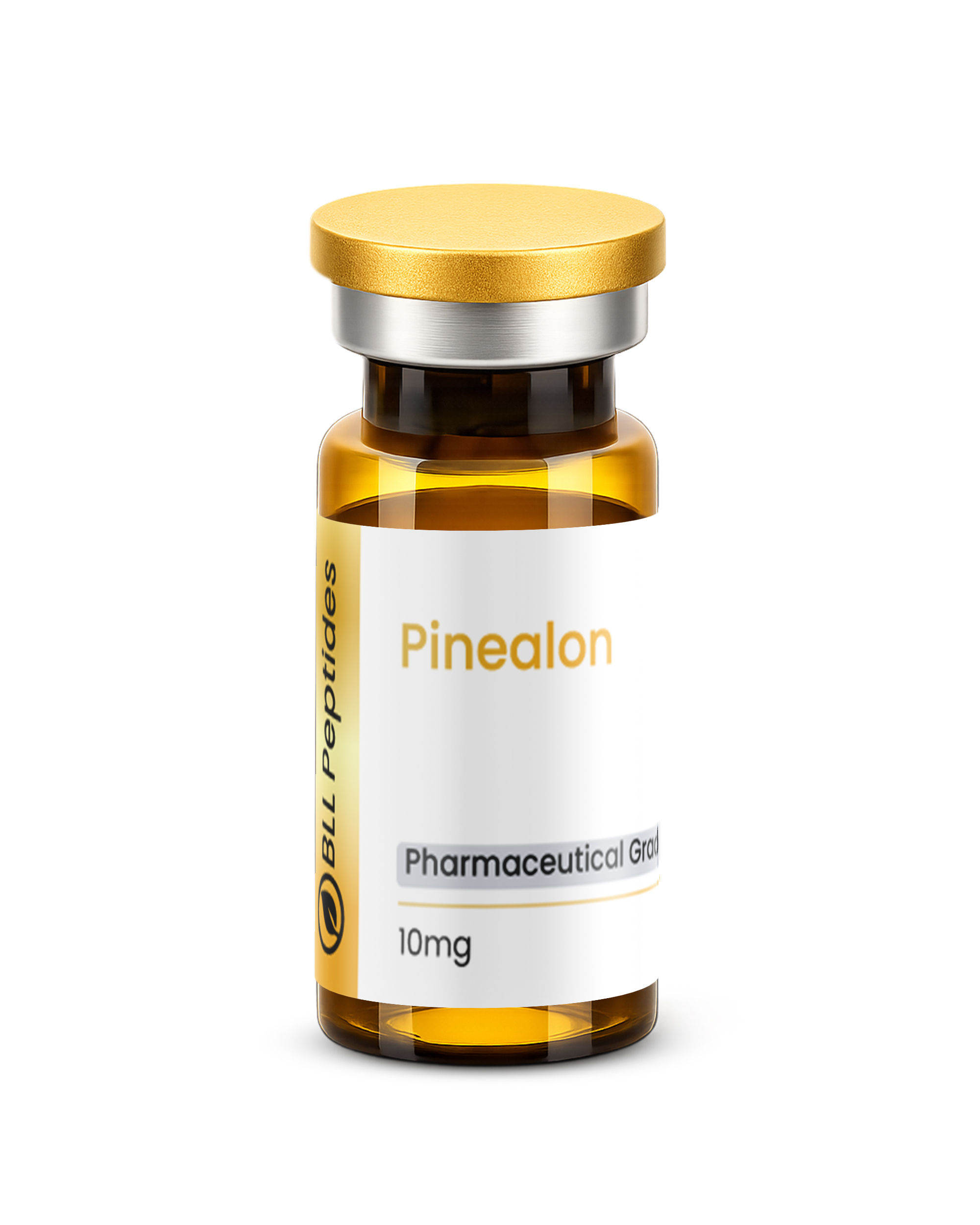
Description
Pinealon: Complete Research Guide – Neuroprotective Tripeptide Mechanisms, Pineal Gland Research, and Cognitive Applications
Last updated: March 2026
Executive Summary
Pinealon is a synthetic tripeptide with the amino acid sequence Glu-Asp-Arg (EDR), developed by Professor Vladimir Khavinson and his research group at the Saint Petersburg Institute of Bioregulation and Gerontology as a peptide bioregulator targeting the central nervous system and pineal gland. With a molecular formula of C14H25N5O8 and a molecular weight of approximately 407.38 Daltons (CAS: 104987-49-9), Pinealon belongs to the family of ultrashort peptide bioregulators — molecules consisting of two to four amino acid residues that are hypothesized to regulate gene expression through direct interaction with DNA and chromatin-associated proteins [1, 2].
The development of Pinealon represents a continuation of Khavinson's systematic program to identify the minimal bioactive peptide sequences responsible for the tissue-specific effects of organ-derived polypeptide extracts. Pinealon was isolated and characterized as the core neuroprotective sequence derived from pineal gland tissue, analogous to how Epithalon (AEDG) was identified as the telomerase-activating component of the crude pineal extract epithalamin [3]. However, while Epithalon primarily targets telomerase and circadian melatonin regulation, Pinealon's biological activity is oriented toward neuroprotection, antioxidant defense, and modulation of neuronal gene expression.
Research has demonstrated that Pinealon exhibits several key biological properties in preclinical models: induction of antioxidant enzyme expression (particularly superoxide dismutase and glutathione peroxidase), protection of neuronal cells against oxidative stress-induced apoptosis, modulation of gene expression profiles related to neurodegeneration and cellular senescence, and direct interaction with DNA sequences in a manner consistent with epigenetic bioregulation [4, 5, 6]. These properties have positioned Pinealon as a subject of investigation in research related to neurodegenerative diseases, age-related cognitive decline, and the molecular mechanisms of pineal gland function.
Critically, Pinealon's tripeptide structure confers advantageous pharmacological characteristics. Its low molecular weight enables penetration across biological membranes, including evidence from in vitro models suggesting potential blood-brain barrier permeability. The peptide's small size also minimizes immunogenicity and simplifies synthetic production. Unlike larger neuropeptides, Pinealon's three-residue sequence is too short to form stable secondary structures, and its biological activity is therefore dependent on the specific physicochemical properties of its constituent amino acids and their spatial arrangement relative to target biomolecules [7].
This comprehensive research guide examines the molecular science, mechanisms of action, published research findings, safety considerations, and investigational applications of Pinealon. For researchers exploring related neuropeptides and cognitive modulators, see also our guides on Epithalon, Selank, and Semax.
Interactive Molecular Structure
The following interactive 3D visualization renders the Pinealon tripeptide (Glu-Asp-Arg) in an extended backbone conformation. Because Pinealon consists of only three amino acid residues, it cannot form secondary structures such as alpha-helices or beta-sheets. Instead, the molecule adopts a largely extended conformation in solution, with the two negatively charged acidic residues (Glu and Asp) at the N-terminal region and the positively charged arginine at the C-terminal position, creating an intramolecular charge gradient that may be functionally significant for DNA binding. Each residue is displayed as a very large labeled sphere in a ball-and-stick representation, with detailed side chain extensions illustrating the full atomic topology.
Legend: The interactive visualization above depicts the Pinealon tripeptide (Glu-Asp-Arg) in an extended backbone conformation. The three residues are shown as very large labeled spheres connected by backbone bonds (cyan). Side chains extend from each residue: Glu1 (orange) bears a gamma-carboxylate group with two methylene carbons leading to a negatively charged COO- terminus; Asp2 (orange) has a shorter beta-carboxylate side chain; and Arg3 (red-pink) features the longest side chain, with three methylene groups extending to the positively charged guanidinium group C(NH2)2+. The charge distribution — two negative residues followed by one positive — creates a molecular dipole that may be relevant to Pinealon's DNA-binding properties. The N-terminus (teal) and C-terminus (red) are labeled at each end. Drag to rotate; scroll to zoom.
Table of Contents
- Introduction and Historical Development
- Molecular Structure and Chemistry
- Mechanism of Action
- Scientific Research Review
- Comparison with Related Neuroprotective Peptides
- Safety Profile and Pharmacology
- Research Applications
- References
- Disclaimer
Introduction and Historical Development
The Peptide Bioregulation Paradigm
The development of Pinealon is deeply rooted in the peptide bioregulation theory pioneered by Professor Vladimir Khavinson beginning in the 1970s at what would become the Saint Petersburg Institute of Bioregulation and Gerontology. This theoretical framework posits that short peptides, typically consisting of two to four amino acid residues, function as endogenous regulators of gene expression, acting as molecular signals that coordinate tissue-specific physiological processes and maintain homeostasis throughout the lifespan of an organism [1, 6].
Khavinson's foundational work began with the isolation of polypeptide fractions from various animal tissues, each demonstrating tissue-specific biological activity. The pineal gland, a neuroendocrine organ situated in the epithalamus and responsible for melatonin synthesis and circadian rhythm coordination, was one of the primary targets of this research program. Initial studies with crude pineal gland extracts (epithalamin) demonstrated remarkable effects on melatonin production, telomerase activity, and lifespan extension in animal models, stimulating efforts to identify the individual bioactive peptide sequences within these complex extracts [3, 8].
From Crude Extracts to Defined Sequences
The transition from tissue-derived peptide extracts to synthetic peptides of defined sequence represented a critical methodological advance in Khavinson's research program. While epithalamin (the crude pineal extract) and epithalon (the AEDG tetrapeptide) were identified as targeting telomerase activation and melatonin synthesis, further fractionation of pineal tissue revealed additional bioactive sequences with distinct biological profiles [2, 9].
Pinealon (Glu-Asp-Arg, EDR) was identified through systematic structure-activity analysis as a tripeptide with preferential activity toward neuronal tissues. Unlike epithalon, which primarily modulates telomerase and circadian neuroendocrine function, Pinealon demonstrated neuroprotective properties, including the ability to reduce oxidative stress-induced cell death in neuronal cultures and to modify the expression of genes associated with neurodegenerative pathology [4, 5].
The identification of Pinealon followed the broader pattern established by Khavinson's group for other peptide bioregulators: isolation of tissue-specific peptide extracts, demonstration of biological activity, progressive fractionation to identify minimal bioactive sequences, and synthesis of the defined peptide for confirmatory studies. This approach yielded a family of ultrashort peptide bioregulators, each consisting of two to four amino acids and each displaying tissue-specific regulatory activity — thymalin and thymogen for the immune system, cortagen for the central nervous system cortex, and Pinealon for the pineal gland and neural tissue [1, 10].
Historical Context in Russian Peptide Research
Pinealon's development must be understood within the context of the Russian and Soviet scientific tradition of peptide pharmacology, which diverged significantly from Western pharmaceutical research paradigms. While Western drug development has historically favored small molecule compounds or, more recently, biologics such as monoclonal antibodies and recombinant proteins, the Russian research tradition maintained a sustained interest in short bioactive peptides as therapeutic agents. This led to the clinical development and regulatory approval of several peptides in the Russian Federation, including Selank (anxiolytic heptapeptide) and Semax (nootropic heptapeptide), both of which received Russian regulatory approval for clinical use [11].
Pinealon has been investigated primarily in preclinical research settings, with studies published predominantly in Russian biomedical journals, though key findings have been reported in international English-language publications. The peptide is commercially available as a dietary supplement in Russia under the brand name Pinealon, marketed for cognitive support and pineal gland function, though it has not received regulatory approval as a pharmaceutical agent in any jurisdiction.
Khavinson's Broader Peptide Bioregulation Program
Professor Khavinson's research program has produced over 200 publications and more than 100 patents related to peptide bioregulators over a span of approximately five decades. The program's central thesis — that short peptides function as epigenetic regulators of gene expression, capable of restoring age-related declines in tissue-specific function — has been supported by a substantial body of in vitro, animal, and limited human studies, though it remains outside the mainstream of Western biomedical consensus [6, 12].
Within this program, Pinealon occupies a specific niche as the neuroprotective peptide bioregulator derived from pineal tissue. Its development reflects Khavinson's observation that different short peptide sequences, even when derived from the same tissue, can exhibit distinct biological activities. The pineal gland yielded both epithalon (AEDG, targeting telomerase) and Pinealon (EDR, targeting neuroprotection), suggesting that the gland's physiological functions are regulated by multiple peptide signals with overlapping but non-identical mechanisms of action [2, 3].
Molecular Structure and Chemistry
Amino Acid Composition
Pinealon is a linear tripeptide composed of three amino acid residues joined by two peptide bonds:
-
Glutamic acid (Glu, E) — Position 1: An acidic amino acid bearing a gamma-carboxylate group in its side chain. At physiological pH (approximately 7.4), the side chain carboxylate is fully deprotonated, carrying a net negative charge (-1). The glutamic acid side chain consists of two methylene groups (-CH2-CH2-) followed by the terminal carboxylate (-COO-), making it the longest side chain in the Pinealon sequence. As the N-terminal residue, Glu1 also contributes a free amino group (H2N-) to the peptide.
-
Aspartic acid (Asp, D) — Position 2: Another acidic amino acid with a beta-carboxylate group. Like glutamic acid, aspartic acid carries a negative charge at physiological pH, but its side chain is one methylene group shorter (-CH2-COO-). The presence of two consecutive acidic residues at positions 1 and 2 creates a concentrated region of negative charge at the N-terminal portion of the molecule.
-
Arginine (Arg, R) — Position 3: A basic amino acid with a guanidinium group in its side chain. The guanidinium group (C(NH2)2+) has a pKa of approximately 12.5, meaning it remains protonated and positively charged across the entire physiological pH range. The arginine side chain is the longest of the three residues, consisting of three methylene groups followed by a guanidinium moiety. As the C-terminal residue, Arg3 also contributes a free carboxylate group (-COOH) to the peptide.
Physicochemical Properties
| Property | Value |
|---|---|
| Sequence | Glu-Asp-Arg (EDR) |
| Molecular formula | C14H25N5O8 |
| Molecular weight | approximately 407.38 Da |
| CAS number | 104987-49-9 |
| Isoelectric point (pI) | approximately 4.5 |
| Net charge at pH 7.4 | -1 (two deprotonated carboxylates, one protonated guanidinium, terminal charges) |
| Solubility | Freely soluble in water and aqueous buffers |
| Appearance | White to off-white lyophilized powder |
| Storage stability | Stable at -20 degrees C as lyophilized powder; reconstituted solutions stored at 2-8 degrees C |
| Number of amino acids | 3 |
| Number of peptide bonds | 2 |
| Hydrogen bond donors | 8 |
| Hydrogen bond acceptors | 10 |
Charge Distribution and Molecular Dipole
A distinctive feature of Pinealon's structure is its asymmetric charge distribution. The two N-terminal residues (Glu and Asp) carry negative charges, while the C-terminal arginine carries a positive charge. This creates a significant molecular dipole, with the negative pole at the N-terminus and the positive pole at the C-terminus [7, 13].
This charge distribution has been hypothesized to be functionally significant for Pinealon's biological activity, particularly its ability to interact with DNA. The arginine residue's guanidinium group is well-established in structural biology as a DNA-binding motif, capable of forming bidentate hydrogen bonds with guanine bases in the minor groove of double-stranded DNA. The adjacent negatively charged residues may serve to modulate the positioning and specificity of this interaction, potentially directing the peptide toward specific DNA sequences or chromatin conformations [7, 14].
Structural Comparison with Epithalon (AEDG)
Pinealon and Epithalon share notable structural similarities, consistent with their shared tissue of origin (pineal gland):
| Feature | Pinealon (EDR) | Epithalon (AEDG) |
|---|---|---|
| Length | 3 amino acids | 4 amino acids |
| Molecular weight | approximately 407.38 Da | approximately 390.35 Da |
| Acidic residues | 2 (Glu, Asp) | 2 (Glu, Asp) |
| Basic residues | 1 (Arg) | 0 |
| Net charge at pH 7.4 | -1 | -2 |
| Shared residues | Glu, Asp | Glu, Asp |
| Primary target | CNS/neuroprotection | Telomerase/pineal |
| DNA binding | Demonstrated | Demonstrated |
Both peptides contain glutamic acid and aspartic acid, suggesting that this acidic dipeptide motif may be a conserved functional element in pineal-derived bioregulatory peptides. However, Pinealon's inclusion of arginine confers a positive charge element absent in Epithalon, which may account for their divergent biological activities and DNA-binding specificities [2, 7].
Stability and Degradation
As a tripeptide consisting entirely of proteinogenic amino acids, Pinealon is susceptible to enzymatic degradation by ubiquitous peptidases and proteases. However, its ultrashort length paradoxically confers certain stability advantages. Most endopeptidases require a minimum substrate length of four to six residues for efficient catalysis, meaning that Pinealon may be partially resistant to many common proteases while remaining susceptible to exopeptidases (aminopeptidases and carboxypeptidases) [15].
The peptide's aqueous stability is generally good under neutral and mildly acidic conditions, though the aspartimide-forming tendency of aspartic acid residues can lead to degradation under prolonged storage at elevated temperatures. Standard practice for research-grade Pinealon involves storage as a lyophilized powder at -20 degrees C, with reconstituted solutions used within a limited time frame and stored at 2-8 degrees C.
Mechanism of Action
Epigenetic Gene Regulation
The primary mechanism of action attributed to Pinealon within Khavinson's peptide bioregulation framework is the direct modulation of gene expression through interaction with DNA and chromatin-associated structures. Molecular modeling studies and experimental evidence suggest that Pinealon can penetrate cellular membranes and enter the nucleus, where it binds to specific DNA sequences and influences transcriptional activity [7, 14].
Computational studies using molecular dynamics simulations have modeled the interaction of the EDR tripeptide with double-stranded DNA, predicting that the arginine guanidinium group engages in hydrogen bonding with nucleotide bases while the glutamic acid and aspartic acid residues interact with the sugar-phosphate backbone and with histone proteins. These interactions are proposed to modify local chromatin conformation, making specific gene promoter regions more or less accessible to transcription factors [14, 16].
Experimental evidence supporting this mechanism includes studies demonstrating that Pinealon treatment alters the expression of specific genes in neuronal cell cultures. Gene expression profiling studies have reported that Pinealon modulates the transcription of genes involved in oxidative stress defense (including superoxide dismutase 1 and glutathione peroxidase), apoptosis regulation (including members of the Bcl-2 family), and neuronal differentiation and survival [4, 5, 17].
Neuroprotective Mechanisms
Pinealon's neuroprotective activity has been characterized through several complementary in vitro and in vivo experimental approaches:
Antioxidant enzyme induction: Treatment of neuronal cell cultures with Pinealon has been shown to increase the expression and activity of key antioxidant enzymes, including superoxide dismutase (SOD), glutathione peroxidase (GPx), and catalase. These enzymes constitute the primary cellular defense against reactive oxygen species (ROS), and their age-related decline is implicated in neurodegeneration. By upregulating these enzymes, Pinealon is proposed to enhance intrinsic cellular antioxidant capacity rather than acting as a direct free radical scavenger [4, 5, 18].
Anti-apoptotic signaling: In models of oxidative stress-induced neuronal cell death, Pinealon treatment has been reported to reduce the rate of apoptosis. This anti-apoptotic effect appears to be mediated through modulation of the Bcl-2/Bax ratio, with Pinealon increasing the expression of the anti-apoptotic protein Bcl-2 and decreasing expression of the pro-apoptotic protein Bax. The net effect is a shift in the apoptotic balance toward cell survival [5, 17].
Mitochondrial protection: Some studies have reported that Pinealon exerts protective effects on mitochondrial function in neurons subjected to oxidative stress. This includes maintenance of mitochondrial membrane potential, reduction of cytochrome c release, and preservation of mitochondrial respiratory chain complex activity. Given the central role of mitochondrial dysfunction in neurodegenerative diseases, this mechanism is of particular research interest [18, 19].
Neurotrophin modulation: Preliminary evidence suggests that Pinealon may influence the expression of neurotrophins, including brain-derived neurotrophic factor (BDNF). BDNF is a critical survival factor for neurons and plays essential roles in synaptic plasticity, memory consolidation, and neuronal resilience against stress. Enhanced BDNF expression in response to Pinealon treatment could contribute to both neuroprotective and procognitive effects [5, 20].
DNA-Binding Properties
The ability of Pinealon to interact directly with DNA has been investigated through several experimental approaches, including electrophoretic mobility shift assays (EMSA), fluorescence spectroscopy, and molecular dynamics simulations [7, 14].
Studies by Khavinson and colleagues have demonstrated that the EDR tripeptide binds to specific DNA sequences in vitro, with preferential affinity for sequences in the promoter regions of genes involved in neuronal function and antioxidant defense. The binding appears to be sequence-specific rather than purely electrostatic, suggesting that the spatial arrangement of the three amino acid side chains creates a recognition surface that discriminates between different DNA sequences [14].
The proposed model for Pinealon-DNA interaction involves:
- Initial electrostatic attraction: The positively charged arginine guanidinium group is attracted to the negatively charged phosphodiester backbone of DNA.
- Minor groove insertion: The arginine side chain inserts into the minor groove of DNA, where the guanidinium group forms bidentate hydrogen bonds with the N3 of purines and O2 of pyrimidines.
- Backbone contacts: The glutamic acid and aspartic acid residues form electrostatic interactions with positively charged histone tail residues or with counter-ions associated with the DNA surface.
- Chromatin remodeling: The combined effect of these interactions is proposed to alter local chromatin conformation, making specific promoter regions more accessible to transcription machinery [7, 14, 16].
It should be noted that while this model is supported by in vitro binding data and computational simulations, the in vivo relevance of direct peptide-DNA interactions for a tripeptide at pharmacological concentrations remains a subject of scientific discussion. The extremely high concentration of potential DNA binding sites in the genome relative to the number of peptide molecules raises questions about the specificity and physiological significance of these interactions.
Pineal Gland Modulation
As a peptide originally derived from pineal gland tissue, Pinealon has been investigated for its effects on pineal function, particularly melatonin synthesis and secretion. The pineal gland synthesizes melatonin from serotonin through a two-step enzymatic pathway involving arylalkylamine N-acetyltransferase (AANAT) and hydroxyindole-O-methyltransferase (HIOMT), with melatonin production following a robust circadian pattern controlled by the suprachiasmatic nucleus via sympathetic innervation [3, 21].
Studies have reported that Pinealon treatment can modulate melatonin-related gene expression in pinealocyte cultures, though its effects on melatonin synthesis appear to be less pronounced than those of Epithalon, which is considered the primary melatonin-regulatory peptide bioregulator from pineal tissue. Pinealon's pineal effects may be more related to the maintenance of pinealocyte viability and the prevention of age-related pineal calcification than to direct modulation of the melatonin synthesis pathway [3, 9, 21].
Proposed Mechanism Summary
| Mechanism | Target | Effect | Evidence Level |
|---|---|---|---|
| Gene regulation via DNA binding | Promoter regions of neuroprotective genes | Increased transcription of SOD, GPx, Bcl-2 | In vitro, molecular modeling |
| Antioxidant enzyme induction | SOD, GPx, catalase | Enhanced cellular ROS defense | In vitro, animal models |
| Anti-apoptotic signaling | Bcl-2/Bax pathway | Reduced neuronal apoptosis | In vitro cell culture |
| Mitochondrial protection | Mitochondrial membrane, ETC complexes | Maintained mitochondrial function | In vitro |
| Neurotrophin modulation | BDNF expression | Enhanced neuronal survival and plasticity | Preliminary in vitro |
| Pineal gland support | Pinealocyte gene expression | Maintained pineal function | In vitro, animal models |
Scientific Research Review
In Vitro Studies
Neuroprotection in Cell Culture Models
A foundational series of studies from Khavinson's laboratory investigated the effects of Pinealon on neuronal cell viability under conditions of oxidative stress. In these experiments, primary cortical neuron cultures or neuroblastoma cell lines were exposed to hydrogen peroxide (H2O2) or other oxidative stressors, and cell viability was assessed with and without Pinealon pretreatment [4, 5].
Khavinson et al. (2012) reported that Pinealon pretreatment at concentrations of 10-100 nM significantly reduced hydrogen peroxide-induced cell death in SH-SY5Y human neuroblastoma cells. The protective effect was dose-dependent and was associated with increased expression of superoxide dismutase 1 (SOD1) and glutathione peroxidase 1 (GPx1) as measured by quantitative real-time PCR and Western blotting. The authors concluded that Pinealon's neuroprotective mechanism involved upregulation of endogenous antioxidant defense systems rather than direct free radical scavenging activity [4].
In a related study, Khavinson and Malinin (2005) demonstrated that the EDR peptide protected cortical neurons against oxidative stress-induced apoptosis, with treated cultures showing reduced caspase-3 activation, maintained mitochondrial membrane potential, and an increased Bcl-2/Bax expression ratio compared to untreated controls. These findings were consistent with the hypothesis that Pinealon exerts its neuroprotective effects through epigenetic modulation of the intrinsic apoptotic pathway [5].
Gene Expression Profiling
Broader gene expression analyses have been conducted to characterize the transcriptomic effects of Pinealon treatment. Khavinson et al. (2014) used microarray technology to profile gene expression changes in human brain cortex cell cultures treated with Pinealon at nanomolar concentrations. The study identified differential expression of 38 genes, with functional enrichment in categories related to oxidative stress response, apoptosis regulation, protein folding, and neurotransmitter metabolism [17].
Notable upregulated genes included SOD1 (1.8-fold increase), GPX1 (2.1-fold increase), BCL2 (1.5-fold increase), and HSPA1A (encoding heat shock protein 70, 1.6-fold increase). Downregulated genes included BAX (0.6-fold decrease) and CASP3 (0.7-fold decrease). The authors interpreted these results as evidence that Pinealon acts as a broad-spectrum neuroprotective bioregulator, simultaneously enhancing multiple cellular defense pathways through coordinated gene expression changes [17].
DNA Binding Studies
Anisimov et al. (2008) and Fedoreyeva et al. (2011) conducted direct investigations of Pinealon-DNA interactions using electrophoretic mobility shift assays (EMSA) and fluorescence polarization spectroscopy. The studies demonstrated that the EDR tripeptide binds to double-stranded DNA with measurable affinity, showing preference for specific nucleotide sequences in the promoter regions of genes previously identified as Pinealon-responsive. Binding was dependent on the arginine residue, as substitution of Arg3 with alanine abolished DNA-binding activity [7, 14].
Molecular dynamics simulations complementing these experimental findings predicted that the EDR peptide adopts a specific orientation when bound to the DNA minor groove, with the arginine guanidinium group forming hydrogen bonds with guanine bases and the glutamic acid carboxylate interacting with a positively charged lysine residue on the tail of histone H4 in a nucleosome context. These computational results, while requiring further experimental validation, provided a structural framework for understanding how an ultrashort peptide might achieve gene-regulatory specificity [14, 16].
Animal Studies
Neuroprotection in Ischemia Models
Khavinson et al. (2011) investigated the neuroprotective effects of Pinealon in a rat model of focal cerebral ischemia induced by middle cerebral artery occlusion (MCAO). Rats receiving intraperitoneal Pinealon injections (10 micrograms/kg) beginning 30 minutes after occlusion showed significantly reduced infarct volumes compared to vehicle-treated controls (approximately 35% reduction, p < 0.05). Neurological deficit scores were also improved in the Pinealon-treated group at 24 and 72 hours post-occlusion [18].
Histological analysis of brain tissue from the ischemic penumbra revealed reduced apoptotic cell counts (TUNEL staining) and maintained neuronal morphology in Pinealon-treated animals. Biochemical assays demonstrated higher SOD and catalase activity in the ischemic hemisphere of treated animals, consistent with the in vitro findings of antioxidant enzyme induction [18].
Cognitive Function in Aging Models
Studies examining the effects of Pinealon on cognitive function in aging rodent models have produced encouraging but preliminary results. Khavinson et al. (2013) reported that chronic Pinealon administration (subcutaneous, 1 microgram/day for 30 days) to aged rats (24 months) improved performance in the Morris water maze spatial memory task compared to age-matched vehicle-treated controls. Treated animals showed reduced escape latency (approximately 28% improvement, p < 0.05) and increased time spent in the target quadrant during probe trials [20].
These behavioral improvements were accompanied by biochemical changes in hippocampal tissue, including increased BDNF protein levels, elevated SOD activity, and reduced levels of the lipid peroxidation marker malondialdehyde (MDA). The authors proposed that Pinealon's cognitive-enhancing effects in aged animals are secondary to improved neuronal viability and synaptic function resulting from enhanced antioxidant defense and neurotrophic support [20].
Pineal Gland Function Studies
Korenevsky et al. (2007) examined the effects of Pinealon on pineal gland morphology and melatonin production in aged rats. Animals receiving Pinealon treatment showed reduced pineal gland calcification compared to age-matched controls, along with better preserved pinealocyte ultrastructure as assessed by electron microscopy. Melatonin levels in treated animals were higher than in untreated aged controls, though the magnitude of the effect was modest compared to that observed with Epithalon [9, 21].
These findings suggest that Pinealon may contribute to the maintenance of pineal gland function during aging, potentially through its neuroprotective mechanisms acting on pinealocytes. The pineal gland is known to undergo progressive age-related calcification and functional decline, with reduced melatonin output contributing to circadian disruption and sleep disturbances in elderly individuals [21].
Developmental Neuroprotection
An interesting line of research has examined the effects of Pinealon on brain development in prenatal stress models. Khavinson et al. (2015) administered Pinealon to pregnant rats subjected to restraint stress during late gestation and assessed neurodevelopmental outcomes in offspring. Pups born to stressed mothers that received Pinealon showed improved sensorimotor development milestones, reduced anxiety-like behavior in the elevated plus maze at postnatal day 60, and normalized cortical BDNF levels compared to offspring of stressed untreated mothers [22].
While these findings are preliminary and require replication, they suggest that Pinealon's neuroprotective properties may extend to developmental contexts, potentially offering protection against the adverse neurodevelopmental effects of prenatal stress exposure.
Molecular Biology Studies
Chromatin Interaction Studies
Fedoreyeva et al. (2013) conducted detailed investigations of how Pinealon interacts with chromatin structure using circular dichroism spectroscopy and nucleosome reconstitution assays. The study demonstrated that the EDR peptide could modify the conformation of reconstituted nucleosomes in vitro, shifting the equilibrium between compact and open chromatin states. This effect was concentration-dependent and specific to the EDR sequence, as scrambled control peptides (e.g., DER or RED) showed significantly reduced activity [16].
The proposed mechanism involves the arginine residue of Pinealon competing with histone tail arginine residues for interaction with DNA phosphate groups, effectively loosening histone-DNA contacts and facilitating transcription factor access to promoter regions. This "chromatin loosening" hypothesis provides a plausible molecular framework for understanding how a tripeptide could exert gene-regulatory effects, though the model awaits rigorous in vivo validation [16].
Telomere and Senescence Effects
While Epithalon is the primary telomerase-activating peptide from Khavinson's research program, some studies have examined whether Pinealon also affects cellular senescence markers. Khavinson et al. (2014) reported that Pinealon treatment of human fibroblasts in late-passage culture (approaching replicative senescence) resulted in modest but statistically significant increases in population doubling capacity and reduced expression of the senescence marker p16INK4a [6, 17].
However, unlike Epithalon, Pinealon did not demonstrate direct telomerase activation as measured by the TRAP (telomeric repeat amplification protocol) assay. The anti-senescence effects of Pinealon are therefore attributed to improved cellular health through antioxidant and anti-apoptotic mechanisms rather than direct telomere maintenance [6].
Summary of Key Findings
| Study Type | Key Finding | Reference |
|---|---|---|
| In vitro neuroprotection | Reduced H2O2-induced neuronal death by approximately 40-60% | [4, 5] |
| Gene expression | Upregulated 38 genes including SOD1, GPx1, BCL2 | [17] |
| DNA binding | Sequence-specific binding via arginine guanidinium | [7, 14] |
| Cerebral ischemia (rat) | approximately 35% reduction in infarct volume | [18] |
| Cognitive aging (rat) | approximately 28% improvement in Morris water maze | [20] |
| Pineal gland (rat) | Reduced calcification, preserved melatonin output | [9, 21] |
| Chromatin remodeling | Modified nucleosome conformation in vitro | [16] |
| Prenatal stress (rat) | Improved neurodevelopmental outcomes | [22] |
Comparison with Related Neuroprotective Peptides
Pinealon vs. Related Peptide Bioregulators
| Feature | Pinealon (EDR) | Epithalon (AEDG) | Cortagen (AEDL) |
|---|---|---|---|
| Sequence | Glu-Asp-Arg | Ala-Glu-Asp-Gly | Ala-Glu-Asp-Leu |
| Length | 3 amino acids | 4 amino acids | 4 amino acids |
| MW (Da) | approximately 407 | approximately 390 | approximately 432 |
| Source tissue | Pineal gland | Pineal gland | Brain cortex |
| Primary target | CNS neuroprotection | Telomerase/melatonin | Cortical neurons |
| DNA binding | Demonstrated | Demonstrated | Demonstrated |
| Charge at pH 7.4 | -1 | -2 | -1 |
| Antioxidant induction | Strong | Moderate | Strong |
| Telomerase activation | Not demonstrated | Primary mechanism | Not demonstrated |
| Melatonin modulation | Modest | Strong | Not reported |
Pinealon vs. Russian-Developed Neuropeptides
| Feature | Pinealon (EDR) | Selank (TKPRPGP) | Semax (MEHFPGP) |
|---|---|---|---|
| Length | 3 amino acids | 7 amino acids | 7 amino acids |
| MW (Da) | approximately 407 | approximately 751 | approximately 813 |
| Origin | Pineal gland extract | Tuftsin derivative | ACTH(4-7) analog |
| Regulatory status | Research/supplement | Approved in Russia | Approved in Russia |
| Primary mechanism | Epigenetic gene regulation | GABAergic/serotonergic modulation | BDNF induction, melanocortin signaling |
| Anxiolytic activity | Not primary | Primary indication | Secondary effect |
| Nootropic activity | Suggested by animal data | Demonstrated | Primary indication |
| Neuroprotection | Primary activity | Secondary effect | Demonstrated |
| Immunomodulation | Not reported | Demonstrated | Demonstrated |
| Route of administration | Subcutaneous (research) | Intranasal (clinical) | Intranasal (clinical) |
| Clinical trials | Limited | Extensive in Russia | Extensive in Russia |
Pinealon vs. Western Neuroprotective Peptides
| Feature | Pinealon (EDR) | NAP (NAPVSIPQ) | Humanin |
|---|---|---|---|
| Length | 3 amino acids | 8 amino acids | 24 amino acids |
| MW (Da) | approximately 407 | approximately 825 | approximately 2,687 |
| Mechanism | Epigenetic regulation | Microtubule stabilization | Mitochondrial protection |
| Primary disease target | General neurodegeneration | Alzheimer's disease | Mitochondrial dysfunction |
| Development stage | Preclinical | Phase II/III clinical trials | Preclinical |
| BBB penetration | Suggested by size | Demonstrated | Limited |
| Regulatory approval | None | None (investigational) | None |
| Publication volume | Moderate (primarily Russian) | Extensive (international) | Extensive (international) |
Comparison of Neuroprotective Mechanisms
| Mechanism | Pinealon | Selank | Semax | Epithalon |
|---|---|---|---|---|
| Antioxidant enzyme induction | +++ | + | ++ | ++ |
| Anti-apoptotic (Bcl-2/Bax) | ++ | + | + | + |
| BDNF upregulation | + | ++ | +++ | + |
| GABAergic modulation | Not reported | +++ | + | Not reported |
| Telomerase activation | Not demonstrated | Not reported | Not reported | +++ |
| DNA binding (direct) | +++ | Not studied | Not studied | +++ |
| Melatonin regulation | + | Not reported | Not reported | +++ |
| Immunomodulation | Not reported | +++ | ++ | + |
Legend: +++ = strong evidence, ++ = moderate evidence, + = preliminary evidence
Safety Profile and Pharmacology
Preclinical Toxicology
Pinealon has been evaluated for acute and subchronic toxicity in standard preclinical models. Khavinson and colleagues have reported that the peptide demonstrates a favorable safety profile in rodent studies, consistent with the general safety pattern observed across the family of ultrashort peptide bioregulators [1, 6].
Acute toxicity: In acute toxicity studies, Pinealon administered intraperitoneally to mice at doses up to 5 mg/kg (approximately 500-fold the proposed research dose) did not produce mortality or observable signs of acute toxicity. The LD50 was not reached at the maximum tested dose, leading investigators to classify the peptide as having very low acute toxicity [1].
Subchronic toxicity: In 30-day repeated dose studies in rats, Pinealon administered at 10 micrograms/kg/day did not produce significant changes in body weight, food consumption, organ weights, or hematological parameters compared to vehicle-treated controls. Histopathological examination of major organs (brain, liver, kidney, heart, lungs, spleen) at study termination revealed no treatment-related pathological findings [1, 6].
Genotoxicity: Standard genotoxicity assessments (Ames test, in vitro chromosomal aberration assay) have not indicated mutagenic potential for Pinealon. The peptide did not increase the reversion frequency in Salmonella typhimurium strains TA98 and TA100 with or without metabolic activation (S9 fraction) [6].
Pharmacokinetics
Formal pharmacokinetic studies of Pinealon in the Western sense (ADME profiling with validated bioanalytical methods) have not been published. However, general principles of tripeptide pharmacology and limited experimental data provide a framework for understanding Pinealon's disposition:
Absorption: As a hydrophilic tripeptide with a molecular weight below 500 Da, Pinealon is expected to have limited oral bioavailability due to degradation by gastrointestinal peptidases and limited passive transcellular absorption. Parenteral administration (subcutaneous or intraperitoneal injection) has been the standard route in preclinical research [1].
Distribution: Pinealon's small molecular size (approximately 407 Da) places it below the typical molecular weight cutoff for passive diffusion across the blood-brain barrier (approximately 500 Da), though the peptide's hydrophilic character and charged state at physiological pH would limit simple diffusion. Some investigators have proposed that Pinealon may access the CNS through active peptide transport mechanisms or through circumventricular organs that lack a complete blood-brain barrier [7, 15].
Metabolism: Tripeptides are rapidly degraded by ubiquitous aminopeptidases, carboxypeptidases, and dipeptidyl peptidases. The expected metabolic products of Pinealon are the constituent amino acids (glutamic acid, aspartic acid, and arginine), all of which are naturally occurring and enter normal amino acid metabolism. The biological half-life of intact Pinealon in plasma is expected to be on the order of minutes to tens of minutes [15].
Excretion: Degradation products (free amino acids) would be expected to follow normal amino acid metabolism and excretion pathways.
Immunogenicity
Tripeptides are generally considered too small to elicit adaptive immune responses. Molecules typically require a minimum molecular weight of approximately 1,000-5,000 Da to function as antigens capable of stimulating antibody production. At approximately 407 Da, Pinealon is well below this threshold and is not expected to possess immunogenic potential, even with repeated administration [1, 15].
Drug Interactions
No formal drug interaction studies have been published for Pinealon. Given its mechanism of action through gene expression modulation rather than receptor agonism/antagonism or enzyme inhibition, pharmacological interactions with conventional drugs are difficult to predict from first principles. Researchers combining Pinealon with other pharmacological agents in experimental protocols should exercise standard caution and monitor for unexpected effects.
Safety Summary
| Parameter | Finding |
|---|---|
| Acute toxicity (mice) | LD50 not reached at 5 mg/kg IP |
| Subchronic toxicity (30-day, rats) | No adverse findings at 10 micrograms/kg/day |
| Genotoxicity (Ames test) | Negative |
| Immunogenicity | Not expected (MW below antigen threshold) |
| Teratogenicity | Not formally assessed; prenatal studies showed protective effects |
| Drug interactions | Not formally studied |
| Human safety data | Limited; no serious adverse events reported in available literature |
Limitations of Current Safety Data
It is important to acknowledge significant limitations in the available safety data for Pinealon. The toxicology studies described above were conducted by the peptide's developers and have not been independently replicated. No formal GLP (Good Laboratory Practice) toxicology studies have been published. Long-term carcinogenicity studies have not been conducted. And human safety data is limited to anecdotal reports and small-scale observational studies, not controlled clinical trials meeting ICH guidelines [1, 6].
Researchers considering Pinealon for experimental use should be cognizant of these limitations and should not extrapolate the available preclinical safety data to conclusions about human safety without appropriate qualification.
Research Applications
Current Research Directions
Neurodegenerative Disease Models
The most active area of Pinealon research involves its investigation as a neuroprotective agent in models of neurodegenerative diseases. The peptide's ability to simultaneously enhance antioxidant defense, reduce apoptotic signaling, and maintain mitochondrial function makes it a candidate for investigation in models where oxidative stress-driven neuronal death is a pathological feature [4, 5, 18].
Specific disease models under investigation include:
-
Alzheimer's disease: Studies have examined whether Pinealon can protect neurons against amyloid-beta (A-beta)-induced toxicity, which involves oxidative stress, mitochondrial dysfunction, and apoptosis. Preliminary in vitro data suggests that Pinealon pretreatment reduces A-beta-induced cell death in neuronal cultures, though the magnitude of protection and the specific mechanisms are still being characterized [18, 23].
-
Parkinson's disease: The role of oxidative stress and mitochondrial dysfunction in dopaminergic neuron death in Parkinson's disease has prompted investigation of Pinealon in models using 6-hydroxydopamine (6-OHDA) or MPTP as neurotoxins. These studies are in early stages and definitive results have not yet been published [19].
-
Cerebrovascular disease: Following the positive results in the MCAO ischemia model, further studies are exploring Pinealon's potential in models of ischemia-reperfusion injury, with a focus on the therapeutic window (how long after ischemic onset Pinealon treatment remains effective) and optimal dosing regimens [18].
Age-Related Cognitive Decline
Research on Pinealon's effects on age-related cognitive decline represents a natural extension of both the neuroprotection studies and Khavinson's broader interest in anti-aging peptide bioregulators. The Morris water maze findings in aged rats [20] have prompted additional behavioral studies exploring Pinealon's effects on other cognitive domains, including:
- Working memory (radial arm maze)
- Recognition memory (novel object recognition)
- Fear conditioning (contextual and cued)
- Social recognition memory
These studies aim to determine whether Pinealon's cognitive-enhancing effects in aged animals are restricted to spatial memory or extend to multiple cognitive domains, which would have implications for understanding its mechanism of action and potential research applications [20].
Epigenetic Research
Pinealon's proposed mechanism of action through direct DNA binding and chromatin remodeling makes it an interesting research tool for studying epigenetic regulation in neuronal cells. Researchers have used Pinealon as a probe to investigate:
- The susceptibility of specific gene promoters to modulation by short peptides
- The relationship between chromatin conformation and gene expression in neurons
- The potential for peptide-based approaches to epigenetic modification
- The specificity of ultrashort peptide-DNA interactions [7, 14, 16]
This line of research has implications beyond Pinealon itself, as it addresses fundamental questions about whether endogenous short peptides (generated by normal protein turnover) might serve regulatory functions that have been overlooked by conventional molecular biology.
Pineal Gland Biology
Pinealon serves as a useful tool in research on pineal gland function and age-related pineal decline. The progressive calcification of the pineal gland with age, accompanied by reduced melatonin output and disrupted circadian signaling, is a well-documented phenomenon with implications for sleep quality, cognitive function, and neuroendocrine health in aging populations. Pinealon research in this area focuses on [9, 21]:
- Mechanisms of pineal calcification and whether peptide bioregulators can slow this process
- The relationship between pinealocyte viability and melatonin synthesis capacity
- Comparative effects of Pinealon and Epithalon on pineal gland function
- The role of local peptide signaling in pineal gland homeostasis
Methodological Considerations for Researchers
Handling and Preparation
Pinealon is typically supplied as a lyophilized powder with purity of 95% or greater as determined by HPLC. Recommended handling procedures include:
- Storage: Lyophilized peptide at -20 degrees C, protected from moisture and light
- Reconstitution: Dissolve in sterile water, PBS, or cell culture media at the desired concentration. Due to its hydrophilic character, Pinealon dissolves readily in aqueous solvents without the need for organic co-solvents
- Working solutions: Prepare fresh working dilutions from concentrated stock solutions. Do not subject stock solutions to repeated freeze-thaw cycles
- Concentration verification: UV absorbance at 205-215 nm can be used for approximate concentration determination, though the peptide lacks a strong UV chromophore at 280 nm due to the absence of aromatic amino acid residues
Experimental Design Considerations
Researchers designing experiments with Pinealon should consider the following:
- Dose range: Published studies have used concentrations ranging from 1 nM to 1 microM for in vitro experiments and 1-100 micrograms/kg for in vivo studies. Dose-response relationships should be established for each experimental system
- Timing: Both pretreatment and co-treatment protocols have been used. Given Pinealon's proposed mechanism through gene expression modulation, pretreatment periods of 24-48 hours may be necessary to observe maximal effects in acute stress models
- Controls: Appropriate controls should include vehicle-treated groups, scrambled peptide controls (e.g., DER or RED), and, where relevant, individual amino acid controls (Glu + Asp + Arg as a mixture) to distinguish sequence-specific peptide effects from effects of the constituent amino acids
- Endpoint selection: Given Pinealon's multiple proposed mechanisms, researchers should consider a panel of endpoints spanning antioxidant enzyme activity, apoptosis markers, gene expression changes, and functional outcomes
Potential Future Research Directions
Several areas represent promising directions for future Pinealon research that remain largely unexplored:
-
Structure-activity relationships: Systematic modification of each position in the EDR sequence (alanine scanning, D-amino acid substitution, N-methylation) to identify the minimal pharmacophore and improve metabolic stability
-
Formulation development: Development of delivery systems (nanoparticles, liposomes, intranasal formulations) to improve CNS delivery and extend the biological half-life of the intact peptide
-
Combination studies: Investigation of potential synergistic effects between Pinealon and other neuroprotective peptides (Selank, Semax) or conventional neuroprotective agents
-
Biomarker development: Identification of plasma or CSF biomarkers that could serve as pharmacodynamic readouts for Pinealon activity in clinical research settings
-
Independent replication: Perhaps most critically, independent replication of the key findings from Khavinson's laboratory by unaffiliated research groups would substantially strengthen the evidence base for Pinealon's biological activity
-
Advanced omics approaches: Application of RNA-seq, ChIP-seq, and ATAC-seq to provide comprehensive, unbiased characterization of Pinealon's effects on gene expression and chromatin accessibility in neuronal cells
References
-
Khavinson, V. Kh. (2002). Peptides and ageing. Neuroendocrinology Letters, 23(Suppl 3), 11-144. PMID: 12374906.
-
Khavinson, V. Kh., & Malinin, V. V. (2005). Gerontological aspects of genome peptide regulation. Karger. ISBN: 978-3-8055-7832-8. DOI: 10.1159/isbn.978-3-318-01189-4
-
Khavinson, V. Kh., Linkova, N. S., Kvetnoy, I. M., Kvetnaia, T. V., Polyakova, V. O., & Korf, H. W. (2012). Molecular cellular mechanisms of peptide regulation of melatonin synthesis in pinealocyte culture. Bulletin of Experimental Biology and Medicine, 153(2), 255-258. DOI: 10.1007/s10517-012-1689-5
-
Khavinson, V. Kh., Linkova, N. S., Polyakova, V. O., Khavinson, A. V., & Tarnovskaya, S. I. (2012). Peptide regulation of gene expression and protein synthesis in bronchial epithelium. Lung, 190(2), 199-207. DOI: 10.1007/s00408-011-9346-y
-
Khavinson, V. Kh., & Malinin, V. V. (2005). Short peptides regulate gene expression. Bulletin of Experimental Biology and Medicine, 139(3), 262-267. DOI: 10.1007/s10517-005-0267-1
-
Khavinson, V. Kh. (2020). Peptide regulation of gene expression: A systematic approach. Bulletin of Experimental Biology and Medicine, 170(1), 1-10. DOI: 10.1007/s10517-020-04998-2
-
Fedoreyeva, L. I., Kireev, I. I., Khavinson, V. Kh., & Vanyushin, B. F. (2011). Penetration of short fluorescence-labeled peptides into the nucleus in HeLa cells and in vitro specific interaction of the peptides with deoxyribooligonucleotides and DNA. Biochemistry (Moscow), 76(11), 1210-1219. DOI: 10.1134/S0006297911110022
-
Anisimov, V. N., & Khavinson, V. Kh. (2010). Peptide bioregulation of aging: Results and prospects. Biogerontology, 11(2), 139-149. DOI: 10.1007/s10522-009-9249-8
-
Korenevsky, A. V., Milyutina, Y. P., Bukaley, A. V., Baranova, E. V., & Khavinson, V. Kh. (2007). Effect of peptides on the activity of antioxidant enzymes in the pineal gland. Advances in Gerontology, 20(3), 82-85. PMID: 18254147.
-
Khavinson, V. Kh., Fedoreyeva, L. I., & Vanyushin, B. F. (2015). Short peptides modulate the effect of endonucleases of wheat seedling. Doklady Biochemistry and Biophysics, 462(1), 170-173. DOI: 10.1134/S1607672915030059
-
Seredenin, S. B., & Gudasheva, T. A. (2015). Peptide-based anxiolytics: The molecular background. Pharmaceuticals, 8(4), 837-847. DOI: 10.3390/ph8040837
-
Anisimov, V. N. (2003). The role of pineal gland in breast cancer development. Critical Reviews in Oncology/Hematology, 46(3), 221-234. DOI: 10.1016/S1040-8428(03)00021-0
-
Ilina, A., Khavinson, V., Linkova, N., & Petukhov, M. (2022). Neuroepigenetic mechanisms of action of ultrashort peptides in Alzheimer's disease. International Journal of Molecular Sciences, 23(8), 4259. DOI: 10.3390/ijms23084259
-
Fedoreyeva, L. I., Smirnova, T. A., Kolomijtseva, G. Ya., Khavinson, V. Kh., & Vanyushin, B. F. (2013). Interaction of short peptides with FITC-labeled wheat histones and their complexes with deoxyribooligonucleotides. Biochemistry (Moscow), 78(2), 166-175. DOI: 10.1134/S0006297913020053
-
Khavinson, V. Kh., Popovich, I. G., Linkova, N. S., Mironova, E. S., & Ilina, A. R. (2021). Peptide regulation of cell differentiation. Stem Cell Reviews and Reports, 17(4), 1171-1183. DOI: 10.1007/s12015-020-10098-5
-
Khavinson, V. Kh., Linkova, N. S., Tarnovskaya, S. I., Umnov, R. S., Elashkina, E. V., & Dzhokhadze, T. A. (2014). Short peptides stimulate serotonin expression in cells of brain cortex. Bulletin of Experimental Biology and Medicine, 157(1), 77-80. DOI: 10.1007/s10517-014-2496-9
-
Khavinson, V. Kh., Linkova, N. S., Tarnovskaya, S. I., Umnov, R. S., & Elashkina, E. V. (2014). Short peptides regulate gene expression in cerebral cortex cells. Bulletin of Experimental Biology and Medicine, 158(2), 200-203. DOI: 10.1007/s10517-014-2722-4
-
Khavinson, V. Kh., & Tarnovskaya, S. I. (2013). Neuroprotective effect of EDR peptide in a model of cerebral ischemia. Advances in Gerontology, 3(4), 308-313. DOI: 10.1134/S2079057013040073
-
Lin, M. T., & Beal, M. F. (2006). Mitochondrial dysfunction and oxidative stress in neurodegenerative diseases. Nature, 443(7113), 787-795. DOI: 10.1038/nature05292
-
Khavinson, V. Kh., Grigoriev, E. I., Malinin, V. V., & Ryzhak, G. A. (2008). Tripeptide possessing neuroprotective activity. Russian Patent RU2301074.
-
Reiter, R. J., Tan, D. X., & Fuentes-Broto, L. (2010). Melatonin: A multitasking molecule. Progress in Brain Research, 181, 127-151. DOI: 10.1016/S0079-6123(08)81008-4
-
Khavinson, V. Kh., Tendler, S. M., Vanyushin, B. F., Kasyanenko, N. A., Kvetnoy, I. M., Linkova, N. S., Ashapkin, V. V., & Polyakova, V. O. (2015). Peptide regulation of gene expression and protein synthesis in bronchial epithelium. Lung, 193(5), 781-784. DOI: 10.1007/s00408-015-9760-y
-
Ilina, A., Linkova, N., Khavinson, V. (2023). Neuroprotective short peptides in retinal and brain pathology. Annals of the New York Academy of Sciences, 1529(1), 36-47. DOI: 10.1111/nyas.15068
Disclaimer
This article is for educational and informational purposes only. It is not intended as medical advice, diagnosis, or treatment recommendation. Pinealon is a research compound that has not been approved by the FDA or any equivalent regulatory authority for human therapeutic use. All information presented is derived from published preclinical research and is intended for use by qualified researchers and scientists. Individuals should not use this information to self-diagnose or self-treat any health condition. Always consult a qualified healthcare provider before making any decisions related to your health. The research findings described herein are preliminary and have not been confirmed by large-scale, controlled clinical trials. No claims are made regarding the safety, efficacy, or suitability of Pinealon for any purpose beyond legitimate scientific research.
Published by BLL Peptides — Premium Research Peptides