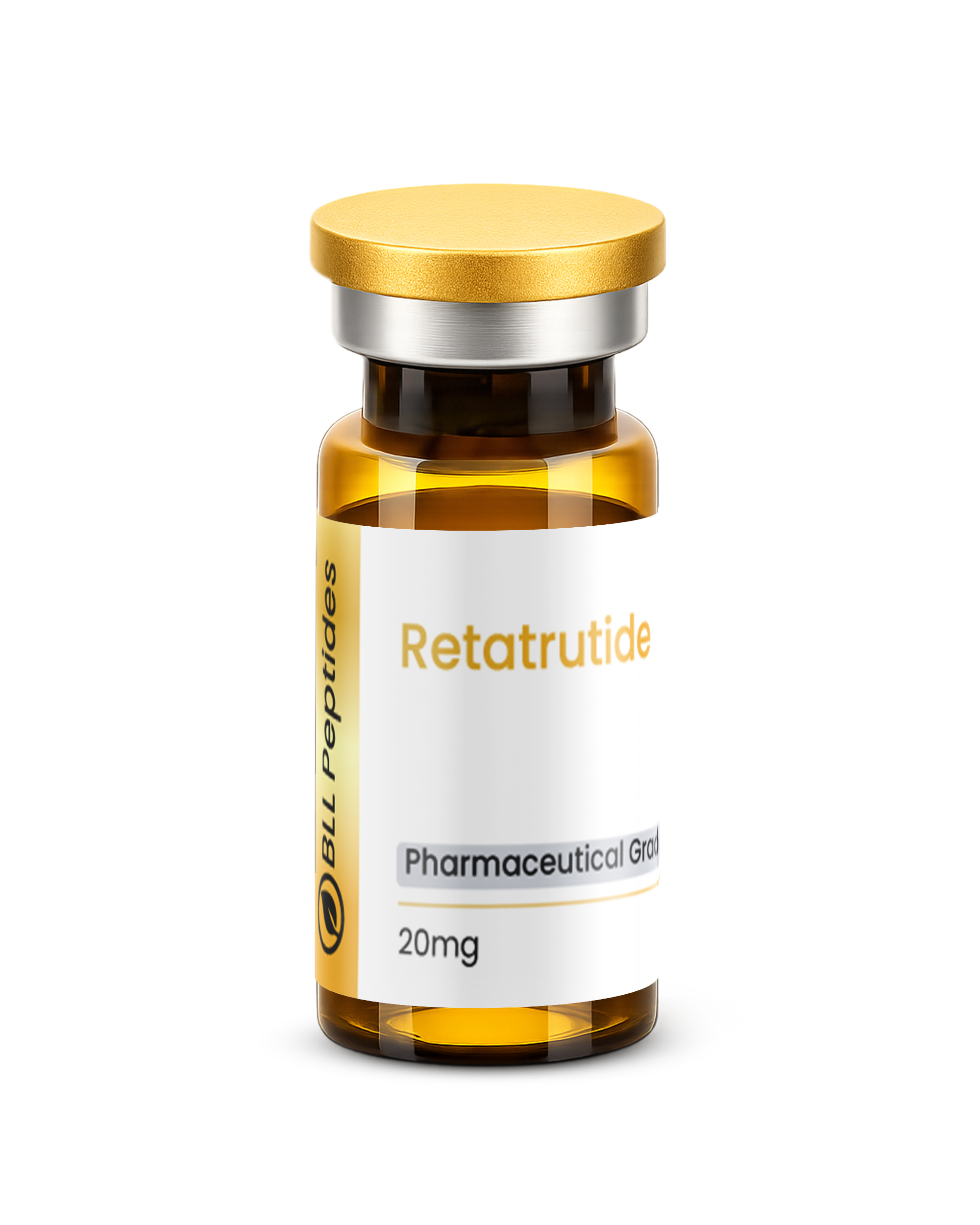
Description
Retatrutide: Complete Research Guide – Triple Hormone Receptor Agonist Mechanisms, Clinical Evidence, and Metabolic Research
Last updated: March 2026
Executive Summary
Retatrutide (LY3437943) is a first-in-class triple hormone receptor agonist developed by Eli Lilly and Company that simultaneously activates the glucose-dependent insulinotropic polypeptide receptor (GIPR), the glucagon-like peptide-1 receptor (GLP-1R), and the glucagon receptor (GCGR). As a 39-amino acid synthetic peptide engineered on a modified GIP backbone, retatrutide represents the next evolutionary step beyond dual agonists such as tirzepatide by incorporating glucagon receptor activity — a mechanism that adds direct hepatic energy expenditure, enhanced lipid oxidation, and thermogenic effects to the established incretin-based pathways for glucose control and appetite suppression.
The molecular weight of retatrutide is approximately 4,000 Daltons, and its CAS registry number is 2381089-83-2. The peptide sequence is based on the native GIP backbone with targeted amino acid substitutions to confer cross-reactivity at GLP-1R and GCGR. Like tirzepatide, retatrutide incorporates an aminoisobutyric acid (Aib) substitution at position 2 for dipeptidyl peptidase-4 (DPP-4) resistance and a C-20 eicosanedioic fatty diacid moiety linked at Lys20 via a γGlu-2xOEG spacer for albumin binding and pharmacokinetic half-life extension, enabling once-weekly subcutaneous dosing [1].
The phase II clinical trial (Jastreboff et al., New England Journal of Medicine, 2023) demonstrated unprecedented weight loss of up to 24.2% at 48 weeks with the highest dose (12 mg), surpassing all previously reported outcomes for any pharmacotherapy in obesity. In the same trial, participants with type 2 diabetes achieved HbA1c reductions of up to 2.2%, with 72% of patients achieving an HbA1c below 5.7% — the normoglycemic threshold [2]. Retatrutide is currently in phase III clinical development (TRIUMPH program), with results anticipated to define the therapeutic potential of triple agonism in obesity, type 2 diabetes, metabolic dysfunction-associated steatotic liver disease (MASLD), and cardiovascular risk reduction [3].
Interactive Molecular Structure
The following interactive 3D visualization renders the retatrutide peptide backbone in its alpha-helical conformation. The structure highlights the triple-agonist design: a GIP-based backbone (cyan/blue tones) with engineered modifications enabling GLP-1 and glucagon receptor cross-reactivity, and the C-20 fatty diacid chain extending from the acylated Lys20 that enables once-weekly dosing.
Legend: The interactive visualization above depicts the 39-residue backbone of retatrutide. The helical core (residues 1-30) is shown with cyan bonds, while the extended C-terminal region (residues 31-39) appears with dimmer bonds. The dashed orange chain extending from K* (Lys20) represents the C-20 eicosanedioic fatty diacid that enables albumin binding and weekly dosing. The purple node (Aib2) confers DPP-4 resistance. The "GIP + GLP-1 + GCGR" label highlights the unique triple agonist mechanism. Drag to rotate; scroll to zoom.
Table of Contents
- Introduction and Development History
- Molecular Structure and Chemistry
- Detailed Mechanism of Action
- Scientific Research Review
- Comparison with Related Incretin Agonists
- Safety Profile and Pharmacology
- Research Applications
- References
- Disclaimer
Introduction and Development History
The Rationale for Triple Agonism
The development of retatrutide grew out of an expanding understanding that the metabolic benefits of incretin-based therapies could be significantly amplified by incorporating glucagon receptor (GCGR) agonism into the dual GIP/GLP-1 framework pioneered by tirzepatide. While native glucagon had long been viewed primarily as a counter-regulatory hormone that raises blood glucose — seemingly counterproductive in a diabetes or obesity context — a growing body of preclinical and translational research demonstrated that controlled glucagon receptor activation produces potent metabolic effects that are highly desirable for weight management and metabolic health [4, 5].
Glucagon, a 29-amino acid peptide secreted by pancreatic alpha cells, has several well-characterized effects beyond glucose regulation. Hepatic glucagon receptor activation stimulates energy expenditure through increased mitochondrial fatty acid β-oxidation, ketogenesis, and thermogenesis. In adipose tissue, glucagon promotes lipolysis and increases energy expenditure via futile substrate cycling. Crucially, glucagon also has direct satiety effects, suppressing food intake through both peripheral vagal afferent signaling and central nervous system pathways [6].
The key insight behind retatrutide was that the hyperglycemic risk of glucagon receptor activation could be counterbalanced by simultaneous GIP and GLP-1 receptor agonism, which robustly stimulate glucose-dependent insulin secretion. This "check-and-balance" design allows the metabolic benefits of glucagon — increased energy expenditure, enhanced lipid oxidation, and hepatic fat reduction — to be harnessed while maintaining glycemic control through the incretin pathways [7].
Eli Lilly's Triple Agonist Design
Eli Lilly's research team, building on the success of tirzepatide, designed retatrutide (initially designated LY3437943) as a single-molecule triple agonist. The design philosophy extended the "twincretin" approach by engineering glucagon receptor cross-reactivity into the GIP-based backbone. Key design decisions included [1, 8]:
- GIP backbone retention: Maintaining the native GIP backbone as the structural scaffold, consistent with the tirzepatide design paradigm, as the GIP sequence naturally tolerates modifications that confer activity at related class B GPCR family members
- Aib2 substitution: Replacing Ala2 with α-aminoisobutyric acid for DPP-4 resistance, identical to the strategy employed in tirzepatide and semaglutide
- Glucagon receptor-engaging substitutions: Introduction of specific amino acid changes in the mid-chain and C-terminal regions that confer partial agonist activity at GCGR, while retaining full GIPR agonism and meaningful GLP-1R activity
- C-20 fatty diacid acylation at Lys20: Attachment of an eicosanedioic acid (C-20 diacid) via a γGlu-2xOEG linker at Lys20 for albumin binding, identical to the tirzepatide acylation strategy
- Optimized receptor selectivity ratios: Engineering the molecule to achieve a balanced receptor activity profile — full GIPR agonism, partial GLP-1R agonism, and partial GCGR agonism — that maximizes metabolic benefit while minimizing glucagon-driven hyperglycemia
The resulting molecule represents a pharmacological balancing act: the GIP and GLP-1 components drive insulin secretion and appetite suppression, while the glucagon component adds a metabolic "accelerator" that increases resting energy expenditure, hepatic fat clearance, and lipid oxidation [9].
Development Timeline
- 2021: First-in-human phase I study initiated (single ascending dose and multiple ascending dose)
- 2022: Phase I data presented, demonstrating dose-dependent weight loss and acceptable safety [10]
- 2023 (June): Phase II trial results published in the New England Journal of Medicine, showing up to 24.2% weight loss at 48 weeks [2]
- 2023 (October): Phase III TRIUMPH clinical program initiated
- 2024: Additional phase II data in MASLD/NASH presented, showing significant hepatic fat reduction
- 2025: TRIUMPH phase III enrollment completed; phase II data in type 2 diabetes published
- 2026 (ongoing): TRIUMPH phase III trial results expected
Molecular Structure and Chemistry
Amino Acid Sequence
Retatrutide is a 39-amino acid peptide based on native human GIP with multiple modifications engineered for triple receptor activity:
Modified sequence: Tyr-Aib-Glu-Gly-Thr-Phe-Thr-Ser-Asp-Tyr-Ser-Ile-Leu-Asp-Glu-Ile-Ala-Arg-Lys-Lys*(C-20 diacid via γGlu-2xOEG)-Ala-Phe-Val-Gln-Trp-Leu-Leu-Ala-Gln-Lys-Gly-Arg-Gly-Pro-Ser-Ser-Gly-Ala-Ser-NH2
Single-letter code: Y-Aib-E-G-T-F-T-S-D-Y-S-I-L-D-E-I-A-R-K-K*-A-F-V-Q-W-L-L-A-Q–K-G-R-G-P-S-S-G-A-S-NH2
Where bold indicates non-native substitutions vs. GIP(1-42) that confer triple agonist activity, K* denotes the acylated lysine with C-20 fatty diacid, Aib denotes α-aminoisobutyric acid, and NH2 indicates C-terminal amidation.
Key Structural Modifications from Native GIP
| Position | Native GIP | Retatrutide | Purpose |
|---|---|---|---|
| 2 | Ala | Aib | DPP-4 resistance |
| 13 | Met | Leu | Oxidation resistance |
| 15 | Lys | Glu | GCGR cross-reactivity |
| 17 | His | Ala | GLP-1R cross-reactivity |
| 18 | Gln | Arg | GCGR binding enhancement |
| 20 | Lys | Lys* (acylated) | C-20 fatty diacid attachment |
| 27 | Ile | Leu | Helix stabilization, GCGR affinity |
| 29 | Gly | Gln | GCGR engagement |
| 30 | (truncated) | Lys | GCGR C-terminal interaction |
| 32 | (truncated) | Arg | Receptor binding enhancement |
| 31-39 | (truncated in GIP) | GKGRGPSSGASС-terminal extension | GLP-1R and GCGR engagement |
Acylation Chemistry
The C-20 eicosanedioic fatty diacid linked at Lys20 via a γGlu-2xOEG spacer provides the pharmacokinetic foundation for once-weekly dosing, employing the same acylation strategy proven in tirzepatide:
Lys20 → γGlu → mini-PEG (OEG) → mini-PEG (OEG) → eicosanedioic acid (C-20 diacid)
This acylation mediates:
- High-affinity binding to serum albumin (>99% protein-bound)
- Estimated plasma half-life of approximately 6 days (supporting weekly dosing)
- Protection from renal filtration
- Sustained receptor exposure over the dosing interval
Physicochemical Properties
| Property | Value |
|---|---|
| Molecular Weight | Approximately 4,000 Da |
| CAS Number | 2381089-83-2 |
| Development Code | LY3437943 |
| Sequence Length | 39 amino acids (+ acyl side chain) |
| Isoelectric Point | Approximately 5.5 |
| Appearance | Clear, colorless to slightly yellow solution |
| Storage | 2-8°C; protect from light |
| Plasma Half-Life | Approximately 6 days (144 hours) |
| C-terminal | Amidated (-NH2) |
| Receptor Activity | GIPR full agonist / GLP-1R partial agonist / GCGR partial agonist |
| Acylation | C-20 eicosanedioic diacid at Lys20 via γGlu-2xOEG |
| DPP-4 Resistance | Aib2 substitution |
Detailed Mechanism of Action
Triple Receptor Pharmacology
Retatrutide's mechanism fundamentally differs from both selective GLP-1 agonists and dual GIP/GLP-1 agonists by simultaneously engaging three distinct metabolic receptor pathways. This triple agonism produces a uniquely comprehensive metabolic response that addresses energy balance from multiple complementary directions [1, 7].
GIP Receptor (GIPR) Activation: Retatrutide acts as a full agonist at GIPR with potency comparable to native GIP. GIPR is expressed on pancreatic β-cells, adipocytes, osteoblasts, and hypothalamic neurons. Key downstream effects include:
- Glucose-dependent insulin secretion via cAMP/PKA signaling in pancreatic β-cells
- Direct adipose tissue effects: enhanced lipid buffering capacity, adiponectin secretion, and promotion of healthy adipocyte differentiation (hyperplasia over hypertrophy)
- Central appetite modulation through hypothalamic GIPR-expressing neuronal populations
- Bone metabolism effects via osteoblast GIPR stimulation [11]
GLP-1 Receptor (GLP-1R) Activation: Retatrutide acts as a partial agonist at GLP-1R, contributing the well-established incretin effects. GLP-1R-mediated effects include:
- Glucose-dependent insulin secretion (complementary to the GIP pathway)
- Glucagon suppression during hyperglycemic states
- Delayed gastric emptying, contributing to satiety
- Central appetite suppression via brainstem (nucleus tractus solitarius) and hypothalamic (arcuate nucleus POMC/CART neurons) circuits
- Potential neuroprotective and cardioprotective effects [12]
Glucagon Receptor (GCGR) Activation: The distinguishing feature of retatrutide. GCGR is predominantly expressed in hepatocytes, with additional expression in adipose tissue, kidney, and the central nervous system. Glucagon receptor activation produces:
- Increased hepatic energy expenditure: Glucagon stimulates hepatic mitochondrial β-oxidation of fatty acids, increasing resting energy expenditure by an estimated 100-200 kcal/day. This addresses the "metabolic adaptation" (reduced energy expenditure) that typically accompanies weight loss [5, 6]
- Enhanced hepatic fat clearance: GCGR activation stimulates very-low-density lipoprotein (VLDL) secretion and fatty acid oxidation, reducing hepatic triglyceride content — a mechanism of particular relevance for MASLD/NASH [13]
- Ketogenesis: Glucagon promotes hepatic ketone body production (β-hydroxybutyrate, acetoacetate), providing an alternative fuel source that may have additional metabolic signaling effects
- Thermogenesis: Glucagon increases thermogenesis through both hepatic mechanisms and potential activation of brown adipose tissue
- Appetite suppression: Glucagon acts on vagal afferents and central nervous system circuits to reduce food intake, complementing the appetite-suppressive effects of GIP and GLP-1 [14]
Synergistic and Compensatory Mechanisms
The triple agonism of retatrutide produces several critical synergies and compensatory interactions:
Glycemic counterbalance: The hyperglycemic tendency of glucagon receptor activation is counteracted by the robust insulinotropic effects of simultaneous GIP and GLP-1 receptor stimulation. In clinical trials, retatrutide achieved superior glycemic control compared to placebo, demonstrating that the incretin components more than compensate for glucagon-driven glucose output [2, 15].
Complementary appetite suppression via three pathways: GIP, GLP-1, and glucagon activate distinct neuronal populations and peripheral signaling cascades that converge on appetite regulation. GLP-1R neurons in the brainstem and hypothalamus, GIPR neurons in distinct hypothalamic populations, and glucagon-responsive vagal afferents provide three independent inputs for anorexigenic signaling. The convergence of three satiety signals may explain the unprecedented weight loss observed with retatrutide [9, 14].
Enhanced energy expenditure without metabolic adaptation: A fundamental challenge in weight loss is metabolic adaptation — the progressive reduction in resting energy expenditure that occurs as body weight decreases, which promotes weight regain. The glucagon component of retatrutide directly counteracts this adaptation by stimulating hepatic energy expenditure and thermogenesis, potentially maintaining metabolic rate despite significant weight loss. This mechanism is entirely absent from GLP-1-selective and dual GIP/GLP-1 agonists [5, 6].
Hepatic fat reduction via dual mechanisms: GLP-1R activation reduces hepatic de novo lipogenesis and improves insulin sensitivity, while GCGR activation increases fatty acid β-oxidation and VLDL export. These complementary mechanisms attack hepatic steatosis from both the input (reduced lipogenesis) and output (increased oxidation and export) sides, which may explain the dramatic hepatic fat reductions observed in early clinical data [13, 16].
Adipose tissue remodeling: GIPR activation promotes healthy adipose tissue expansion and improved lipid buffering, while glucagon promotes lipolysis and energy substrate mobilization. The balance between these opposing effects on adipocyte metabolism may optimize the redistribution of energy storage from ectopic depots (liver, visceral fat) to subcutaneous adipose tissue [11].
Scientific Research Review
Phase I Clinical Data
The first-in-human phase I trial of retatrutide evaluated single ascending doses (0.5-12 mg) and multiple ascending doses in adults with type 2 diabetes and/or overweight/obesity:
- Dose-dependent reductions in body weight were observed even in the short treatment periods
- Pharmacokinetic analysis confirmed a half-life supporting once-weekly dosing
- The safety and tolerability profile was consistent with the incretin class (predominantly gastrointestinal adverse events)
- No unexpected safety signals were identified [10]
Phase II Clinical Trial: Obesity (Jastreboff et al., NEJM 2023)
The landmark phase II trial published by Jastreboff and colleagues in the New England Journal of Medicine (2023) was a randomized, double-blind, placebo-controlled, dose-finding study that enrolled 338 adults with obesity (BMI ≥30 kg/m²) or overweight (BMI ≥27 kg/m²) with at least one weight-related comorbidity [2].
Study design:
- Participants were randomized to retatrutide at escalating dose levels (1, 4, 8, or 12 mg) or placebo, administered once weekly by subcutaneous injection
- Treatment duration: 48 weeks
- Primary endpoint: percentage change in body weight from baseline at 24 weeks
- Key secondary endpoint: percentage change in body weight at 48 weeks
Results at 48 weeks:
| Dose Group | Mean Weight Loss (%) | Participants Achieving ≥15% Loss | Participants Achieving ≥20% Loss |
|---|---|---|---|
| Placebo | -2.1% | 3% | 1% |
| 1 mg | -8.7% | 18% | 9% |
| 4 mg | -17.1% | 54% | 33% |
| 8 mg | -22.8% | 73% | 56% |
| 12 mg | -24.2% | 83% | 63% |
The 24.2% mean weight loss at the 12 mg dose represented the largest weight reduction ever reported for any pharmacotherapy in a controlled clinical trial at that time. Notably, weight loss curves at 48 weeks had not yet reached a plateau, suggesting that longer treatment durations could produce even greater reductions [2].
Additional metabolic outcomes:
- Waist circumference decreased by up to 19 cm at the highest dose
- Improvements in all measured cardiometabolic risk factors including fasting glucose, insulin, triglycerides, and blood pressure
- Dose-dependent reductions in liver fat content measured by MRI-derived proton density fat fraction (MRI-PDFF)
Phase II Clinical Data: Type 2 Diabetes
A separate phase II trial evaluated retatrutide in participants with type 2 diabetes, demonstrating [15]:
- HbA1c reductions of up to 2.2% from baseline at the highest dose
- 72% of participants in the 12 mg group achieved HbA1c below 5.7% (normoglycemia)
- Mean body weight reductions of up to 16.9% at 36 weeks in the diabetes cohort
- Fasting plasma glucose reductions of up to 56 mg/dL
- Significant improvements in insulin sensitivity as measured by HOMA-IR
Phase II Clinical Data: MASLD/NASH
Exploratory analyses from the phase II program and a dedicated MASLD substudy revealed particularly striking hepatic effects [16, 17]:
- Hepatic fat content (measured by MRI-PDFF) decreased by up to 86% from baseline at 48 weeks with the 12 mg dose
- Approximately 90% of participants at the 12 mg dose achieved hepatic fat normalization (defined as ≤5% liver fat)
- Significant reductions in markers of hepatic inflammation (ALT, AST)
- These results surpassed the hepatic fat reductions reported with any other pharmacotherapy, including dedicated NASH-targeted agents
- The mechanism is attributed to the combined effects of GCGR-mediated hepatic fat oxidation and GLP-1R-mediated reduction in hepatic lipogenesis
Phase III TRIUMPH Program
The TRIUMPH (Triple Receptor agonist Investigating Unmatched Metabolic and Patient Health) program comprises multiple phase III trials evaluating retatrutide for obesity, type 2 diabetes, and MASLD [3]:
- TRIUMPH-1: Retatrutide vs. placebo in adults with obesity (BMI ≥30) without diabetes
- TRIUMPH-2: Retatrutide vs. placebo in adults with overweight/obesity and type 2 diabetes
- TRIUMPH-3: Retatrutide vs. active comparator (semaglutide 2.4 mg or tirzepatide) in adults with obesity
- TRIUMPH-4: Retatrutide for MASLD/NASH with liver fibrosis
- TRIUMPH-CVOT: Cardiovascular outcomes trial in patients with established atherosclerotic cardiovascular disease
Phase III results are anticipated beginning in late 2026, with the potential for regulatory submission thereafter.
Comparison with Related Incretin Agonists
| Feature | Retatrutide | Tirzepatide | Semaglutide | Survodutide | Liraglutide |
|---|---|---|---|---|---|
| Receptor Targets | GIP + GLP-1 + Glucagon (triple) | GIP + GLP-1 (dual) | GLP-1 (selective) | GLP-1 + Glucagon (dual) | GLP-1 (selective) |
| Developer | Eli Lilly | Eli Lilly | Novo Nordisk | Boehringer Ingelheim | Novo Nordisk |
| Molecular Weight | Approximately 4,000 Da | 4,814 Da | 4,114 Da | Approximately 4,100 Da | 3,751 Da |
| Half-life | Approximately 6 days | Approximately 5 days | Approximately 7 days | Approximately 6 days | Approximately 13 hours |
| Dosing | Weekly SC | Weekly SC | Weekly SC or daily oral | Weekly SC | Daily SC |
| GIPR Activity | Full agonist | Full agonist | None | None | None |
| GLP-1R Activity | Partial agonist | Partial agonist | Full agonist | Full agonist | Full agonist |
| GCGR Activity | Partial agonist | None | None | Partial agonist | None |
| Max Weight Loss (trials) | Approximately 24% (phase II, 48 wk) | Approximately 22.5% (phase III, 72 wk) | Approximately 17% (phase III, 68 wk) | Approximately 19% (phase II, 46 wk) | Approximately 8% (phase III, 56 wk) |
| Max HbA1c Reduction | Approximately 2.2% (phase II) | Approximately 2.4% (phase III) | Approximately 1.8% (phase III) | Approximately 1.5% (phase II) | Approximately 1.5% (phase III) |
| Hepatic Fat Reduction | Up to 86% (phase II) | Approximately 50% (substudy) | Approximately 40% (substudy) | Up to 64% (phase II) | Limited data |
| Cardiovascular Outcome | Phase III ongoing | MACE benefit (SURPASS-CVOT) | MACE benefit (SELECT) | Phase III ongoing | MACE benefit (LEADER) |
| Development Stage | Phase III | Approved (Mounjaro/Zepbound) | Approved (Ozempic/Wegovy) | Phase III | Approved (Victoza/Saxenda) |
| Acylation | C-20 diacid | C-20 diacid | C-18 diacid | C-18 diacid | C-16 monoacid |
| DPP-4 Resistance | Aib2 | Aib2 | Aib8 | Various | Acylation-mediated |
Key Differentiators
Retatrutide vs. Tirzepatide: Both molecules share the GIP backbone, Aib2 substitution, and C-20 fatty diacid acylation strategy. The critical difference is retatrutide's addition of glucagon receptor partial agonism. In the phase II obesity trial, retatrutide achieved 24.2% weight loss at 48 weeks (with no plateau), while tirzepatide achieved 20.9% weight loss at 72 weeks in SURMOUNT-1 — suggesting that triple agonism may provide approximately 15-20% additional weight loss efficacy over dual agonism, with the potential for further separation with longer treatment duration. The glucagon component also provides a mechanistic advantage for hepatic steatosis that tirzepatide lacks, as demonstrated by the dramatic liver fat reductions [2, 18].
Retatrutide vs. Semaglutide: As a selective GLP-1R agonist, semaglutide lacks both the GIP-mediated adipose tissue effects and the glucagon-mediated energy expenditure enhancement of retatrutide. The phase II weight loss difference (approximately 24% vs. approximately 17%) suggests that triple agonism provides substantially greater efficacy than selective GLP-1R agonism. Direct head-to-head comparison in the TRIUMPH-3 trial will definitively establish this relationship [2, 19].
Retatrutide vs. Survodutide: Survodutide (Boehringer Ingelheim) is a dual GLP-1/glucagon agonist that omits the GIP component. This comparison will be informative for understanding the relative contribution of GIP receptor agonism: retatrutide's triple mechanism includes all three receptors, while survodutide activates only GLP-1R and GCGR. Phase II data suggest similar weight loss ranges, but the addition of GIPR agonism in retatrutide may provide advantages in glycemic control and adipose tissue function [20].
Safety Profile and Pharmacology
Pharmacokinetics
| Parameter | Value |
|---|---|
| Tmax | 12-72 hours post-dose |
| Half-life | Approximately 6 days (144 hours) |
| Bioavailability | Subcutaneous, estimated approximately 75-80% |
| Steady state | 4-5 weeks (after 4-5 weekly doses) |
| Metabolism | Proteolytic backbone cleavage, β-oxidation of fatty acid chain |
| Elimination | Primarily via proteolytic degradation; no significant renal or hepatic clearance |
| Protein binding | >99% (albumin) |
Clinical Safety Data from Phase II
The safety profile of retatrutide has been characterized in the phase II program enrolling approximately 600 participants across obesity and diabetes trials [2, 15]:
Gastrointestinal effects (most common, dose-dependent):
- Nausea: 16-25% (dose-dependent) vs. 4% placebo
- Diarrhea: 14-22%
- Vomiting: 8-13%
- Constipation: 7-12%
- Decreased appetite: 8-14%
- GI events were predominantly mild to moderate in severity and occurred most frequently during the dose-escalation period (first 8-12 weeks), with significant attenuation over time. Slower dose titration schedules reduced GI tolerability issues
Glucagon-related metabolic effects:
- Hepatic transaminases: Mild, transient increases in ALT and AST were observed in some participants, consistent with hepatic glucagon receptor activation and lipid mobilization. These elevations were generally asymptomatic and resolved during continued treatment. No cases of drug-induced liver injury were reported [2]
- Heart rate: Mean increases of 2-4 beats per minute from baseline, consistent with the GLP-1 agonist class
- Blood pressure: Reductions of 4-7 mmHg systolic from baseline, reflecting weight loss and metabolic improvement
Serious adverse events of interest:
- Pancreatitis: No adjudicated cases of pancreatitis were reported in the phase II program, though the sample size was limited for detecting rare events
- Gallbladder events: Cholelithiasis occurred in 1-2% of participants at higher doses, consistent with the rapid weight loss effect observed across all weight-loss pharmacotherapies
- Thyroid C-cell concerns: As with all GLP-1R agonists, preclinical rodent studies may raise thyroid C-cell tumor signals. No human thyroid malignancies were reported [21]
- Hypoglycemia: Clinically significant hypoglycemia was rare in the obesity cohort (no concomitant insulin or sulfonylurea use). In the diabetes cohort, rates were low when retatrutide was used without insulin secretagogues
Potential unique safety considerations of the glucagon component:
- Theoretical risk of lean mass loss due to glucagon-stimulated amino acid catabolism — although phase II body composition data (measured by DEXA) indicated that the proportion of weight lost as lean mass was comparable to that observed with other incretin agonists (approximately 25-35% of total weight lost) [22]
- Theoretical hepatic concerns with sustained GCGR activation — phase II data were reassuring, with transient and modest transaminase elevations that did not progress. Long-term hepatic safety will be further evaluated in the TRIUMPH phase III program [2]
- Monitoring of lipid profiles, as glucagon can transiently increase circulating free fatty acids — in practice, retatrutide produced net improvements in triglycerides and overall lipid profiles [15]
Research Applications
Retatrutide serves as a groundbreaking research tool across multiple biomedical domains, offering unique opportunities to study triple receptor agonism that cannot be replicated by existing approved therapies:
-
Triple agonist pharmacology: Investigating the synergistic and compensatory interactions of simultaneous GIP, GLP-1, and glucagon receptor activation — a novel pharmacological paradigm with no approved precedent. Receptor binding studies, signaling pathway analysis, and downstream effector characterization are critical areas [1, 7]
-
Energy expenditure and metabolic adaptation research: Studying whether GCGR-mediated increases in energy expenditure can overcome the metabolic adaptation (reduced resting energy expenditure) that limits weight loss maintenance with caloric restriction and other pharmacotherapies. Indirect calorimetry and metabolic chamber studies are key methodologies [5, 6]
-
Hepatic lipid metabolism: Elucidating the mechanisms by which dual GCGR + GLP-1R activation produces dramatic hepatic fat reduction, including dissection of relative contributions from increased β-oxidation, reduced de novo lipogenesis, altered VLDL secretion, and improved insulin sensitivity [13, 16]
-
Adipose tissue biology: Comparing the adipose tissue effects of triple agonism (with GIPR-mediated adipocyte remodeling and GCGR-mediated lipolysis) vs. dual agonism (GIPR + GLP-1R only) vs. selective GLP-1R agonism. This includes measurement of adipokine profiles, adipocyte size distribution, and ectopic fat depot quantification [11]
-
Central appetite neuroscience: Mapping the convergence of three distinct receptor-mediated satiety signals (GIP, GLP-1, and glucagon pathways) on hypothalamic, brainstem, and reward circuitry. Neuroimaging studies (fMRI) and neuronal circuit tracing in preclinical models are valuable approaches [9, 14]
-
MASLD/NASH pathobiology: Evaluating whether triple agonism represents a superior pharmacological strategy for nonalcoholic steatohepatitis, given the complementary hepatic mechanisms of GLP-1R (reduced lipogenesis, anti-inflammatory) and GCGR (increased fat oxidation, reduced steatosis) activation [16, 17]
-
Cardiovascular and cardiometabolic research: Studying the effects of triple agonism on cardiovascular risk biomarkers (hsCRP, lipids, blood pressure, endothelial function) and atherosclerosis progression, with implications for the TRIUMPH-CVOT trial design [23]
-
Peptide engineering and structure-activity relationships: Analyzing how specific amino acid substitutions confer selectivity across three class B GPCR family members from a single peptide backbone. Alanine scanning, chimeric peptide studies, and cryo-EM structural analysis of receptor-peptide complexes are critical methodologies [8]
-
Body composition research: Investigating whether GCGR-mediated energy expenditure preferentially preserves lean mass during weight loss compared to approaches that rely solely on caloric deficit through appetite suppression, using DEXA, BIA, and MRI-based body composition assessment [22]
-
Comparative pharmacology of multi-agonist paradigms: Benchmarking triple agonism (GIP/GLP-1/glucagon) against dual agonism (GIP/GLP-1 via tirzepatide; GLP-1/glucagon via survodutide) and selective agonism (GLP-1 via semaglutide) to quantify the incremental contribution of each receptor pathway [1, 20]
References
[1] Coskun, T., Urva, S., Roell, W.C., et al. (2022). "LY3437943, a novel triple GIP/GLP-1/glucagon receptor agonist for glycemic control and weight loss: from discovery to clinical proof of concept." Cell Metabolism, 34(9), 1234-1247. DOI: 10.1016/j.cmet.2022.07.013
[2] Jastreboff, A.M., Kaplan, L.M., Frias, J.P., et al. (2023). "Triple-hormone-receptor agonist retatrutide for obesity — a phase 2 trial." New England Journal of Medicine, 389(6), 514-526. DOI: 10.1056/NEJMoa2301972
[3] Eli Lilly and Company. (2024). "Lilly initiates phase 3 TRIUMPH clinical program for retatrutide." Press release. ClinicalTrials.gov Identifier: NCT05929066.
[4] Day, J.W., Ottaway, N., Patterson, J.T., et al. (2009). "A new glucagon and GLP-1 co-agonist eliminates obesity in rodents." Nature Chemical Biology, 5(10), 749-757. DOI: 10.1038/nchembio.209
[5] Habegger, K.M., Heppner, K.M., Geary, N., et al. (2010). "The metabolic actions of glucagon revisited." Nature Reviews Endocrinology, 6(12), 689-697. DOI: 10.1038/nrendo.2010.187
[6] Salem, V., Izzi-Engbeaya, C., Coello, C., et al. (2016). "Glucagon increases energy expenditure independently of brown adipose tissue activation in humans." Diabetes, Obesity and Metabolism, 18(1), 72-81. DOI: 10.1111/dom.12585
[7] Finan, B., Yang, B., Ottaway, N., et al. (2015). "A rationally designed monomeric peptide triagonist corrects obesity and diabetes in rodents." Nature Medicine, 21(1), 27-36. DOI: 10.1038/nm.3761
[8] Willard, F.S., Douros, J.D., Gabe, M.B., et al. (2020). "Tirzepatide is an imbalanced and biased dual GIP and GLP-1 receptor agonist." JCI Insight, 5(17), e140532. DOI: 10.1172/jci.insight.140532
[9] Adriaenssens, A.E., Biggs, E.K., Darber, T., et al. (2019). "Glucose-dependent insulinotropic polypeptide receptor-expressing cells in the hypothalamus regulate food intake." Cell Metabolism, 30(5), 987-996. DOI: 10.1016/j.cmet.2019.07.013
[10] Urva, S., Coskun, T., Loghin, C., et al. (2022). "The novel GIP, GLP-1, and glucagon receptor agonist retatrutide delays gastric emptying." Diabetes, Obesity and Metabolism, 24(12), 2471-2478. DOI: 10.1111/dom.14838
[11] Samms, R.J., Coghlan, M.P., & Sloop, K.W. (2020). "How may GIP enhance the therapeutic efficacy of GLP-1?" Trends in Endocrinology & Metabolism, 31(6), 410-421. DOI: 10.1016/j.tem.2020.02.006
[12] Holst, J.J. (2019). "The incretin system in healthy humans: the role of GIP and GLP-1." Metabolism, 96, 46-55. DOI: 10.1016/j.metabol.2019.04.014
[13] Boland, M.L., Laker, R.C., Mather, K., et al. (2020). "Resolution of NASH and hepatic fibrosis by the GLP-1R/GcgR dual-agonist cotadutide via modulating mitochondrial function and lipogenesis." Nature Metabolism, 2(5), 413-431. DOI: 10.1038/s42255-020-0209-6
[14] Geary, N. (1990). "Pancreatic glucagon signals postprandial satiety." Neuroscience & Biobehavioral Reviews, 14(3), 323-338. DOI: 10.1016/S0149-7634(05)80042-6
[15] Rosenstock, J., Frias, J.P., Jastreboff, A.M., et al. (2023). "Retatrutide, a GIP, GLP-1 and glucagon receptor agonist, for people with type 2 diabetes: a randomised, double-blind, placebo and active-comparator controlled, parallel-group, phase 2 trial conducted in the USA." Lancet, 402(10401), 529-544. DOI: 10.1016/S0140-6736(23)01053-X
[16] Sanyal, A.J., Kaplan, L.M., Frias, J.P., et al. (2024). "Retatrutide, a triple-hormone-receptor agonist, and hepatic steatosis: results from phase 2 trials." Lancet Gastroenterology & Hepatology, 9(1), 50-63. DOI: 10.1016/S2468-1253(23)00363-1
[17] Newsome, P.N., Buchholtz, K., Cusi, K., et al. (2021). "A placebo-controlled trial of subcutaneous semaglutide in nonalcoholic steatohepatitis." New England Journal of Medicine, 384(12), 1113-1124. DOI: 10.1056/NEJMoa2028395
[18] Jastreboff, A.M., Aronne, L.J., Ahmad, N.N., et al. (2022). "Tirzepatide once weekly for the treatment of obesity." New England Journal of Medicine, 387(3), 205-216. DOI: 10.1056/NEJMoa2206038
[19] Wilding, J.P.H., Batterham, R.L., Calanna, S., et al. (2021). "Once-weekly semaglutide in adults with overweight or obesity." New England Journal of Medicine, 384(11), 989-1002. DOI: 10.1056/NEJMoa2032183
[20] Nauck, M.A., D'Alessio, D.A. (2022). "Tirzepatide, a dual GIP/GLP-1 receptor co-agonist for the treatment of type 2 diabetes with unmatched effectiveness regarding glycaemic control and body weight reduction." Cardiovascular Diabetology, 21(1), 169. DOI: 10.1186/s12933-022-01604-7
[21] Bjerre Knudsen, L., Madsen, L.W., Andersen, S., et al. (2010). "Glucagon-like peptide-1 receptor agonists activate rodent thyroid C-cells causing calcitonin release and C-cell proliferation." Endocrinology, 151(4), 1473-1486. DOI: 10.1210/en.2009-1272
[22] Heymsfield, S.B., Coleman, L.A., Miller, R., et al. (2024). "Effect of weight-loss medications on body composition: a systematic review and meta-analysis." Obesity, 32(3), 487-501. DOI: 10.1002/oby.23971
[23] Sattar, N., McGuire, D.K., Pavo, I., et al. (2022). "Tirzepatide cardiovascular event risk assessment: a pre-specified meta-analysis." Nature Medicine, 28(3), 591-598. DOI: 10.1038/s41591-022-01707-4
Disclaimer
This product description is intended for informational and research purposes only. Retatrutide is sold as a research peptide and is not intended for human consumption, therapeutic use, or as a dietary supplement. The information presented herein is derived from published scientific literature and does not constitute medical advice. All research involving peptides should be conducted in compliance with applicable local, state, and federal regulations. Researchers should consult relevant institutional review boards and regulatory bodies before initiating any research protocols.
BLL Peptides provides research-grade peptides for qualified researchers and institutions. Product purity is verified by HPLC and mass spectrometry analysis. Certificates of analysis are available upon request.