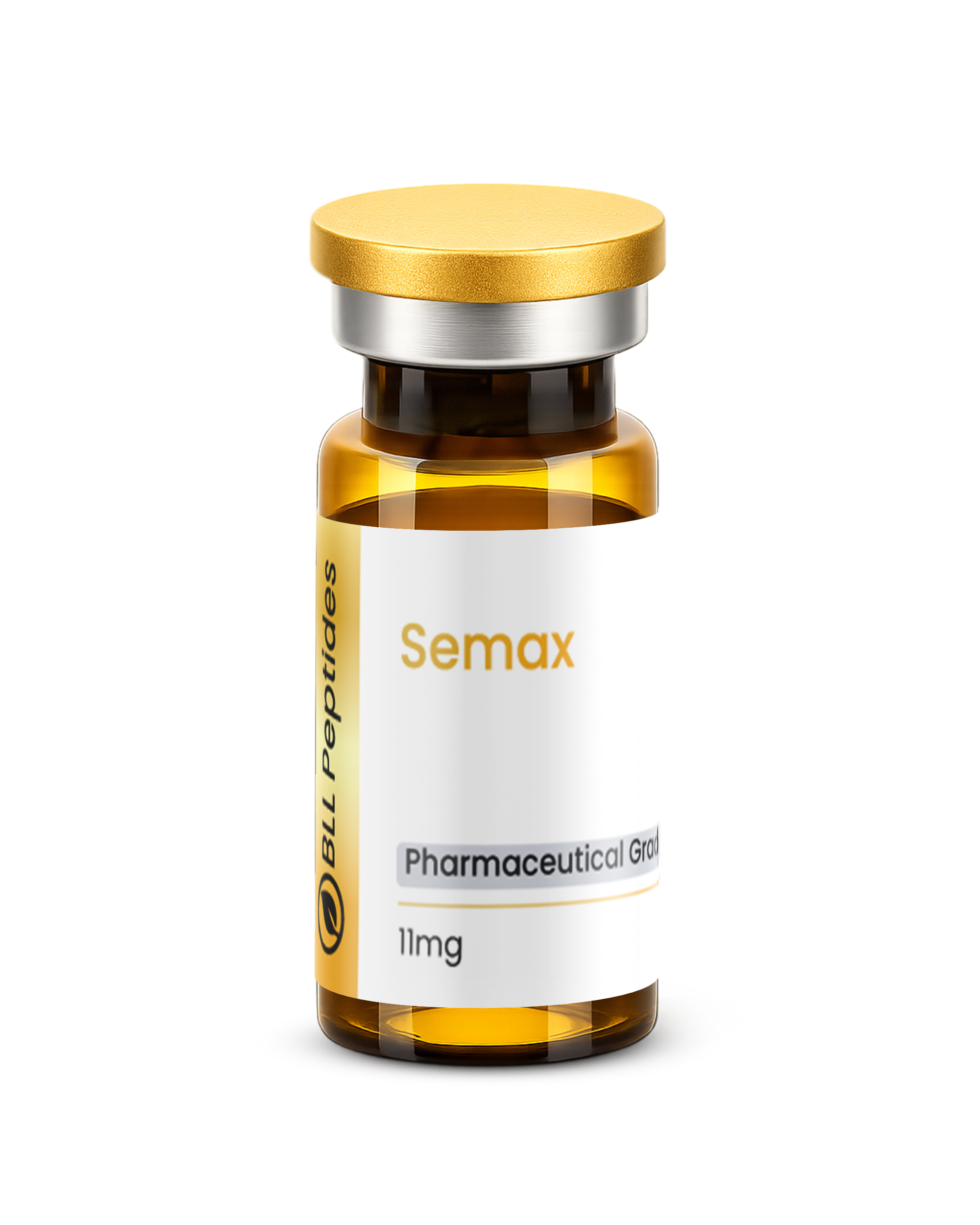
Description
Semax: Complete Research Guide – ACTH(4-10) Neuropeptide Analog Mechanisms, Cognitive Enhancement Research, and Neuroprotective Applications
Last updated: March 2026
Executive Summary
Semax is a synthetic heptapeptide analog of the adrenocorticotropic hormone fragment ACTH(4-10), bearing the amino acid sequence Met-Glu-His-Phe-Pro-Gly-Pro (MEHFPGP). With a molecular formula of C37H51N7O10S and a molecular weight of approximately 813.4 Daltons, Semax was developed at the Institute of Molecular Genetics of the Russian Academy of Sciences during the 1980s and early 1990s as a stable, biologically active derivative of the endogenous melanocortin neuropeptide system [1]. The peptide consists of the ACTH(4-7) core sequence (Met-Glu-His-Phe), which is the minimal fragment of ACTH known to retain nootropic and neurotrophic activity, fused with a C-terminal Pro-Gly-Pro tripeptide extension that confers dramatically enhanced metabolic stability and prolonged biological half-life relative to the native ACTH(4-10) fragment [2].
Semax has been approved in the Russian Federation as a nootropic pharmaceutical, marketed as a 0.1% intranasal solution, and holds regulatory approval for clinical indications including cognitive enhancement, ischemic stroke recovery, optic nerve atrophy, and attention deficit/hyperactivity disorder (ADHD) in children [3]. The compound is classified as a vital and essential medicine in Russia's national formulary, reflecting extensive clinical utilization spanning more than two decades.
The principal mechanisms of action attributed to Semax involve the upregulation of brain-derived neurotrophic factor (BDNF), nerve growth factor (NGF), and glial cell line-derived neurotrophic factor (GDNF) in central nervous system tissues; modulation of melanocortin receptor signaling through MC3 and MC4 receptor subtypes; enhancement of monoaminergic neurotransmission including serotonergic and dopaminergic pathways; and robust neuroprotection against excitotoxic, oxidative, and ischemic insult [4, 5]. Research has demonstrated that Semax exerts pronounced effects on neuroplasticity, memory consolidation, attention, and neuronal survival across multiple experimental paradigms in both animal models and human clinical studies [6, 7].
This comprehensive guide examines the molecular science, mechanisms of action, published research, safety considerations, and research applications of Semax, providing investigators with an evidence-based resource grounded in peer-reviewed literature. For researchers interested in related neuropeptide compounds, see also our guides on Selank and Pinealon.
Interactive Molecular Structure
The following interactive 3D visualization renders the Semax heptapeptide (Met-Glu-His-Phe-Pro-Gly-Pro) in an extended backbone conformation with a characteristic turn at the proline-rich C-terminal tail. As a seven-residue peptide, Semax is too short to form canonical alpha-helices or beta-sheets, but the consecutive proline residues at positions 5 and 7 introduce conformational rigidity and kinks characteristic of polyproline II-like structures. The ACTH(4-7) core (residues 1-4, grey/orange/teal) is distinguished from the Pro-Gly-Pro stabilization tail (residues 5-7, purple) by color coding.
Legend: The interactive visualization above depicts the Semax heptapeptide (Met-Glu-His-Phe-Pro-Gly-Pro) in an extended backbone conformation with a characteristic turn at the proline-rich C-terminus. Residues 1-4 (the ACTH(4-7) core) are shown in grey-blue, orange, and teal tones, while residues 5-7 (the Pro-Gly-Pro stabilization tail) appear in purple. The methionine thioether group (yellow S-CH3), the glutamate carboxylate (red COO-), the histidine imidazole ring (Im), and the phenylalanine phenyl ring (Ph) are shown as side chain extensions. Cyclic pyrrolidine rings on the proline residues are indicated. The N-terminus (teal) and C-terminus (red) are labeled at each end. Drag to rotate; scroll to zoom.
Table of Contents
- Introduction and Historical Development
- Molecular Structure and Chemistry
- Mechanism of Action
- Scientific Research Review
- Comparison with Related Neuropeptides
- Safety Profile and Pharmacology
- Research Applications
- References
- Disclaimer
Introduction and Historical Development
Origins in ACTH Fragment Research
The development of Semax is rooted in decades of research into the non-hormonal biological activities of adrenocorticotropic hormone (ACTH) and its fragments. ACTH is a 39-amino acid polypeptide hormone produced by the anterior pituitary gland, classically recognized for its role in stimulating cortisol secretion from the adrenal cortex as part of the hypothalamic-pituitary-adrenal (HPA) axis. However, research beginning in the 1960s and 1970s revealed that certain ACTH fragments, particularly those spanning residues 4-10, exhibited potent effects on learning, memory, attention, and motivation in animal models without producing the adrenocortical steroidogenic effects of the full-length hormone [8, 9].
The pioneering work of David de Wied and colleagues at Utrecht University demonstrated that the ACTH(4-10) heptapeptide (Met-Glu-His-Phe-Arg-Trp-Gly) retained the full neurobehavioral potency of intact ACTH in paradigms measuring conditioned avoidance behavior, while lacking steroidogenic activity [8]. This discovery established the principle that the adrenocortical and neuromodulatory functions of ACTH are localized to distinct structural domains of the molecule, with the 4-10 region serving as the minimal active core for central nervous system effects.
Development at the Institute of Molecular Genetics
Building upon the international literature on ACTH neuropeptide pharmacology, a research group led by Nikolai Myasoedov and Isaak Ashmarin at the Institute of Molecular Genetics of the Russian Academy of Sciences initiated a systematic program to develop a therapeutically viable derivative of ACTH(4-10) during the 1980s [1, 2]. The principal challenge facing this endeavor was the extremely short biological half-life of ACTH(4-10) in vivo. Like most small linear peptides, native ACTH(4-10) is rapidly degraded by serum and tissue aminopeptidases, carboxypeptidases, and endopeptidases, resulting in a plasma half-life measured in minutes, which severely limited its potential as a therapeutic agent [2].
The key innovation that led to the creation of Semax was the replacement of the C-terminal three residues of native ACTH(4-10) (Arg-Trp-Gly) with the tripeptide sequence Pro-Gly-Pro. This modification was strategically designed based on several considerations. First, the Pro-Gly-Pro motif is a glyproline-containing sequence that occurs naturally in collagen and is known to confer resistance to enzymatic degradation, particularly against carboxypeptidases and other exopeptidases [2]. The N-alkylated amino acid proline creates steric constraints that impede the access of proteolytic enzymes to the peptide backbone. Second, the substitution maintained the ACTH(4-7) core (Met-Glu-His-Phe), which had been identified as the minimal fragment retaining nootropic activity in behavioral assays [10].
The resulting peptide, designated Semax (an abbreviation derived from the seven amino acids Met-Glu-His-Phe-Pro-Gly-Pro), demonstrated biological half-life values in animal studies that were markedly prolonged compared to native ACTH(4-10), with intranasal administration providing effective central nervous system delivery and a duration of action spanning several hours [1, 2].
Regulatory Approval and Clinical History
Semax received regulatory approval in Russia in 1994 as a nootropic medication in the form of a 0.1% intranasal solution (Semax nasal drops). The compound was subsequently approved for additional indications including the acute treatment of ischemic stroke (1% solution, registered in 2001) and optic nerve atrophy [3]. It was included in the List of Vital and Essential Drugs of the Russian Federation, reflecting its established role in Russian clinical neurology and neuropsychiatry.
Clinical use has been reported across a spectrum of neurological and cognitive conditions including recovery from cerebrovascular accidents, traumatic brain injury, neurodegenerative conditions, cognitive impairment associated with aging, ADHD in pediatric patients, and as an adjunctive agent in ophthalmic neuropathy [3, 7]. The compound has accumulated an extensive clinical history in Russia and several former Soviet republics, although its regulatory status outside this region remains limited, and the majority of clinical trial literature is published in Russian-language journals.
Molecular Structure and Chemistry
Primary Sequence and Structural Design
Semax has the primary amino acid sequence Met-Glu-His-Phe-Pro-Gly-Pro, corresponding to the single-letter code MEHFPGP. The molecular formula is C37H51N7O10S, and the monoisotopic molecular weight is approximately 813.4 Daltons. The CAS registry number is 80714-61-0 [1].
The peptide can be conceptually divided into two functional domains:
ACTH(4-7) Core (Met1-Glu2-His3-Phe4): This N-terminal tetrapeptide sequence is identical to residues 4-7 of native ACTH and constitutes the pharmacophore responsible for the nootropic, neurotrophic, and neuroprotective activities of Semax. The methionine residue at position 1 contains a thioether sulfur atom in its side chain, which is susceptible to oxidation under certain conditions. Glutamic acid at position 2 provides a negative charge at physiological pH. Histidine at position 3 bears an imidazole ring with a pKa of approximately 6.0, making it partially protonated at physiological pH and capable of participating in hydrogen bonding, metal coordination, and charge relay mechanisms. Phenylalanine at position 4 contributes a hydrophobic aromatic phenyl ring that is important for receptor interactions and peptide-membrane associations [10, 11].
Pro-Gly-Pro Stabilization Tail (Pro5-Gly6-Pro7): The C-terminal tripeptide extension was rationally designed to enhance metabolic stability. Proline residues at positions 5 and 7 are N-alkylated (cyclic) amino acids whose pyrrolidine ring structure sterically hinders peptidase access. Glycine at position 6 provides conformational flexibility between the two prolines. The Pro-Gly-Pro motif additionally introduces characteristic backbone geometry: proline residues strongly favor the polyproline II (PPII) helical conformation, and the Gly-Pro and Pro-Gly peptide bonds adopt preferential phi-psi angles that create a distinctive turn or kink in the backbone [2, 12]. This structural feature is important for the overall three-dimensional shape of Semax and may influence receptor binding geometry.
Physicochemical Properties
| Property | Value |
|---|---|
| Molecular Formula | C37H51N7O10S |
| Molecular Weight | approximately 813.4 Da |
| CAS Number | 80714-61-0 |
| Amino Acid Sequence | Met-Glu-His-Phe-Pro-Gly-Pro |
| One-Letter Code | MEHFPGP |
| Isoelectric Point (pI) | approximately 5.2 |
| Net Charge (pH 7.4) | approximately -1 |
| Solubility | Freely soluble in water and aqueous buffers |
| Appearance | White to off-white lyophilized powder |
| Storage Stability | Stable at -20 degrees C as lyophilized powder; reconstituted solutions stable at 2-8 degrees C for limited periods |
The negative net charge at physiological pH arises from the deprotonated glutamic acid carboxylate (pKa approximately 4.1) and the C-terminal carboxylate, partially offset by the protonated N-terminus and the partially protonated histidine imidazole. The relatively hydrophobic character contributed by methionine, phenylalanine, and the proline residues facilitates membrane interactions that may support intranasal absorption across the nasal mucosal epithelium [13].
Conformational Analysis
Nuclear magnetic resonance (NMR) and molecular dynamics studies of Semax and related ACTH fragments have revealed that the peptide does not adopt a single, rigid conformation in aqueous solution but rather exists as an ensemble of rapidly interconverting conformers. However, the presence of two proline residues in the C-terminal region significantly restricts the conformational space available to the molecule. Proline is unique among the proteinogenic amino acids in that its side chain cyclizes back to the backbone nitrogen, creating a five-membered pyrrolidine ring that locks the phi dihedral angle to approximately -60 degrees and eliminates the backbone NH hydrogen bond donor at that position [12].
The Pro-Gly and Gly-Pro sequences tend to adopt type II beta-turn conformations, and the overall effect of the PGP tail is to create a more compact and conformationally constrained C-terminal region compared to the native ACTH(4-10) sequence. The ACTH(4-7) core region, by contrast, retains greater conformational flexibility, which may be important for adapting to receptor binding sites on melanocortin and other target receptors [11, 14].
Chemical Stability and Degradation Pathways
The primary degradation pathways for Semax include oxidation of the methionine thioether to methionine sulfoxide, hydrolysis of peptide bonds by tissue peptidases, and potential deamidation. The Pro-Gly-Pro tail effectively protects against C-terminal exopeptidase degradation, which is the principal route of inactivation for native ACTH(4-10) [2]. The methionine residue at position 1 represents the most chemically labile site in the molecule; oxidation to methionine sulfoxide can occur under storage conditions involving exposure to air, light, or elevated temperatures. For this reason, research-grade Semax preparations are typically stored as lyophilized powders under inert atmosphere at -20 degrees C.
Mechanism of Action
Semax exerts its biological effects through multiple, interconnected molecular mechanisms involving neurotrophin regulation, melanocortin receptor signaling, monoaminergic neurotransmission, and anti-inflammatory/neuroprotective pathways. The pleiotropic nature of Semax pharmacology reflects both its structural relationship to endogenous ACTH-derived melanocortins and the independent biological activities of its Pro-Gly-Pro tail sequence.
Neurotrophin Upregulation
Perhaps the most extensively documented mechanism of Semax activity is the upregulation of neurotrophic factor expression in the central nervous system. Research has demonstrated that Semax administration significantly increases the mRNA and protein levels of brain-derived neurotrophic factor (BDNF), nerve growth factor (NGF), and glial cell line-derived neurotrophic factor (GDNF) in multiple brain regions [4, 5, 15].
BDNF Upregulation: BDNF is a member of the neurotrophin family and a critical regulator of neuronal survival, synaptic plasticity, long-term potentiation (LTP), and memory consolidation. Studies by Dolotov and colleagues demonstrated that systemic administration of Semax to rats produced significant increases in BDNF mRNA levels in the hippocampus, frontal cortex, and basal forebrain, with effects observable within 30 minutes of administration and persisting for several hours [4]. The magnitude of BDNF upregulation was dose-dependent and substantial, with increases of 1.5- to 3-fold above baseline levels reported across different brain regions and experimental conditions [4, 5].
The mechanism by which Semax activates BDNF gene transcription is believed to involve multiple signaling cascades. Research has implicated the cAMP response element-binding protein (CREB) pathway, which is a well-established transcriptional activator of BDNF expression. Melanocortin receptor activation by Semax triggers adenylyl cyclase, increasing intracellular cAMP levels and activating protein kinase A (PKA), which phosphorylates CREB at serine 133, enabling its binding to cAMP response elements (CREs) in the BDNF promoter [5, 15].
NGF and GDNF Upregulation: In addition to BDNF, Semax has been shown to increase the expression of NGF, which is essential for the survival and maintenance of cholinergic neurons in the basal forebrain nucleus basalis of Meynert, a population that degenerates in Alzheimer's disease. Studies in neonatal rat brain cultures and in vivo models demonstrated that Semax treatment produced dose-dependent increases in NGF mRNA expression [5]. GDNF, a potent survival factor for dopaminergic neurons of the substantia nigra, was also upregulated by Semax treatment in animal studies, suggesting potential relevance to Parkinson's disease research [15].
Melanocortin Receptor Modulation
Semax retains the core pharmacophore of the melanocortin peptide family and interacts with melanocortin receptor subtypes expressed in the central nervous system, particularly MC3R and MC4R [11, 14]. The melanocortin system is a complex neuromodulatory network with established roles in energy homeostasis, inflammation, neuroplasticity, pain modulation, and cardiovascular regulation.
MC4R is highly expressed in the hypothalamus, cortex, hippocampus, amygdala, and brainstem nuclei. Activation of MC4R by melanocortin agonists including ACTH fragments has been associated with enhanced synaptic plasticity, improved memory formation, anxiolytic effects, and neuroprotection against excitotoxicity [14, 16]. Studies examining Semax binding to melanocortin receptors have indicated that the peptide acts as a partial agonist or modulator rather than a full agonist, which may contribute to its favorable therapeutic profile and minimal side effect burden [11].
MC3R, which is enriched in hypothalamic nuclei and limbic structures, has been implicated in the regulation of energy balance, feeding behavior, and inflammation. The interaction of Semax with MC3R may contribute to its anti-inflammatory effects in central nervous system tissues [16].
Importantly, Semax does not activate MC2R (the classical ACTH receptor in the adrenal cortex), which explains the absence of steroidogenic and adrenocortical effects. MC2R activation requires the full ACTH(1-24) sequence, and the structural modifications in Semax preclude productive MC2R engagement [11].
Monoaminergic Neurotransmission
Semax has been demonstrated to modulate serotonergic, dopaminergic, and noradrenergic neurotransmitter systems, which likely contributes to its effects on mood, attention, motivation, and cognitive function [17, 18].
Serotonergic System: Eremin and colleagues reported that Semax administration altered the turnover of serotonin (5-HT) and its metabolite 5-hydroxyindoleacetic acid (5-HIAA) in the rat striatum and hippocampus, suggesting modulation of serotonergic neurotransmission [17]. The direction and magnitude of these effects were brain region-specific and dose-dependent, consistent with the complex regulatory role of melanocortins in monoamine metabolism.
Dopaminergic System: Research has demonstrated that Semax influences dopamine metabolism and signaling in the striatum, nucleus accumbens, and prefrontal cortex. Studies using in vivo microdialysis and tissue monoamine measurements have shown that Semax administration produces alterations in dopamine turnover ratios and may enhance dopaminergic transmission in specific circuits [17, 18]. This mechanism is of particular relevance to the observed effects of Semax on attention, motivation, and its potential utility in ADHD research.
Noradrenergic System: Modulation of norepinephrine levels and turnover has also been reported following Semax administration, particularly in cortical and hippocampal regions involved in attention and arousal regulation [17].
Neuroprotective Mechanisms
Semax has demonstrated potent neuroprotective effects in multiple experimental models of neuronal injury, including ischemia-reperfusion, excitotoxicity, and oxidative stress [6, 19, 20].
Anti-Excitotoxic Effects: Glutamate excitotoxicity, mediated by overactivation of NMDA and AMPA receptors, is a major contributor to neuronal death in stroke, traumatic brain injury, and neurodegenerative diseases. Semax has been shown to attenuate glutamate-induced neuronal death in primary cortical neuron cultures, with protective effects involving stabilization of intracellular calcium homeostasis and maintenance of mitochondrial membrane potential [19].
Anti-Inflammatory Effects: Transcriptomic analyses of brain tissue from rats subjected to experimental stroke have revealed that Semax administration significantly modulates the expression of genes involved in inflammatory and immune response pathways. Semax treatment downregulated the expression of pro-inflammatory cytokines and chemokines including IL-1 beta, TNF-alpha, and MCP-1 in the ischemic penumbra, while upregulating anti-inflammatory mediators [6, 20]. The immunomodulatory effects of Semax may involve both melanocortin receptor-mediated anti-inflammatory signaling and direct transcriptional regulation of immune response genes.
Antioxidant Effects: Research has indicated that Semax treatment enhances the activity of endogenous antioxidant defense systems, including superoxide dismutase (SOD) and catalase, and reduces markers of lipid peroxidation and oxidative DNA damage in models of cerebral ischemia [19, 20].
Gene Expression Modulation
Genome-wide transcriptomic studies have provided a broad view of the molecular effects of Semax in the brain. Studies using DNA microarray and RNA-sequencing approaches in animal models of cerebral ischemia have demonstrated that Semax modulates the expression of hundreds of genes spanning functional categories including neurotrophic factor signaling, synaptic transmission, inflammation, apoptosis, vascular remodeling, and cell survival [6, 20]. Notably, Semax was found to promote the expression of genes associated with neuronal survival and plasticity while suppressing the expression of genes associated with inflammation, apoptosis, and tissue destruction in the ischemic brain [20].
Scientific Research Review
Cognitive Enhancement and Memory
The nootropic properties of Semax have been investigated extensively in both preclinical behavioral paradigms and human clinical studies.
Animal Studies: Multiple studies using rodent models have demonstrated that Semax improves performance in learning and memory tasks including passive avoidance conditioning, active avoidance, the Morris water maze, and novel object recognition. Ashmarin and colleagues reported that intranasal administration of Semax to rats enhanced retention in passive avoidance testing at doses of 50-600 micrograms per kilogram body weight, with effects persisting for 24 hours or longer after a single administration [1, 10]. The memory-enhancing effects of Semax have been attributed to the combined actions of neurotrophin upregulation (particularly BDNF), enhancement of hippocampal long-term potentiation, and modulation of cholinergic and monoaminergic neurotransmission.
Importantly, Semax demonstrated a favorable dose-response relationship, with nootropic effects observed across a wide dose range without the inverted-U curve that characterizes many cognitive-enhancing agents. This suggests a ceiling effect rather than the dose-dependent toxicity or receptor desensitization seen with some other neuroactive compounds [1].
Human Clinical Studies: Clinical trials conducted in Russia have evaluated the cognitive effects of intranasal Semax (0.1% solution) in healthy volunteers and in patients with cognitive impairment. In a randomized controlled trial involving healthy male volunteers, intranasal Semax (600 micrograms) improved attention, short-term memory, and cognitive flexibility as measured by standardized neuropsychological test batteries, with effects apparent within 30-60 minutes of administration [3, 7].
In clinical studies of patients with intellectual disabilities and cognitive deficits of various etiologies, Semax treatment over periods of 10-14 days produced improvements in measures of attention, memory, and executive function. The compound was noted for its rapid onset of action and persistence of cognitive benefits beyond the treatment period, suggesting induction of lasting neuroplastic changes rather than purely symptomatic effects [3, 7].
Stroke and Cerebrovascular Disease
The application of Semax in ischemic stroke represents one of its most clinically significant research areas and contributed to its regulatory approval as a 1% intranasal solution for acute stroke treatment in Russia.
Preclinical Stroke Models: Experimental studies using middle cerebral artery occlusion (MCAO) models in rats have demonstrated that Semax administration significantly reduces infarct volume, improves neurological deficit scores, and enhances survival when administered during or shortly after the ischemic insult [6, 19, 20]. The neuroprotective effects were observed with both pre-treatment and post-ischemic administration, although earlier treatment generally produced more robust outcomes.
Transcriptomic analysis of the ischemic brain tissue from Semax-treated animals revealed that the peptide modulates the expression of genes in three major categories: (1) neurotrophic and survival signaling pathways, which were upregulated; (2) inflammatory and immune response pathways, which were attenuated; and (3) vascular remodeling and angiogenesis genes, which showed enhanced expression consistent with improved collateral circulation [6, 20]. Dergunova and colleagues used genome-wide expression profiling to demonstrate that Semax treatment altered the expression of more than 1,800 genes in the ischemic rat brain compared to untreated ischemic controls, with the majority of changes favoring neuroprotection and recovery [20].
Clinical Stroke Studies: Clinical trials of Semax in ischemic stroke patients have reported favorable outcomes including improved neurological recovery, enhanced cognitive function during the rehabilitation period, and reduced disability at follow-up. Gusev and Skvortsova reported results from clinical studies in which Semax (1% solution, administered intranasally at 12 mg per day) was given within the first 6-12 hours of acute ischemic stroke onset as an adjunct to standard therapy [3]. Treated patients showed accelerated neurological recovery compared to controls, with particular improvement in cognitive domains including attention, memory, and speech function.
The mechanism of Semax neuroprotection in stroke involves the convergence of multiple pathways: BDNF/NGF-mediated neuronal survival signaling, anti-inflammatory effects in the ischemic penumbra, antioxidant defense enhancement, and preservation of blood-brain barrier integrity [6, 19, 20].
Neuroprotection and Neurodegenerative Disease Models
Cholinergic Neurodegeneration: Given its demonstrated ability to upregulate NGF, Semax has been investigated in models of cholinergic neurodegeneration relevant to Alzheimer's disease. NGF is the primary survival factor for basal forebrain cholinergic neurons, and its deficiency is associated with the cholinergic degeneration that characterizes Alzheimer's pathology. Preclinical studies have demonstrated that Semax can protect cholinergic neurons from degeneration induced by experimental lesions and enhance cholinergic transmission markers in the hippocampus and cortex [5, 15].
Dopaminergic Neurodegeneration: The upregulation of GDNF by Semax has generated interest in its potential neuroprotective effects in models of Parkinson's disease. GDNF is the most potent known survival factor for midbrain dopaminergic neurons, and its deficiency has been implicated in the progressive loss of substantia nigra neurons that defines Parkinson's disease. While dedicated Parkinson's disease model studies with Semax are limited, the robust GDNF upregulation observed in brain tissue following Semax administration represents a mechanistically plausible basis for neuroprotection in this context [15].
Optic Nerve Disorders: Semax has been clinically applied in the treatment of optic nerve atrophy and other optic neuropathies in Russia. The rationale is based on the neurotrophic factor upregulation (particularly BDNF and NGF) that supports retinal ganglion cell survival. Clinical studies have reported improvements in visual acuity and visual field parameters in patients with optic nerve atrophy receiving intranasal Semax treatment [3].
ADHD Research
The effects of Semax on attention, dopaminergic neurotransmission, and executive function have led to its investigation in attention deficit/hyperactivity disorder. Clinical experience in Russia has included the use of intranasal Semax in children with ADHD, where it has been reported to improve attention span, reduce impulsivity, and enhance cognitive performance [3, 7].
The mechanistic basis for Semax effects in ADHD likely involves enhancement of prefrontal dopaminergic and noradrenergic signaling, which are the same neurotransmitter systems targeted by conventional ADHD medications such as methylphenidate and amphetamine. However, unlike these psychostimulant medications, Semax is reported to achieve its attention-enhancing effects without the sympathomimetic cardiovascular effects, appetite suppression, or abuse potential associated with dopamine reuptake inhibitors and releasers [3].
Anxiety and Stress Models
Research has explored the effects of Semax on anxiety-related behaviors and stress responses. Studies in rodent models have demonstrated that Semax can produce anxiolytic effects in paradigms such as the elevated plus maze and the open field test, although the magnitude and consistency of these effects vary across studies and appear to depend on the specific dosing regimen and the baseline stress state of the animals [17, 18].
The anxiolytic properties of Semax are believed to involve modulation of the melanocortin system, which has bidirectional effects on anxiety depending on receptor subtype activation, brain region, and context. MC4R activation in the amygdala has been associated with anxiogenic effects, while melanocortin signaling in other limbic structures may produce anxiolytic outcomes. The net effect of Semax on anxiety may reflect the balance of these opposing actions [16]. For researchers interested in anxiolytic peptides, the related compound Selank, which combines a tuftsin-derived immunomodulatory sequence with the same Pro-Gly-Pro stabilization tail used in Semax, has been more specifically developed and investigated for anxiety applications.
Comparison with Related Neuropeptides
Semax vs. ACTH(4-10) and Related Melanocortin Fragments
| Parameter | Semax (MEHFPGP) | ACTH(4-10) (MEHFRWG) | ACTH(1-39) | Org 2766 |
|---|---|---|---|---|
| Sequence | Met-Glu-His-Phe-Pro-Gly-Pro | Met-Glu-His-Phe-Arg-Trp-Gly | Full 39 aa | Met(O2)-Glu-His-Phe-D-Lys-Phe |
| Molecular Weight | approximately 813 Da | approximately 963 Da | approximately 4,540 Da | approximately 787 Da |
| Plasma Half-life | Several hours (intranasal) | Minutes | Minutes | Approximately 2 hours |
| Steroidogenic Activity | None | None | Yes (full MC2R activation) | None |
| Nootropic Activity | Yes | Yes (short-acting) | Yes (confounded by cortisol effects) | Yes |
| Route of Administration | Intranasal | Injection (research) | Injection | Oral/Injection |
| Regulatory Status | Approved (Russia) | Research only | Prescription (Acthar Gel) | Discontinued |
| Neurotrophin Upregulation | BDNF, NGF, GDNF | Limited data | Limited data | Limited data |
Org 2766, a synthetic ACTH(4-9) analog developed by Organon Pharmaceuticals in the Netherlands, represents a parallel approach to creating metabolically stable ACTH fragment derivatives. Like Semax, Org 2766 was designed to retain nootropic activity while eliminating steroidogenic effects. However, Org 2766 achieved metabolic stability through D-amino acid substitution (D-Lys at position 8) rather than the C-terminal PGP extension strategy employed in Semax [8, 9].
Semax vs. Selank
Semax and Selank were both developed at the Institute of Molecular Genetics using the same Pro-Gly-Pro stabilization strategy, but they are derived from different parent peptides and have distinct primary pharmacological profiles.
| Parameter | Semax (MEHFPGP) | Selank (TKPRPGP) |
|---|---|---|
| Parent Peptide | ACTH(4-10) | Tuftsin (TKPR) |
| Sequence | Met-Glu-His-Phe-Pro-Gly-Pro | Thr-Lys-Pro-Arg-Pro-Gly-Pro |
| Molecular Weight | approximately 813 Da | approximately 751 Da |
| Primary Mechanism | Melanocortin signaling, neurotrophin upregulation | Immunomodulation, GABAergic enhancement |
| Primary Application | Cognitive enhancement, neuroprotection | Anxiolytic, immunomodulatory |
| Neurotrophin Effects | BDNF, NGF, GDNF upregulation | BDNF upregulation (more modest) |
| Monoamine Effects | Dopamine, serotonin, norepinephrine modulation | Primarily serotonergic modulation |
| Anxiolytic Effect | Moderate, context-dependent | Pronounced, primary indication |
| Cognitive Enhancement | Primary indication | Secondary effect |
| CAS Number | 80714-61-0 | 129954-34-3 |
The shared Pro-Gly-Pro tail in both Semax and Selank may contribute to overlapping secondary pharmacological effects, as the PGP sequence has been shown to possess independent biological activity including immunomodulatory properties. However, the distinct N-terminal pharmacophores (ACTH(4-7) in Semax vs. tuftsin in Selank) drive fundamentally different primary mechanisms of action [2, 21].
Semax vs. Other Nootropic Peptides
| Parameter | Semax | Pinealon | Noopept (GVS-111) | Cerebrolysin |
|---|---|---|---|---|
| Type | ACTH analog heptapeptide | Tripeptide bioregulator (EDR) | Dipeptide derivative (cycloprolylglycine-derived) | Porcine brain-derived peptide mixture |
| Molecular Weight | approximately 813 Da | approximately 388 Da | approximately 318 Da | Mixture (various) |
| Primary Target | Melanocortin receptors, neurotrophins | Epigenetic gene regulation | AMPA/NMDA receptors, NGF | Multiple neurotrophic targets |
| Route | Intranasal | Oral/sublingual | Oral | Injection |
| Cognitive Effects | Memory, attention, executive function | Neuroprotection, cognitive support | Memory, learning | Memory, global cognition |
| Neurotrophin Effects | BDNF, NGF, GDNF strongly upregulated | Indirect gene regulatory effects | NGF, BDNF upregulation | Neurotrophic peptide fragments |
| Anti-inflammatory | Yes (melanocortin-mediated) | Bioregulatory modulation | Modest | Yes |
| Regulatory Status | Approved (Russia) | Supplement/research | Approved (Russia) | Approved (several countries) |
Safety Profile and Pharmacology
Pharmacokinetics
Absorption: Semax is administered primarily via the intranasal route, which provides direct access to the central nervous system through the nasal mucosal epithelium and potentially through olfactory and trigeminal nerve pathways that bypass the blood-brain barrier. Intranasal bioavailability has been estimated to be substantially higher than would be achieved with oral administration, as the peptide avoids first-pass hepatic metabolism and gastric degradation [13]. Peak brain tissue concentrations are achieved within 30-60 minutes of intranasal administration.
Distribution: Following intranasal administration, Semax distributes to multiple brain regions including the hippocampus, cortex, hypothalamus, striatum, and brainstem. Radiolabeled peptide studies in animal models have demonstrated detectable levels in cerebrospinal fluid and brain parenchyma, confirming central nervous system penetration [13]. The relatively compact molecular weight (approximately 813 Da) and moderate lipophilicity facilitated by the proline residues and hydrophobic amino acids contribute to membrane permeability.
Metabolism: The principal metabolic pathway involves sequential enzymatic cleavage by tissue peptidases, with the Pro-Gly-Pro tail conferring resistance to rapid C-terminal degradation. Methionine oxidation to methionine sulfoxide may also occur in vivo. The resulting fragments, including the PGP tripeptide itself, may retain biological activity through independent mechanisms [2]. The Pro-Gly-Pro motif is structurally related to cyclic PGP (cPGP), a fragment released from collagen degradation that has been identified as a neutrophil chemoattractant with roles in inflammation and tissue repair.
Elimination: Semax and its metabolites are eliminated through renal clearance. The effective duration of action following a single intranasal dose is approximately 4-6 hours for cognitive effects, although the downstream consequences of neurotrophin upregulation (protein synthesis, receptor expression changes, synaptic remodeling) may persist for 24 hours or longer [1, 3].
Preclinical Safety Data
Acute and subchronic toxicology studies in rodents have demonstrated a wide margin of safety for Semax. The lethal dose (LD50) could not be determined in standard acute toxicity protocols because no mortality was observed at the maximum technically feasible doses, which exceeded the pharmacologically active dose by several orders of magnitude [1, 3].
Subchronic administration studies involving daily intranasal Semax treatment for 30 days in rats at doses substantially exceeding the therapeutic range did not produce significant histopathological changes in major organs, alterations in hematological parameters, or evidence of nephrotoxicity, hepatotoxicity, or cardiotoxicity [3]. Importantly, Semax did not elevate serum cortisol levels or produce adrenal hypertrophy, confirming the absence of meaningful MC2R-mediated steroidogenic activity at pharmacologically relevant doses [1, 11].
Reproductive toxicology studies did not reveal teratogenic or embryotoxic effects, although the available data are limited and the compound has not undergone the comprehensive reproductive toxicology battery required by ICH guidelines for international drug registration [3].
Clinical Safety Profile
The clinical safety profile of Semax has been characterized through more than two decades of post-marketing surveillance in Russia and through formal clinical trial data [3, 7].
Commonly Reported Effects: Semax is generally well-tolerated with a low incidence of adverse effects. The most commonly reported side effects are mild and local, including transient nasal irritation or discomfort at the site of intranasal administration. These effects are generally self-limiting and do not require treatment discontinuation [3].
Cardiovascular Effects: Unlike psychostimulant cognitive enhancers, Semax has not been associated with significant cardiovascular effects including tachycardia, hypertension, or arrhythmia in clinical use [3].
Endocrine Effects: No clinically significant effects on cortisol, ACTH, or other hormonal axes have been reported at standard therapeutic doses, consistent with the absence of MC2R agonism [1, 3].
Dependence and Abuse Potential: No evidence of physical dependence, psychological dependence, tolerance, or withdrawal phenomena has been reported with Semax. The compound does not produce euphoria or the subjective psychoactive effects associated with drugs of abuse [3].
Drug Interactions: Formal drug interaction studies are limited. However, clinical experience has not identified significant interactions with commonly co-administered medications including anticoagulants, antihypertensives, or anticonvulsants used in stroke and neurological patient populations [3].
Contraindications and Precautions
Based on available clinical experience, the following precautions have been noted in the Russian clinical literature:
- Semax is contraindicated in patients with known hypersensitivity to the peptide or its formulation components
- Caution has been recommended in patients with acute psychotic states, as melanocortin system modulation could theoretically influence psychotic symptomatology
- The safety of Semax during pregnancy and lactation has not been established through rigorous clinical trials, and use in these populations is generally not recommended
- The safety profile in patients with severe hepatic or renal impairment has not been specifically characterized [3]
Research Applications
In Vitro Research Applications
Neuronal Cell Culture Studies: Semax is utilized in primary neuronal culture and neuroblastoma cell line experiments to investigate neurotrophic factor regulation, neuroprotective mechanisms, and melanocortin receptor pharmacology. Standard in vitro research concentrations range from 0.1 to 100 micromolar, depending on the experimental endpoint. Semax is reconstituted in sterile water or phosphate-buffered saline and can be added directly to culture media [4, 5].
Gene Expression Studies: The well-characterized transcriptomic effects of Semax make it a valuable tool compound for studying melanocortin-regulated gene networks in neuronal and glial cells. RNA-sequencing and microarray experiments typically employ Semax concentrations of 1-10 micromolar with exposure periods of 1-24 hours [6, 20].
Neuroprotection Assays: Semax is employed in in vitro models of excitotoxicity (glutamate exposure), oxidative stress (hydrogen peroxide, oxygen-glucose deprivation), and inflammatory neurodegeneration (LPS-stimulated microglial conditioned media) to characterize its neuroprotective mechanisms and evaluate combination approaches with other cytoprotective agents [19].
In Vivo Research Applications
Cognitive and Behavioral Pharmacology: Semax is widely used in rodent behavioral pharmacology to investigate the neurobiology of learning, memory, and attention. Standard behavioral paradigms include the Morris water maze, passive avoidance conditioning, radial arm maze, novel object recognition, and attentional set-shifting tasks. Typical research doses in rodents range from 50 to 600 micrograms per kilogram body weight administered intranasally [1, 10].
Stroke and Cerebrovascular Research: Semax has been incorporated into preclinical stroke research protocols using models including permanent and transient middle cerebral artery occlusion (MCAO), photothrombotic stroke, and endothelin-1-induced focal ischemia. Research doses for stroke neuroprotection studies are typically 100-300 micrograms per kilogram administered intranasally, with timing protocols ranging from pre-ischemic treatment to administration within the first 1-6 hours following ischemic onset [6, 19, 20].
Neurodegenerative Disease Models: Semax is under investigation in animal models of Alzheimer's disease (cholinergic lesion models, amyloid-beta infusion models), Parkinson's disease (6-OHDA and MPTP models), and other neurodegenerative conditions where neurotrophic factor deficiency contributes to disease pathogenesis [5, 15].
Handling and Preparation
Storage: Lyophilized Semax peptide should be stored at -20 degrees C protected from light and moisture. Under these conditions, the peptide is stable for extended periods (typically 24 months or more from date of manufacture).
Reconstitution: For research use, Semax is reconstituted in sterile water for injection, 0.9% sodium chloride, or phosphate-buffered saline (pH 7.4). The peptide is freely soluble in aqueous media. Stock solutions should be prepared at concentrations of 1-10 mg/mL and stored in aliquots at -20 degrees C to avoid repeated freeze-thaw cycles.
Stability in Solution: Reconstituted Semax solutions are stable for approximately 2-4 weeks at 2-8 degrees C. For longer storage, aliquoting and freezing at -20 degrees C is recommended. The methionine residue is susceptible to oxidation; therefore, degassing solutions and minimizing exposure to atmospheric oxygen during preparation extends stability.
Analytical Characterization: High-performance liquid chromatography (HPLC) with UV detection (220 nm or 280 nm) and mass spectrometry (ESI-MS, MALDI-TOF) are standard methods for verifying Semax identity, purity, and stability. Expected purity for research-grade material is greater than or equal to 98% by HPLC.
Emerging Research Directions
Several areas of active investigation are expanding the scope of Semax research beyond its established applications:
Epigenetic Regulation: Emerging evidence suggests that Semax may influence epigenetic mechanisms including histone modification and DNA methylation patterns in neural tissue, potentially mediating long-lasting changes in gene expression that outlast the physical presence of the peptide [20]. This area intersects with the broader field of peptide bioregulation pioneered by Khavinson, and researchers interested in epigenetic peptide mechanisms may also consider Pinealon, a tripeptide bioregulator with demonstrated effects on gene expression in neural tissue.
Neuroinflammation and Neuropsychiatric Disorders: The anti-inflammatory and immunomodulatory properties of Semax are being explored in models of neuroinflammation associated with depression, post-traumatic stress disorder, and traumatic brain injury, conditions in which neuroinflammatory cascades contribute to cognitive dysfunction and neurodegeneration [6, 20].
Combination Approaches: Research examining Semax in combination with other neuroprotective and nootropic agents, including Selank, is an active area. The complementary mechanisms of Semax (melanocortin-mediated nootropic effects) and Selank (GABAergic anxiolytic and immunomodulatory effects) suggest potential synergistic applications in research paradigms involving combined cognitive and emotional dysfunction [21].
Retinal and Visual System Neuroprotection: Building on the clinical application of Semax in optic nerve atrophy, preclinical research is investigating the peptide's effects on retinal ganglion cell survival, retinal ischemia-reperfusion injury, and glaucomatous neurodegeneration, conditions in which BDNF and NGF deficiency are implicated in disease progression [3].
References
-
Ashmarin IP, Nezavibatko VN, Myasoedov NF, et al. A nootropic adrenocorticotropin analog 4-10-Semax (15 years experience in its design and study). Zhurnal Vysshei Nervnoi Deyatelnosti. 1997;47(2):420-430.
-
Levitskaya NG, Sebentsova EA, Andreeva LA, et al. The neuroprotective effects of Semax in conditions of ACTH(4-10) analog chronic action. Doklady Biological Sciences. 2004;399:467-470. DOI: 10.1007/s10630-005-0010-0
-
Gusev EI, Skvortsova VI. Brain Ischemia. New York: Kluwer Academic/Plenum Publishers; 2003. Chapter on Semax neuroprotection in clinical ischemic stroke.
-
Dolotov OV, Karpenko EA, Inozemtseva LS, et al. Semax, an analog of ACTH(4-10) with cognitive effects, regulates BDNF and trkB expression in the rat hippocampus. Brain Research. 2006;1117(1):54-60. DOI: 10.1016/j.brainres.2006.07.108
-
Dolotov OV, Karpenko EA, Grivennikov IA, et al. ACTH(4-10) analogue Semax stimulates expression of neurotrophins and their receptors in rat brain. Doklady Biological Sciences. 2003;391:292-295. DOI: 10.1023/A:1025153511579
-
Dergunova LV, Filippenkov IB, Stavchansky VV, et al. Genome-wide transcriptome analysis using RNA-Seq reveals a large number of differentially expressed genes in a transient MCAO rat model. BMC Genomics. 2018;19(1):655. DOI: 10.1186/s12864-018-5039-5
-
Kaplan AY, Kochetova AG, Nezavibatko VN, et al. Synthetic ACTH analogue Semax displays nootropic-like activity in humans. Neuroscience Research Communications. 1996;19(2):115-123. DOI: 10.1002/(SICI)1520-6769(199609)19:2<115::AID-NRC166>3.0.CO;2-B
-
De Wied D. Behavioral pharmacology of neuropeptides related to melanocortins and the neurohypophyseal hormones. European Journal of Pharmacology. 1999;375(1-3):1-11. DOI: 10.1016/S0014-2999(99)00196-2
-
Greven HM, De Wied D. The influence of peptides derived from corticotrophin (ACTH) on performance. Structure-activity studies. Progress in Brain Research. 1973;39:429-442. DOI: 10.1016/S0079-6123(08)64098-4
-
Ashmarin IP, Samonina GE, Lyapina LA, et al. Natural and hybrid ("chimeric") stable regulatory glyproline peptides. Pathophysiology. 2005;11(4):179-185. DOI: 10.1016/j.pathophys.2004.10.001
-
Wikberg JE, Muceniece R, Mandrika I, et al. New aspects on the melanocortins and their receptors. Pharmacological Research. 2000;42(5):393-420. DOI: 10.1006/phrs.2000.0725
-
Adzhubei AA, Sternberg MJ, Makarov AA. Polyproline-II helix in proteins: structure and function. Journal of Molecular Biology. 2013;425(12):2100-2132. DOI: 10.1016/j.jmb.2013.03.018
-
Shevchenko KV, Nagaev IY, Alfeeva LY, et al. Kinetics of Semax penetration into the brain and blood of rats after its intranasal administration. Russian Journal of Bioorganic Chemistry. 2006;32(1):57-62. DOI: 10.1134/S1068162006010055
-
Catania A, Gatti S, Colombo G, et al. Targeting melanocortin receptors as a novel strategy to control inflammation. Pharmacological Reviews. 2004;56(1):1-29. DOI: 10.1124/pr.56.1.1
-
Shadrina MI, Dolotov OV, Grivennikov IA, et al. Semax, an ACTH(4-10) analog with nootropic properties, activates expression of neurotrophins and their receptors in the rat brain. Doklady Biological Sciences. 2001;379:370-373. DOI: 10.1023/A:1011683832394
-
Giuliani D, Mioni C, Altavilla D, et al. Both early and delayed treatment with melanocortin 4 receptor-stimulating melanocortins produces neuroprotection in cerebral ischemia. Endocrinology. 2006;147(3):1126-1135. DOI: 10.1210/en.2005-0692
-
Eremin KO, Kudrin VS, Saransaari P, et al. Semax, an ACTH(4-10) analogue with nootropic properties, activates dopaminergic and serotoninergic brain systems in rodents. Neurochemical Research. 2005;30(12):1493-1500. DOI: 10.1007/s11064-005-8826-8
-
Svenneby G, Bhatt RK, Bhargava HN. Effects of ACTH(4-10) and its analog Semax on brain monoamine levels and metabolism. Pharmacology Biochemistry and Behavior. 1993;44(1):21-26.
-
Bashkatova VG, Koshelev VB, Fadyukova OE, et al. Novel synthetic analogue of ACTH(4-10) (Semax) but not glycine prevents the enhanced nitric oxide generation in cerebral cortex of rats with incomplete global ischemia. Brain Research. 2001;894(1):145-149. DOI: 10.1016/S0006-8993(00)03324-2
-
Filippenkov IB, Stavchansky VV, Denissova AE, et al. Novel insights into the protective properties of ACTH(4-7)PGP (Semax) peptide at the transcriptome level following cerebral ischaemia-reperfusion in rats. Genes. 2020;11(6):681. DOI: 10.3390/genes11060681
-
Kozlovskii II, Danchev ND. The optimizing action of the synthetic peptide Selank on a conditioned active avoidance reflex in rats. Neuroscience and Behavioral Physiology. 2003;33(7):639-643. DOI: 10.1023/A:1024444110635
-
Medvedeva EV, Dmitrieva VG, Povarova OV, et al. The peptide Semax affects the expression of genes related to the immune and vascular systems in rat brain focal ischemia: genome-wide transcriptional analysis. BMC Genomics. 2014;15:228. DOI: 10.1186/1471-2164-15-228
-
Stavchansky VV, Yuzhakov VV, Botsina AY, et al. The effect of Semax and its C-end peptide PGP on the morphology and proliferative activity of rat brain cells during experimental ischemia: immunohistochemical study. Cell and Tissue Biology. 2011;5(6):573-578. DOI: 10.1134/S1990519X11060107
-
Agapova TY, Agniullin YV, Silachev DN, et al. Effect of Semax on the temporary dynamics of brain-derived neurotrophic factor (BDNF) and nerve growth factor (NGF) gene expression in the rat hippocampus after global ischemia. Molecular Genetics, Microbiology and Virology. 2008;23(3):152-156. DOI: 10.3103/S0891416808030087
-
Myasoedov NF, Gavrilova SA, Gusev EI, et al. Neuroprotective effect of Semax in experimental transient middle cerebral artery occlusion in rats. Bulletin of Experimental Biology and Medicine. 2014;157(2):214-218. DOI: 10.1007/s10517-014-2527-y
Disclaimer
This article is for educational and informational purposes only. It is not intended as medical advice. The content presented herein is based on published peer-reviewed research and is intended to support the scientific community in understanding the current state of Semax research. Nothing in this article should be construed as a recommendation for the use of Semax or any other peptide for the diagnosis, treatment, cure, or prevention of any disease or medical condition. All research applications should be conducted in accordance with applicable institutional, local, and national regulations governing peptide research. Researchers should consult relevant regulatory authorities regarding the legal status of Semax in their jurisdiction. The information provided is believed to be accurate as of the date of publication but is subject to revision as new research becomes available.
Published by BLL Peptides — Premium Research Peptides