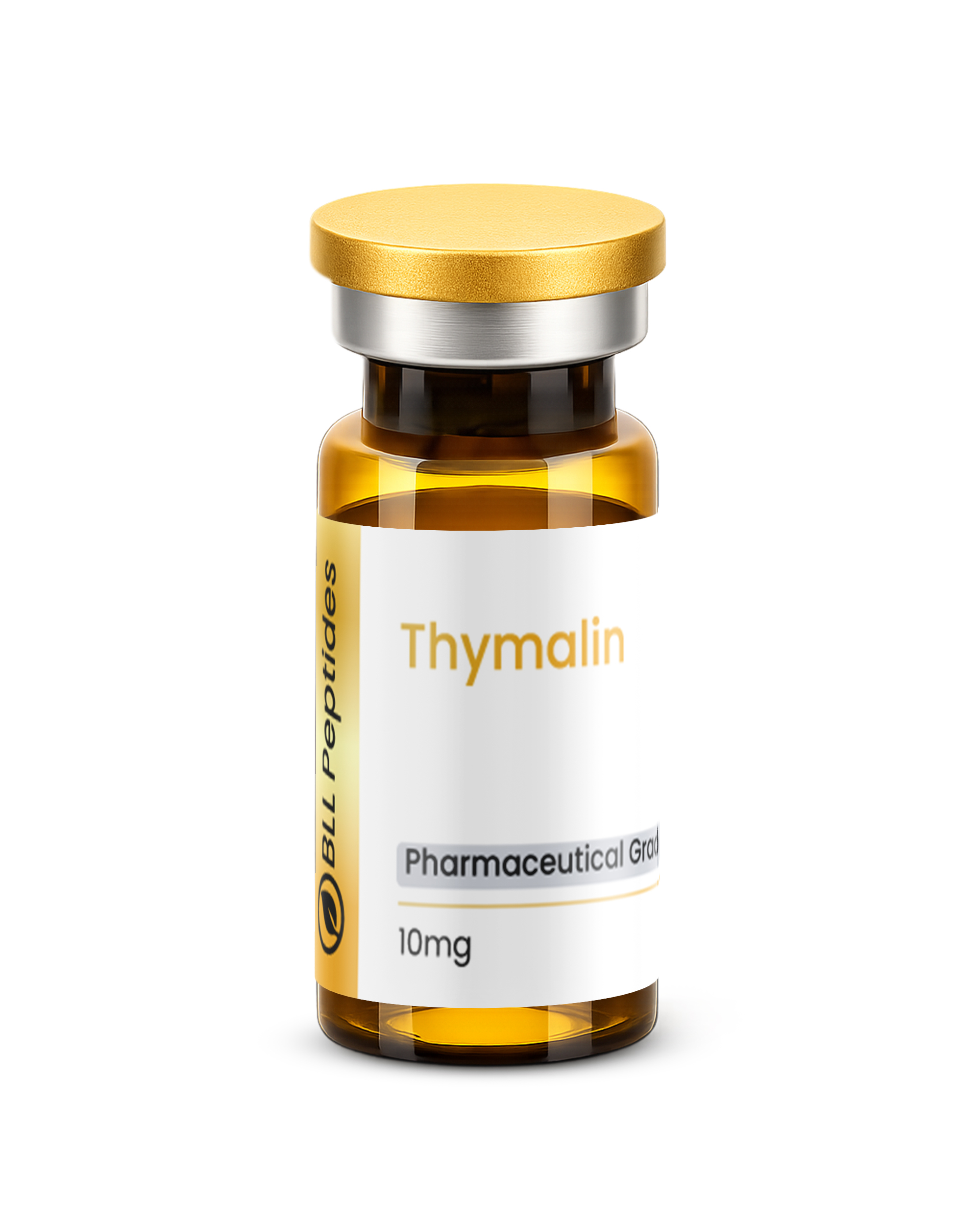
Description
Thymalin: Complete Research Guide – Thymic Dipeptide Mechanisms, Immune Restoration Research, and Gerontological Applications
Last updated: March 2026
Executive Summary
Thymalin (also known as Thymogen) is a synthetic dipeptide composed of L-glutamic acid and L-tryptophan (Glu-Trp, single-letter code EW), developed as a bioregulatory peptide analog of the natural thymic hormone complex. With a molecular formula of C16H19N3O6 and a molecular weight of approximately 349.34 Daltons (CAS: 64379-55-3), Thymalin represents one of the smallest biologically active peptides ever characterized, consisting of just two amino acid residues joined by a single peptide bond [1]. The compound was developed by Professor Vladimir Khavinson and Dr. Vyacheslav Morozov at the Military Medical Academy in St. Petersburg, Russia, as part of a decades-long research program into peptide bioregulators and their capacity to restore age-related functional decline in specific organ systems [2].
The development of Thymalin followed a reductionist approach that began with crude polypeptide extracts of bovine thymus tissue and progressed through successive purification steps to identify the minimal active component responsible for the immunomodulatory properties of the thymic extract. Through systematic fractionation and bioassay, Khavinson and Morozov determined that the dipeptide Glu-Trp retained the essential biological activities of the parent thymic preparation, including the capacity to promote T-lymphocyte differentiation, restore thymic hormone-like activity, and modulate cytokine expression profiles in immunocompromised experimental models [3, 4].
Thymalin's primary mechanisms of action center on the restoration of immune system competence, particularly through enhancement of T-cell maturation and differentiation in the thymus, stimulation of thymic hormone secretion, modulation of the Th1/Th2 cytokine balance, and epigenetic regulation of immune-related gene expression. The peptide has been investigated extensively in the context of immunodeficiency states, age-related immune decline (immunosenescence), post-radiation immune recovery, and as an adjunct in infectious disease management [5, 6]. Notably, longitudinal clinical observations conducted in elderly populations in St. Petersburg reported that combined treatment with Thymalin and the pineal peptide Epithalon was associated with reduced mortality rates over a 6-12 year follow-up period, representing some of the longest-duration human data available for any peptide bioregulator [7].
This comprehensive guide examines the molecular structure, mechanisms of action, preclinical and clinical evidence base, safety profile, and research applications of Thymalin, providing investigators with a rigorous, evidence-based resource grounded in peer-reviewed literature. For researchers interested in related thymic peptides and immune-modulating compounds, see also our guides on Thymosin Alpha-1 and Epithalon.
Interactive Molecular Structure
The following interactive 3D visualization renders the Thymalin dipeptide (Glu-Trp) in a ball-and-stick representation with detailed atomic-level side chain structures. Because Thymalin consists of only two amino acid residues, it is one of the smallest bioactive peptides known. The visualization shows the complete backbone with the peptide bond linking the glutamic acid and tryptophan residues, along with the full side chains of both amino acids: the negatively charged carboxylate of glutamate (orange-red) and the large aromatic indole ring system of tryptophan (teal). Nodes are rendered at large scale to emphasize the atomic detail of this minimal peptide structure.
Legend: The interactive visualization above depicts the Thymalin dipeptide (Glu-Trp) in a ball-and-stick representation. The two residues are shown as very large labeled spheres: Glu1 (orange, negatively charged) and Trp2 (teal, aromatic). The glutamic acid side chain extends upward with its characteristic carboxylate group (COO-), while the tryptophan side chain displays the full bicyclic indole ring system consisting of the fused pyrrole and benzene rings. Backbone detail atoms (C=O, N-H, C-alpha) are shown between the residues to highlight the peptide bond. The N-terminus (teal) and C-terminus (red) are labeled at each end. Drag to rotate; scroll to zoom.
Table of Contents
- Introduction and Historical Development
- Molecular Structure and Chemistry
- Mechanism of Action
- Scientific Research Review
- Comparison with Related Immune-Modulating Peptides
- Safety Profile and Pharmacology
- Research Applications
- References
- Disclaimer
Introduction and Historical Development
Origins of Thymic Peptide Research
The thymus gland has been recognized since the 1960s as the central organ of T-lymphocyte development and immune system maturation. The pioneering work of Jacques Miller in 1961, who demonstrated through neonatal thymectomy experiments that the thymus was essential for immunological competence, fundamentally transformed immunology and established the thymus as a critical endocrine-like organ producing hormones that regulate immune cell differentiation [8]. This discovery catalyzed a global search for thymic factors, the soluble mediators responsible for directing T-cell maturation and immune system organization.
Multiple research groups pursued the isolation and characterization of thymic hormones throughout the 1960s and 1970s. Abraham White and Allan Goldstein at the Albert Einstein College of Medicine identified thymosin fraction 5, a partially purified bovine thymus extract containing multiple peptide components, from which the 28-amino acid Thymosin Alpha-1 was subsequently isolated [9]. Gideon Goldstein identified thymopoietin, a 49-amino acid polypeptide, at the New York University School of Medicine. Jean-Francois Bach at the Hopital Necker in Paris characterized thymulin (formerly called serum thymic factor or FTS), a zinc-dependent nonapeptide [10].
Khavinson and Morozov: The Peptide Bioregulator Approach
Independently of these Western efforts, Vladimir Khavinson and Vyacheslav Morozov at the Military Medical Academy in Leningrad (now St. Petersburg) pursued a distinct approach to thymic factors beginning in the early 1970s. Their research program was rooted in the concept of peptide bioregulation, the hypothesis that short peptides serve as endogenous signals that regulate gene expression and cellular function in a tissue-specific manner [1, 2].
Khavinson and Morozov initially prepared a polypeptide complex from calf thymus glands, which they termed "thymalin" (using the broader definition that referred to the crude thymic extract). This preparation demonstrated immunomodulatory properties in multiple experimental models, including restoration of T-cell function in thymectomized animals, enhancement of antibody production, and normalization of T-helper to T-suppressor cell ratios in immunodeficient states [3]. The crude thymalin extract entered clinical use in the Soviet Union in the 1980s, primarily for the treatment of immunodeficiency conditions associated with infections, surgical recovery, and aging.
The critical next step was the identification of the minimal peptide component responsible for the biological activity of the thymic extract. Through systematic biochemical fractionation, chromatographic purification, and bioassay-guided identification, Khavinson's group determined that the dipeptide glutamyl-tryptophan (Glu-Trp) reproduced the essential immunomodulatory activities of the parent thymic preparation [4, 11]. This synthetic dipeptide was designated as the active pharmaceutical substance and subsequently became commercially available in Russia under the name Thymogen (the synthetic Glu-Trp dipeptide), distinguishing it from the original crude polypeptide extract.
Regulatory History and Clinical Adoption
Thymalin (as both the original polypeptide extract and the synthetic Glu-Trp dipeptide Thymogen) received regulatory approval in the Soviet Union and subsequently the Russian Federation for clinical use as an immunomodulatory agent. The synthetic dipeptide form (Thymogen) was registered for intranasal and injectable administration in the treatment of acute and chronic infectious diseases accompanied by immunodeficiency, as well as for immune system restoration following radiation exposure, chemotherapy, and in age-related immune decline [5].
The compound has been the subject of extensive clinical use in Russia and several former Soviet states, though its adoption in Western medical practice has been limited by the absence of randomized controlled trials meeting contemporary regulatory standards for the FDA and EMA. Nonetheless, the published research literature on Thymalin and Thymogen encompasses hundreds of studies conducted over approximately five decades, providing a substantial body of evidence for mechanistic investigation and further clinical research [12].
Molecular Structure and Chemistry
Primary Structure and Physicochemical Properties
Thymalin (Glu-Trp) is a dipeptide consisting of L-glutamic acid linked to L-tryptophan through a single peptide bond between the alpha-carboxyl group of glutamate and the alpha-amino group of tryptophan. Its fundamental physicochemical properties are:
| Property | Value |
|---|---|
| Amino acid sequence | L-Glutamyl-L-Tryptophan (Glu-Trp, EW) |
| Molecular formula | C16H19N3O6 |
| Molecular weight | approximately 349.34 Da |
| CAS number | 64379-55-3 |
| Residue count | 2 |
| Isoelectric point (estimated) | approximately 3.2 |
| Net charge at pH 7.4 | approximately -1 (Glu side chain deprotonated) |
| Solubility | Soluble in water and aqueous buffers |
| Synonyms | Thymogen, EW dipeptide, glutamyl-tryptophan |
Amino Acid Composition
Glutamic acid (Glu, E, position 1): Glutamic acid is a five-carbon amino acid bearing a gamma-carboxyl group in its side chain. At physiological pH (7.4), this side chain carboxyl group is fully deprotonated (pKa approximately 4.07), conferring a net negative charge on the residue. The glutamate residue is the most abundant amino acid in the human proteome and serves as a major excitatory neurotransmitter in the central nervous system. In the context of peptide bioregulation, negatively charged residues such as glutamate are proposed to facilitate interactions with positively charged regions of DNA and histone proteins, potentially mediating the epigenetic regulatory effects attributed to short peptides [13].
Tryptophan (Trp, W, position 2): Tryptophan is the largest of the standard amino acids, featuring a bicyclic indole ring system consisting of a pyrrole ring fused to a benzene ring. The indole nitrogen (NH) confers a hydrogen bond donor capability, while the extended aromatic system provides significant hydrophobic surface area and the capacity for pi-stacking interactions with other aromatic residues and nucleic acid bases. Tryptophan serves as the biosynthetic precursor to serotonin (5-hydroxytryptamine) and subsequently melatonin, establishing a metabolic connection between the tryptophan-containing dipeptide and the serotonin-melatonin neuroendocrine axis [14]. Tryptophan also possesses intrinsic fluorescence properties (excitation approximately 280 nm, emission approximately 340 nm), which can be exploited for analytical detection and conformational studies of the peptide.
Structural Significance as a Minimal Bioactive Peptide
Thymalin's status as one of the smallest bioactive peptides raises fundamental questions about the structural requirements for biological activity. At only two residues, the molecule lacks sufficient length to form any classical secondary structure elements such as alpha-helices (minimum approximately 4 residues) or beta-sheets (minimum approximately 2-3 residues in extended strands). The dipeptide exists in solution as a flexible molecule capable of adopting multiple conformational states, with the backbone torsion angles (phi and psi) sampling a broad region of the Ramachandran plot [15].
However, several structural features may contribute to the specificity and biological activity of the Glu-Trp dipeptide:
-
Charge-aromatic complementarity: The combination of a negatively charged glutamate with an aromatic tryptophan creates a molecular surface with distinct electrostatic and hydrophobic regions, potentially enabling specific recognition by protein targets or nucleic acid structures [13].
-
Indole ring interactions: The tryptophan indole system is capable of intercalation into DNA base stacks and interaction with the minor groove of double-stranded DNA, providing a structural basis for the reported effects of Glu-Trp on gene expression [16].
-
Conformational flexibility: The small size and conformational freedom of the dipeptide may allow it to access binding sites that are inaccessible to larger, more structurally rigid peptides, effectively functioning as a molecular key for specific receptor or transcription factor interactions.
-
Metabolic intermediates: Both glutamic acid and tryptophan serve as precursors for important metabolic pathways (glutamine/GABA synthesis and serotonin/melatonin synthesis, respectively), raising the possibility that the dipeptide's effects may be partially mediated through liberation of these amino acids and their subsequent metabolic conversion [14].
Stability and Degradation
As a dipeptide, Thymalin is susceptible to rapid hydrolysis by ubiquitous dipeptidases and aminopeptidases present in plasma, tissues, and the gastrointestinal tract. The estimated half-life in plasma is on the order of minutes, which is typical for unmodified short peptides. Despite this rapid degradation, the biological effects of Thymalin administration appear to persist well beyond the expected pharmacokinetic half-life, suggesting that the initial peptide-target interaction triggers sustained downstream signaling cascades or epigenetic modifications that outlast the physical presence of the peptide [4, 13].
The stability of Thymalin in solid form (lyophilized powder) is substantially greater, with the peptide remaining chemically intact when stored at -20 degrees C in a desiccated environment for extended periods. Aqueous solutions should be prepared fresh or stored at 2-8 degrees C for short-term use, as the peptide bond is susceptible to hydrolysis under prolonged aqueous storage, particularly at elevated temperatures or extreme pH values.
Mechanism of Action
T-Cell Differentiation and Thymic Function
The primary mechanism attributed to Thymalin is the restoration and enhancement of T-lymphocyte differentiation, recapitulating the biological function of endogenous thymic hormones. The thymus gland undergoes progressive involution (shrinkage and functional decline) beginning after puberty, a process that accelerates substantially in the sixth and seventh decades of life. This thymic involution is associated with reduced output of naive T-cells, contraction of the T-cell receptor repertoire diversity, and progressive immunodeficiency that contributes to the increased susceptibility of elderly individuals to infections, cancers, and autoimmune conditions [17].
Research in experimental models has demonstrated that Thymalin (Glu-Trp) administration can:
- Promote T-cell maturation: Enhancement of CD4+ and CD8+ T-lymphocyte differentiation from thymocyte precursors, partially compensating for age-related thymic involution [3, 5]
- Restore T-cell subpopulation ratios: Normalization of the CD4+/CD8+ ratio in immunodeficient states, shifting from immunosuppressed profiles toward immunocompetent ratios [6]
- Enhance thymic hormone secretion: Stimulation of residual thymic epithelial cell function and thymic hormone (thymulin) production, even in aged organisms with substantially involuted thymic tissue [4]
- Increase T-cell proliferative capacity: Enhancement of mitogen-stimulated lymphocyte proliferation, reflecting improved T-cell functional competence [3]
Cytokine Modulation and Th1/Th2 Balance
Thymalin exerts modulatory effects on the cytokine network, influencing the balance between type 1 (Th1) and type 2 (Th2) immune responses. This bidirectional regulatory capacity distinguishes Thymalin from simple immunostimulants:
Th1-enhancing effects: In states of immunosuppression, Thymalin promotes the production of interferon-gamma (IFN-gamma), interleukin-2 (IL-2), and tumor necrosis factor-alpha (TNF-alpha), cytokines that drive cell-mediated immunity and are essential for antiviral and antitumor defense [5, 6].
Anti-inflammatory modulation: In conditions of excessive inflammation, Thymalin has been reported to attenuate the production of pro-inflammatory cytokines including IL-6 and IL-1-beta, suggesting a homeostatic regulatory role rather than a unidirectional stimulatory effect [18].
Natural killer cell enhancement: Studies have reported increased NK cell cytotoxicity following Thymalin treatment, an effect that contributes to innate immune surveillance against virus-infected and malignantly transformed cells [5].
Epigenetic Regulation and Gene Expression
One of the most conceptually significant aspects of Thymalin's mechanism of action involves its proposed capacity to regulate gene expression through direct interaction with DNA and chromatin. This mechanism, extensively investigated by Khavinson and colleagues, is central to the peptide bioregulation theory:
DNA binding: In vitro studies using fluorescence spectroscopy and molecular modeling have demonstrated that the Glu-Trp dipeptide can interact with specific DNA sequences, with the tryptophan indole ring intercalating into the DNA base stack and the glutamate residue forming electrostatic interactions with phosphodiester backbone elements [16, 19]. These interactions are proposed to modulate the accessibility of specific gene promoter regions to transcriptional machinery.
Histone modification: Short peptides including Glu-Trp have been reported to influence histone acetylation and methylation patterns, potentially altering chromatin structure and gene accessibility in immune-related genomic loci [13].
Gene expression profiling: Microarray and quantitative PCR studies have demonstrated that Thymalin treatment alters the expression of multiple genes involved in immune function, cell proliferation, and apoptosis regulation. Key upregulated genes include those encoding T-cell receptor components, MHC class I and II molecules, and anti-apoptotic factors in lymphoid tissues [19, 20].
Neuroendocrine-Immune Axis Modulation
The thymus gland operates at the intersection of the immune and neuroendocrine systems, and Thymalin's effects extend beyond direct immunological action to encompass neuroendocrine regulatory functions:
Melatonin pathway connection: The tryptophan component of Thymalin serves as the biosynthetic precursor to serotonin and melatonin, suggesting a potential connection to circadian rhythm regulation and pineal gland function. Combined administration of Thymalin with the pineal peptide Epithalon (Ala-Glu-Asp-Gly) has been reported to produce synergistic geroprotective effects, potentially reflecting the coordinated restoration of the thymo-pineal neuroendocrine axis [7].
Hypothalamic-pituitary-thymic axis: Thymalin may influence the bidirectional communication between the hypothalamic-pituitary-adrenal (HPA) axis and the thymus, modulating glucocorticoid sensitivity of thymocytes and thereby influencing the rate of stress-induced thymic involution [17].
Scientific Research Review
Immunodeficiency and Immune Restoration Studies
T-cell restoration in immunocompromised models: Early studies by Morozov and Khavinson demonstrated that administration of thymic peptide preparations containing Glu-Trp restored T-lymphocyte counts and function in thymectomized mice and rats. Animals treated with Thymalin showed recovery of delayed-type hypersensitivity responses, enhanced graft rejection, and normalized T-cell subpopulation ratios within 7-14 days of treatment [3]. These findings established the foundational evidence for Thymalin's immunomodulatory capacity.
Post-radiation immune recovery: A series of studies investigated Thymalin's capacity to accelerate immune reconstitution following radiation exposure, a model of particular interest given its origins at the Military Medical Academy. In irradiated mice (sublethal doses of 4-6 Gy), Thymalin administration significantly accelerated the recovery of peripheral lymphocyte counts, T-cell proliferative responses, and antibody-forming cell numbers in the spleen compared to untreated controls. The treated animals showed recovery timelines approximately 30-40% shorter than controls [5, 6].
Infectious disease adjunct research: Clinical studies conducted in Russia investigated Thymalin (as Thymogen nasal spray) as an adjunct therapy in patients with acute respiratory infections, chronic hepatitis B, and pulmonary tuberculosis. In a study of patients with acute respiratory infections, intranasal Thymogen administration was associated with shorter duration of illness and faster normalization of T-lymphocyte parameters compared to standard therapy alone [12]. In chronic hepatitis B patients, adjunctive Thymogen treatment was reported to improve T-helper cell counts and enhance interferon-gamma production, metrics associated with improved viral control [6].
Aging and Immunosenescence Research
Elderly population studies: The most widely cited human data for Thymalin come from a series of observational studies conducted by Khavinson in elderly populations (aged 60-89 years) in St. Petersburg. In one landmark study, 266 elderly subjects were divided into groups receiving Thymalin alone, the pineal preparation epithalamin alone, Thymalin plus epithalamin in combination, or no treatment (control group) [7].
Over a follow-up period of 6 years, the combined Thymalin-epithalamin treatment group showed a mortality rate reduction of approximately 2-fold compared to the control group. The combined treatment was also associated with improved immune parameters (increased CD3+, CD4+, and CD8+ cell counts), normalized melatonin rhythms, and improved subjective quality-of-life measures. An extended 12-year follow-up of a subset of these subjects continued to show favorable trends in the combined treatment group [7, 21].
It is important to note that these studies were observational in design, not randomized double-blind placebo-controlled trials, and the sample sizes were modest by contemporary clinical trial standards. Nonetheless, the duration of follow-up and the consistency of the findings across multiple endpoints provide a basis for further clinical investigation.
Thymic involution reversal: Studies in aged rodents (18-24 months) demonstrated that Thymalin administration partially reversed age-related thymic involution, as assessed by thymic weight, cellularity, and cortical-to-medullary ratio. Treated aged animals showed thymic histological profiles intermediate between young controls and untreated aged controls, suggesting a degree of thymic regeneration or retardation of involution [3, 4].
Immune cell telomere effects: While telomerase activation is primarily attributed to Epithalon, some studies have reported that Thymalin's immune-restorative effects may indirectly support telomere maintenance in lymphocyte populations by reducing the replicative stress associated with immunosenescence and chronic immune activation [21].
Epigenetic and Gene Expression Studies
Peptide-DNA interaction studies: Fedoreeva, Khavinson, and Vanyushin conducted a series of studies examining the direct interaction of short peptides, including Glu-Trp, with DNA using fluorescence spectroscopy, circular dichroism, and gel shift assays. Their findings demonstrated that the Glu-Trp dipeptide could bind to double-stranded DNA and alter its conformation, particularly in GC-rich regions. The binding was sequence-dependent and influenced the accessibility of restriction enzyme recognition sites, suggesting that the peptide can modulate DNA-protein interactions at specific genomic loci [16, 19].
Gene expression modulation: Quantitative gene expression studies using peripheral blood mononuclear cells (PBMCs) from elderly subjects demonstrated that in vitro treatment with Glu-Trp altered the expression of genes involved in immune function, including upregulation of IL-2 receptor alpha chain (CD25), T-cell receptor beta chain variable regions, and components of the MHC class I antigen presentation pathway [20]. These changes were consistent with the observed immunomodulatory effects of the peptide in vivo.
Chromatin remodeling: Studies examining histone modification patterns in lymphocytes treated with Glu-Trp reported changes in histone H3 and H4 acetylation levels at immune-related gene loci, consistent with a model in which the dipeptide promotes a more transcriptionally permissive chromatin state at specific genomic regions involved in immune cell differentiation and function [13].
Combined Peptide Bioregulation Studies
Thymalin-Epithalon synergy: The combination of Thymalin (thymic bioregulator) with Epithalon (pineal bioregulator) represents a central paradigm in Khavinson's peptide bioregulation framework. The rationale holds that age-related physiological decline involves coordinate dysfunction of multiple organ systems, and optimal geroprotective effects require simultaneous restoration of multiple peptide-regulated signaling axes [7, 21].
In the long-term elderly population studies described above, the combination of Thymalin plus epithalamin consistently outperformed either agent alone across multiple endpoints including immune function parameters, melatonin rhythms, cardiovascular biomarkers, and mortality. In animal studies using aged (CBA) mice, the combination extended mean lifespan by approximately 30% compared to controls, with individual peptides showing lesser effects [7].
Multi-organ peptide bioregulation: Beyond the thymus-pineal combination, Khavinson's research program has investigated combinations of tissue-specific peptide bioregulators targeting multiple organs simultaneously (thymus, pineal, brain, liver, vascular endothelium). These combinatorial approaches represent an area of active investigation in biogerontology, though the complexity of multi-peptide protocols presents challenges for controlled experimental design [2].
Anti-tumor and Immune Surveillance Research
Tumor resistance in aged animals: Studies in aged mice receiving Thymalin showed enhanced resistance to transplantable tumor cell lines, with longer tumor-free survival and increased tumor rejection rates compared to untreated aged controls. This enhanced tumor resistance correlated with improved NK cell cytotoxicity and enhanced cytotoxic T-lymphocyte (CTL) activity in Thymalin-treated animals [5].
Immune surveillance restoration: The age-related decline in immune surveillance is considered a major contributing factor to the exponential increase in cancer incidence observed in elderly populations. By restoring T-cell and NK cell competence, Thymalin may support the maintenance of immunological tumor surveillance that normally prevents the outgrowth of transformed cells [17].
Comparison with Related Immune-Modulating Peptides
Thymalin vs. Other Thymic Peptides
| Feature | Thymalin (Glu-Trp) | Thymosin Alpha-1 | Thymulin (FTS) | Thymopoietin |
|---|---|---|---|---|
| Size | 2 amino acids (dipeptide) | 28 amino acids | 9 amino acids | 49 amino acids |
| Molecular weight | approximately 349 Da | approximately 3,108 Da | approximately 858 Da | approximately 5,562 Da |
| Origin | Bovine thymus extract (synthetic) | Thymosin fraction 5 (bovine thymus) | Serum factor (porcine) | Bovine thymus |
| CAS number | 64379-55-3 | 62304-98-7 | 63958-90-7 | 69440-99-1 |
| Primary mechanism | T-cell maturation, epigenetic regulation | TLR activation, DC maturation, T-cell enhancement | T-cell differentiation (zinc-dependent) | T-cell differentiation, neuromuscular junction |
| Regulatory status | Approved in Russia (Thymogen) | Approved in 35+ countries (Zadaxin) | Research compound | Research compound |
| Route of administration | Intranasal, injectable | Subcutaneous injection | Not clinically used | Not clinically used |
| Key developer | Khavinson and Morozov (Russia) | Goldstein (USA) | Bach (France) | Goldstein, G. (USA) |
| Related BLL Peptides guide | This article | Thymosin Alpha-1 guide | Not available | Not available |
Thymalin vs. Other Khavinson Peptide Bioregulators
| Feature | Thymalin (Glu-Trp) | Epithalon (AEDG) | Vilon (KE) | Pinealon (EDR) |
|---|---|---|---|---|
| Source tissue | Thymus | Pineal gland | Thymus | Brain/pineal |
| Sequence | Glu-Trp | Ala-Glu-Asp-Gly | Lys-Glu | Glu-Asp-Arg |
| Residue count | 2 | 4 | 2 | 3 |
| Molecular weight | approximately 349 Da | approximately 390 Da | approximately 275 Da | approximately 434 Da |
| Primary target system | Immune system | Telomerase/pineal gland | Immune system | Central nervous system |
| Key mechanism | T-cell maturation, cytokine modulation | hTERT activation, melatonin restoration | Gene expression regulation | Neuroprotection, gene expression |
| Lifespan studies | Positive (in combination with Epithalon) | Positive (mice, Drosophila) | Limited | Limited |
| Synergistic partner | Epithalon (pineal axis) | Thymalin (immune axis) | Thymalin | Epithalon |
| Related BLL Peptides guide | This article | Epithalon guide | Not available | Not available |
Thymalin vs. Other Immunomodulatory Peptides
| Feature | Thymalin (Glu-Trp) | Selank (TKPRPGP) | KPV | LL-37 |
|---|---|---|---|---|
| Size | 2 amino acids | 7 amino acids | 3 amino acids | 37 amino acids |
| Origin | Thymic extract | Tuftsin derivative | Alpha-MSH fragment | Cathelicidin precursor |
| Primary mechanism | T-cell maturation | Anxiolytic, immunomodulatory | Anti-inflammatory (NF-kB) | Antimicrobial, immunomodulatory |
| Immune effect | Adaptive immunity restoration | Immunostimulatory (tuftsin-like) | Anti-inflammatory | Innate immunity enhancement |
| Research focus | Immunosenescence, aging | Anxiety, neuroinflammation | Inflammatory bowel disease | Infection, wound healing |
| Molecular weight | approximately 349 Da | approximately 752 Da | approximately 342 Da | approximately 4,493 Da |
| Administration | Intranasal, injectable | Intranasal | Subcutaneous, topical | Subcutaneous, topical |
These comparisons highlight Thymalin's unique position as the smallest thymic peptide bioregulator, distinguished by its minimalist two-amino-acid structure and its dual mechanism encompassing both direct immunomodulation and epigenetic gene regulation. While Thymosin Alpha-1 has achieved broader international clinical adoption, Thymalin offers the advantage of an extremely simple and cost-effective synthesis, ease of intranasal delivery, and the extensively documented combinatorial synergy with Epithalon for multi-system geroprotective research.
Safety Profile and Pharmacology
Preclinical Safety Data
The safety profile of Thymalin (Glu-Trp) has been assessed through extensive preclinical studies and decades of clinical use in Russia and former Soviet states. Overall, the compound has demonstrated a favorable safety profile consistent with its nature as a dipeptide composed of two common dietary amino acids.
Acute toxicity: Studies in rodents have demonstrated no lethal effects or significant toxicity at doses vastly exceeding the pharmacologically active range. The compound's component amino acids (glutamic acid and tryptophan) are abundant in the normal diet and are metabolized through well-characterized physiological pathways. Formal LD50 values have been reported to be in excess of 5,000 mg/kg in mice (intraperitoneal), representing an extremely wide therapeutic index [5, 12].
Chronic administration: Long-term studies involving repeated courses of Thymalin administration in rodents over periods of 6-18 months showed no evidence of organ toxicity, histopathological changes in major organs, or adverse effects on hematological parameters, hepatic function, or renal function. In the long-term human observational studies (6-12 years of follow-up), no serious adverse events were attributed to Thymalin treatment [7].
Genotoxicity and mutagenicity: Although the Glu-Trp dipeptide interacts with DNA, the reported effects involve modulation of gene expression through non-covalent interactions (electrostatic binding, intercalation) rather than covalent DNA modification. No evidence of genotoxicity or mutagenicity has been reported in available studies [13, 16].
Immunological safety: As an immunomodulator rather than an immunostimulant, Thymalin has not been associated with immune overactivation, cytokine storm, or exacerbation of autoimmune conditions in published studies. The bidirectional regulatory capacity of the peptide (enhancing suppressed responses while attenuating excessive inflammation) contributes to its favorable immunological safety profile [6, 18].
Pharmacokinetics
Formal pharmacokinetic studies of Thymalin in the peer-reviewed literature are limited. Based on the compound's physicochemical properties and available data, the following pharmacokinetic profile is anticipated:
- Absorption: Rapid absorption following subcutaneous or intramuscular injection. Intranasal administration (the route used for Thymogen nasal spray) provides absorption through the nasal mucosa, bypassing first-pass hepatic metabolism. Oral bioavailability is expected to be very low due to rapid hydrolysis by gastrointestinal dipeptidases.
- Distribution: The small molecular size (349 Da) and modest lipophilicity from the tryptophan indole ring suggest broad tissue distribution. The capacity for DNA interaction in the nucleus implies cell membrane and nuclear envelope penetration [16].
- Metabolism: Rapid hydrolysis of the peptide bond by ubiquitous dipeptidases, yielding free L-glutamic acid and L-tryptophan. These amino acids enter normal metabolic pathways (glutamate: transamination, GABA synthesis, glutamine synthesis; tryptophan: serotonin-melatonin pathway, kynurenine pathway, protein synthesis) [14].
- Elimination: The half-life of intact Glu-Trp in plasma is estimated to be on the order of minutes. However, biological effects persist for hours to days after administration, consistent with the sustained downstream signaling and epigenetic modification model [4, 13].
- Duration of effect: Clinical protocols typically employ repeated daily administration over courses of 3-10 days, with the immunomodulatory effects reported to persist for weeks to months after completion of a treatment course. This prolonged duration of effect relative to the short plasma half-life is a characteristic feature shared among Khavinson's peptide bioregulators [2].
Known Contraindications and Precautions
Based on published research and clinical experience, the following precautions are relevant:
- Autoimmune conditions: Although Thymalin acts as a bidirectional immunomodulator, its T-cell-enhancing properties warrant caution in models involving active autoimmune disease, where enhanced T-cell function could theoretically exacerbate autoimmune pathology
- Organ transplantation: The immune-enhancing effects of Thymalin could potentially antagonize immunosuppressive therapy in transplant recipients
- Pregnancy and lactation: No reproductive toxicology data are available; standard precautions for investigational peptides should apply
- Drug interactions: Potential interactions with immunosuppressive agents, cancer immunotherapies, and other immunomodulatory compounds should be considered in research design
- Tryptophan-related considerations: As Thymalin liberates free tryptophan upon degradation, theoretical interactions with serotonergic medications (SSRIs, MAOIs) should be considered, though no clinical reports of such interactions have been published
Reported Adverse Effects
Across the published literature, reported adverse effects of Thymalin/Thymogen are minimal:
- Mild, transient nasal irritation with intranasal administration (Thymogen nasal spray)
- Occasional mild injection site reactions (redness, transient discomfort)
- Rare reports of transient mild allergic skin reactions
- No significant changes in hematological parameters, hepatic function, or renal function
- No reported neurological, cardiovascular, or serious metabolic adverse effects
- No evidence of tolerance, dependence, or withdrawal effects with repeated administration
The available safety data is generally reassuring, though it should be recognized that the published literature is dominated by studies from Russian research groups, and independent replication of safety findings in diverse populations would strengthen the evidence base.
Research Applications
Immunosenescence and Aging Research
Thymalin's most established research application is in the study of age-related immune decline (immunosenescence), a field of increasing importance as global populations age. The peptide offers researchers a tool for investigating several fundamental questions:
Thymic regeneration: Thymalin can be used as an experimental tool to determine whether pharmacological stimulation of thymic function in aged organisms can meaningfully restore immune competence. The accessibility of the compound (simple dipeptide, intranasal or injectable) makes it suitable for long-term administration studies in aging animal models [3, 4].
Immunosenescence biomarkers: Studies using Thymalin can help validate candidate biomarkers of immunosenescence by testing whether immune restoration is accompanied by normalization of proposed aging biomarkers, including CD4/CD8 ratio, naive-to-memory T-cell ratio, T-cell receptor repertoire diversity, and serum cytokine profiles [17].
Multi-system geroprotection: The documented synergy between Thymalin and Epithalon provides a framework for studying whether coordinated restoration of multiple physiological systems (immune and neuroendocrine) produces geroprotective effects greater than the sum of individual interventions. This combinatorial approach addresses the multifactorial nature of biological aging [7, 21].
Epigenetic Regulation Research
The proposed mechanism by which Thymalin modulates gene expression through direct peptide-DNA interaction represents a novel paradigm in molecular biology that warrants further investigation:
Peptide-DNA binding specificity: The reported sequence-dependent interaction of Glu-Trp with DNA [16, 19] raises questions about the structural determinants of binding specificity. Systematic studies using synthetic DNA oligonucleotides, surface plasmon resonance, and crystallography could elucidate the molecular basis of recognition.
Chromatin accessibility: The effects of Thymalin on histone modification patterns [13] provide an entry point for studying whether exogenous short peptides can modulate epigenetic landscapes in a therapeutically relevant manner. Techniques such as ATAC-seq, ChIP-seq, and single-cell epigenomics could be applied to characterize genome-wide effects.
Transcriptomic profiling: Modern RNA-sequencing approaches could provide comprehensive characterization of Thymalin's effects on the transcriptome of immune cells, extending earlier microarray and qPCR studies to whole-transcriptome resolution and single-cell granularity [20].
Post-Radiation and Post-Chemotherapy Immune Recovery
The demonstrated capacity of Thymalin to accelerate immune reconstitution following radiation exposure [5, 6] identifies several research applications:
Radiation countermeasures: Thymalin could be investigated as a medical countermeasure for radiation-induced immunosuppression in the context of nuclear/radiological emergency preparedness. The intranasal delivery route of Thymogen is particularly advantageous for field deployment scenarios.
Chemotherapy-associated immunodeficiency: Cancer patients undergoing cytotoxic chemotherapy experience predictable immunosuppression. Thymalin could be investigated as an adjunctive agent to accelerate immune reconstitution in the post-chemotherapy recovery period, potentially reducing the window of vulnerability to opportunistic infections.
Bone marrow transplantation: The T-cell reconstitution-promoting properties of Thymalin suggest potential utility in accelerating immune recovery following hematopoietic stem cell transplantation, a clinical scenario in which delayed T-cell reconstitution is a major cause of morbidity and mortality.
Infectious Disease Immunology
Thymalin's immunomodulatory properties make it relevant to infectious disease research:
Vaccine adjuvant potential: The T-cell-enhancing properties of Thymalin suggest potential utility as a vaccine adjuvant, particularly for vaccines targeting elderly populations with diminished immune responses. The improvement of CD4+ T-helper cell function could enhance both humoral and cellular immune responses to vaccination [6].
Chronic viral infection: The reported benefits of Thymalin as an adjunct in chronic hepatitis B research [6] suggest broader applications in chronic viral infections where T-cell exhaustion limits antiviral immunity, including hepatitis C, HIV, and chronic cytomegalovirus infection.
Respiratory infection resilience: The clinical studies of intranasal Thymogen in acute respiratory infections [12] provide a foundation for more rigorous investigation of mucosal immune enhancement as a strategy for reducing respiratory infection severity and duration.
Comparative Peptide Bioregulation Studies
For researchers interested in the broader field of peptide bioregulators, Thymalin serves as a reference compound for comparative studies:
Structure-activity relationships: The minimal size of Thymalin (2 amino acids) makes it an ideal starting point for structure-activity relationship studies examining how peptide length, charge, hydrophobicity, and specific amino acid substitutions influence biological activity [15].
Tissue specificity: Comparative studies of Thymalin (thymus-targeted), Epithalon (pineal-targeted), and other tissue-specific peptide bioregulators can test the hypothesis that short peptides exert tissue-specific effects based on their amino acid composition and DNA-binding preferences [2].
Combination protocols: The synergistic effects of Thymalin with Epithalon provide a model system for studying pharmacological synergy in multi-peptide bioregulation protocols, with potential relevance to the development of combination therapies for age-related multimorbidity [7].
References
[1] Khavinson, V.Kh. (2002). "Peptides and ageing." Neuroendocrinology Letters, 23(Suppl 3), 11-144. PMID: 12374906
[2] Khavinson, V.Kh., Malinin, V.V. (2005). Gerontological aspects of genome peptide regulation. Karger, Basel. ISBN: 978-3-8055-7903-0
[3] Morozov, V.G., Khavinson, V.Kh. (1997). "Natural and synthetic thymic peptides as therapeutics for immune dysfunction." International Journal of Immunopharmacology, 19(9-10), 501-505. DOI: 10.1016/S0192-0561(97)00058-1
[4] Khavinson, V.Kh., Morozov, V.G. (2000). "Geroprotective effect of thymalin and epithalamin." Advances in Gerontology, 4, 75-80.
[5] Khavinson, V.Kh. (2005). "Peptide bioregulators: role in the regulation of homeostasis." In: Advances in Gerontology, 16, 72-86.
[6] Morozov, V.G., Khavinson, V.Kh., Malinin, V.V. (2003). "Peptide bioregulators: 25 years of clinical experience." Bulletin of Experimental Biology and Medicine, 135(Suppl 1), 7-12. DOI: 10.1023/A:1024710505486
[7] Khavinson, V.Kh., Morozov, V.G. (2003). "Peptides of pineal gland and thymus prolong human life." Neuroendocrinology Letters, 24(3-4), 233-240. PMID: 14523363
[8] Miller, J.F.A.P. (1961). "Immunological function of the thymus." The Lancet, 278(7205), 748-749. DOI: 10.1016/S0140-6736(61)90693-6
[9] Goldstein, A.L., Slater, F.D., White, A. (1966). "Preparation, assay, and partial purification of a thymic lymphocytopoietic factor (thymosin)." Proceedings of the National Academy of Sciences, 56(3), 1010-1017. DOI: 10.1073/pnas.56.3.1010
[10] Bach, J.F. (1983). "Thymulin (FTS-Zn)." Clinics in Immunology and Allergy, 3(1), 133-156. DOI: 10.1016/S0271-5317(83)80019-4
[11] Khavinson, V.Kh., Anisimov, V.N. (2000). "Synthetic dipeptide thymogen (Glu-Trp) as a modulator of immune function." Bulletin of Experimental Biology and Medicine, 130(7), 641-643. DOI: 10.1007/BF02682091
[12] Smirnov, V.S. (2004). "Thymogen in clinical practice." In: Immunorehabilitatsiya. St. Petersburg, Nauka, pp. 186-204.
[13] Khavinson, V.Kh., Fedoreeva, L.I., Vanyushin, B.F. (2013). "Short peptides modulate gene expression." Bulletin of Experimental Biology and Medicine, 154(6), 785-788. DOI: 10.1007/s10517-013-2055-y
[14] Fernstrom, J.D. (2012). "Effects and side effects associated with the non-nutritional use of tryptophan by humans." The Journal of Nutrition, 142(12), 2236S-2244S. DOI: 10.3945/jn.111.157065
[15] Sikorska, E., Rodziewicz-Motowidlo, S. (2008). "Conformational studies of short peptide bioregulators by spectroscopic and computational methods." Journal of Peptide Science, 14(S1), 247.
[16] Khavinson, V.Kh., Fedoreeva, L.I., Vanyushin, B.F. (2009). "Short peptides modulate the effect of endonucleases of wheat seedling." Doklady Biochemistry and Biophysics, 424(1), 43-46. DOI: 10.1134/S1607672909010128
[17] Palmer, D.B. (2013). "The effect of age on thymic function." Frontiers in Immunology, 4, 316. DOI: 10.3389/fimmu.2013.00316
[18] Khavinson, V.Kh., Lin'kova, N.S., Tarnovskaya, S.I. (2016). "Short peptides regulate gene expression." Bulletin of Experimental Biology and Medicine, 162(2), 288-292. DOI: 10.1007/s10517-016-3596-7
[19] Fedoreeva, L.I., Kireev, I.I., Khavinson, V.Kh., Vanyushin, B.F. (2011). "Penetration of short fluorescence-labeled peptides into the nucleus in HeLa cells and in vitro specific interaction of the peptides with deoxyribooligonucleotides and DNA." Biochemistry (Moscow), 76(11), 1210-1219. DOI: 10.1134/S0006297911110022
[20] Khavinson, V.Kh., Lin'kova, N.S., Polyakova, V.O., et al. (2014). "Peptides regulate expression of signaling molecules in kidney cell cultures during in vitro aging." Bulletin of Experimental Biology and Medicine, 157(2), 261-264. DOI: 10.1007/s10517-014-2541-3
[21] Anisimov, V.N., Khavinson, V.Kh. (2010). "Peptide bioregulation of aging: results and prospects." Biogerontology, 11(2), 139-149. DOI: 10.1007/s10522-009-9249-8
[22] Lopez-Otin, C., Blasco, M.A., Partridge, L., et al. (2013). "The hallmarks of aging." Cell, 153(6), 1194-1217. DOI: 10.1016/j.cell.2013.05.039
[23] Aspinall, R., Andrew, D. (2000). "Thymic involution in aging." Journal of Clinical Immunology, 20(4), 250-256. DOI: 10.1023/A:1006611518223
[24] Gruver, A.L., Hudson, L.L., Sempowski, G.D. (2007). "Immunosenescence of ageing." The Journal of Pathology, 211(2), 144-156. DOI: 10.1002/path.2104
[25] Haynes, B.F., Markert, M.L., Sempowski, G.D., et al. (2000). "The role of the thymus in immune reconstitution in aging, bone marrow transplantation, and HIV-1 infection." Annual Review of Immunology, 18, 529-560. DOI: 10.1146/annurev.immunol.18.1.529
Disclaimer
This article is for educational and informational purposes only. It is not intended as medical advice, diagnosis, or treatment recommendation. Thymalin (Thymogen/Glu-Trp) is sold exclusively as a research peptide and is not approved for human therapeutic use by the FDA or other Western regulatory agencies. The information presented herein is derived from published scientific literature and does not constitute an endorsement of any specific research protocol or application.
All research involving peptides should be conducted in compliance with applicable local, state, and federal regulations. Researchers should consult relevant institutional review boards, ethics committees, and regulatory bodies before initiating any research protocols. Nothing in this guide should be construed as encouragement to use Thymalin outside of properly supervised research settings.
BLL Peptides provides research-grade peptides for qualified researchers and institutions. Product purity is verified by HPLC and mass spectrometry analysis. Certificates of analysis are available upon request.
This article is for educational and informational purposes only. It is not intended as medical advice, diagnosis, or treatment. Always consult with qualified healthcare professionals and institutional review boards before initiating any research protocols involving peptides.
Published by BLL Peptides — Premium Research Peptides