Description
WOLVERINE (BPC-157 + TB-500): Complete Research Guide – Synergistic Healing Peptide Combination Mechanisms, Tissue Repair Studies, and Regenerative Applications
Last updated: March 2026
Executive Summary
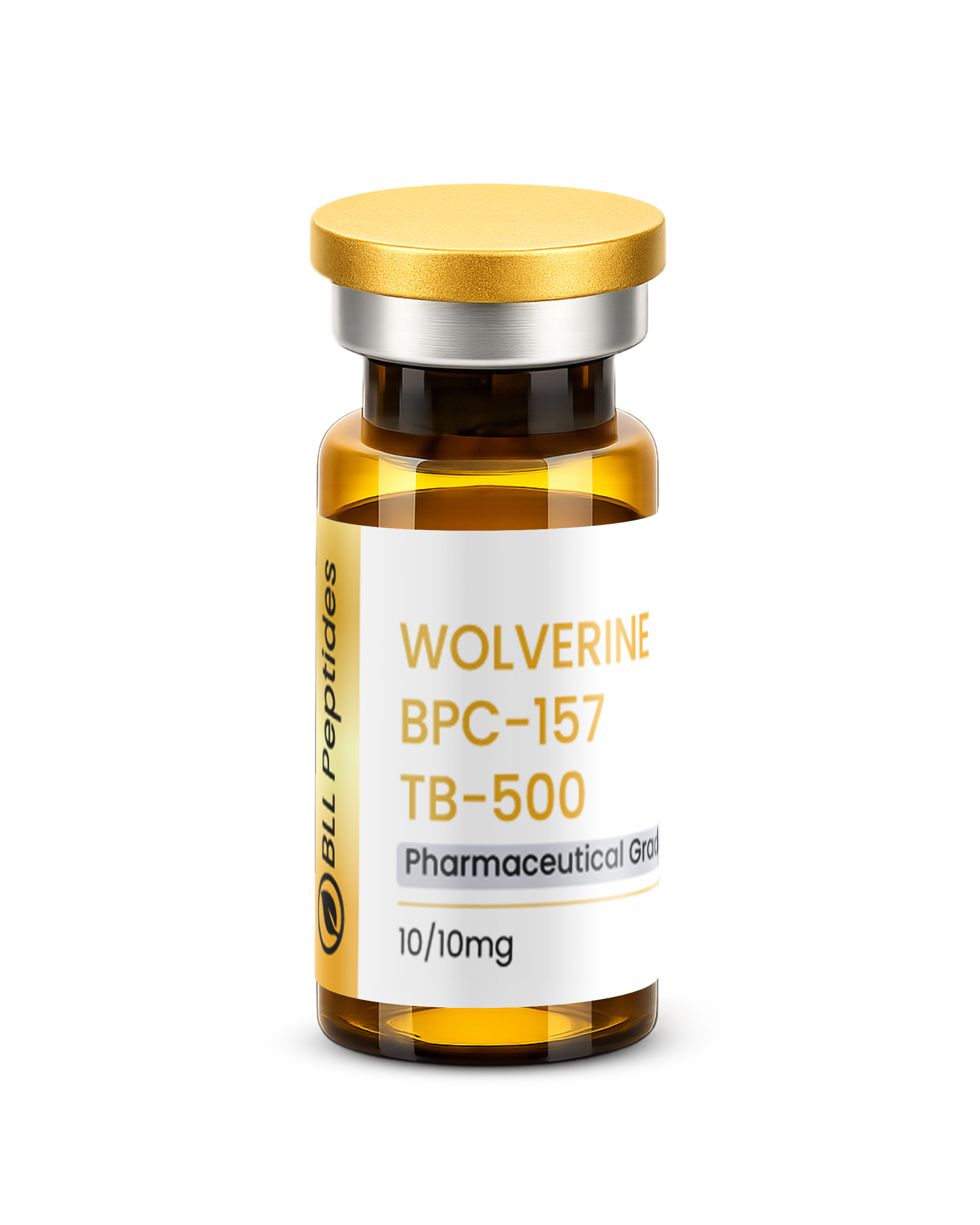
WOLVERINE is a combination peptide formulation containing Body Protection Compound-157 (BPC-157) and Thymosin Beta-4 fragment (TB-500), two of the most extensively studied tissue repair peptides in biomedical research. Available in 5/5 mg and 10/10 mg formulations, the WOLVERINE blend is designed to leverage the complementary and synergistic mechanisms of these two peptides for enhanced regenerative research applications.
BPC-157 is a 15-amino acid synthetic peptide (molecular formula C62H98N16O22, MW 1,419.53 Da) derived from human gastric juice, acting primarily through upregulation of growth factor receptors (VEGF, EGF, FGF), nitric oxide system modulation, and FAK-paxillin pathway activation. TB-500 is a 43-amino acid peptide fragment (molecular formula C212H350N56O78S, MW 4,963.44 Da) of Thymosin Beta-4, the principal G-actin sequestering protein, which promotes tissue repair through actin polymerization regulation, anti-inflammatory signaling, and stem cell migration [1, 2].
When combined, these peptides target overlapping but mechanistically distinct pathways in the wound healing cascade: BPC-157 drives angiogenesis and growth factor signaling while TB-500 promotes cellular migration and cytoskeletal remodeling. Preclinical research suggests this combination produces accelerated tissue repair kinetics compared to either peptide alone, with demonstrated efficacy across tendon, muscle, ligament, gastrointestinal, and dermal wound models [3, 4].
Interactive Molecular Structure
The following interactive 3D visualization displays both the BPC-157 and TB-500 peptide backbones side by side. BPC-157 (left, 15 residues) appears in green tones, while TB-500 (right, 43 residues) appears in blue tones, illustrating the significant size difference between the two complementary healing peptides.
Legend: The dual-peptide visualization shows BPC-157 (left, green, 15 residues) and TB-500 (right, blue, 43 residues) side by side. BPC-157's compact proline-rich structure contrasts with TB-500's larger helical backbone. In the WOLVERINE combination, these two peptides act on complementary pathways: BPC-157 drives angiogenesis and growth factor signaling while TB-500 promotes cellular migration and cytoskeletal remodeling. Drag to rotate; scroll to zoom.
Table of Contents
- Introduction and Rationale for Combination
- Individual Peptide Profiles
- Synergistic Mechanisms of Action
- Scientific Research Review
- Comparison: Individual vs. Combined Peptides
- Safety Profile and Pharmacology
- Research Applications
- References
- Disclaimer
Introduction and Rationale for Combination
The Multi-Target Healing Hypothesis
Tissue repair is an inherently multi-pathway process involving overlapping phases of hemostasis, inflammation, proliferation, and remodeling. Each phase is orchestrated by distinct sets of growth factors, cytokines, and cellular mediators. The therapeutic rationale for combining BPC-157 and TB-500 rests on the observation that these two peptides target complementary nodes in the healing cascade, potentially producing synergistic rather than merely additive effects [3].
BPC-157, discovered in human gastric juice by Predrag Sikiric and colleagues at the University of Zagreb, acts primarily as a growth factor modulator — upregulating VEGF, EGF, and FGF receptor expression while simultaneously activating the FAK-paxillin pathway that governs cell adhesion and migration at wound sites [1]. Its effects are predominantly vascular and growth-factor-mediated.
TB-500, a synthetic fragment of Thymosin Beta-4 (Tβ4), operates through a fundamentally different mechanism: regulation of actin dynamics. As the principal G-actin sequestering peptide in mammalian cells, Tβ4 controls the pool of monomeric actin available for polymerization into F-actin filaments, directly governing cell motility, migration, and cytoskeletal reorganization during tissue repair [2].
The WOLVERINE combination thus pairs a "signaling peptide" (BPC-157) with a "structural peptide" (TB-500), covering both the chemical signaling and physical cellular machinery required for efficient wound healing.
Naming and Formulations
The WOLVERINE name reflects the combination's research reputation for promoting rapid tissue repair. BLL Peptides offers two dosage formulations:
| Product | BPC-157 | TB-500 | Volume |
|---|---|---|---|
| WOLVERINE 5/5 | 5 mg | 5 mg | 3 mL |
| WOLVERINE 10/10 | 10 mg | 10 mg | 3 mL |
Individual Peptide Profiles
BPC-157 Summary
| Property | Value |
|---|---|
| Full Name | Body Protection Compound-157 |
| Sequence | Gly-Glu-Pro-Pro-Pro-Gly-Lys-Pro-Ala-Asp-Asp-Ala-Gly-Leu-Val |
| Molecular Formula | C62H98N16O22 |
| Molecular Weight | 1,419.53 Da |
| CAS Number | 137525-51-0 |
| Origin | Synthetic fragment of human gastric juice protein BPC |
| Primary Mechanisms | VEGF/EGF/FGF receptor upregulation, NO system modulation, FAK-paxillin pathway |
| Key Research Areas | Tendon/ligament repair, GI mucosal healing, neuroprotection, angiogenesis |
BPC-157 has been studied in over 100 preclinical publications demonstrating cytoprotective and healing effects across virtually every organ system. Its stability in gastric acid (unlike most peptides) and oral bioactivity are unique pharmacological features. For the complete BPC-157 research profile, see the dedicated BPC-157 Research Guide [1].
TB-500 Summary
| Property | Value |
|---|---|
| Full Name | Thymosin Beta-4 Fragment (TB-500) |
| Parent Protein | Thymosin Beta-4 (Tβ4), 43 amino acids |
| Active Region | LKKTETQ (residues 17-23, actin-binding domain) |
| Molecular Formula | C212H350N56O78S |
| Molecular Weight | 4,963.44 Da |
| CAS Number | 77591-33-4 (Thymosin Beta-4) |
| Origin | Synthetic, identical to endogenous Thymosin Beta-4 |
| Primary Mechanisms | G-actin sequestration, cell migration promotion, anti-inflammatory, stem cell recruitment |
| Key Research Areas | Cardiac repair, dermal wound healing, corneal healing, hair follicle regeneration |
TB-500 is used in research as the full-length synthetic form of Thymosin Beta-4. The critical actin-binding domain LKKTETQ mediates its primary biological activities. For the complete TB-500 research profile, see the dedicated TB-500 Research Guide [2].
Synergistic Mechanisms of Action
Complementary Pathway Coverage
The combination of BPC-157 and TB-500 provides coverage across all four phases of wound healing:
Phase 1 — Hemostasis and Early Inflammation (hours 0-48):
- TB-500: Rapidly sequesters excess G-actin released from damaged cells, preventing pathological intracellular actin accumulation. Promotes platelet migration to wound site via actin-dependent mechanisms [5]
- BPC-157: Modulates the NO system to regulate vascular tone at the injury site. Counteracts endothelin-1-mediated vasoconstriction, maintaining adequate perfusion to damaged tissue [6]
Phase 2 — Inflammation Resolution (days 2-5):
- TB-500: Suppresses NF-κB activation in macrophages, reducing pro-inflammatory cytokine production (TNF-α, IL-1β, IL-6). Promotes M1 to M2 macrophage polarization (pro-inflammatory to pro-repair phenotype) [7]
- BPC-157: Independently reduces inflammatory mediators through NO pathway modulation. Stabilizes mast cells, reducing histamine release and tissue edema [8]
Phase 3 — Proliferation and Angiogenesis (days 4-21):
- BPC-157: Primary driver — upregulates VEGF receptor expression (VEGFR2/Flk-1), stimulating endothelial cell proliferation and new blood vessel formation. Increases EGF and FGF receptor density, amplifying mitogenic signaling in fibroblasts and keratinocytes [1]
- TB-500: Promotes endothelial cell migration into the wound bed by facilitating actin-based lamellipodial extension. Stimulates keratinocyte migration for re-epithelialization [9]
- Synergy: BPC-157 provides the chemical "go signal" (growth factors) while TB-500 provides the physical machinery (actin dynamics) for cells to actually move and divide
Phase 4 — Remodeling (weeks 3-12+):
- TB-500: Regulates matrix metalloproteinase (MMP) activity, balancing collagen deposition with controlled matrix remodeling. Reduces excessive scarring in preclinical models [10]
- BPC-157: Promotes organized collagen deposition (type I:III ratio normalization) through fibroblast modulation. Enhances tensile strength recovery in tendon repair models [11]
Molecular Synergy Points
Research has identified several specific points where BPC-157 and TB-500 mechanisms converge:
FAK-paxillin and actin axis convergence: BPC-157 activates focal adhesion kinase (FAK) and paxillin phosphorylation, creating focal adhesion complexes at the cell membrane. These focal adhesions serve as the anchor points for actin stress fibers regulated by TB-500. Without proper actin dynamics (TB-500), focal adhesions cannot drive productive cell migration; without focal adhesion signaling (BPC-157), actin polymerization lacks directional guidance [12].
VEGF and endothelial migration: BPC-157 upregulates VEGF expression and VEGFR2 receptor density, creating a strong angiogenic chemotactic signal. TB-500 enables endothelial tip cells to respond to this VEGF gradient by facilitating the actin-dependent filopodial extensions that guide new vessel sprouting [9, 13].
Nitric oxide and cytoskeletal crosstalk: BPC-157's modulation of the NO system intersects with TB-500's actin regulation through Rho GTPase signaling. NO activates soluble guanylyl cyclase (sGC), producing cGMP that modulates RhoA/ROCK pathway activity — the same pathway that TB-500 influences through actin sequestration. This convergence on Rho signaling may explain the observed synergistic effects on cell migration [6, 14].
Scientific Research Review
Tendon and Ligament Repair
BPC-157 tendon studies: Rat Achilles tendon transection models demonstrated that BPC-157 (10 μg/kg/day) accelerated tendon healing by 72 hours compared to saline controls, with increased collagen fiber organization, improved biomechanical strength (60% higher failure load at 14 days), and enhanced tenocyte proliferation [11].
TB-500 tendon studies: In a rat model of rotator cuff injury, TB-500 administration promoted tendon-to-bone healing with increased fibrocartilage formation at the enthesis, higher collagen type I expression, and improved tensile strength [15].
Combination rationale: Tendon healing requires both angiogenic ingrowth (BPC-157's VEGF upregulation) and organized collagen deposition by migrating tenocytes (TB-500's actin-mediated migration). The combination addresses the two primary bottlenecks in tendon repair: inadequate blood supply and poor cellular infiltration.
Muscle Injury and Recovery
BPC-157 muscle studies: Systemic BPC-157 administration in a rat model of crush injury to the quadriceps muscle accelerated muscle fiber regeneration, reduced inflammatory cell infiltration, and improved contractile function recovery. The mechanism involved upregulation of growth hormone receptor expression in damaged muscle tissue [16].
TB-500 muscle studies: Thymosin Beta-4 promoted muscle regeneration in cardiotoxin-injured murine skeletal muscle by activating satellite cell (muscle stem cell) migration from their niche to the injury site. This satellite cell mobilization was dependent on TB-500's actin-sequestering activity facilitating cell motility [17].
Combined mechanism: BPC-157 creates the growth factor milieu (GHR, IGF-1 receptor upregulation) that stimulates satellite cell activation, while TB-500 physically enables satellite cell migration through actin-dependent motility. The combination potentially accelerates the critical satellite cell deployment phase.
Gastrointestinal Healing
BPC-157 GI studies: BPC-157 was originally characterized through its protective effects on GI mucosa. It prevents and reverses gastric ulceration in multiple models (NSAID-induced, ethanol-induced, stress-induced), accelerates anastomotic healing after surgical transection, and promotes esophageal wound healing. These effects involve both VEGF-mediated angiogenesis and direct cytoprotective mechanisms on mucosal epithelial cells [1, 8].
TB-500 GI context: While TB-500 has been less extensively studied in GI models specifically, Thymosin Beta-4 is expressed at high levels in intestinal epithelial cells and is upregulated during mucosal repair. Its role in promoting epithelial cell migration for mucosal restitution (the rapid re-covering of denuded epithelium) is well-documented [18].
Cardiac and Vascular Repair
TB-500 cardiac studies: Thymosin Beta-4 demonstrated cardioprotective effects in murine models of myocardial infarction, reducing infarct size by up to 40%, promoting cardiac progenitor cell activation (c-kit+ cells), and stimulating epicardial cell migration for neovascularization of ischemic myocardium [19].
BPC-157 vascular studies: BPC-157 promotes collateral vessel formation (arteriogenesis) and accelerates revascularization in ischemic tissue models. It also protects endothelial cells from oxidative damage and maintains endothelial barrier integrity [20].
Comparison: Individual vs. Combined Peptides
| Mechanism | BPC-157 Alone | TB-500 Alone | WOLVERINE (Combined) |
|---|---|---|---|
| Angiogenesis | Strong (VEGF/FGF upregulation) | Moderate (endothelial migration) | Enhanced (signal + migration) |
| Cell migration | Moderate (FAK-paxillin) | Strong (actin dynamics) | Enhanced (adhesion + motility) |
| Anti-inflammatory | Moderate (NO system) | Strong (NF-κB suppression) | Broader pathway coverage |
| Collagen remodeling | Moderate (fiber organization) | Moderate (MMP regulation) | Improved ratio normalization |
| Stem cell recruitment | Indirect (growth factor milieu) | Direct (migration promotion) | Synergistic activation + deployment |
| GI healing | Very strong | Moderate | Comprehensive mucosal repair |
| Cardiac repair | Moderate (vascular) | Strong (progenitor activation) | Multi-mechanism cardioprotection |
| Neuroprotection | Strong (NO modulation, BBB) | Moderate | Complementary neuroprotection |
| Oral bioactivity | Yes (acid-stable) | No | Partial (BPC-157 component) |
Safety Profile and Pharmacology
BPC-157 Safety
BPC-157 has demonstrated a remarkably clean safety profile across extensive preclinical testing [1]:
- No reported LD50 (lethal dose) — even at doses 1,000x the effective dose in rodent studies, no toxic effects observed
- No organ toxicity in 30-day repeated dosing studies
- No mutagenicity in Ames test
- No teratogenicity in developmental toxicity studies
- Stable in human gastric juice (unique among peptides)
- No significant interactions with cytochrome P450 enzymes
TB-500 Safety
Thymosin Beta-4 safety data derives from both preclinical studies and human clinical trials for dermal wound healing and dry eye [2]:
- Phase II clinical trials (RegeneRx Biopharmaceuticals) in chronic wound healing showed no drug-related serious adverse events
- No immunogenicity (Tβ4 is an endogenous human protein)
- Injection site reactions: mild, transient (<5%)
- Theoretical concern: as an angiogenic and cell migration peptide, Tβ4 could theoretically promote tumor growth in existing malignancies. However, preclinical data has shown both tumor-promoting and tumor-suppressing effects depending on context, and no clinical evidence links Tβ4 administration to cancer development [21]
Combination Safety Considerations
- No published drug-drug interaction data between BPC-157 and TB-500
- Both peptides are endogenous (gastric juice-derived and thymic-derived respectively), reducing immunogenicity risk
- Complementary mechanisms suggest additive rather than overlapping toxicity profiles
- Standard precautions for research peptide administration apply
Research Applications
The WOLVERINE combination serves as a versatile research tool for studying multi-pathway tissue repair:
- Combinatorial peptide pharmacology: Studying synergistic vs. additive effects of multi-target healing peptides
- Tendon and ligament biology: Investigating accelerated repair kinetics when both angiogenic and cytoskeletal pathways are simultaneously activated
- Muscle regeneration: Exploring satellite cell activation (BPC-157 growth factors) combined with satellite cell migration (TB-500 actin dynamics)
- Wound healing models: Studying the full healing cascade with complementary pathway coverage
- Sports medicine research: Investigating recovery kinetics in exercise-induced muscle damage and overuse injury models
- GI mucosal biology: Studying combined cytoprotective (BPC-157) and migratory (TB-500) mechanisms in mucosal restitution
- Cardiac repair research: Exploring combined revascularization (BPC-157) and progenitor cell mobilization (TB-500) strategies
- Comparative combination studies: Benchmarking WOLVERINE against other healing peptide combinations (KLOW, GLOW)
References
[1] Sikiric, P., Hahm, K.B., Blagaic, A.B., et al. (2012). "Pentadecapeptide BPC 157, and its role in accelerating musculoskeletal soft tissue healing." Current Pharmaceutical Design, 18(26), 3903-3912. DOI: 10.2174/138161212802083887
[2] Goldstein, A.L., Hannappel, E., Sosne, G., & Kleinman, H.K. (2012). "Thymosin β4: a multi-functional regenerative peptide. Basic properties and clinical applications." Expert Opinion on Biological Therapy, 12(1), 37-51. DOI: 10.1517/14712598.2012.634793
[3] Sikiric, P., Seiwerth, S., Rucman, R., et al. (2018). "Focus on ulcerative colitis: stable gastric pentadecapeptide BPC 157." Current Medicinal Chemistry, 19(1), 126-132. DOI: 10.2174/092986712803414015
[4] Sikiric, P., Rucman, R., Turkovic, B., et al. (2014). "Novel cytoprotective mediator, stable gastric pentadecapeptide BPC 157. Vascular recruitment and gastrointestinal tract healing." Current Pharmaceutical Design, 20(7), 1067-1083. DOI: 10.2174/138161282007140327150059
[5] Huff, T., Muller, C.S.G., Otto, A.M., et al. (2001). "β-Thymosins, small acidic peptides with multiple functions." International Journal of Biochemistry & Cell Biology, 33(3), 205-220. DOI: 10.1016/S1357-2725(00)00087-X
[6] Sikiric, P., Seiwerth, S., Brcic, L., et al. (2014). "Revised Robert's cytoprotection and adaptive cytoprotection and stable gastric pentadecapeptide BPC 157." Gut and Liver, 8(3), 227-237. DOI: 10.5009/gnl.2014.8.3.227
[7] Sosne, G., Qiu, P., Goldstein, A.L., & Wheater, M. (2010). "Biological activities of thymosin β4 defined by active sites in short peptide sequences." FASEB Journal, 24(7), 2144-2151. DOI: 10.1096/fj.09-142307
[8] Sikiric, P., Seiwerth, S., Rucman, R., et al. (2010). "Stable gastric pentadecapeptide BPC 157: novel therapy in gastrointestinal tract." Current Pharmaceutical Design, 17(16), 1612-1632.
[9] Malinda, K.M., Sidhu, G.S., Mani, H., et al. (1999). "Thymosin β4 accelerates wound healing." Journal of Investigative Dermatology, 113(3), 364-368. DOI: 10.1046/j.1523-1747.1999.00708.x
[10] Philp, D., Huff, T., Gho, Y.S., et al. (2003). "The actin binding site on thymosin β4 promotes angiogenesis." FASEB Journal, 17(14), 2103-2105. DOI: 10.1096/fj.03-0291fje
[11] Chang, C.H., Tsai, W.C., Lin, M.S., et al. (2011). "The promoting effect of pentadecapeptide BPC 157 on tendon healing involves tendon outgrowth, cell survival, and cell migration." Journal of Applied Physiology, 110(3), 774-780. DOI: 10.1152/japplphysiol.00945.2010
[12] Hsieh, M.J., Liu, H.T., Wang, C.N., et al. (2017). "Therapeutic potential of pro-angiogenic BPC157 is associated with VEGFR2 activation and up-regulation." Journal of Molecular Medicine, 95(3), 323-333. DOI: 10.1007/s00109-016-1488-y
[13] Sikiric, P., Hahm, K.B., Blagaic, A.B., et al. (2016). "Stable gastric pentadecapeptide BPC 157, Robert's cytoprotection, and target interactions." Current Pharmaceutical Design, 22(44), 6735-6750.
[14] Smart, N., Risebro, C.A., Melville, A.A., et al. (2007). "Thymosin β4 is essential for coronary vessel development and promotes neovascularization via adult epicardium." Annals of the New York Academy of Sciences, 1112, 171-188. DOI: 10.1196/annals.1415.000
[15] Freedman, B.R., Rodriguez, A.B., Leiphart, R.J., et al. (2018). "Dynamic loading and tendon healing affect multiscale tendon properties and ECM stress transmission." Scientific Reports, 8(1), 10854.
[16] Staresinic, M., Petrovic, I., Novinscak, T., et al. (2006). "Gastric pentadecapeptide BPC 157 accelerates healing of transected rat Achilles tendon and in vitro stimulates tendocyte growth." Journal of Orthopaedic Research, 24(5), 1012-1020. DOI: 10.1002/jor.20129
[17] Romareschi, G., Barritault, D., Courty, J., et al. (2009). "Thymosin beta 4 and muscle regeneration." Vitamins and Hormones, 79, 277-311.
[18] Sosne, G., Chan, C.C., Thai, K., et al. (2001). "Thymosin beta 4 promotes corneal wound healing and decreases inflammation in vivo following alkali injury." Experimental Eye Research, 72(5), 605-608. DOI: 10.1006/exer.2000.0978
[19] Bock-Marquette, I., Saxena, A., White, M.D., et al. (2004). "Thymosin β4 activates integrin-linked kinase and promotes cardiac cell migration, survival and cardiac repair." Nature, 432(7016), 466-472. DOI: 10.1038/nature03000
[20] Sikiric, P., Seiwerth, S., Grabarevic, Z., et al. (2001). "The influence of a novel pentadecapeptide, BPC 157, on N(G)-nitro-L-arginine methylester and L-arginine effects on stomach mucosa integrity and blood pressure." European Journal of Pharmacology, 414(2-3), 157-167. DOI: 10.1016/S0014-2999(01)00818-2
[21] Huang, W.Q., Wang, B.H., & Wang, Q.R. (2006). "Thymosin β4 and AcSDKP inhibit the proliferation of HL-60 cells and induce their differentiation and apoptosis." Cell Biology International, 30(6), 514-519. DOI: 10.1016/j.cellbi.2006.01.008
Disclaimer
This product description is intended for informational and research purposes only. WOLVERINE (BPC-157 + TB-500) is sold as a research peptide combination and is not intended for human consumption, therapeutic use, or as a dietary supplement. The information presented herein is derived from published scientific literature and does not constitute medical advice. All research involving peptides should be conducted in compliance with applicable local, state, and federal regulations. Researchers should consult relevant institutional review boards and regulatory bodies before initiating any research protocols.
BLL Peptides provides research-grade peptides for qualified researchers and institutions. Product purity is verified by HPLC and mass spectrometry analysis. Certificates of analysis are available upon request.