

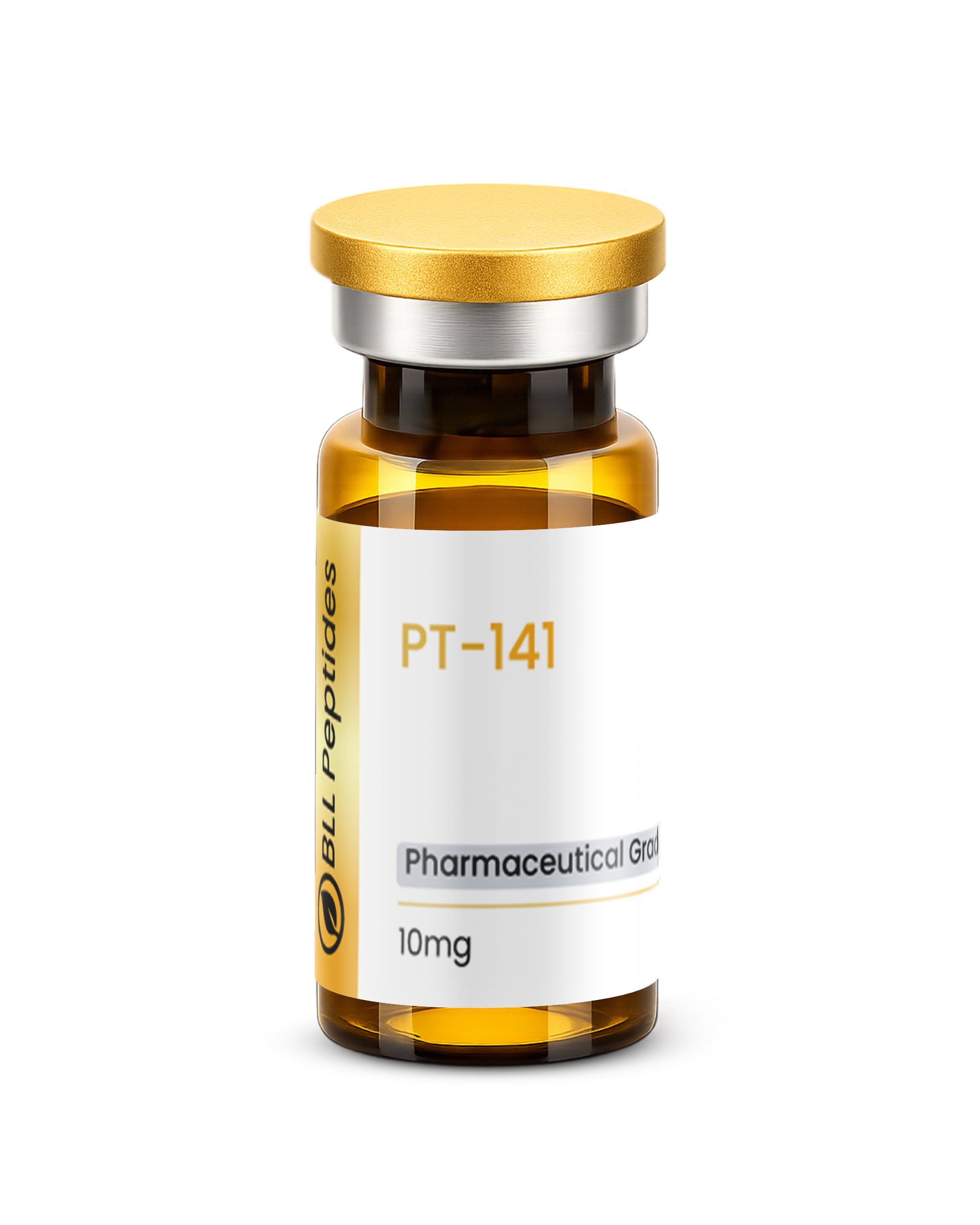
The melanocortin system is one of the more underappreciated regulatory networks in neuroscience, governing not just pigmentation but energy homeostasis, inflammation, and — through hypothalamic MC3R and MC4R — aspects of autonomic function that researchers have only begun to characterize fully. PT-141 (bremelanotide) enters this system through the same receptor axis used by alpha-MSH, but its effects downstream of MC4R activation differ from what early investigators expected, partly because the mechanism is entirely central rather than vascular. Having spent time studying hypothalamic circuitry in the context of pituitary surgery, the specificity of the melanocortin receptor subtypes in this context is something I find mechanistically significant. This review covers what the current research shows about PT-141 and melanocortin receptor pharmacology.
What Is PT-141?
PT-141, also known by its scientific name bremelanotide, is a synthetic cyclic heptapeptide derived from the hormone α-melanocyte-stimulating hormone (α-MSH). It was originally developed as a spin-off from melanotan II research, which itself was aimed at studying skin pigmentation and UV protection. Researchers quickly noticed that PT-141 produced central nervous system effects that were distinct from simple pigmentation changes, and investigation pivoted accordingly.
PT-141 is structurally different from earlier melanocortin analogues in ways that matter pharmacologically. Its cyclic conformation confers metabolic stability and improved receptor binding selectivity. For research purposes, it has become one of the better-characterized tools for probing the melanocortin system’s role in CNS-mediated physiology.
The Melanocortin System: MC3R and MC4R
To understand what makes PT-141 scientifically interesting, you need to understand the melanocortin receptor family. There are five known melanocortin receptors (MC1R through MC5R), each with distinct tissue distributions and functional roles. The two most relevant to PT-141 research are MC3R and MC4R.
MC4R (melanocortin-4 receptor) is expressed widely throughout the brain, with particularly high density in the hypothalamus and limbic regions. It has been implicated in the regulation of energy homeostasis, autonomic function, and — importantly for PT-141 research — centrally mediated physiological arousal pathways. MC4R knockout studies in animal models have demonstrated profound effects on body weight regulation and behavioral outputs, pointing to this receptor as a key node in CNS signaling networks.
MC3R (melanocortin-3 receptor) is less well characterized but appears to play a modulatory role in energy balance and has been identified in limbic and hypothalamic circuits. Some research suggests MC3R may act as a presynaptic autoreceptor, modulating melanocortin tone within specific brain regions.
PT-141 binds with high affinity to both MC3R and MC4R, making it a useful research ligand for probing the functional interplay between these two receptor subtypes in intact neurological systems.
Research Overview and Key Findings
The preclinical and clinical research trajectory of PT-141 has been extensive. Early animal studies using rodent models demonstrated that centrally administered melanocortin agonists produced behavioral and autonomic effects that could be blocked by selective MC4R antagonists, providing strong evidence for receptor-specific signaling rather than off-target activity.
Subsequent work in human subjects focused on characterizing the pharmacokinetics and receptor engagement of bremelanotide. Importantly, human studies confirmed that PT-141 achieves CNS penetration following subcutaneous administration — a key prerequisite for central melanocortin receptor engagement rather than peripheral-only activity.
One of the most scientifically significant aspects of the PT-141 research literature is the evidence that its mechanism operates upstream of the vascular changes seen with phosphodiesterase inhibitors. Neuroimaging studies and pharmacological challenge paradigms have been used to map the downstream signaling consequences of MC3R/MC4R activation, with particular attention to hypothalamic and limbic circuits.
Research has also examined the role of the melanocortin system in energy regulation more broadly. The discovery that MC4R haploinsufficiency is one of the most common monogenic causes of severe early-onset obesity has given the melanocortin receptor system outsized significance in metabolic neuroscience. PT-141, as a well-characterized agonist at this receptor, continues to serve as a research tool in this context.
From a neuroscience perspective, what I find most compelling is the way this compound has helped delineate the boundaries of hypothalamic circuitry. The melanocortin system sits at a fascinating intersection: it receives input from leptin-responsive neurons, integrates signals related to energy status, and projects to autonomic and limbic centers that govern a wide range of motivated behaviors. Using selective tools like PT-141 to probe this system has produced mechanistic insights that wouldn’t be accessible through less selective interventions.
Research-Grade PT-141 at BLL Peptides
For researchers and scientists studying melanocortin receptor pharmacology, access to high-purity, consistently characterized peptides is essential. BLL Peptides offers research-grade PT-141, manufactured under rigorous quality standards and intended strictly for laboratory and scientific research use.
You can find our . All BLL Peptides products are supplied for research purposes only and are not intended for human use or consumption.
About the Author: Dr. James is a board-certified neurosurgeon trained at Yale University and medical advisor to BLL Peptides.
Further Reading
- Cognitive Function & Brain Health: A Complete Guide to Peptides
- Athletic Performance & Recovery: A Complete Guide to Peptides
Related Research
- BPC-157 Peptide: Mechanisms of Tissue Repair in Research Models
- TB-500 (Thymosin Beta-4): Understanding Its Role in Cellular Recovery Research
- Injury Recovery & Healing: A Complete Guide to Regenerative Peptides
- Research-grade PT-141 at BLL Peptides
Research Disclaimer: This article is intended for informational and educational purposes only. The content reflects current scientific literature and is not intended as medical advice, diagnosis, or treatment guidance. PT-141 (bremelanotide) is a research compound intended strictly for laboratory research use. It is not approved for human self-administration outside of regulated clinical or medical settings. Always consult a licensed healthcare professional regarding any health-related questions or concerns.