

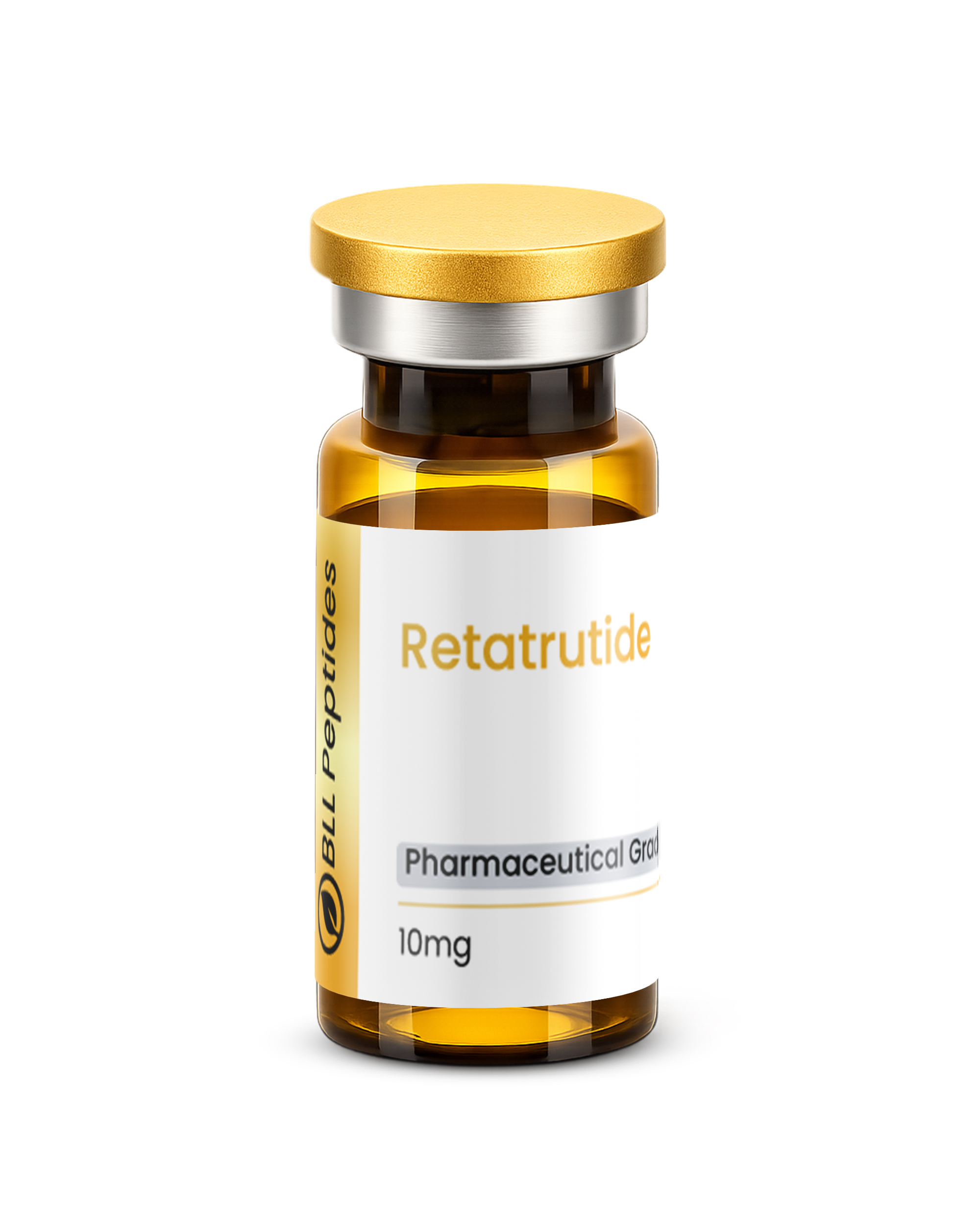
Obesity research has undergone a quiet revolution in the last five years — and Retatrutide may represent its next chapter. Where Semaglutide was the breakthrough that proved GLP-1 agonism could produce meaningful weight reduction, and Tirzepatide demonstrated that adding GIP receptor activation could push those results further, Retatrutide introduces a third element: glucagon receptor activation. The question the research community is now asking is whether this triple-receptor approach represents an incremental improvement or a genuinely different category of metabolic intervention.
Retatrutide (LY3437943) is a triple agonist targeting the GLP-1 receptor, GIP receptor, and glucagon receptor simultaneously. Developed by Eli Lilly, it’s currently in Phase 3 clinical trials following Phase 2 results that generated significant attention in the endocrinology and obesity research communities. The preliminary data positions it as potentially the most potent pharmacological agent for weight reduction studied in human trials to date — raising both scientific excitement and important research questions about mechanism, durability, and the biology of extreme weight reduction.
Retatrutide’s Triple Receptor Mechanism: What the Research Shows
To understand what makes Retatrutide scientifically interesting, it helps to understand what each receptor axis contributes individually. GLP-1 agonism reduces appetite through hypothalamic signaling, slows gastric emptying, and improves insulin secretion. GIP agonism enhances GLP-1’s appetite-reducing and insulin-secretory effects while additionally promoting fat storage regulation and potentially exerting direct central effects. Glucagon receptor activation — the new element — adds significant lipolytic drive, increasing hepatic glucose production, elevating energy expenditure, and mobilizing fatty acids from adipose tissue.
The glucagon component is the most pharmacologically novel aspect of Retatrutide — glucagon is typically thought of as a counter-regulatory hormone that raises blood sugar, but in the context of combined GLP-1 agonism, the hyperglycemic effects appear to be offset while the metabolic and energy-expenditure benefits are preserved.
This combination creates a compound that addresses obesity through multiple metabolic levers simultaneously: reduced food intake (GLP-1/GIP CNS effects), improved metabolic efficiency and insulin sensitivity (GIP effects), and increased energy expenditure and fat mobilization (glucagon effects). The Phase 2 trial results published in the New England Journal of Medicine found that Retatrutide produced mean weight loss of approximately 24% of body weight over 48 weeks at the highest studied dose — substantially exceeding what had been observed with single and dual agonists (PMID: 37328435).
Key Research Findings and Open Questions
A 24% mean weight reduction is a number that commands attention in obesity science. For context, Semaglutide produced approximately 15% mean weight loss in its landmark STEP trials, and Tirzepatide produced approximately 20-22% in SURMOUNT. If Retatrutide’s Phase 2 numbers hold through Phase 3 testing — which involves larger, more diverse populations — it would represent the most effective pharmacological weight reduction approach in clinical history outside of bariatric surgery.
The NASH (non-alcoholic steatohepatitis) research angle has also attracted significant attention. Hepatic steatosis — fatty liver disease — is strongly associated with visceral obesity and insulin resistance, and the glucagon receptor component of Retatrutide has shown particular efficacy in preclinical models of hepatic fat reduction. Phase 2 data showed significant reductions in liver fat content, raising the possibility of a dual metabolic-hepatic indication.
The research question now is durability: whether the weight loss observed with Retatrutide is maintained upon treatment cessation or requires continuous administration — a question that also applies to all current GLP-1 class compounds and has significant implications for how these agents are conceptualized as research tools versus potential therapies.
For metabolic researchers, Semaglutide and Tirzepatide at BLL Peptides offer related research angles on GLP-1 and dual GIP/GLP-1 mechanisms for comparative studies. All compounds are for research purposes only.
Frequently Asked Questions About Retatrutide and Obesity Research
- What makes Retatrutide different from Semaglutide and Tirzepatide?
- Retatrutide adds glucagon receptor agonism to the GLP-1 and GIP receptor activation used by Tirzepatide. This triple mechanism adds lipolytic drive and increased energy expenditure alongside the appetite and insulin effects of the dual agonist class.
- What weight loss was observed in Retatrutide Phase 2 research?
- The Phase 2 trial published in NEJM reported approximately 24% mean body weight reduction over 48 weeks at the highest studied dose — the largest pharmacological weight loss observed in controlled trials at that point.
- What is the glucagon receptor’s role in Retatrutide’s mechanism?
- Glucagon agonism adds lipolytic drive, increases hepatic energy expenditure, and mobilizes fat. While glucagon typically raises blood sugar, this hyperglycemic effect appears offset by the concurrent GLP-1/GIP insulin-secretory activity.
- What are the key open research questions about Retatrutide?
- Primary questions include weight loss durability after cessation, the NASH/fatty liver application, cardiovascular outcomes data, and comparative long-term effects versus established GLP-1 class compounds.
Dr. James Nguyen is a neurosurgeon and research advisor at BLL Peptides. His work focuses on peptide research, neurological recovery, and longevity science. All content is for educational and research purposes only.
This content is intended for research purposes only. BLL Peptides products are not intended for human consumption.