
Selank Peptide Research: What Scientists Are Discovering About This Synthetic Enkephalin Analogue
·

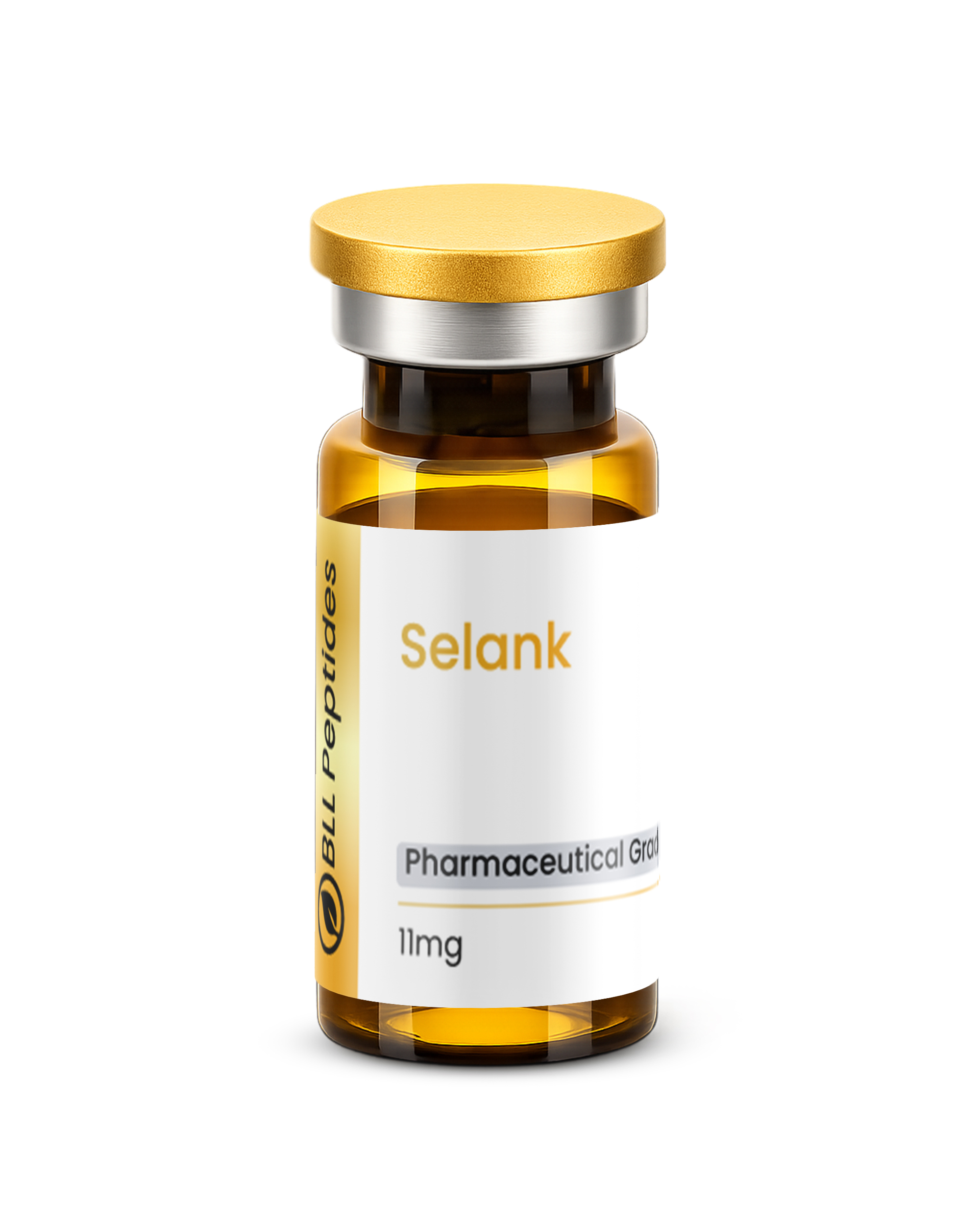
There is a question I return to often in my work as a neurosurgeon: why do some brains handle stress gracefully while others seem to amplify it into something self-destructive? It is not a new question in neuroscience, but the search for molecular answers keeps turning up unexpected candidates. One that genuinely stopped me was Selank peptide research — a body of literature built around a synthetic heptapeptide that appears to modulate anxiety-related neurobiology through mechanisms that do not fit neatly into any existing pharmacological category.
Selank peptide research centers on a seven-amino-acid synthetic analogue of the endogenous tetrapeptide tuftsin, developed in the 1990s at the Institute of Molecular Genetics in Moscow. The peptide — with the sequence Thr-Lys-Pro-Arg-Pro-Gly-Pro — was engineered with a C-terminal Pro-Gly-Pro extension to extend metabolic stability, following a design principle similar to Semax. What has emerged from subsequent decades of preclinical and limited clinical research is a compound with apparent activity across GABAergic neurotransmission, enkephalin metabolism, and brain-derived neurotrophic factor regulation — a combination that is, frankly, unusual for a seven-residue peptide.
What Is Selank? The Direct Answer
Selank is a synthetic heptapeptide with the sequence Thr-Lys-Pro-Arg-Pro-Gly-Pro (TKPRPGP), structurally derived from the immunomodulatory tetrapeptide tuftsin (Thr-Lys-Pro-Arg). The C-terminal Pro-Gly-Pro extension increases its resistance to enzymatic breakdown, significantly extending its functional half-life compared to native tuftsin. Originally developed as part of Soviet and later Russian peptide pharmacology programs, Selank has accumulated a research portfolio spanning anxiolytic neurobiology, cognitive modulation, immune signaling, and neuroprotection. Selank peptide research is distinguished by the compound’s apparent multi-pathway activity — operating across neurotransmitter systems rather than through a single receptor mechanism.
What Is Selank and Why Does Its Structure Matter?
Tuftsin — the tetrapeptide from which Selank is derived — is itself a naturally occurring immunomodulatory peptide cleaved from the Fc region of immunoglobulin G. It interacts with central nervous system receptors and shows weak anxiolytic properties in animal models, but its rapid enzymatic degradation severely limits its practical utility as a research tool. Selank addresses this limitation directly through the Pro-Gly-Pro C-terminal extension, which resists peptidase cleavage and dramatically extends the window of biological activity.
The resulting heptapeptide is small enough to cross the blood-brain barrier effectively, yet stable enough to exert measurable effects on central neurotransmitter systems. The combination of CNS penetration and metabolic stability in a single small peptide is precisely what makes Selank an interesting research subject — it allows researchers to study peptide-mediated modulation of anxiety circuitry without the confounding variables of rapid degradation.
How Selank Works: What the Research Suggests
The mechanistic picture that has emerged from preclinical Selank research is multi-layered. Rather than acting through a single dominant receptor pathway, the compound appears to modulate several overlapping systems simultaneously:
- GABAergic potentiation: A central finding in multiple studies is that Selank enhances GABAergic transmission — the brain’s primary inhibitory neurotransmitter system. Research has documented increases in GABA-A receptor expression and GABA turnover in limbic structures, which researchers believe underlies the compound’s observed anxiolytic effects in animal models.
- Enkephalinase inhibition: Selank appears to inhibit enkephalinase, the enzyme responsible for breaking down endogenous enkephalins — the brain’s endogenous opioid peptides. By slowing enkephalin degradation, Selank may extend the duration of endogenous anxiolytic signaling without directly activating opioid receptors. This enkephalinase inhibition mechanism represents one of the more novel aspects of Selank’s proposed pharmacology — it is not a mechanism typically targeted by conventional anxiolytic compounds.
- BDNF modulation: Similar to its structural relative Semax, some Selank studies have documented upregulation of brain-derived neurotrophic factor (BDNF) expression in hippocampal tissue — a finding of potential relevance to research on stress-related neural plasticity and memory consolidation.
- Serotonergic and dopaminergic effects: Animal studies have observed changes in serotonin and dopamine turnover in limbic regions following Selank exposure, though the directionality and magnitude of these effects vary across experimental paradigms.
- Cytokine regulation: Consistent with its tuftsin ancestry, Selank also shows apparent effects on immune signaling — specifically on interleukin-6 (IL-6) and other cytokines that have increasingly recognized roles in neuroinflammation and stress neurobiology.
A 2014 study indexed on PubMed (PMID: 24881041) reported that Selank produced anxiolytic effects in animal models comparable in magnitude to traditional benzodiazepine reference compounds, but without the sedation, muscle relaxation, or amnesia typically associated with GABA-A positive allosteric modulators. Whether this profile reflects a genuinely distinct mechanism or a quantitative difference in GABAergic engagement remains an active question in the research literature.
What Selank Peptide Research Has Found So Far
The published Selank literature is predominantly Russian in origin, with most foundational work emerging from the Institute of Molecular Genetics and affiliated research groups. The key findings across this body of work include:
- Anxiolytic activity without sedation: Multiple animal studies across elevated plus-maze, open field, and fear-conditioning paradigms have found anxiolytic effects at research doses that did not produce measurable sedation, motor impairment, or amnestic effects — distinguishing Selank’s behavioral profile from classical benzodiazepines in preclinical models.
- Enkephalin system interactions: Detailed neurochemical studies have documented Selank’s effects on enkephalin metabolism, with researchers finding that the compound reduces enkephalin breakdown rates in brain tissue samples — consistent with enkephalinase inhibition as a functional mechanism.
- Nootropic observations: Several studies have reported improvements in learning and memory task performance in rodent models of stress-impaired cognition, suggesting that Selank’s effects on stress circuitry may have downstream consequences for cognitive performance under conditions of elevated anxiety.
- Cytokine modulation: Research has documented Selank’s effects on pro-inflammatory cytokine expression, with some studies finding reductions in IL-6 and interferon-gamma under inflammatory challenge conditions — a finding of relevance to the growing literature on neuroinflammation in stress and mood-related biology.
- BDNF elevation: Hippocampal BDNF upregulation has been reported in animal studies, paralleling findings from the related Semax literature and raising questions about whether tuftsin-derived peptides share a common neurotrophic signaling mechanism.
The pattern emerging across the Selank literature — anxiolytic activity without sedation, combined with potential cognitive-enhancing and neurotrophic effects — is scientifically unusual and scientifically significant, even if much of the work awaits Western replication.
Selank Research: Key Findings at a Glance
- Selank demonstrates GABAergic potentiation in limbic brain regions in preclinical models
- Enkephalinase inhibition may extend endogenous enkephalin activity without direct opioid receptor engagement
- Animal studies report anxiolytic behavioral profiles comparable to benzodiazepines but without sedation or amnesia
- Preclinical data documents BDNF upregulation in hippocampal tissue
- Research shows cytokine modulation, including IL-6 effects, relevant to neuroinflammation research
- Cognitive performance improvements observed in stress-impaired rodent models
Related Peptide Research at BLL Peptides
Researchers studying neuropeptide modulation of stress and anxiety circuitry often investigate compounds across several mechanistic categories. BLL Peptides offers research-grade compounds relevant to adjacent research questions:
- BPC-157 — a pentadecapeptide with an extensive preclinical portfolio spanning CNS, peripheral nervous system, and tissue repair research, with several studies examining its effects on dopaminergic and GABAergic neurotransmitter systems
- NAD+ — a mitochondrial coenzyme increasingly studied in the context of neuronal energy metabolism and cellular resilience under stress conditions
All BLL Peptides products are manufactured in the USA under GMP-certified conditions and supplied strictly for research purposes. Explore the full catalog at bllpeptides.com.
Frequently Asked Questions About Selank Peptide Research
What is Selank and how is it different from tuftsin?
Selank is a synthetic heptapeptide (TKPRPGP) derived from tuftsin, an endogenous immunomodulatory tetrapeptide. The key structural difference is Selank’s C-terminal Pro-Gly-Pro extension, which significantly increases metabolic stability and resistance to enzymatic breakdown — extending its functional half-life and making it a more practical research tool than native tuftsin.
How does Selank’s mechanism differ from benzodiazepines?
While Selank appears to enhance GABAergic transmission, it does not act as a direct positive allosteric modulator of GABA-A receptors the way classical benzodiazepines do. Its GABAergic effects may be indirect, mediated through enkephalinase inhibition and upstream modulation of inhibitory tone — which may account for preclinical findings showing anxiolytic effects without the sedation, motor impairment, or amnestic properties typical of benzodiazepine-class compounds.
What is the significance of enkephalinase inhibition in Selank research?
Enkephalinase is the enzyme that degrades endogenous enkephalins — the brain’s natural opioid peptides involved in pain modulation, stress response, and mood regulation. By inhibiting this enzyme, Selank may prolong enkephalin activity in synaptic clefts without directly activating opioid receptors. This mechanism is distinct from both direct opioid agonism and conventional anxiolytic pharmacology, and represents one of the more novel aspects of Selank’s research profile.
What does Selank research show about BDNF?
Several preclinical studies have found that Selank upregulates BDNF expression in hippocampal tissue. BDNF (brain-derived neurotrophic factor) is critical for neuron survival, synaptic plasticity, and memory consolidation. Finding BDNF-modulating activity in a peptide primarily studied for anxiolytic effects adds a neurotrophic dimension to Selank research that parallels findings from structurally related compounds like Semax.
Where can researchers find peer-reviewed Selank studies?
PubMed is the primary resource. Searching ‘Selank anxiolytic,’ ‘Selank GABA,’ ‘tuftsin analogue peptide CNS,’ or ‘TKPRPGP enkephalinase’ will surface the key literature. Most foundational studies originate from Russian research institutions, though interest from Western neuroscience groups has grown as the peptide’s multi-pathway profile has attracted broader attention.
About the Author
Dr. James is a board-certified neurosurgeon with over two decades of clinical and surgical experience. His interest in neuropeptide research grew from years of studying the molecular mechanisms underlying neural resilience and stress responses in high-stakes clinical contexts. He serves as a scientific advisor to Better Life Lab and BLL Peptides, contributing evidence-based research reviews on emerging developments in peptide biology. His writing is intended for research and educational purposes, not as medical advice.
This content is intended for research purposes only. BLL Peptides products are not intended for human consumption.