

Introduction
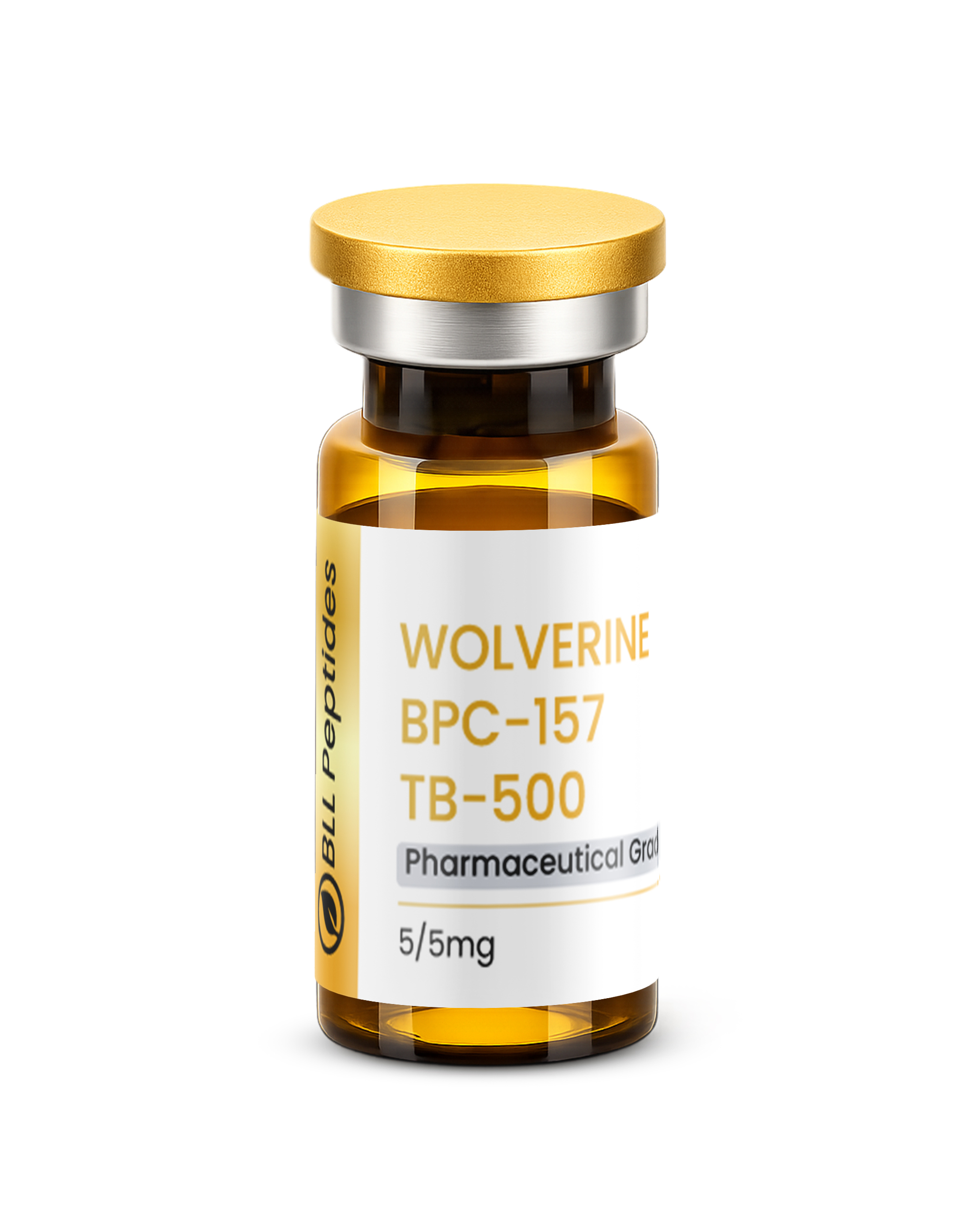
BPC-157 and TB-500 are the two most frequently discussed peptides in tissue repair research, and they are often studied in combination — but understanding why requires working through their mechanisms separately before examining how they interact. BPC-157 activates the FAK-paxillin pathway and upregulates VEGF and the nitric oxide system, creating the vascular and growth factor conditions necessary for tissue regeneration. TB-500 promotes directed cell migration by sequestering G-actin, providing the cellular movement that allows repair processes to reach and populate the injury site. These mechanisms are sequential and complementary: the cell migration TB-500 facilitates operates upstream of the regenerative environment BPC-157 creates. That mechanistic relationship is what makes the combination more than additive.
| Feature | TB-500 | BPC-157 |
|---|---|---|
| Origin | Synthetic fragment of Thymosin Beta-4 | Derived from gastric juice protein BPC |
| Primary Mechanism | Actin sequestration, cell migration | Nitric oxide modulation, angiogenesis |
| Tissue Targets | Muscle, cardiac, connective tissue | GI tract, tendons, ligaments, CNS |
| Anti-inflammatory | Yes | Yes |
| Research Model | Animal models (rodent, equine) | Animal models (rodent, rat) |
| Stacking Potential | High (complementary to BPC-157) | High (complementary to TB-500) |
TB-500 Overview
TB-500 is a synthetic peptide derived from the naturally occurring protein Thymosin Beta-4 (Tβ4), specifically representing the active region responsible for actin binding. Research has shown that Tβ4 plays a crucial role in cellular migration, wound healing, and new blood vessel formation. TB-500’s mechanism centers on its ability to sequester G-actin, thereby facilitating cell motility and tissue regeneration at injury sites.
Preclinical studies in rodent models have demonstrated accelerated healing in muscle and connective tissue injuries. A notable area of TB-500 research involves cardiac tissue, where studies in rat infarction models suggest potential cytoprotective and regenerative properties. Additionally, equine sports medicine has provided substantial observational data on TB-500’s potential in soft tissue recovery.
BPC-157 Overview
BPC-157 is a pentadecapeptide (15 amino acids) derived from a protein found in human gastric juice. It has been studied extensively in rodent models for its apparent ability to promote healing across a remarkably diverse range of tissue types. BPC-157’s primary mechanism appears to involve the modulation of nitric oxide (NO) systems, promotion of angiogenesis, and upregulation of growth factor expression including VEGF.
Research has shown BPC-157 to be particularly effective in gastrointestinal models, where it demonstrates protective and reparative effects on gut mucosa. Beyond the GI tract, published studies have explored its effects on tendon-to-bone healing, ligament repair, and even neuroprotection in CNS injury models — a particularly relevant finding from a neurosurgical perspective.
Head-to-Head Comparison
When comparing TB-500 and BPC-157, the key distinction lies in their primary tissue targets and mechanisms. TB-500 demonstrates a broader systemic reach through its role in the actin cytoskeleton and has shown particular promise in cardiac and large muscle group research. BPC-157, on the other hand, shows remarkable potency across soft tissue, gut, and neurological models.
Both peptides share anti-inflammatory properties, but through different pathways. TB-500 modulates inflammatory cytokines through Tβ4-mediated pathways, while BPC-157 appears to work through NO-dependent and NO-independent mechanisms depending on tissue context.
Research Findings
A 2010 study published in the Journal of Peptide Science demonstrated significant acceleration in wound closure in TB-500-treated animal models compared to controls. Research on BPC-157 published in Current Pharmaceutical Design highlighted its ability to counteract NSAID-induced GI damage while simultaneously accelerating tendon-to-bone interface healing in surgical models.
The stacking of TB-500 and BPC-157 has become a topic of interest in research circles. Given their complementary mechanisms — TB-500 promoting systemic cell migration and BPC-157 providing localized tissue repair and vascular support — the theoretical synergy between them has merit, though direct combination studies in animal models remain limited as of this writing.
Research-Grade TB-500 and BPC-157 at BLL Peptides
For researchers studying these compounds, BLL Peptides offers research-grade formulations of both:
- TB-500 10mg/3mL — High-purity research formulation
- BPC-157 10mg/3mL — Research-grade peptide solution
Conclusion
TB-500 and BPC-157 represent two of the most researched peptides in the tissue repair space. Their distinct yet complementary mechanisms make them individually valuable and potentially synergistic when studied in combination. Researchers should evaluate published literature carefully and source compounds from reputable suppliers for any preclinical investigation.
Further Reading
- BPC-157 Peptide: Mechanisms of Tissue Repair in Research Models
- TB-500 (Thymosin Beta-4): Understanding Its Role in Cellular Recovery Research
- Injury Recovery & Healing: A Complete Guide to Regenerative Peptides
About the Author: Dr. James is a board-certified neurosurgeon trained at Yale University and medical advisor to BLL Peptides.
Related Research
- BPC-157 Peptide: Mechanisms of Tissue Repair in Research Models
- TB-500 (Thymosin Beta-4): Understanding Its Role in Cellular Recovery Research
- Injury Recovery & Healing: A Complete Guide to Regenerative Peptides
- Research-grade TB-500 at BLL Peptides
Research Disclaimer: All content on this page is intended for informational and educational purposes only. TB-500 and BPC-157 are research compounds not approved by the FDA for human use. This article does not constitute medical advice. All research must be conducted in compliance with applicable laws and institutional guidelines.