

Introduction
Thymosin Alpha-1 and TB-500 are sometimes grouped together in discussions of peptide-based recovery, but they operate through pathways that share almost no overlap. Thymosin Alpha-1 is an immune modulator — it acts primarily on dendritic cells and T-cell subsets to enhance adaptive immune surveillance and cytokine coordination. TB-500 is a structural repair compound — its mechanism centers on actin dynamics and directed cell migration at sites of tissue injury. Understanding this distinction matters practically: combining them addresses different aspects of recovery simultaneously, but conflating their mechanisms leads to confused expectations about what each one does. This review examines the research on both compounds with that distinction as the organizing principle.
| Feature | Thymosin Alpha-1 | TB-500 |
|---|---|---|
| Origin | Derived from Thymosin fraction 5 (thymus) | Synthetic fragment of Thymosin Beta-4 |
| Primary Action | Immune modulation (T-cell maturation) | Tissue repair (actin, cell migration) |
| Key Targets | T lymphocytes, NK cells, dendritic cells | Muscle, cardiac, connective tissue |
| Anti-inflammatory | Yes (via immune modulation) | Yes (via cytokine modulation) |
| Clinical Research Status | Human trials (hepatitis B/C, sepsis) | Preclinical (rodent, equine models) |
| Stacking Potential | Complementary with TB-500 | Complementary with Tα1 |
Thymosin Alpha-1 Overview
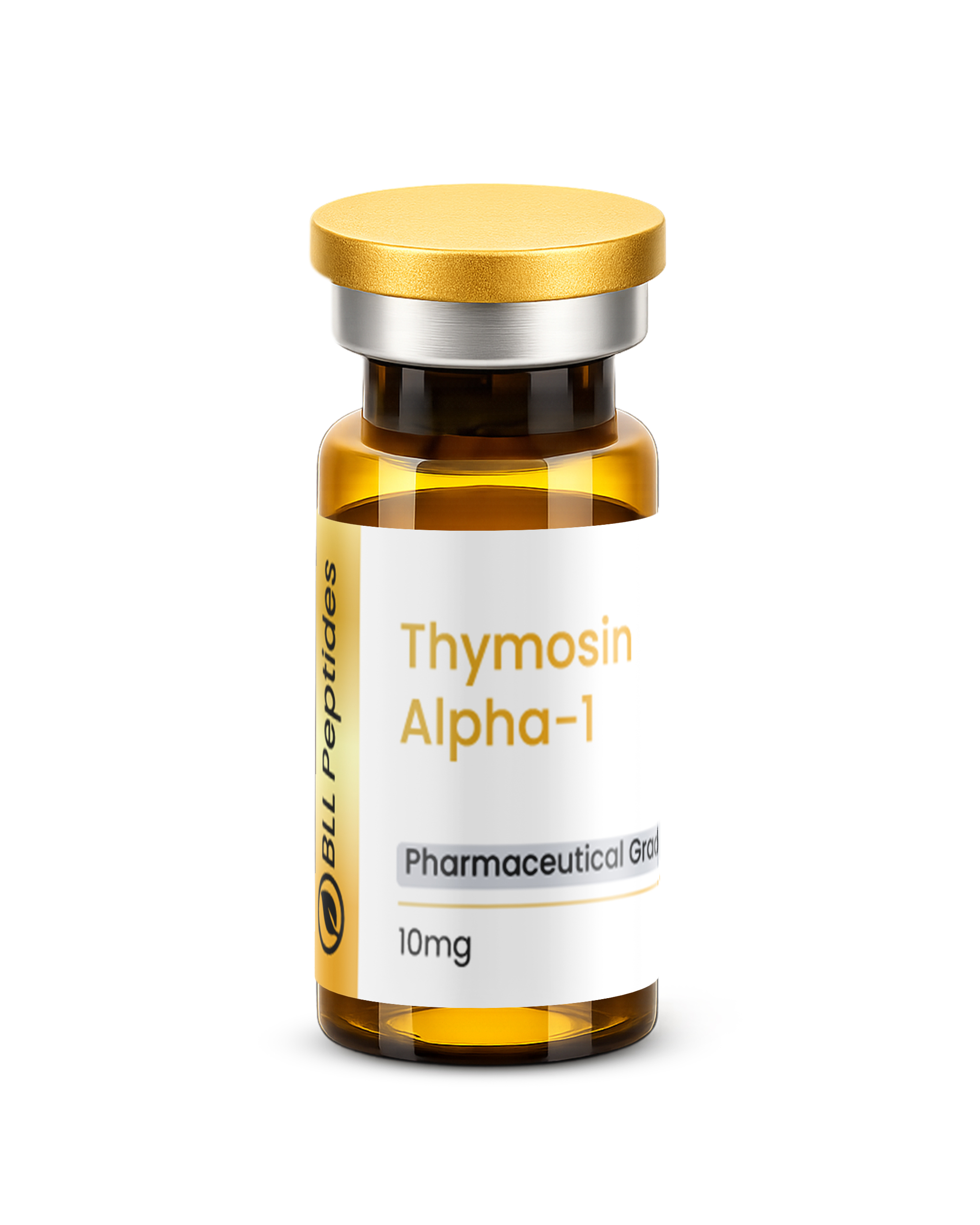
Thymosin Alpha-1 (Tα1) is a 28-amino acid peptide originally isolated from thymosin fraction 5, a biologically active extract of the thymus gland. It has the most extensive clinical research history of any thymosin peptide, with studies conducted in hepatitis B, hepatitis C, HIV, cancer, and sepsis populations. A pharmaceutical form of Tα1 (Zadaxin) is approved in over 30 countries for hepatitis B treatment.
Mechanistically, Tα1 acts as a biological response modifier — it does not stimulate the immune system indiscriminately but rather restores and normalizes immune function in immunocompromised or dysregulated states. Research has shown its effects on T-lymphocyte maturation, natural killer (NK) cell activity, dendritic cell function, and cytokine balance (particularly in favor of Th1 responses). This immune-normalizing profile has generated interest in its use as an adjunct in immunological research models.
TB-500 Overview
TB-500 is a synthetic peptide derived from the active region of Thymosin Beta-4 (Tβ4), a ubiquitous intracellular protein involved in actin cytoskeleton dynamics. Despite sharing the “thymosin” name, TB-500 and Thymosin Alpha-1 have no overlapping mechanisms — they evolved from different branches of the thymosin protein family with fundamentally distinct biological roles.
TB-500’s primary research value lies in its ability to promote cell migration and tissue repair. By sequestering G-actin and facilitating F-actin polymerization dynamics, it enables faster migration of repair cells to sites of injury. Preclinical studies have documented its effects in wound healing, cardiac tissue recovery following infarction, and musculoskeletal regeneration. Anti-inflammatory effects have also been observed, mediated through Tβ4’s ability to downregulate inflammatory gene expression.
Head-to-Head Comparison
Despite sharing nomenclature, Thymosin Alpha-1 and TB-500 operate in non-overlapping biological domains. Tα1 is fundamentally an immunological research tool — its value lies in modulating adaptive and innate immune responses, making it relevant to infection models, oncology research, and immunodeficiency studies. TB-500 is a regenerative research tool — its value lies in accelerating tissue repair, reducing recovery time in injury models, and promoting angiogenesis.
This complementarity is precisely what makes the combination of Tα1 and TB-500 an area of emerging research interest. In scenarios where tissue damage is accompanied by immune compromise or dysregulation — such as post-surgical recovery, chronic injury models, or conditions involving both local tissue damage and systemic immune disruption — the simultaneous study of immune normalization (Tα1) and tissue repair (TB-500) may yield synergistic insights.
Research Findings
Thymosin Alpha-1’s clinical research base is among the most robust of any research peptide. Multiple randomized controlled trials have investigated its immunomodulatory effects. A pivotal multi-center trial published in Hepatology demonstrated significant improvements in seroconversion rates in chronic hepatitis B patients treated with Tα1 compared to controls. Separately, research in sepsis models — both animal and human — has explored Tα1’s ability to restore immune competence in states of immune paralysis.
TB-500’s research base, while primarily preclinical, is extensive. Studies in rodent models of cardiac infarction have demonstrated measurable improvements in cardiac function metrics with Tβ4/TB-500 treatment. In wound healing models, accelerated closure and improved angiogenesis have been consistently reported. The compound’s safety profile in animal models has been favorable, with no significant toxicological findings reported at research doses.
Combination studies involving both Tα1 and TB-500 remain limited in the published literature, but the theoretical rationale for stacking — immune normalization paired with structural tissue repair — is compelling and represents an active area of inquiry in research circles.
Research-Grade Thymosin Alpha-1 and TB-500 at BLL Peptides
BLL Peptides provides research-grade formulations of both compounds for qualified researchers:
Conclusion
Thymosin Alpha-1 and TB-500 represent two distinct and complementary arms of peptide research: immune modulation and tissue repair. Their shared “thymosin” name belies entirely different mechanisms, targets, and research applications. Together, they offer researchers a powerful pair of tools for investigating the intersection of immune function and structural recovery. Each has a substantial and growing body of supporting literature, and their theoretical synergy makes them among the most intriguing combination protocols currently under investigation in preclinical research.
Further Reading
- TB-500 (Thymosin Beta-4): Understanding Its Role in Cellular Recovery Research
- Detoxification & Immune Support: A Complete Guide to Glutathione
- Injury Recovery & Healing: A Complete Guide to Regenerative Peptides
About the Author: Dr. James is a board-certified neurosurgeon trained at Yale University and medical advisor to BLL Peptides.
Related Research
- TB-500 (Thymosin Beta-4): Understanding Its Role in Cellular Recovery Research
- TB-500 vs BPC-157: What the Research Shows About These Two Healing Peptides
- Injury Recovery & Healing: A Complete Guide to Regenerative Peptides
- Research-grade Thymosin Alpha-1 at BLL Peptides
Research Disclaimer: All content on this page is intended for informational and educational purposes only. Thymosin Alpha-1 and TB-500 are research compounds. Thymosin Alpha-1 (as Zadaxin) holds regulatory approval in some countries for specific indications; however, this article does not constitute medical advice or treatment recommendations. All research must be conducted in compliance with applicable regulations, institutional review standards, and ethical guidelines.