
Tirzepatide vs Semaglutide: A Research Comparison of Dual GIP/GLP-1 vs Selective GLP-1 Mechanisms
·

Research and educational content authored by Dr. James Nguyen, board-certified neurosurgeon and scientific advisor to BLL Peptides. For research and educational purposes only. Not for human or animal use.
Among the most closely studied peptide compounds in contemporary metabolic research, tirzepatide and semaglutide stand out for their effects on incretin receptor pathways. Yet these two molecules differ substantially in their mechanism, receptor targeting, and observed outcomes in preclinical and clinical research. This comparison explores what the current literature reveals about each compound and why researchers are increasingly studying them side by side.
Mechanism: Dual Agonist vs. Selective GLP-1 Agonist
Semaglutide is a selective GLP-1 (glucagon-like peptide-1) receptor agonist. It mimics endogenous GLP-1, binding to the GLP-1 receptor to potentiate glucose-dependent insulin secretion, suppress glucagon, slow gastric emptying, and signal satiety to the brain. Semaglutide’s modifications — including fatty acid attachment and amino acid substitutions at positions 8, 26, and 34 — give it an extended half-life compared to native GLP-1 and resistance to DPP-4 enzymatic degradation.
Tirzepatide takes a fundamentally different approach. It is a dual agonist that activates both the GLP-1 receptor and the GIP (glucose-dependent insulinotropic polypeptide) receptor. GIP is another incretin hormone that, in combination with GLP-1 signaling, produces a compounded effect on insulin secretion and adipose tissue metabolism. The dual mechanism means tirzepatide engages two distinct but complementary pathways simultaneously — a feature that appears to account for its differentiated effect profile in research models.
This distinction — selective GLP-1 vs. dual GIP/GLP-1 agonism — is the foundational difference that makes these two compounds scientifically distinct, not merely variations of the same drug class.
Clinical Trial Programs: SURPASS vs. STEP
The STEP Program (Semaglutide): The STEP trials enrolled thousands of participants. STEP 1 demonstrated approximately 14.9% mean body weight reduction over 68 weeks at 2.4 mg weekly dosing. STEP 5 extended follow-up to 104 weeks, showing sustained metabolic effects. The STEP program established semaglutide as one of the most comprehensively studied GLP-1 receptor agonists in the literature.
The SURPASS Program (Tirzepatide): The SURPASS trials tested tirzepatide at 5 mg, 10 mg, and 15 mg in type 2 diabetes populations. SURMOUNT-1 demonstrated 20.9% mean body weight reduction at the 15 mg dose over 72 weeks. SURPASS-2 directly compared tirzepatide against semaglutide 1 mg, finding superior HbA1c reduction with tirzepatide across all three doses tested.
Weight Reduction Research Data
- Semaglutide 2.4 mg (STEP 1, 68 weeks): ~14.9% mean body weight reduction
- Tirzepatide 5 mg (SURMOUNT-1, 72 weeks): ~15.0% mean body weight reduction
- Tirzepatide 10 mg (SURMOUNT-1): ~19.5% mean body weight reduction
- Tirzepatide 15 mg (SURMOUNT-1): ~20.9% mean body weight reduction
The GIP receptor contribution to adipose tissue metabolism appears to play a meaningful role. GIP receptors are expressed on adipocytes, and GIP signaling influences fat storage and mobilization independently of the GLP-1 pathway. Researchers hypothesize that tirzepatide’s superior outcomes in research models stem partly from this adipose-targeted mechanism that semaglutide does not engage.
Half-Life and Dosing in Research Models
Semaglutide has a plasma half-life of approximately 165-184 hours (roughly one week), enabling once-weekly dosing in clinical research models. Half-life extension is achieved through C18 fatty acid linker albumin binding and DPP-4 resistance.
Tirzepatide has an approximately 5-day (120-hour) half-life, also supporting once-weekly dosing protocols. Its half-life extension involves C20 fatty diacid attachment through a gamma-glutamic acid linker and mini-PEG spacer — similar concept to semaglutide but structurally distinct.
Structural Biology
Semaglutide is a GLP-1 analog with 94% amino acid identity to native human GLP-1(7-37), with critical modifications preserving GLP-1 receptor selectivity while extending circulation time.
Tirzepatide is a “twincretin” — a single synthetic 39-amino-acid peptide engineered to activate both GIP and GLP-1 receptors with balanced potency. Its backbone is GIP-derived with modifications that confer GLP-1 receptor binding. This represents a structurally novel peptide class distinct from pure GLP-1 analogs.
Research Applications
- Metabolic research: Glucose homeostasis, insulin sensitivity, HbA1c modulation, beta-cell function
- Adipose biology: Fat mass changes, adipokine signaling, visceral vs. subcutaneous fat composition
- Cardiovascular research: Semaglutide’s SELECT trial demonstrated cardiovascular outcome data; tirzepatide’s SURPASS-CVOT is ongoing
- Neurological research: Both compounds act on CNS GLP-1 receptors; researchers investigate effects on appetite-regulating neural circuits and potential neuroprotective properties
- Hepatic research: Non-alcoholic fatty liver disease models are an active area for both compounds
Summary for Researchers
- Tirzepatide: dual GIP/GLP-1 mechanism vs. semaglutide’s selective GLP-1 activity
- Research data shows greater metabolic effects with tirzepatide at equivalent timepoints
- Both compounds support once-weekly dosing in research models
- GIP receptor biology — particularly adipose-specific effects — is a major driver of tirzepatide research interest
- Semaglutide has a larger published cardiovascular outcomes dataset
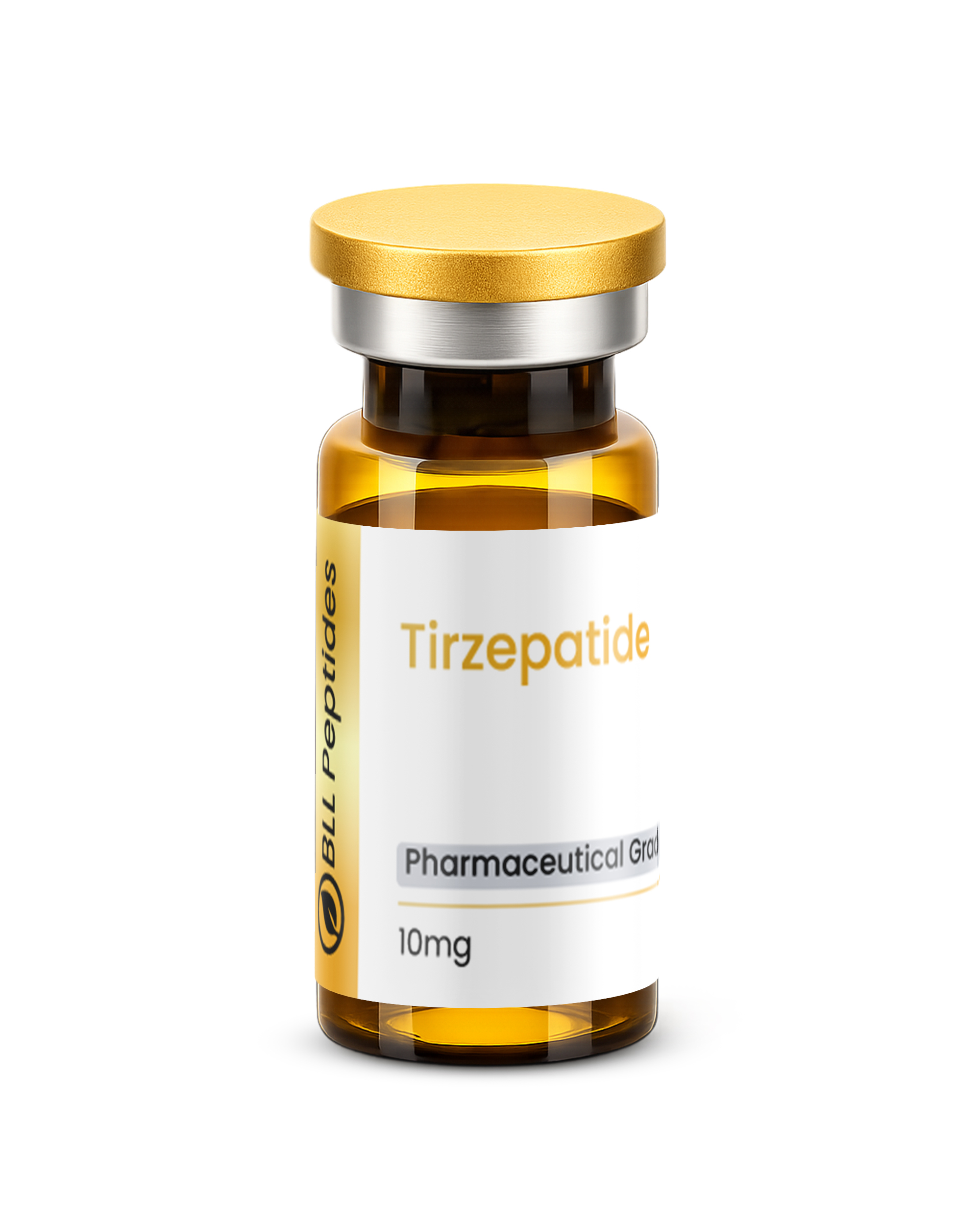
BLL Peptides supplies both tirzepatide (10mg, 15mg, 30mg) and semaglutide (5mg, 10mg) for laboratory research, USA-manufactured to 98%+ purity with Certificate of Analysis for every batch.
Disclaimer: All BLL Peptides products are strictly for laboratory research and development. Not for human or animal use. Not FDA-evaluated. Not a drug, dietary supplement, or medical device. This content is authored by Dr. James Nguyen for research and educational purposes only.