
GHK-Cu Peptide Research: What Scientists Are Discovering About This Copper Tripeptide and Tissue Regeneration
·

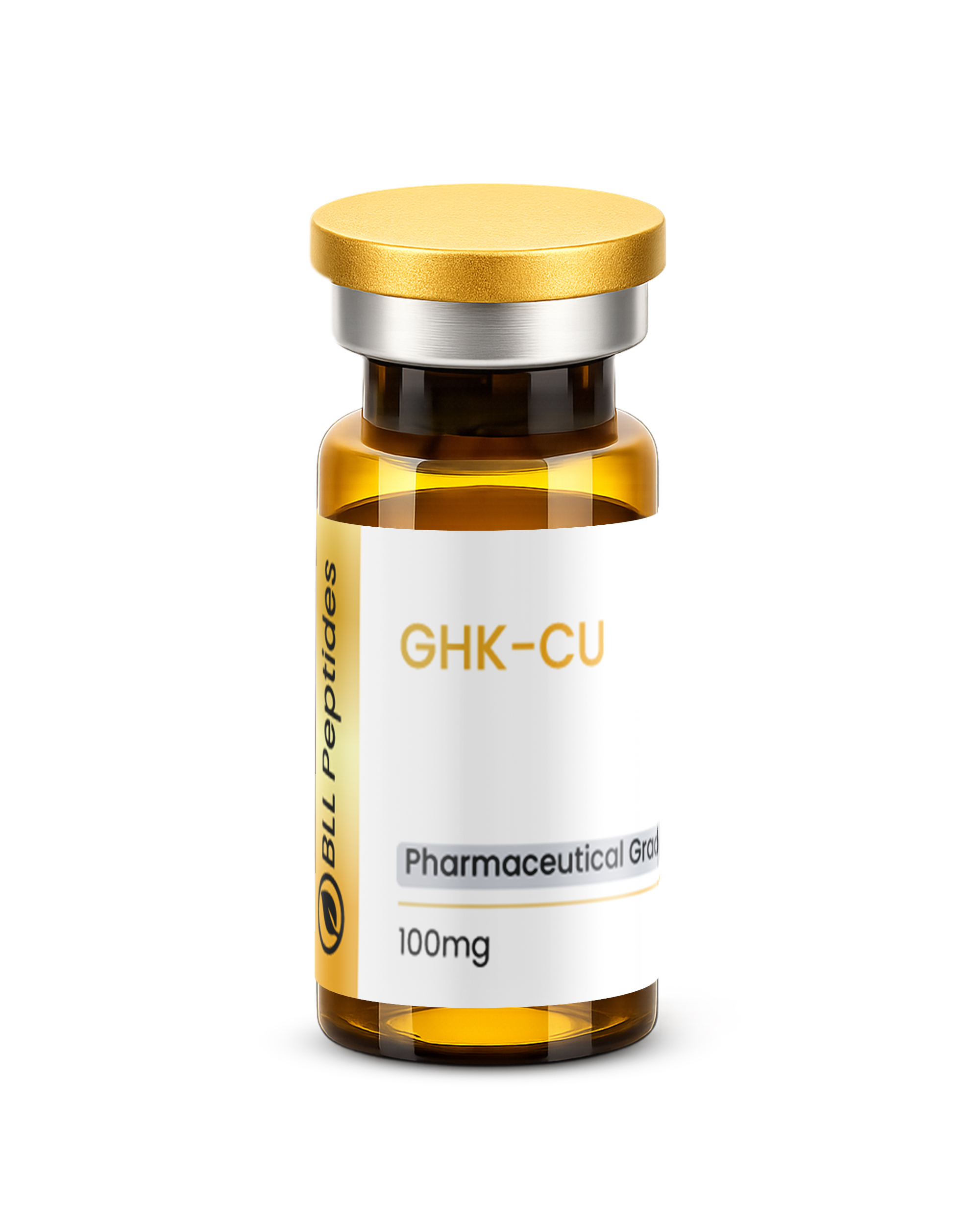
There’s a peptide I keep coming back to — not because it’s flashy or newly synthesized, but because the more I read the research, the more remarkable its biological profile becomes. GHK-Cu, a naturally occurring copper tripeptide, has been quietly accumulating decades of scientific attention, and what researchers are finding touches on everything from wound repair to neurological protection.
GHK-Cu (glycyl-L-histidyl-L-lysine copper) is a tripeptide that naturally occurs in human plasma, saliva, and urine. It binds copper(II) ions and appears to act as a biological signal for tissue repair and regeneration. Researchers have identified it as a potent activator of wound healing pathways, antioxidant defense, and potentially, gene expression modulation across hundreds of biological processes.
What Is GHK-Cu?
GHK-Cu was first isolated in 1973 by Loren Pickart, who identified it in human plasma as a fraction capable of stimulating liver tissue restoration. The peptide itself — glycine, histidine, lysine — is remarkably small, yet its biological reach is anything but. It forms a stable complex with copper(II), a trace element essential for enzymatic function, collagen synthesis, and antioxidant activity.
What makes GHK-Cu particularly interesting from a research standpoint is its apparent role as a biological “reset” signal. Plasma levels of GHK-Cu are estimated around 200 ng/mL in young adults, dropping significantly with age — and researchers have proposed that this decline may be linked to the reduction in regenerative capacity observed in aging tissues.
As a neurosurgeon, I find it especially compelling that GHK-Cu’s influence extends well beyond skin and connective tissue. The scientific literature points toward neurological applications that are only now beginning to be systematically explored.
How GHK-Cu Works: The Mechanism Behind the Research
The biological activity of GHK-Cu appears to operate through several overlapping mechanisms. Research has demonstrated its ability to:
- Stimulate collagen and glycosaminoglycan synthesis — critical for extracellular matrix remodeling
- Activate antioxidant enzymes including superoxide dismutase and catalase
- Modulate gene expression across a surprisingly wide range of pathways
- Promote angiogenesis — the formation of new blood vessels to support healing tissue
- Exhibit anti-inflammatory activity by suppressing TNF-alpha and other pro-inflammatory signals
A landmark gene expression analysis by Pickart and Margolina found that GHK-Cu can reset the gene expression profile of aging or damaged human fibroblasts toward a more youthful state. In one study, GHK-Cu influenced the expression of over 31% of all human genes with established relevance to biological processes — a staggering breadth of potential activity for a three-amino-acid peptide.
The copper component isn’t merely structural. Cu(II) is a required cofactor for lysyl oxidase, the enzyme responsible for cross-linking collagen and elastin. Without adequate copper activity, connective tissue integrity suffers — and GHK-Cu appears to act as a targeted copper delivery system, shuttling this essential mineral precisely where biological repair demands it.
What the Research Shows: Key Scientific Findings
The published literature on GHK-Cu spans multiple decades and disciplines. Here are some of the more compelling findings scientists have documented:
Wound Healing and Skin Repair
Multiple preclinical studies have demonstrated GHK-Cu’s ability to accelerate wound closure. A 2010 review in Skin Pharmacology and Physiology noted that GHK-Cu accelerates wound healing and improves the quality of healed tissue, including increased collagen and elastin production. Researchers observed improved tensile strength in healed wounds when GHK-Cu was present.
Neurological and Neuroprotective Potential
This is the area that caught my attention most directly. Emerging research suggests GHK-Cu may have meaningful roles in nervous system protection. Studies have shown it can suppress the expression of genes associated with neurodegeneration and oxidative damage. In Alzheimer’s disease pathway analysis, GHK-Cu has been shown to downregulate genes associated with amyloid plaque formation and neuroinflammation — though human trials in this context remain in early stages.
A 2012 study published in PLoS ONE examined GHK-Cu’s ability to reverse gene expression changes associated with metastatic colon cancer, lung cancer, and aging in human cells. The breadth of influence on gene networks — particularly those governing oxidative stress and inflammation — has made it a subject of significant interest in aging and neurological research.
Antioxidant and Anti-Inflammatory Activity
Chronic inflammation and oxidative stress are underlying drivers of most degenerative conditions — including the ones I deal with most in neurosurgical practice. GHK-Cu has demonstrated the ability to suppress TNF-alpha-induced oxidative damage and increase the expression of antioxidant enzymes. Research indicates that GHK-Cu may activate the Nrf2 pathway, one of the body’s primary cellular defense systems against oxidative stress.
Hair Follicle Research
Beyond wound repair and neuroprotection, GHK-Cu has received considerable attention in hair biology. Studies suggest it can stimulate hair follicle size, prolong the anagen (growth) phase, and suppress follicle regression signals. A 1993 study by Uno et al. found that GHK-Cu significantly increased follicle size in macaque models compared to controls.
For those interested in the broader landscape of peptide research, comparing GHK-Cu with other tissue-repair-focused compounds is instructive. BPC-157, for instance, has similarly captured researcher interest for its effects on connective tissue and angiogenesis — though its mechanisms differ substantially from the copper-dependent pathways GHK-Cu activates. Likewise, TB-500 (Thymosin Beta-4) operates on actin-mediated cellular migration, representing yet another distinct pathway in the tissue repair research space.
GHK-Cu and Aging: A Research Perspective
One of the most intriguing aspects of GHK-Cu research is its relationship to the aging process itself. As mentioned, plasma GHK-Cu concentrations decline with age — from roughly 200 ng/mL in young adults to below 80 ng/mL in individuals over 60. Researchers have speculated that this decline may contribute to reduced regenerative capacity, increased inflammation, and the gradual breakdown of tissue architecture that characterizes biological aging.
A 2015 review by Pickart, Vasquez-Soltero, and Margolina in Biomolecules examined GHK-Cu’s potential role in resetting age-related gene expression changes, concluding that “GHK’s ability to activate numerous repair and protective systems suggests that it acts as a master regulator of repair and protection.” You can find a referenced overview of GHK research on PubMed here.
This positions GHK-Cu not as a single-target molecule but as a broad biological signal — something that tells aging or damaged tissue to shift back toward repair mode. Whether that signal can be therapeutically harnessed remains an active area of investigation.
Researchers interested in mitochondrial aging pathways may also find it useful to compare GHK-Cu’s gene-modulatory effects with those of NAD+, another compound that has garnered substantial scientific attention for its role in cellular energy metabolism and repair signaling.
Where GHK-Cu Research Stands Today
The scientific literature on GHK-Cu is robust in preclinical and in vitro settings, with a growing body of topical application studies in humans — particularly in dermatology. Systemic research, including neurological applications and broader aging biology, remains largely preclinical but is advancing.
What I find most intellectually honest to say is this: GHK-Cu is not a molecule with a single studied effect. It is a signaling compound with unusually broad biological reach, and the research community is still working to understand the full scope of what that means. The findings so far are compelling enough to justify ongoing investigation — and that’s precisely why it continues to attract serious scientific interest.
Frequently Asked Questions About GHK-Cu Research
What does GHK-Cu stand for?
GHK-Cu stands for glycyl-L-histidyl-L-lysine copper. It’s a naturally occurring tripeptide that forms a stable complex with copper(II) ions. It was first identified in human plasma in 1973 and has since become a subject of substantial biomedical research interest.
What areas of biology does GHK-Cu research focus on?
Published research on GHK-Cu has examined wound healing, collagen synthesis, antioxidant activity, hair follicle biology, anti-inflammatory signaling, neuroprotection, and gene expression modulation. It is one of the more broadly studied naturally occurring peptides in the regenerative biology literature.
How does GHK-Cu relate to aging in the research literature?
Research has documented a significant age-related decline in plasma GHK-Cu levels. Scientists have proposed that this decline may contribute to reduced tissue repair capacity and increased systemic inflammation with age. Studies have examined GHK-Cu’s potential to reverse age-associated gene expression patterns, though this research is ongoing.
Is GHK-Cu the same as copper peptide?
GHK-Cu is the most widely studied copper peptide, and the term “copper peptide” in scientific and cosmetic contexts often refers specifically to GHK-Cu. However, copper peptides as a category include other peptide-copper complexes. GHK-Cu is unique in its natural occurrence in human biology and the extent of published research backing its activity.
What is the difference between GHK-Cu and BPC-157 in research?
Both peptides have been studied for tissue repair effects, but their mechanisms differ substantially. GHK-Cu acts primarily through copper-dependent enzymatic activation, collagen stimulation, and broad gene expression modulation. BPC-157 (Body Protective Compound 157) has been studied primarily for its effects on angiogenesis, tendon/ligament repair, and gastrointestinal protection through growth factor pathways. They represent distinct molecular strategies in regenerative peptide research.
About the Author
Dr. James is a practicing neurosurgeon and member of the BLL Peptides research and advisory team. His clinical background spans over a decade of surgical neurology, with a growing research focus on neuroprotective compounds, regenerative biology, and the molecular mechanisms underlying tissue repair. He writes to bridge the gap between emerging peptide science and those who want to understand what the research actually says — without the hype.
This content is intended for research purposes only. BLL Peptides products are not intended for human consumption.