LL-37 Peptide Research: What Scientists Are Learning About the Body’s Natural Antimicrobial Defense
·

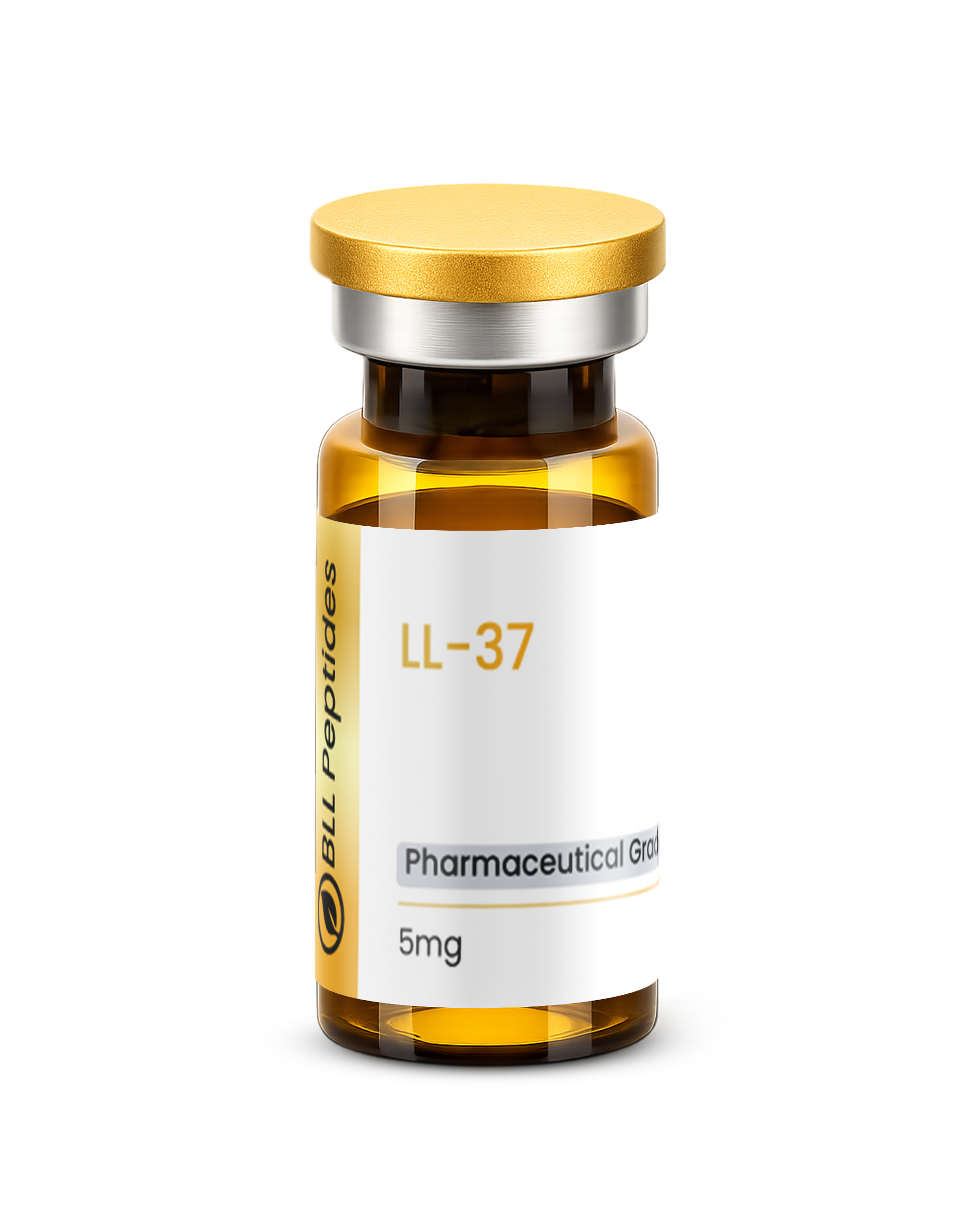
The human body already makes its own broad-spectrum antimicrobial compound. After years in neurosurgery — managing post-operative infections, watching the immune system either hold the line or fold under pressure — that fact still strikes me as remarkable. We pour billions into external antibiotics each year, yet one of the most powerful defense molecules was inside us the whole time. That molecule is LL-37.
LL-37 is a 37-amino-acid cathelicidin peptide naturally produced by the human body. Encoded by the CAMP gene, it serves as a first-line innate immune defender — capable of disrupting bacterial membranes, modulating inflammatory signaling, and influencing wound repair. Researchers have been studying LL-37’s role in conditions ranging from chronic infections to autoimmune disorders, and the early data is generating serious scientific interest.
What Is LL-37?
LL-37 is the only known cathelicidin expressed in humans. It is derived from the precursor protein hCAP18 (human cationic antimicrobial protein, 18 kDa), stored primarily in neutrophil granules and secreted by epithelial cells throughout the body — skin, gut, lungs, and beyond.
The name reflects its structure: two leucine (L) residues at the N-terminus and 37 total amino acids. But beyond its antimicrobial action, LL-37 is increasingly recognized as a multifunctional immune modulator — not simply a peptide that kills pathogens, but one that communicates with the immune system in surprisingly sophisticated ways.
How LL-37 Works: Mechanisms Under Study
Researchers have identified several proposed mechanisms by which LL-37 exerts its effects in preclinical models:
- Membrane disruption: LL-37 carries a net positive charge that allows it to bind to negatively charged bacterial membranes, destabilizing them and leading to cell death — even in some antibiotic-resistant strains.
- Toll-like receptor modulation: Studies suggest LL-37 can influence TLR4 and TLR9 signaling, shaping the inflammatory cascade rather than simply triggering it.
- Wound healing signaling: In vitro research shows LL-37 promotes keratinocyte migration and proliferation — a key step in tissue repair and re-epithelialization.
- Anti-biofilm activity: Biofilms represent one of the most stubborn challenges in infection management. Early research indicates LL-37 may interfere with biofilm formation in certain bacterial species.
As a neurosurgeon who has managed post-operative infections firsthand, the anti-biofilm angle alone is something I find clinically fascinating — even if most of this work remains at the preclinical stage. When you’ve watched a biofilm compromise a surgical site, you develop a very personal interest in what might stop it.
What the Research Shows
The LL-37 literature has grown steadily over the past two decades. Key data points from published research include:
- A comprehensive review on PubMed noted that LL-37 demonstrates broad-spectrum antimicrobial activity against gram-positive and gram-negative bacteria, fungi, and enveloped viruses, while simultaneously influencing both innate and adaptive immune responses.
- Research has shown that LL-37 deficiency is associated with increased susceptibility to certain skin infections, including those seen in atopic dermatitis patients — a population where cathelicidin expression is measurably reduced.
- In wound-healing models, LL-37 has been observed to accelerate re-epithelialization by up to 50% compared to controls in some in vitro studies, suggesting a meaningful role in tissue repair signaling.
The peptide doesn’t just fight — it regulates. That distinction matters enormously in how researchers are modeling its potential applications.
Key Research Findings
- LL-37 levels are measurably lower in patients with chronic wounds and certain inflammatory skin conditions
- Animal models have shown LL-37 suppresses NF-κB-driven inflammatory signaling under specific conditions
- The peptide appears to possess angiogenic properties — stimulating new blood vessel formation in preclinical wound models
- LL-37 has shown selective cytotoxic activity against certain cancer cell lines in early laboratory studies, though this area remains highly preliminary
- Emerging research suggests LL-37 may cross-talk with the gut microbiome, influencing mucosal immunity in ways researchers are still mapping
That last point — the gut-immune connection — is something I’ve come to pay close attention to. As someone with a background in neurosurgery, I’m acutely aware of the gut-brain axis. Any peptide touching mucosal immunity is worth watching carefully. We’re only beginning to understand how these ancient defense molecules talk to the rest of the body.
LL-37 in the Context of Peptide Research
If you’ve been following this blog, LL-37 fits naturally alongside other immune-modulating peptides we’ve examined. Thymosin Alpha-1 operates upstream in the adaptive immune system — while LL-37 is a front-line innate responder. These pathways are complementary in how researchers model systemic immune support.
Researchers studying BPC-157 have examined its role in gut mucosal healing — a tissue environment where LL-37 is also naturally expressed and active. Meanwhile, NAD+ research has pointed to its role in supporting the cellular energy demands of immune cells, including the very neutrophils that produce and release LL-37 upon pathogen challenge.
None of this implies these compounds work in proven concert clinically. But understanding where they operate in the immune landscape helps frame the research questions worth asking next.
BLL Peptides provides research-grade peptides including BPC-157 and TB-500 for laboratory and investigational use. All products are USA-manufactured and GMP-certified.
Frequently Asked Questions About LL-37 Research
What is LL-37 peptide?
LL-37 is a 37-amino-acid cathelicidin peptide naturally produced by the human body. It plays a key role in innate immunity, antimicrobial defense, and inflammatory regulation, and has been the subject of extensive preclinical research over the past two decades.
What has research shown about LL-37 and wound healing?
Preclinical studies have observed that LL-37 promotes keratinocyte migration, stimulates angiogenesis, and may accelerate tissue re-epithelialization. These findings come from in vitro and animal models; human clinical applications remain under active investigation.
Is LL-37 deficiency linked to disease?
Research has associated reduced LL-37 expression with increased susceptibility to skin infections, chronic wounds, and inflammatory conditions such as atopic dermatitis. The relationship between deficiency and disease causality is still being studied.
How does LL-37 differ from traditional antibiotics?
Unlike traditional antibiotics that target specific bacterial metabolic pathways, LL-37 disrupts bacterial membranes through a physical charge-based mechanism. This broad-spectrum action is of significant research interest in the context of antibiotic-resistant organisms, though LL-37 remains a research-stage compound.
Where can researchers source LL-37 for study?
LL-37 is available as a research peptide from specialized suppliers. BLL Peptides offers a range of research-grade compounds, including BPC-157 and TB-500, for qualified research purposes only.
About the Author
Dr. James is a board-certified neurosurgeon and member of the BLL Peptides medical advisory team. His clinical background in surgical recovery, neurological repair, and immune response has shaped a deep interest in peptide biology and regenerative research. He writes for the BLL Peptides blog to bring a physician’s perspective to the evolving science of peptides.
This content is intended for research purposes only. BLL Peptides products are not intended for human consumption.