
KPV Peptide Research: What a Three-Amino-Acid Fragment Reveals About Gut Inflammation
·

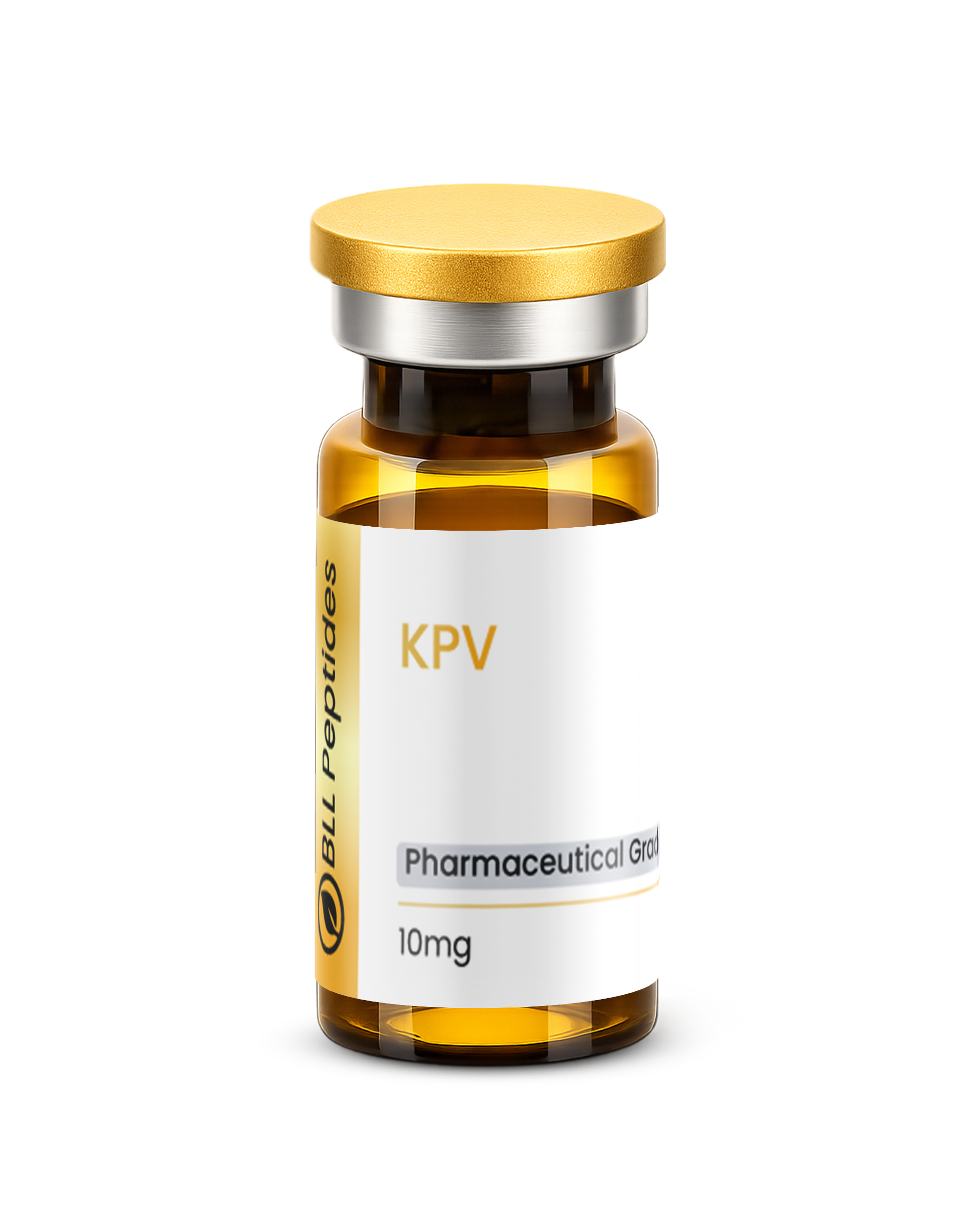
Three amino acids. That’s it — lysine, proline, valine, strung together in a sequence so short you’d be forgiven for dismissing it as chemically insignificant. The first time I encountered KPV peptide research in the literature, I almost did exactly that. Then I read what this tripeptide does to NF-κB signaling in inflamed gut tissue, and I started paying much closer attention. A compound this small shouldn’t be this interesting. And yet here we are.
KPV is a C-terminal tripeptide fragment of alpha-melanocyte-stimulating hormone (α-MSH), consisting of lysine (K), proline (P), and valine (V), that has demonstrated potent anti-inflammatory activity in preclinical models through melanocortin receptor activation and direct NF-κB pathway inhibition. Despite its minimal size, KPV retains much of α-MSH’s immune-modulating function while offering a smaller, potentially more bioavailable profile that researchers have studied in the context of gut inflammation, wound healing, and systemic immune regulation.
What Is KPV?
Alpha-MSH is a 13-amino-acid neuropeptide produced primarily by the pituitary gland and keratinocytes, well known for its roles in pigmentation and appetite regulation. But its biological reach extends far beyond those functions — α-MSH is also a potent endogenous anti-inflammatory signal, acting through melanocortin receptors (MCRs) expressed throughout immune cells, the gut epithelium, and the central nervous system.
KPV represents the C-terminal tripeptide of α-MSH (residues 11–13). Researchers discovered that this short fragment retains α-MSH’s anti-inflammatory activity despite lacking the N-terminal acetyl group and most of the peptide’s sequence. This finding was significant: it suggested that the bioactive “core” of α-MSH’s immune-modulating function is concentrated in just three residues — a discovery with real implications for targeted research into inflammatory disease models.
As a neurosurgeon, I find the gut-brain axis relevance here particularly notable. The gut is sometimes called the “second brain,” and neuroinflammation research increasingly implicates gut permeability and mucosal immune dysregulation in CNS conditions. A peptide that modulates gut mucosal inflammation through a mechanism rooted in neuropeptide biology sits at exactly the intersection that interests me most.
How KPV Works: Mechanisms Under Study
Preclinical research has identified several proposed mechanisms behind KPV’s anti-inflammatory activity:
- Melanocortin receptor activation: KPV binds to MC1R and MC3R — receptor subtypes expressed on immune cells, gut epithelial cells, and macrophages — triggering downstream cAMP signaling that dampens pro-inflammatory cytokine production.
- Direct NF-κB inhibition: Studies have shown KPV can suppress NF-κB nuclear translocation in intestinal epithelial cells independently of receptor binding, suggesting a dual mechanism of action that may explain its potency relative to its size.
- Cytokine modulation: In cell-based models, KPV has been observed to reduce the production of TNF-α, IL-1β, and IL-6 — three of the primary pro-inflammatory cytokines that drive mucosal damage in gut inflammatory models.
- Epithelial barrier support: Some research suggests KPV may help maintain tight junction integrity in intestinal epithelial cells under inflammatory stress — a finding of particular interest given what we know about gut permeability and systemic inflammation.
The direct NF-κB inhibition pathway is what I keep returning to. NF-κB is arguably the central hub of inflammatory gene transcription — its dysregulation is implicated in conditions ranging from IBD to certain neurodegenerative diseases. A three-amino-acid peptide influencing that pathway is a research finding worth taking seriously.
What the Research Shows
The KPV literature, while still predominantly preclinical, has produced some notable findings. A key study published in the Journal of Pharmacology and Experimental Therapeutics demonstrated that KPV significantly reduced intestinal inflammation in experimental colitis models, with measurable reductions in inflammatory markers and epithelial damage scores compared to controls — findings that helped establish KPV as a research-priority compound in gut inflammation biology.
Additional research has documented:
- KPV reduced TNF-α and IL-6 production by up to 50% in activated macrophage cell cultures in some in vitro models, suggesting meaningful immunomodulatory potency at the cellular level
- Topical KPV application in wound models demonstrated accelerated re-epithelialization and reduced inflammatory infiltrate compared to untreated controls — extending its research relevance beyond the gut
- KPV’s small molecular size is hypothesized to confer better mucosal penetration compared to full-length α-MSH, making it a subject of oral delivery research in IBD models
The fact that a three-amino-acid fragment can replicate meaningful portions of a 13-residue neuropeptide’s anti-inflammatory function is not just pharmacologically interesting — it’s a window into how peptide bioactivity is organized and how selectively it can be studied.
Key Research Findings
- KPV activates MC1R and MC3R melanocortin receptors, triggering anti-inflammatory cAMP signaling in immune and epithelial cells
- Direct NF-κB inhibition has been documented in intestinal epithelial cells independent of receptor activation — a dual-mechanism finding that distinguishes KPV from many receptor-dependent peptides
- Preclinical colitis models show reduced inflammatory markers, improved histological scoring, and maintained epithelial barrier integrity with KPV treatment
- KPV has demonstrated wound-healing activity in topical application studies, consistent with α-MSH’s established role in skin repair and immune modulation
- Its tripeptide structure makes it one of the smallest bioactive anti-inflammatory research peptides currently under active investigation, with implications for stability, penetration, and delivery research
For researchers studying the intersection of neuropeptide biology and gut immunology, KPV occupies a uniquely accessible corner of the literature — small enough to study with precision, biologically active enough to generate meaningful data.
KPV in the Broader Peptide Research Landscape
KPV research connects naturally to several areas that peptide researchers study in parallel. The gut mucosal focus overlaps significantly with BPC-157 research, where cytoprotective effects in the gastrointestinal tract have been among the most replicated findings in the preclinical literature. Both peptides have been studied in gut inflammation models — BPC-157 primarily through growth factor pathway modulation, KPV through melanocortin receptor and NF-κB signaling. The mechanisms are distinct; the tissue of interest overlaps considerably.
The immune-modulating angle in KPV research also connects to the broader immunoregulatory literature, including work on TB-500, whose actin-binding and tissue repair mechanisms have been studied in inflammatory resolution models. And NAD+ research intersects here meaningfully — NAD+ is required for SIRT1 activation, which in turn modulates NF-κB transcriptional activity, creating a potential research connection point between mitochondrial redox biology and the NF-κB pathway that KPV has been shown to influence.
BLL Peptides offers research-grade compounds including:
- 🔬 BPC-157 (10mg/3ml) — studied extensively for gut mucosal protection and cytoprotective signaling
- 🔬 TB-500 (10mg/3ml) — research peptide studied for tissue repair and inflammatory resolution
- 🔬 NAD+ (500mg/10ml) — central coenzyme in mitochondrial metabolism with NF-κB-intersecting signaling research
All products are USA-manufactured, GMP-certified, and intended strictly for research purposes.
Frequently Asked Questions About KPV Peptide Research
What is KPV peptide?
KPV is a tripeptide consisting of lysine (K), proline (P), and valine (V) — the C-terminal three amino acids of alpha-melanocyte-stimulating hormone (α-MSH). It is the smallest known fragment of α-MSH to retain meaningful anti-inflammatory bioactivity in preclinical models, acting through melanocortin receptor activation and direct NF-κB pathway inhibition.
What has research shown about KPV and gut inflammation?
Preclinical studies in experimental colitis models have shown that KPV reduces inflammatory markers including TNF-α and IL-6, improves histological scoring of mucosal damage, and may support epithelial barrier integrity. These findings have made KPV a subject of ongoing research interest in inflammatory bowel disease biology, though robust clinical human data remains limited.
How does KPV differ from alpha-MSH?
Alpha-MSH is a 13-amino-acid neuropeptide with multiple biological roles including pigmentation, appetite regulation, and immune modulation. KPV is just its three C-terminal amino acids, retaining the anti-inflammatory function without the full peptide structure. Its smaller size is hypothesized to improve mucosal penetration and molecular stability under certain research conditions compared to the parent molecule.
What is NF-κB and why is its inhibition significant in KPV research?
NF-κB is a transcription factor that regulates the expression of hundreds of genes involved in inflammation, immune response, and cell survival. Its dysregulation is associated with chronic inflammatory conditions including IBD, rheumatoid arthritis, and certain neurological diseases. KPV’s documented ability to suppress NF-κB nuclear translocation in gut epithelial cells — independently of receptor activation — is a mechanistically notable finding that distinguishes it from many receptor-only-dependent anti-inflammatory peptides.
Are there other peptides studied alongside KPV in inflammation research?
Yes. Researchers studying gut mucosal inflammation often examine KPV in the context of related compounds studied in the same tissue environments. BPC-157 has extensive preclinical data in GI models. Thymosin Alpha-1 and LL-37 have been studied for immune regulation in mucosal contexts. Understanding where each peptide operates mechanistically helps frame the research questions that matter most — which is ultimately what drives good science.
About the Author
Dr. James is a board-certified neurosurgeon and member of the BLL Peptides medical advisory team. His clinical background in surgical recovery, neurological repair, and gut-brain axis research has shaped a deep interest in peptide biology and inflammation science. He writes for the BLL Peptides blog to bring a physician’s perspective to the evolving science of research peptides.
This content is intended for research purposes only. BLL Peptides products are not intended for human consumption.