
Semax Peptide Research: What a Neurosurgeon Found Curious About This ACTH-Derived Neuropeptide
·

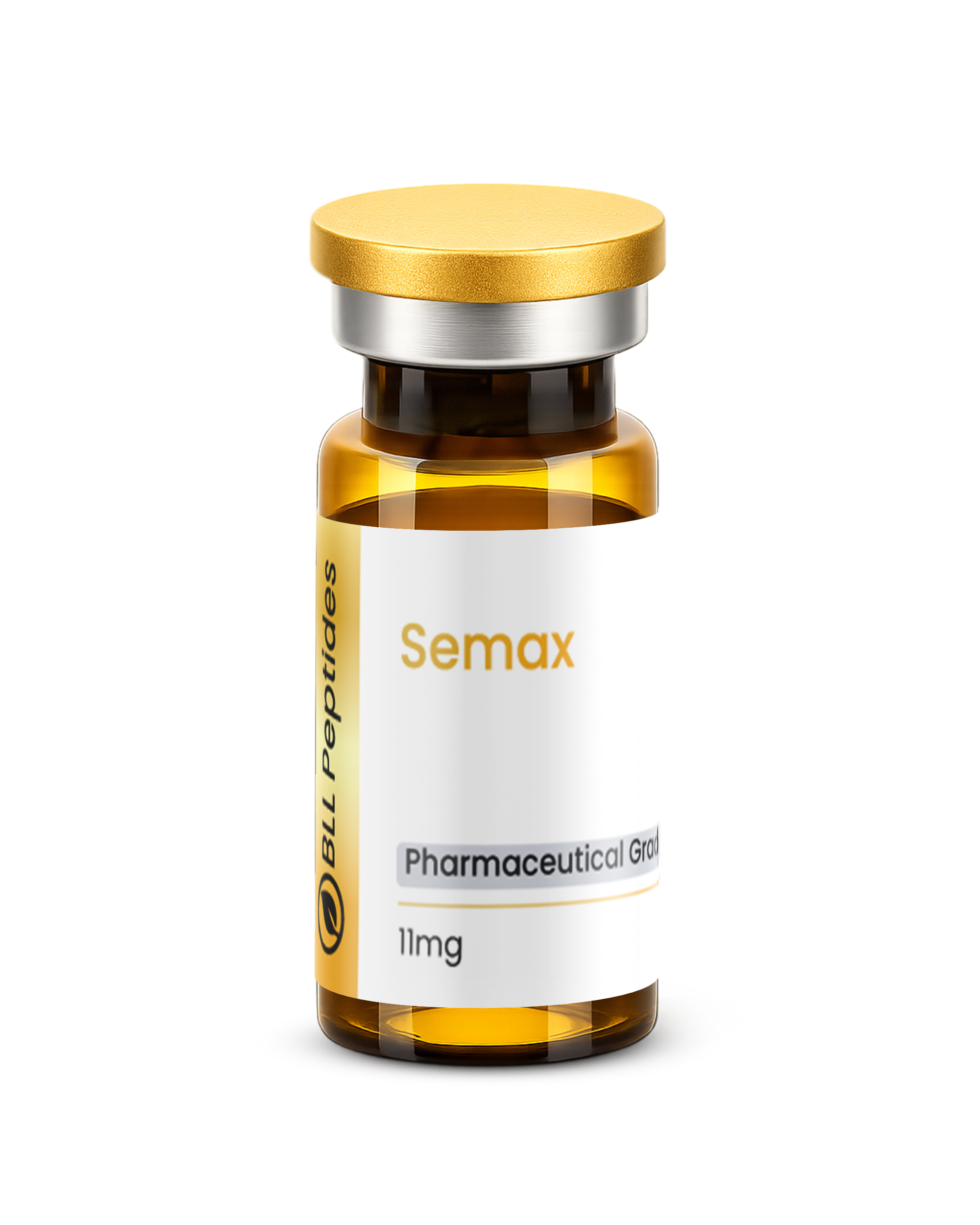
Late one evening, I was reviewing post-stroke recovery literature — the kind of deep dive that starts at 11 PM and somehow becomes 2 AM. Most of what I read was familiar territory: standard neurological endpoints, predictable outcome measures. Then a study from the Institute of Molecular Genetics in Moscow stopped me cold. Researchers were reporting meaningful improvements in cognitive recovery using a synthetic analog of a fragment of ACTH — a hormone I hadn’t thought about since medical school. That compound was Semax peptide. It went straight onto my research list.
Here’s the direct answer: Semax is a synthetic heptapeptide derived from the ACTH(4-7) fragment, primarily studied for its neuroprotective, nootropic, and BDNF-upregulating properties. It has been the subject of clinical investigation in Russia for decades, with an emerging body of preclinical research now drawing interest from Western neuroscience.
What Is Semax Peptide?
Semax is a heptapeptide with the sequence Met-Glu-His-Phe-Pro-Gly-Pro. It was developed in Russia during the 1980s as a stable synthetic analog of the ACTH(4-7) fragment — a short stretch of the adrenocorticotropic hormone that, in isolation, lacks the hormonal activity of full ACTH but retains interesting neuroactive properties.
Despite its small size — just seven amino acids — Semax peptide research suggests it can influence multiple neurological systems simultaneously. That kind of biological leverage in a compact molecule is exactly what makes peptide research so fascinating from a neuroscience standpoint.
How Semax Works: Proposed Mechanisms in Current Research
The research on Semax points to several overlapping mechanisms, each relevant to different aspects of brain function:
BDNF and NGF Upregulation
The most replicated finding in Semax research is its apparent ability to increase brain-derived neurotrophic factor (BDNF) and nerve growth factor (NGF) in brain tissue. BDNF is essential for neuronal survival, synaptic plasticity, and the formation of new memory circuits. Studies have reported BDNF increases of 50–80% in hippocampal and cortical tissue following Semax administration in animal models — a magnitude that catches the attention of anyone who works in brain recovery medicine.
Dopaminergic and Serotonergic Modulation
Semax appears to influence both dopamine and serotonin pathways. As a neurosurgeon who has watched neurotransmitter dysregulation derail recovery in TBI and stroke patients, I find the serotonergic findings particularly interesting — there’s a potential anxiolytic dimension to Semax research that deserves more rigorous investigation.
Neuroprotection Under Ischemic Conditions
This is arguably the most clinically relevant research thread. Multiple animal studies have demonstrated reduced infarct volume and improved behavioral outcomes when Semax was administered in ischemic stroke models. The proposed mechanism involves both anti-inflammatory signaling and enhanced neurotrophin expression in the peri-infarct zone — exactly the area where salvageable neurons hang in the balance.
What Semax Peptide Research Shows
A key study published in Neurochemical Research — available on PubMed — demonstrated that Semax significantly increased both BDNF and its precursor proBDNF in rat brain tissue, suggesting its nootropic effects are at least partially mediated through neurotrophin pathways. This isn’t trivial. BDNF modulation is one of the most pursued targets in neurodegenerative disease research, and finding a short peptide that reliably upregulates it is a meaningful data point.
Russian randomized controlled trials in ischemic stroke patients reported improvements in neurological function scores and cognitive indices during recovery. The consistency of these findings across different research groups — and across both animal and human models — gives Semax a stronger evidence base than many peptides at this stage of investigation.
Beyond stroke, preclinical data points to potential applications in attention and working memory research, with animal cognitive task performance improving measurably in several paradigms. The anti-inflammatory findings are also worth noting: Semax has demonstrated downregulation of pro-inflammatory cytokines in CNS tissue under oxidative stress conditions.
Key Findings in Semax Peptide Research
- BDNF increases of 50–80% reported in hippocampal tissue in animal models
- Reduced infarct size and improved motor recovery in ischemic stroke models
- Measurable cognitive improvements in animal working memory paradigms
- Anxiolytic effects via serotonergic pathway modulation
- Anti-inflammatory activity in CNS tissue under stress conditions
- Favorable acute safety profile in short-term animal studies
One of the most striking aspects of Semax research is its apparent multi-target activity — a single compound influencing neurotrophin expression, neurotransmitter balance, and neuroinflammation simultaneously. In neurosurgery, we rarely see that kind of convergent action without significant side effect trade-offs.
Semax in the Broader Landscape of Peptide Research
What Semax research reveals is part of a much larger pattern in peptide biology: short amino acid sequences, often derived from larger endogenous proteins, can exert disproportionately large effects on complex physiological systems. We see analogous dynamics in compounds like BPC-157, which has demonstrated compelling gut-brain axis effects in preclinical models, and in the mitochondrial research surrounding NAD+, which intersects with the same neuronal energy pathways that Semax appears to support.
I’m also watching the emerging research on TB-500 with similar interest — there are interesting hypotheses about how peptides that promote systemic repair might synergize with neuroprotective compounds in recovery contexts. These are early threads, but they’re worth pulling.
For researchers building out a study protocol around cognitive and neurological peptides, BLL Peptides offers research-grade compounds in this category. As a neurosurgeon, I’m particularly interested in seeing more rigorous, Western-standard RCTs on Semax — the Russian data is promising, but replication in diverse populations with standardized endpoints would significantly strengthen the evidence base.
Frequently Asked Questions About Semax Peptide Research
Q: What is Semax peptide primarily being researched for?
A: The primary research areas include neuroprotection following ischemic events, BDNF and NGF upregulation, cognitive function, working memory, and potential anxiolytic effects. Most peer-reviewed data comes from animal models, with clinical data from Russian trials focused on stroke recovery.
Q: How does Semax differ from Selank?
A: Both are Russian-developed nootropic peptides, but they have distinct structures and mechanisms. Selank is derived from tuftsin and is primarily researched for anxiolytic effects. Semax is derived from ACTH and is more associated with cognitive enhancement, BDNF upregulation, and neuroprotection research.
Q: What does the clinical research on Semax show?
A: Russian randomized controlled trials in ischemic stroke patients have reported improvements in neurological function scores and cognitive recovery markers. However, large-scale, multi-center, double-blind RCTs in Western medical literature remain limited. More research is needed before definitive clinical conclusions can be drawn.
Q: Is Semax related to ACTH?
A: Yes. Semax is a synthetic analog of the ACTH(4-7) fragment — a short portion of adrenocorticotropic hormone. The key distinction is that Semax lacks the full hormonal activity of ACTH; its bioactivity appears to center on neurotrophin modulation and CNS-specific effects rather than adrenal signaling.
Q: What is the current state of Semax research outside of Russia?
A: Interest is growing. Western researchers have begun investigating Semax’s BDNF-upregulating mechanisms, and it appears in an increasing number of nootropic and neuropeptide research reviews. The compound’s favorable preclinical profile and the Russian clinical data provide a reasonable foundation for expanded investigation.
About the Author: Dr. James is a practicing neurosurgeon and member of the BLL Peptides medical research team. His clinical background in neurological surgery informs his ongoing interest in neuropeptide research, cognitive recovery mechanisms, and the emerging science of peptide biology. All content published under his authorship is intended for research and educational purposes only.
This content is intended for research purposes only. BLL Peptides products are not intended for human consumption.