
Selank Peptide Research: A Neurosurgeon’s Look at This Anxiolytic Heptapeptide
·

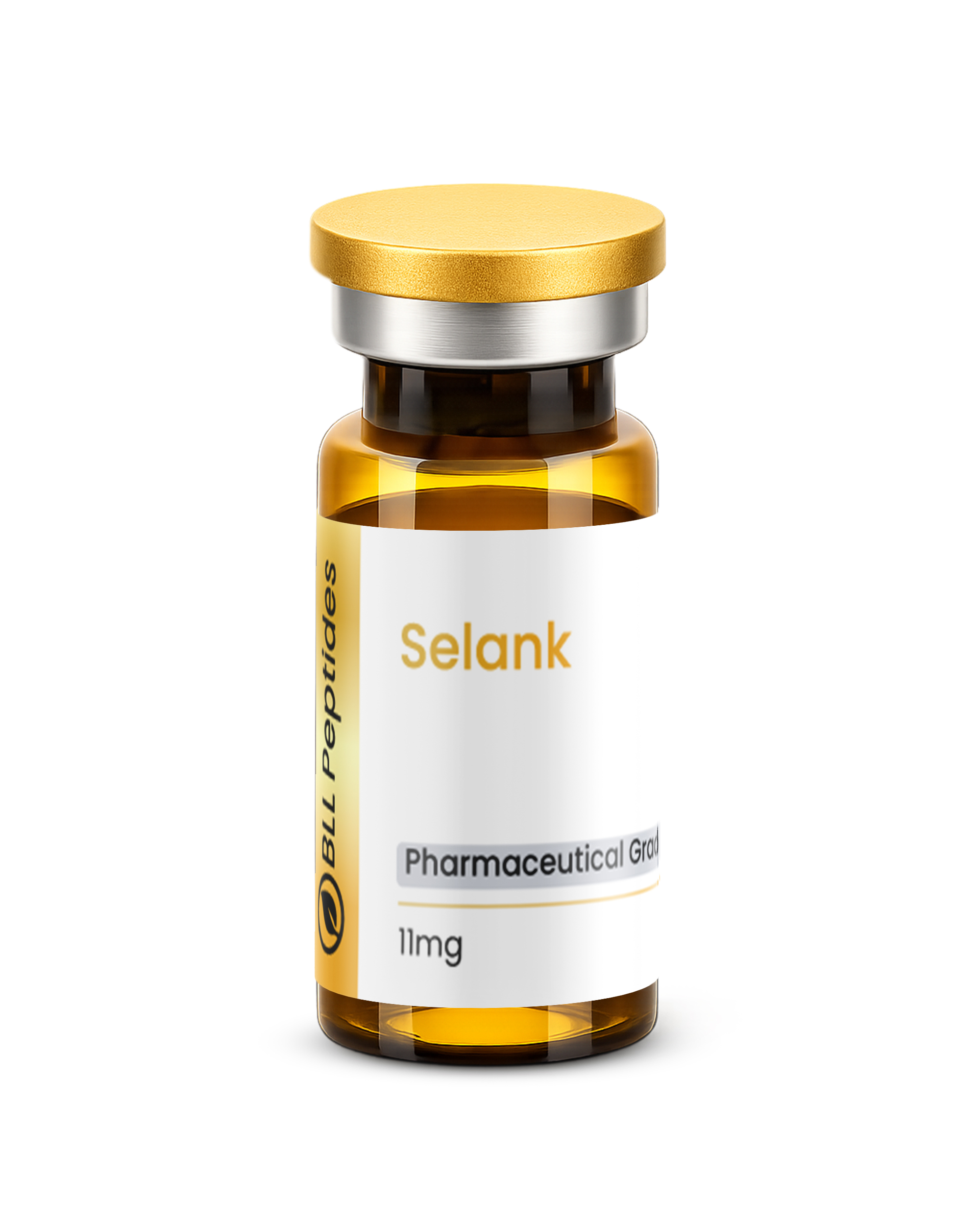
I’ve sat across from patients who checked out fine on every scan we ran — no lesion, no bleed, no structural abnormality — and yet they couldn’t sleep, couldn’t focus, and lived in a low-grade state of dread they couldn’t quite name. That clinical gap haunts me. It’s part of why, a few years into my neurosurgery career, I started digging into peptide research. Selank was one of the first compounds that genuinely surprised me.
What Is Selank? The Direct Answer
Selank is a synthetic heptapeptide developed by the Institute of Molecular Genetics of the Russian Academy of Sciences. Structurally, it is derived from tuftsin — a naturally occurring tetrapeptide (Thr-Lys-Pro-Arg) involved in immune modulation — with additional amino acid extensions designed to increase its metabolic stability and central nervous system bioavailability. In research settings, Selank peptide research has focused primarily on its anxiolytic and nootropic properties: effects on anxiety, mood stability, learning, and memory consolidation, without the sedative profile typically associated with benzodiazepines.
Selank research suggests it may modulate GABAergic and serotonergic neurotransmission while simultaneously influencing BDNF expression — a combination that makes it unlike anything else currently being studied in the peptide space.
The Neurochemistry Behind Selank Peptide Research
As someone who has spent years mapping the brain’s architecture in the operating room, what drew me to Selank research wasn’t just its behavioral effects — it was the mechanism. This peptide appears to act on multiple CNS pathways simultaneously, which is unusual and worth paying attention to:
- GABAergic modulation: Selank has been shown in preclinical research to increase the sensitivity of GABA-A receptors without directly binding to the benzodiazepine site. This suggests anxiolytic action may be possible without the classic dependency concerns associated with standard GABA agonists.
- Serotonin system interaction: Studies from Russian research groups found that Selank influences the expression of genes related to serotonin transport (SLC6A4) and receptor activity. This may explain observed stabilization of mood tone without the emotional blunting commonly reported with SSRIs.
- BDNF upregulation: Perhaps the most compelling finding — Selank appears to increase brain-derived neurotrophic factor (BDNF), a protein critical for neuronal growth, learning, and long-term memory consolidation. Chronically low BDNF is consistently associated with anxiety disorders and treatment-resistant depression.
The idea that a single heptapeptide could influence GABAergic tone, serotonergic expression, and BDNF simultaneously — without apparent sedation — is what made me want to understand this compound at a deeper level.
What the Selank Research Actually Shows
The majority of Selank research has emerged from Russian and Eastern European institutions, but the data is substantive and increasingly referenced internationally. A foundational study published in Bulletin of Experimental Biology and Medicine demonstrated that Selank produced anxiolytic effects comparable to diazepam in animal models — with one critical distinction: no sedation and no impairment of motor coordination.
Two data points that stood out to me:
- In one controlled study, Selank administration led to a 4.5-fold increase in BDNF mRNA expression in specific brain regions within hours of administration — a striking neuroplasticity signal.
- Research involving subjects with generalized anxiety disorder found that Selank reduced anxiety scores on the Hamilton Anxiety Scale with efficacy comparable to phenazepam, but without measurable cognitive dulling or sedative side effects.
There are also emerging findings around immune modulation. Selank’s tuftsin-derived structure retains some immunomodulatory properties, including potential effects on IL-6 and interferon expression. For a neurosurgeon who regularly sees inflammatory cascades driving post-operative cognitive complications, that crossover is difficult to ignore.
Selank and the Nootropic Research Thread
Beyond the anxiety angle, Selank peptide research has examined its effects on learning and cognitive performance. Studies using maze-based paradigms in rodent models demonstrated improved spatial memory and faster reversal learning in Selank-treated groups compared to controls. The leading hypothesis is that BDNF upregulation accelerates synaptic plasticity — the brain’s ability to reorganize and strengthen connections in response to new information.
This positions Selank as one of the few compounds being actively studied for both anxiolytic and cognitive-enhancement properties without the sedation trade-off. For researchers interested in nootropic peptides, it represents a mechanistically distinct profile from racetams or cholinergics.
If you’re exploring related peptide research, BLL Peptides carries compounds with adjacent neurological and systemic profiles. BPC-157 has been studied extensively for neuroprotective and gut-brain axis effects — a natural parallel for researchers interested in CNS resilience. For mitochondrial and cognitive aging research, NAD+ continues to reveal compelling connections between cellular energy metabolism and neurological function. Researchers studying neuromodulatory peptides may also find PT-141’s melanocortin receptor work a relevant adjacent field.
Frequently Asked Questions About Selank Peptide Research
What is Selank structurally derived from?
Selank is a synthetic analog of tuftsin, a naturally occurring tetrapeptide (Thr-Lys-Pro-Arg) found as part of the IgG heavy chain. Researchers extended the tuftsin sequence with additional amino acids to improve metabolic stability and CNS bioavailability for research applications.
How does Selank differ from standard anxiolytics in preclinical research?
In preclinical models, Selank produced anxiolytic effects comparable to benzodiazepines but without measurable sedation or motor impairment. Researchers hypothesize this is due to indirect modulation of GABA-A receptor sensitivity rather than direct benzodiazepine-site binding — a mechanistically distinct profile that continues to generate research interest.
What role does BDNF play in Selank research findings?
BDNF (brain-derived neurotrophic factor) is essential for neuroplasticity, learning, and stress resilience. Selank research has documented significant increases in BDNF mRNA expression in animal models following administration. Researchers believe this BDNF signal may contribute to both the anxiolytic and memory-enhancing properties observed in the preclinical data.
Is Selank the same as Semax?
No. Though both are synthetic peptides developed in Russia with CNS research applications, they are structurally and pharmacologically distinct. Semax is derived from ACTH and studied primarily for neuroprotection. Selank targets GABAergic and serotonergic pathways with a stronger focus on anxiety modulation. They represent different mechanistic approaches to neurological research.
Where is most Selank peptide research being conducted?
The majority of Selank research has come from Russian institutions, particularly the Institute of Molecular Genetics of the Russian Academy of Sciences, with growing interest from Western researchers. Most published studies are in preclinical (animal model) contexts, with some clinical trials conducted in Russia.
About Dr. James
Dr. James is a practicing neurosurgeon and research advisor at BLL Peptides. With over a decade of clinical experience in neurological surgery, Dr. James brings a physician’s skepticism and curiosity to emerging peptide research. His work focuses on the intersection of neuroinflammation, recovery biology, and novel therapeutic compounds currently under investigation.
This content is intended for research purposes only. BLL Peptides products are not intended for human consumption.