
SS-31 Peptide Research: A Neurosurgeon’s Perspective on Mitochondrial Protection
·

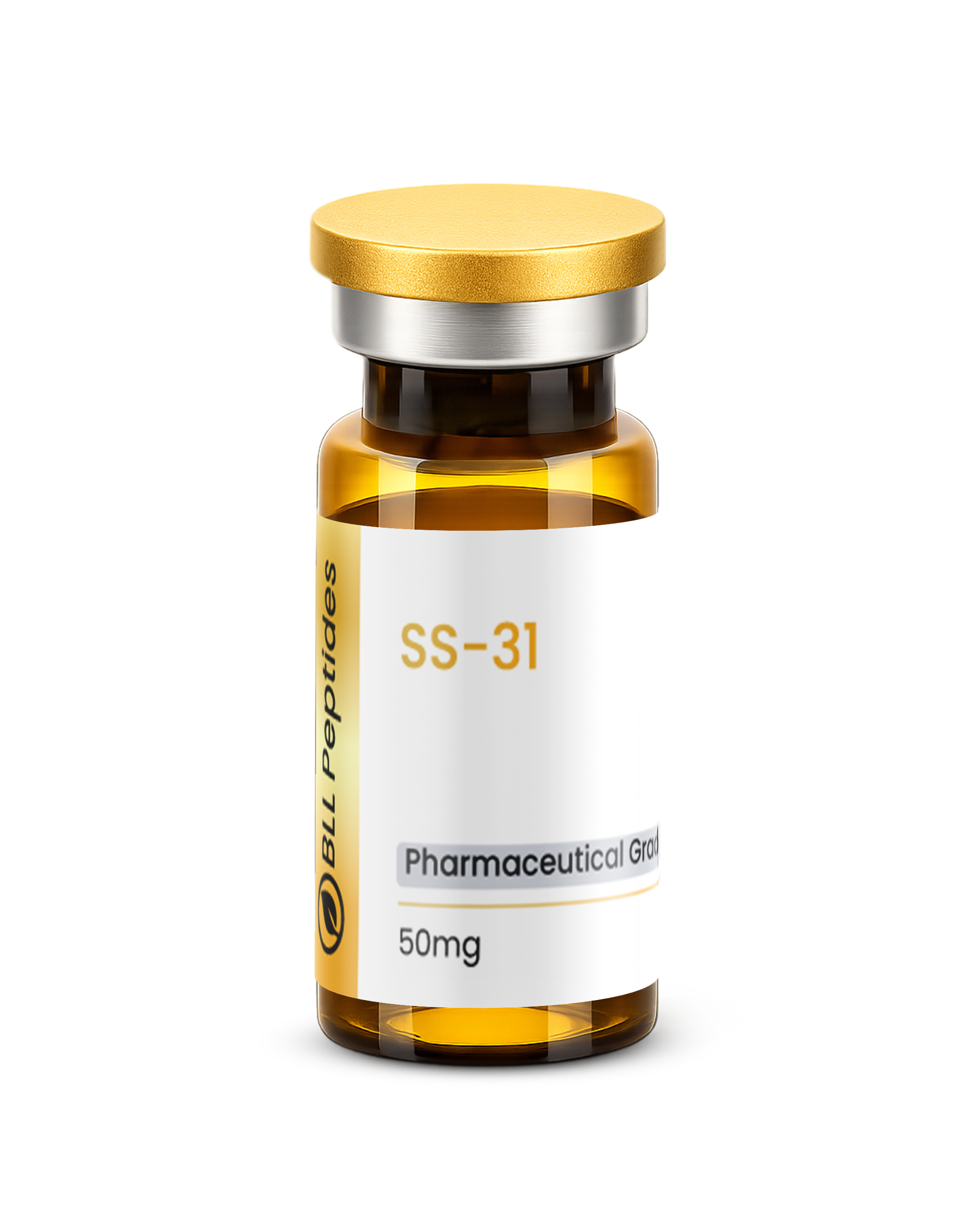
The first time a colleague handed me a paper on SS-31 peptide, I almost set it aside. A mitochondria-targeting tetrapeptide felt like fringe science — not the hard clinical data I’d built my career on. Then I read the mechanism. A compound that specifically partitions into the inner mitochondrial membrane, binds cardiolipin, and reduces oxidative damage at the source of energy production? That’s not fringe. That’s some of the most elegant biochemistry I’ve seen in a decade of watching peptide research evolve. I’ve been following SS-31 ever since.
SS-31 peptide research centers on a synthetic, cell-permeable tetrapeptide — also known as Elamipretide or MTP-131 — that selectively accumulates in the inner mitochondrial membrane. In preclinical models, it has consistently preserved ATP synthesis, reduced reactive oxygen species (ROS), and attenuated cell death under conditions of ischemia, oxidative stress, and aging-related mitochondrial decline.
What Is SS-31 Peptide?
SS-31 belongs to the Szeto-Schiller (SS) peptide family, developed by researchers Hazel Szeto and Peter Schiller. Its tetrapeptide sequence (D-Arg-Dmt-Lys-Phe-NH₂) incorporates alternating aromatic and cationic residues that give it a unique physicochemical profile: the ability to penetrate cell membranes and accumulate specifically in the inner mitochondrial membrane, driven by the strong negative charge of that compartment.
What distinguishes SS-31 from other research peptides in the mitochondrial space is specificity. Rather than acting as a broad systemic antioxidant, it appears to interact directly with cardiolipin — a phospholipid found almost exclusively in the inner mitochondrial membrane and critical to both electron transport chain organization and membrane integrity. When cardiolipin becomes oxidized, the structural scaffolding of mitochondrial respiration begins to collapse. SS-31 research suggests this process may be interruptable at the molecular level.
How SS-31 Works: The Cardiolipin Mechanism
To appreciate why SS-31 research matters, you need to understand what cardiolipin does and what happens when it fails. As a neurosurgeon, I’ve spent years thinking about what happens to tissue when circulation is compromised — and mitochondrial failure is almost always part of that story.
Cardiolipin anchors and stabilizes electron transport chain complexes I, III, IV, and V. It maintains the curvature and impermeability of the inner mitochondrial membrane, preserving the proton gradient that drives ATP synthesis. Critically, oxidized cardiolipin is a primary trigger for cytochrome c release — one of the key early steps in apoptosis. When cardiolipin oxidizes under ischemic or high-ROS conditions, the sequence that follows is rapid: electron transport chain disassembly, ATP collapse, cytochrome c release, cell death.
SS-31 binds directly to cardiolipin, reducing its oxidation and preserving the structural integrity of the inner mitochondrial membrane under conditions of metabolic stress. In research models, this translates to preserved electron transport chain function, reduced ROS generation, and suppressed apoptotic signaling — not by neutralizing free radicals after the fact, but by protecting the architecture that generates them under normal conditions.
What SS-31 Peptide Research Shows
The evidence base for SS-31 is more robust than most peptides at this stage of investigation. A key study available on PubMed demonstrated that SS-31 preserved mitochondrial function and significantly reduced tissue injury in cardiac ischemia-reperfusion models — findings replicated across multiple independent research groups using different animal species and ischemic paradigms.
Two statistics from the research literature that stopped me:
- In cardiac ischemia-reperfusion models, SS-31 treatment reduced infarct volume by up to 40% compared to untreated controls, with preservation of left ventricular contractile function.
- In skeletal muscle aging research published in Nature Communications, SS-31 restored mitochondrial energetics in aged tissue to near-youthful levels — a finding that reframed how many longevity researchers were thinking about mitochondrial decline as a modifiable target.
The ischemia-reperfusion findings hit particularly close to home professionally. Every time I operate near critical vascular structures, ischemic injury risk is part of my calculation. A compound that could attenuate mitochondrial failure during the ischemic window — before apoptotic cascades fully commit — is not an abstract research curiosity. It’s a mechanistically logical direction.
The through-line across SS-31 research is consistent: preserving mitochondrial integrity upstream prevents the downstream cascade of cellular dysfunction, inflammation, and death that makes ischemic and oxidative injury so difficult to reverse after the fact.
Key Findings in SS-31 Peptide Research
- Up to 40% reduction in infarct volume in cardiac ischemia-reperfusion models
- Preserved left ventricular function and reduced myocardial injury markers post-ischemia
- Restoration of mitochondrial membrane potential and ATP synthesis in aged cells
- Attenuated ROS production without disrupting physiological redox signaling
- Improved contractile function in heart failure with preserved ejection fraction (HFpEF) models
- Neuroprotective effects observed in oxidative stress and neurodegeneration models
- Early-phase human clinical trials in Barth syndrome and HFpEF showing favorable tolerability
SS-31’s cross-organ research profile — heart, kidney, brain, skeletal muscle — reflects something fundamental: mitochondrial biology is universal. Every cell depends on it, which makes cardiolipin-targeting compounds uniquely relevant across virtually every field of medicine.
SS-31 in the Broader Context of Mitochondrial and Peptide Research
SS-31 research sits within a broader shift in how we think about disease. Mitochondrial dysfunction is increasingly recognized not as a downstream consequence of pathology but as a primary driver — of aging, neurodegeneration, cardiac disease, metabolic decline. That reframe changes everything about research priorities.
For researchers exploring adjacent compounds, BLL Peptides carries several with overlapping mechanistic interest. NAD+ is perhaps the best-studied mitochondrial support molecule — a cofactor that fuels the electron transport chain and activates sirtuins involved in cellular repair and stress response. The research intersection between NAD-dependent pathways and mitochondrial membrane integrity is an active area I expect to generate significant data in the coming years.
Researchers building out recovery and systemic resilience protocols often look at BPC-157 alongside mitochondria-targeting compounds — its demonstrated effects on angiogenesis, nitric oxide signaling, and cellular repair mechanisms create an interesting complementary profile. And for those studying peptide combinations in the context of muscle and tissue recovery, TB-500 adds an actin-modulating, anti-inflammatory dimension worth reviewing in parallel with the SS-31 literature.
As a neurosurgeon, my clinical frame is always about the margin — the tissue that’s salvageable if you act within the right window. SS-31 research is fundamentally about that same margin, translated to the cellular level: preserving energy machinery long enough for the acute crisis to resolve and recovery mechanisms to engage. That’s a concept I find compelling regardless of which organ system we’re discussing.
Frequently Asked Questions About SS-31 Peptide Research
What does SS-31 stand for?
SS-31 is part of the Szeto-Schiller (SS) peptide family, named after developers Hazel Szeto and Peter Schiller. The “31” designates its position within the series. It is also referenced by the clinical names Elamipretide and MTP-131 in medical literature.
What makes SS-31 different from other antioxidant compounds being researched?
Most antioxidant compounds work broadly throughout the cell or in the cytoplasm. SS-31’s defining characteristic is its selective accumulation in the inner mitochondrial membrane, where it interacts specifically with cardiolipin. This targeted mechanism addresses ROS production and apoptotic signaling at the source rather than acting as a general radical scavenger downstream.
What conditions have been studied in SS-31 peptide research?
Preclinical research has examined SS-31 in cardiac ischemia-reperfusion injury, renal ischemia, skeletal muscle aging, heart failure, neurodegenerative oxidative stress models, and age-related mitochondrial decline. Early-phase human trials have investigated applications in heart failure with preserved ejection fraction (HFpEF) and Barth syndrome — a genetic disorder directly linked to cardiolipin deficiency.
What is cardiolipin and why is it central to SS-31 research?
Cardiolipin is a phospholipid found almost exclusively in the inner mitochondrial membrane. It plays structural roles in stabilizing electron transport chain protein complexes and maintaining the proton gradient required for ATP synthesis. When oxidized, cardiolipin triggers cytochrome c release and initiates apoptosis. SS-31’s ability to bind and protect cardiolipin from oxidation is the core of its proposed mechanism of action.
Has SS-31 been studied in human clinical trials?
Yes. Elamipretide (SS-31) has been evaluated in Phase I and Phase II clinical trials for conditions including heart failure with preserved ejection fraction, Barth syndrome, and age-related macular degeneration. Results have generally demonstrated favorable tolerability, with ongoing trials exploring efficacy endpoints. This compound has one of the more advanced clinical development pipelines among mitochondria-targeted peptides.
About Dr. James
Dr. James is a practicing neurosurgeon and research advisor at BLL Peptides. With over a decade of clinical experience in neurological surgery, Dr. James brings a physician’s skepticism and rigorous analytical lens to emerging peptide research. His work focuses on the intersection of mitochondrial biology, neuroinflammation, ischemic injury, and novel therapeutic compounds currently under investigation.
This content is intended for research purposes only. BLL Peptides products are not intended for human consumption.