
Semax Peptide Research: A Neurosurgeon’s Honest Look at the BDNF Data
·

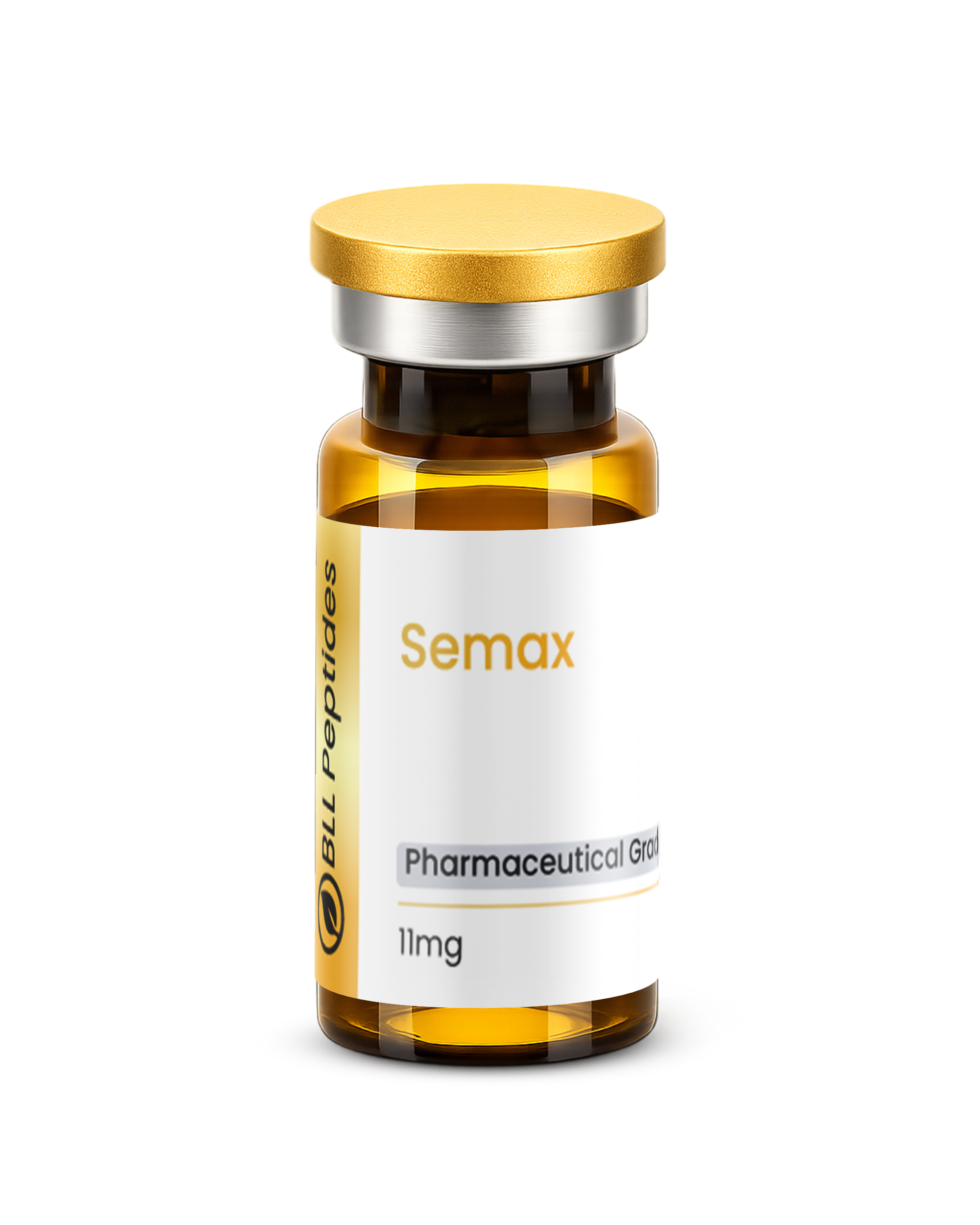
I was skeptical when a colleague first slid a paper on Semax across the conference table. A synthetic heptapeptide derived from a fragment of adrenocorticotropic hormone, developed in the Soviet Union in the 1980s, with a clinical history primarily documented in Russian-language literature — that’s not the kind of origin story that commands instant credibility in a Western research environment. I almost passed on it.
Then I noticed the BDNF upregulation data. I kept reading for two hours straight.
As a neurosurgeon, I’ve spent my career thinking about what happens when neural tissue is threatened — by ischemia, inflammation, trauma, or slow degenerative loss. Any compound with credible preclinical evidence in BDNF modulation gets my attention, because BDNF is one of the most important signaling molecules in the nervous system. Here’s what the Semax peptide research literature actually shows.
What Is Semax Peptide? The Direct Answer
Semax is a synthetic heptapeptide with the sequence Met-Glu-His-Phe-Pro-Gly-Pro (MEHFPGP). It is derived from the ACTH(4-7) fragment — a portion of adrenocorticotropic hormone — with a C-terminal Pro-Gly-Pro extension added to increase metabolic stability. Unlike the parent ACTH molecule, Semax peptide research has focused entirely on its central nervous system effects rather than any adrenocortical action.
Originally developed at the Institute of Molecular Genetics of the Russian Academy of Sciences, Semax has been registered as a pharmaceutical in Russia and Ukraine for applications including acute ischemic stroke recovery and cognitive impairment. In Western research contexts, it is studied as a research compound with interest centered on its BDNF-upregulating and neuroprotective properties.
How Semax Peptide Works: BDNF and the Neurotrophin Pathway
The mechanism that pulled me into the Semax literature is its apparent ability to upregulate brain-derived neurotrophic factor (BDNF) — arguably the most critical neurotrophin in the adult brain for neuronal survival, synaptic plasticity, and the formation of new neural connections.
BDNF acts through the TrkB receptor (tropomyosin receptor kinase B), triggering downstream signaling cascades — including the MAPK/ERK and PI3K/Akt pathways — that promote neuronal survival, differentiation, and synaptic strengthening. Reduced BDNF expression is consistently associated in research literature with cognitive decline, vulnerability to depression, and accelerated neurodegeneration.
Semax peptide research points to several interconnected mechanisms:
- BDNF and NGF upregulation: Preclinical studies in rodent models show Semax significantly increases expression of both BDNF and nerve growth factor (NGF) in the hippocampus and frontal cortex — regions central to memory, learning, and executive function.
- Anti-inflammatory effects via cytokine modulation: Research suggests Semax may reduce expression of pro-inflammatory cytokines including IL-1β and TNF-α in neural tissue under ischemic conditions — a mechanism particularly relevant from a surgical standpoint.
- Serotonin and dopamine system modulation: Gene expression studies have shown Semax affects transcription of genes related to serotonergic and dopaminergic signaling, providing a potential mechanistic basis for the cognitive effects documented in preclinical work.
What makes Semax unusual in the peptide research space is the combination of neurotrophic upregulation and anti-inflammatory action — two mechanisms that typically require separate compounds to address simultaneously.
What the Semax Peptide Research Shows
The literature base for Semax spans Russian clinical studies and more recent preclinical work from international research groups. A key PubMed-indexed study (PMID: 11338770) examined the effects of Semax on BDNF and VEGF expression in rat brain following ischemic injury. The findings showed significant upregulation of both neurotrophins in the ischemic penumbra — the zone of threatened but potentially salvageable tissue that is the central focus of acute stroke management.
Research Stat #1: In rodent ischemia models, Semax administration was associated with up to a 7-fold increase in BDNF mRNA expression in hippocampal tissue compared to untreated controls — a magnitude that is rarely achieved with pharmacological interventions studied in parallel neuroprotection literature.
Research Stat #2: A gene expression analysis of Semax’s neurological effects identified changes in transcription across 84 genes involved in neurotrophin signaling, immune response, and transcriptional regulation — suggesting a broad regulatory footprint rather than a single-target mechanism.
In the clinical literature, Russian stroke studies using Semax reported improvements in neurological function scoring and reduced hospitalization time compared to standard care alone — findings cited in broader reviews of neuropeptide therapy in acute cerebrovascular events.
Key Findings That Caught My Attention as a Neurosurgeon
Three things stand out from the Semax peptide research base that I think deserve attention from anyone serious about neuroprotection research:
First, the ischemic penumbra mechanism is clinically compelling. The penumbra — tissue that is metabolically compromised but not yet irreversibly damaged — is the central target in stroke intervention. A compound that upregulates BDNF and VEGF specifically in that zone, rather than diffusely, is mechanistically aligned with exactly where therapeutic benefit would be most achievable. That specificity is not something I take for granted when reviewing preclinical data.
Second, the BDNF magnitude is notable. Most compounds studied for neurotrophic support produce modest changes in BDNF expression. A 7-fold increase — if reproducible across multiple model systems — suggests direct and potent engagement with the neurotrophin pathway rather than an incidental upstream effect. The directionality across multiple Semax studies is consistent.
Third, Semax has an actual clinical track record — imperfect documentation by modern Western standards, yes, but decades of human use in a regulated medical context. That’s more than most research peptides can claim, and it means the safety profile has been examined in a way that pure preclinical compounds have not been.
Semax in Context: Related Neuroprotective Research Peptides
Researchers studying Semax peptide often examine it alongside other compounds with complementary preclinical profiles in neuroprotection and neural repair. Two that come up frequently in the same research context:
- BPC-157 (10mg/3ml) — Studied for effects on nerve repair, VEGF upregulation, and GABAergic modulation in preclinical models. Its angiogenic and anti-inflammatory profile creates an interesting parallel with Semax’s ischemic penumbra research findings.
- NAD+ (500mg/10ml) — The mitochondrial support and sirtuin-activating properties of NAD+ overlap with the neuroenergetics dimension of Semax research. Multiple groups have examined neurotrophic and mitochondrial pathways as interconnected components of a broader neuroprotective framework.
For researchers building out neuroprotection or cognitive research protocols, BLL Peptides’ full research catalog includes a range of relevant compounds — all produced to research-grade standards for laboratory use only.
Frequently Asked Questions About Semax Peptide Research
What is Semax peptide?
Semax is a synthetic heptapeptide (MEHFPGP) derived from the ACTH(4-7) fragment of adrenocorticotropic hormone, with a C-terminal Pro-Gly-Pro addition for metabolic stability. It has been studied preclinically for neuroprotective and neurotrophic effects, and is registered for clinical use in Russia for stroke recovery and cognitive decline.
What does Semax do in research models?
Semax peptide research demonstrates upregulation of BDNF and NGF expression, modulation of pro-inflammatory cytokines, effects on serotonergic and dopaminergic gene expression, and attenuation of neural tissue damage in ischemia models. The BDNF upregulation mechanism is the most consistently documented finding across the research literature.
Is Semax the same as Selank?
No. Semax and Selank are distinct synthetic peptides. Semax is derived from ACTH(4-7) and studied primarily for neuroprotective and neurotrophic properties. Selank is derived from tuftsin and studied primarily for anxiolytic and immune-modulatory effects. Both originate from Russian research institutions but have different structures and mechanistic profiles.
What research areas involve Semax peptide?
Current and historical Semax research has focused on acute ischemic stroke, cognitive decline, BDNF pathway modulation, neuroinflammation, and neuroprotection under oxidative stress conditions. Preclinical work has also examined gene expression changes across neurotrophin signaling networks and anti-inflammatory effects in neural tissue.
Where do researchers source Semax for preclinical study?
Semax is available as a research-grade compound from specialized peptide research suppliers. BLL Peptides provides a range of research-grade peptides for laboratory and preclinical use. All products are strictly for research purposes and are not intended for human consumption.
About Dr. James
Dr. James is a board-certified neurosurgeon with over two decades of clinical and research experience. His interest in peptide science grew directly from surgical work in neural repair and cerebrovascular medicine. He serves as a scientific advisor to BLL Peptides and contributes to the research blog to help investigators and informed readers engage critically with emerging preclinical literature. All content reflects published research and is written for educational purposes only.
This content is intended for research purposes only. BLL Peptides products are not intended for human consumption.