
PT-141 (Bremelanotide): What a Neurosurgeon Finds Fascinating About This Melanocortin Peptide
·

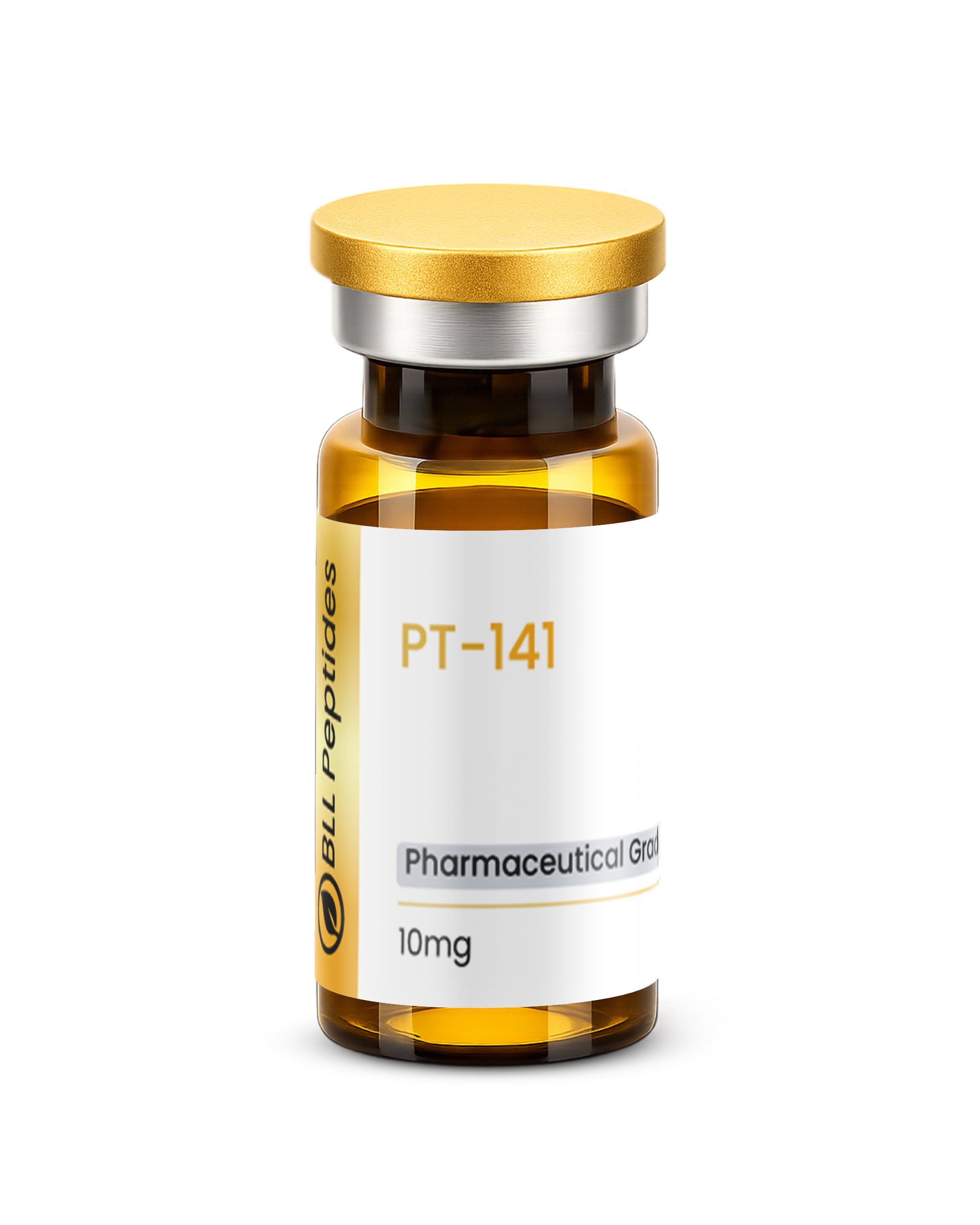
Every now and then, a compound stops me mid-chart review and demands my full attention. PT-141 was one of those moments — and I wasn’t even looking for it.
I was consulting on a spinal cord injury case, examining whether supraspinal pathways might still mediate certain physiological responses when peripheral nerve signaling is disrupted. The literature kept pulling me toward the melanocortin system. That’s when I first encountered PT-141 (bremelanotide) — and I haven’t stopped thinking about it since. As a neurosurgeon, the idea of a compound that acts primarily on the brain to produce behavioral effects, rather than targeting the peripheral vasculature, is genuinely fascinating.
What Is PT-141 (Bremelanotide)?
PT-141, known pharmaceutically as bremelanotide, is a synthetic cyclic heptapeptide derived from Melanotan II. Its molecular structure — Ac-Nle-cyclo[Asp-His-D-Phe-Arg-Trp-Lys]-OH — gives it high binding affinity for melanocortin receptors, specifically MC3R and MC4R, which are expressed prominently in the hypothalamus and limbic system.
The defining feature of PT-141 in the research literature is where it acts: the central nervous system, not the peripheral vasculature. That single distinction separates it mechanistically from virtually every other compound previously studied in its research category. Researchers studying PT-141 can find it available at BLL Peptides for laboratory and research use.
How the Melanocortin System Works in Research Models
The melanocortin system is one of the more underappreciated networks in CNS neuroscience. It encompasses five receptor subtypes (MC1R–MC5R), with MC3R and MC4R playing key roles in energy homeostasis, feeding behavior, and — critically for PT-141 research — motivational and arousal circuitry.
In animal models, activation of MC4R receptors in the medial preoptic area (MPOA) and paraventricular nucleus of the hypothalamus triggers downstream dopaminergic signaling in the nucleus accumbens — the brain’s core reward hub. A 2019 study in Neuropsychopharmacology documented this cascade, showing measurable dopamine release in reward circuitry following MC4R agonism.
This is a brain-circuit phenomenon, not a vascular one — and as a neurosurgeon, that distinction is everything.
PT-141’s cyclic molecular structure also confers greater metabolic stability and improved CNS penetration compared to linear peptide analogs, which helps explain its robust activity in central pathway research models. Its selectivity for MC3R and MC4R over MC1R (which drives melanin pigmentation) also significantly reduces the skin-darkening effects observed with earlier Melanotan compounds.
What the Research Shows on PT-141
The clinical research on PT-141 is more substantial than most researchers realize. The RECONNECT trials — two Phase 3 randomized controlled studies — evaluated bremelanotide in premenopausal women diagnosed with hypoactive sexual desire disorder (HSDD).
Published in Obstetrics & Gynecology (Kingsberg et al., 2019), the trials reported that bremelanotide produced statistically significant increases in satisfying sexual events and measurable reductions in related distress over placebo — findings robust enough to support FDA approval for HSDD in 2019. Across both trials, approximately 25% of participants reported a clinically meaningful response on desire endpoints versus 17% for placebo.
Beyond the clinical endpoints, the mechanistic research paints a compelling picture:
- Receptor binding studies confirm PT-141’s selectivity for MC3R and MC4R, substantially reducing melanogenic off-target effects seen in earlier Melanotan analogs
- Preclinical models demonstrate PT-141 activity independent of circulating testosterone levels — suggesting a parallel motivational pathway that doesn’t rely on androgenic signaling
- Animal studies in spinal cord injury models found partial preservation of centrally-mediated responses via supraspinal pathways, even when peripheral nerve circuits were compromised — this was the finding that first caught my attention during that SCI consult
- Unlike PDE5 inhibitors and other vascular compounds, PT-141 shows no dependence on nitric oxide production for its primary CNS effects — a meaningful distinction for research contexts where NO pathway function may be altered
In multiple preclinical studies, PT-141 produced dose-dependent increases in motivational behavior through central pathways, even in the absence of peripheral hormonal cues.
Key Research Findings at a Glance
- PT-141 preferentially binds MC3R and MC4R in hypothalamic nuclei associated with reward, motivation, and arousal processing
- The Phase 3 RECONNECT trials demonstrated statistically significant improvement on both desire and distress endpoints compared to placebo
- Dopaminergic signaling in the nucleus accumbens appears central to PT-141’s behavioral effects in animal models
- PT-141 represents one of the few CNS-first mechanisms studied in its research category — the majority of prior compounds worked peripherally
- Spinal cord injury preclinical models suggest potential supraspinal activity preservation — an area I believe warrants significantly more dedicated study
For researchers interested in complementary CNS-active peptide compounds, NAD+ research offers a parallel lens into neuroenergetics and mitochondrial support in brain tissue, while BPC-157 continues to generate interest for its neuroprotective properties across multiple preclinical models.
Frequently Asked Questions About PT-141 Research
What receptors does PT-141 target?
PT-141 primarily activates melanocortin receptor subtypes MC3R and MC4R, which are concentrated in hypothalamic regions involved in reward, motivation, and arousal circuitry. Its selectivity for these subtypes over MC1R significantly reduces the melanogenic side effects observed with earlier Melanotan compounds.
How is PT-141 mechanistically different from PDE5 inhibitors?
PDE5 inhibitors like sildenafil act on peripheral vascular smooth muscle by amplifying nitric oxide signaling. PT-141 operates upstream at the level of CNS receptor activation, producing behavioral effects through hypothalamic and limbic circuits independently of peripheral vascular NO pathways.
Has PT-141 been studied in neurological injury research models?
Yes. Preclinical research in spinal cord injury models has examined whether supraspinal melanocortin pathway activation can still produce measurable responses when peripheral nerve pathways are disrupted. These models suggest partial preservation of centrally-mediated effects — a mechanistically important area for ongoing research.
What is the regulatory status of bremelanotide?
Bremelanotide received FDA approval in 2019 under the brand name Vyleesi for HSDD in premenopausal women — making it one of only two approved pharmacological treatments for this condition. Ongoing preclinical research continues to explore its CNS mechanisms, receptor pharmacology, and potential applications in neurological models involving melanocortin pathway dysregulation.
Is PT-141 the same as Melanotan II?
No. PT-141 (bremelanotide) is derived from Melanotan II but is a structurally distinct cyclic peptide. The modified cyclic structure reduces melanogenic activity while preserving MC3R/MC4R affinity, and provides improved metabolic stability compared to the linear Melanotan II peptide.
About the Author
Dr. James is a board-certified neurosurgeon with over two decades of clinical and academic experience. His research interests include CNS neuroprotection, peptide pharmacology, and the intersection of neurological function with systemic health. He serves as a medical advisor to BLL Peptides, contributing research analysis and clinical context to the company’s educational content.
This content is intended for research purposes only. BLL Peptides products are not intended for human consumption.