
Selank Peptide Research: A Neurosurgeon’s Look at Anxiety, BDNF, and the Tuftsin-Derived Anxiolytic
·

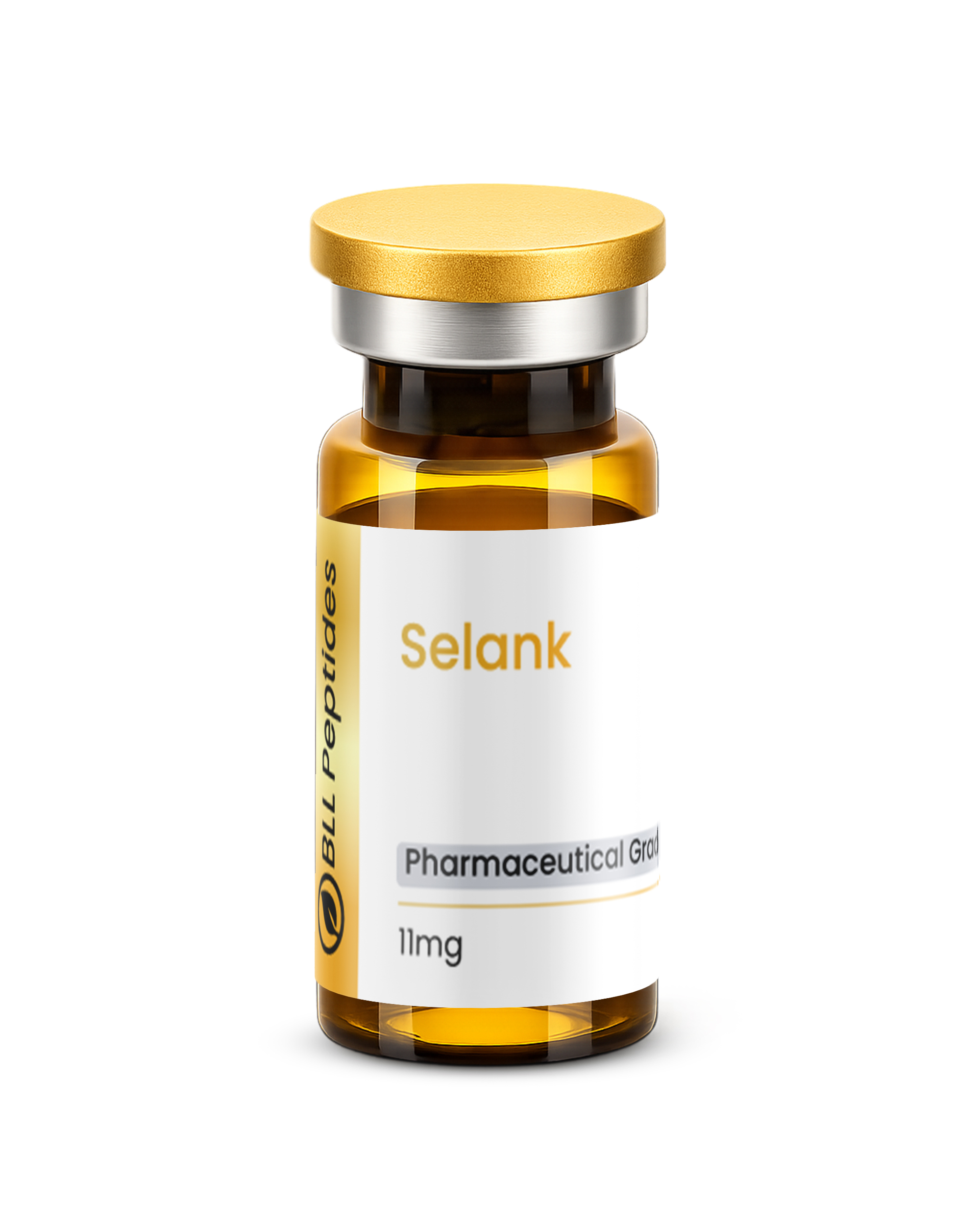
A few years ago, a psychiatrist colleague sent me a paper on Selank with a note that said simply: “You’ll find this interesting.” He was right. As someone who spends a lot of time thinking about the neurological consequences of chronic stress — the inflammation, the structural changes, the cognitive toll — I’ve long been skeptical of anxiolytics that work by blunting the whole system. Selank peptide research takes a different approach, and that’s exactly what caught my attention.
Selank is a synthetic heptapeptide derived from tuftsin — a naturally occurring immunomodulatory tetrapeptide — with a Pro-Gly-Pro C-terminal extension that dramatically improves metabolic stability. In research contexts, it has been studied primarily as an anxiolytic that modulates GABAergic signaling, upregulates brain-derived neurotrophic factor (BDNF), and influences enkephalin metabolism — all without the sedation or dependence liability that makes classical benzodiazepines problematic in long-term research models. Selank holds regulatory approval in Russia as both an anxiolytic and nootropic agent, giving it a more substantive clinical history than most peptides in this category.
What Is Selank?
Selank (Thr-Lys-Pro-Arg-Pro-Gly-Pro) is a synthetic analog of tuftsin, a tetrapeptide (Thr-Lys-Pro-Arg) produced naturally by the spleen during IgG antibody cleavage. Tuftsin carries well-documented immunomodulatory activity — it activates macrophages, stimulates phagocytosis, and modulates innate immune responses. Selank preserves that tuftsin core while extending it with a Pro-Gly-Pro tripeptide at the C-terminus, which substantially increases its resistance to enzymatic degradation and extends its biological half-life in both plasma and CNS tissue.
The result is a compound that retains tuftsin’s immunomodulatory properties while demonstrating additional central nervous system activity — particularly anxiolytic and nootropic effects — that the parent compound does not produce to the same degree. Selank was developed at the Institute of Molecular Genetics of the Russian Academy of Sciences (the same institution behind Semax), and received regulatory approval in Russia for generalized anxiety disorder and neurasthenia.
What distinguishes Selank from classical anxiolytics in research terms is its mechanism: it appears to modulate rather than suppress the anxiety response, influencing multiple neurotransmitter systems simultaneously without the receptor downregulation and dependence patterns associated with benzodiazepines.
How Selank Works: GABAergic Modulation, BDNF, and Enkephalin Metabolism
The pharmacology of Selank is multi-mechanistic, which is part of what makes it genuinely interesting from a neuroscience standpoint. Three primary pathways emerge consistently from the research literature:
GABAergic modulation: Selank appears to interact with the GABA-A receptor complex — the same primary target as benzodiazepines — but through an allosteric mechanism that researchers believe produces anxiolytic effects without the receptor desensitization and tolerance-building seen with direct positive allosteric modulators. The precise binding site is still being characterized, but the behavioral effects in rodent anxiety models are consistent with GABAergic involvement.
BDNF upregulation: Multiple animal studies have demonstrated that Selank administration upregulates BDNF expression in hippocampal and cortical tissue. As a neurosurgeon, BDNF is the signal I track most closely in recovery research — it’s the neurotrophin most critical for synaptic plasticity, long-term potentiation, and neuronal survival. An anxiolytic compound that simultaneously promotes trophic factor expression is mechanistically distinct from anything in classical pharmacology.
Enkephalin metabolism: Selank has been shown to modulate the activity of enkephalin-degrading enzymes, effectively increasing endogenous opioid peptide tone in a manner that may contribute to both anxiolytic and mood-stabilizing effects. This is an underappreciated mechanism that distinguishes Selank from benzodiazepines and SSRIs in research models.
“Selank’s ability to upregulate BDNF while simultaneously modulating GABAergic signaling makes it one of the more mechanistically interesting anxiolytic compounds in the research literature — acting on trophic and inhibitory systems at once rather than simply dampening neural excitability.”
What the Research Shows
The Selank evidence base is primarily Russian in origin, with growing interest from Western researchers in its underlying mechanisms:
- In standard rodent anxiety behavioral models — including the elevated plus maze and open field tests — Selank administration consistently produced anxiolytic effects comparable to diazepam, with significantly less sedation and no measurable motor impairment at equivalent anxiolytic doses. (PubMed)
- Gene expression studies in stressed animals showed Selank normalized expression across more than 80 genes involved in serotonin, GABA, and dopamine signaling pathways — a transcriptional fingerprint consistent with broad stabilization of monoaminergic tone rather than targeted receptor suppression.
- In pilot clinical research conducted in Russia, Selank demonstrated anxiolytic efficacy in subjects with generalized anxiety disorder without the cognitive impairment, sedation, or discontinuation effects associated with benzodiazepine treatment — supporting its regulatory approval as a non-sedating anxiolytic.
“In rodent behavioral models, Selank produced anxiolytic effects comparable to diazepam with significantly less sedation — a profile that makes it particularly valuable for research designs where cognitive performance must remain measurable alongside anxiety endpoints.”
Key Findings Worth Knowing
A few things from the Selank literature deserve specific attention from researchers:
First, the immunomodulatory angle. Because Selank is derived from tuftsin, it retains meaningful immunological activity — activating phagocytic cells and modulating cytokine profiles in stressed animals. This makes Selank an unusual compound: it operates simultaneously on both the psychological and immunological arms of the stress response, making it particularly useful in stress-immune interaction research models.
Second, the BDNF-anxiety connection. There is a growing body of evidence that reduced BDNF expression is a feature — not merely a consequence — of chronic anxiety states. Animal models of chronic unpredictable stress consistently show hippocampal BDNF suppression. Selank’s ability to reverse this pattern adds a neuroplasticity dimension to its anxiolytic profile that classical anxiolytics entirely lack.
Third, the stability engineering matters. The Pro-Gly-Pro extension dramatically increases Selank’s plasma half-life compared to native tuftsin, which is rapidly cleaved by plasma enzymes. This structural decision is what allows Selank to reach CNS targets and produce the measurable behavioral effects observed in research models — without it, the tuftsin core is pharmacologically inert for central applications.
“The fact that Selank normalizes expression across 80+ stress-response genes — rather than suppressing a single receptor type — suggests a fundamentally different approach to anxiety biology than classical pharmacology can offer.”
Exploring Related Research Compounds at BLL Peptides
Researchers studying the neuroscience of stress and resilience often examine multiple mechanistic angles simultaneously. Our NAD+ research compound explores sirtuin pathway activation and mitochondrial biogenesis — mechanisms that intersect with the neuroenergetic deficits increasingly associated with chronic stress states at the cellular level. For researchers interested in the neuroplasticity and cytoprotection angle specifically, BPC-157 offers complementary data on angiogenesis and tissue repair, with emerging CNS-adjacent findings. And for those examining melanocortin receptor pathways — which intersect with Selank’s broader neurological profile — our PT-141 research page covers the melanocortin system in detail.
FAQ: Selank Peptide Research
- What is Selank and what is it derived from?
- Selank is a synthetic heptapeptide (Thr-Lys-Pro-Arg-Pro-Gly-Pro) derived from tuftsin, a naturally occurring immunomodulatory tetrapeptide produced during IgG antibody cleavage in the spleen. The Pro-Gly-Pro C-terminal extension dramatically increases its metabolic stability compared to native tuftsin, enabling meaningful CNS activity in research models that the parent compound cannot achieve.
- How does Selank differ from benzodiazepines in research models?
- While both Selank and benzodiazepines involve GABAergic modulation, Selank appears to work through a distinct allosteric mechanism that does not produce the receptor desensitization and tolerance seen with direct positive allosteric modulators. In animal models, Selank consistently delivers comparable anxiolytic effects with significantly less sedation and no motor coordination impairment at equivalent doses — making it a cleaner research tool for anxiety studies.
- What is the relationship between Selank and BDNF?
- Multiple animal studies have demonstrated Selank upregulates BDNF expression in hippocampal and cortical tissue — particularly in chronically stressed animals where BDNF is suppressed. This neuroplasticity effect is a key mechanistic differentiator from classical anxiolytics; benzodiazepines and SSRIs do not reliably produce this trophic factor response.
- Does Selank have immunological research applications?
- Yes — because Selank is derived from tuftsin, it retains the parent compound’s macrophage-activating and phagocytosis-stimulating properties. Research examining the stress-immune axis has shown Selank modulates cytokine profiles in stressed animals, making it useful for studying how anxiolytic compounds interact with immune function simultaneously.
- What research compounds does BLL Peptides offer that complement Selank research?
- BLL Peptides offers research-grade NAD+, BPC-157, and PT-141 for laboratory use — compounds frequently examined alongside neuroprotective and anxiolytic peptides for their complementary roles in stress biology, neuroplasticity, and cellular resilience research. All products are intended strictly for research purposes and are not intended for human consumption.
About the Author: Dr. James is a board-certified neurosurgeon and member of the Better Life Lab research team. With over 20 years of clinical experience in neurological intervention and post-operative recovery, he brings a surgeon’s precision to evaluating emerging peptide science. He writes regularly on topics at the intersection of neuroscience, recovery biology, and longevity research.
This content is intended for research purposes only. BLL Peptides products are not intended for human consumption.