
Semax Peptide Research: A Neurosurgeon’s Look at ACTH-Derived Neuroprotection
·

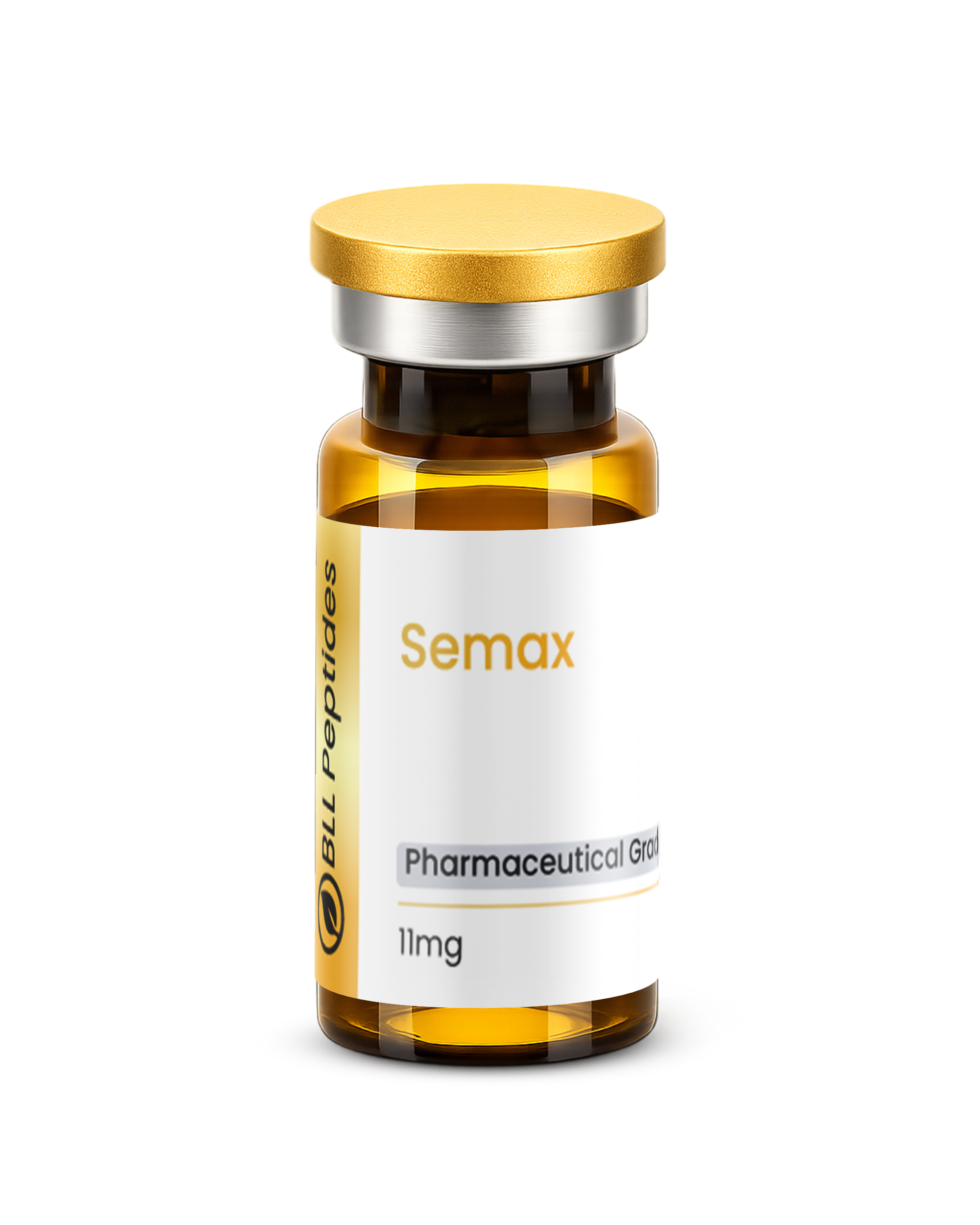
The first time I watched a patient lose language after a stroke — able to think, unable to speak — I was a resident standing at a bedside where surgery had gone perfectly. The clot was removed. The pressure was managed. But something in that neural circuitry had shifted in ways no scalpel could address. Twenty years later, that gap between what we can surgically fix and what the brain needs to genuinely recover still drives my curiosity. Semax peptide research sits squarely in that gap.
Semax is a synthetic heptapeptide derived from the N-terminal fragment of ACTH (adrenocorticotropic hormone) — specifically the ACTH(4-7) sequence — with a Pro-Gly-Pro C-terminal extension that dramatically increases its stability in plasma and CNS tissue. In research contexts, it has been studied for neuroprotection, BDNF upregulation, cognitive enhancement, and recovery from ischemic brain injury. For anyone interested in the neuroscience of repair and recovery, the Semax literature is worth a close read.
What Is Semax?
Semax was developed in the 1980s at the Institute of Molecular Genetics of the Russian Academy of Sciences. The peptide sequence — Met-Glu-His-Phe-Pro-Gly-Pro — is built on the ACTH(4-7) tetrapeptide core, with a Pro-Gly-Pro tripeptide added at the C-terminus specifically to resist enzymatic degradation. That structural engineering matters: it extends biological activity well beyond what the native ACTH fragment can sustain in vivo.
A critical distinction for research purposes: Semax does not stimulate cortisol release from the adrenal cortex the way full ACTH does. The fragment targeting appears to selectively engage central nervous system melanocortin receptor pathways — particularly MC4R — without triggering the adrenocortical response. This selectivity makes Semax more useful for isolating neurological mechanisms in research settings without HPA-axis confounding.
Semax received regulatory approval in Russia for use in stroke rehabilitation and conditions involving cerebrovascular insufficiency — giving it a clinical approval profile that is relatively uncommon among peptides studied primarily in the nootropic research space.
How Semax Works: BDNF, Melanocortin Receptors, and Neuroprotection
The mechanism of Semax is multifactorial, which is part of what makes it genuinely interesting from a neuroscience standpoint. Three primary pathways emerge consistently from the research literature:
Melanocortin receptor activation: Semax interacts with MC4R and related melanocortin receptors in the CNS, triggering downstream cAMP-mediated signaling that influences synaptic plasticity, mood regulation, and cognitive function. These receptors are distributed throughout limbic structures and the prefrontal cortex — regions central to memory, attention, and executive function.
BDNF and NGF upregulation: The most frequently cited mechanism in the Semax literature is its ability to upregulate brain-derived neurotrophic factor (BDNF) and nerve growth factor (NGF) expression in CNS tissue. As a neurosurgeon, I think about BDNF the way a cardiologist thinks about VEGF — it is the trophic signal that drives the healing cascade we actually care about. Neurogenesis, long-term potentiation, neuronal survival: all downstream of BDNF.
Neuroinflammation reduction: In rodent ischemia models, Semax significantly reduces inflammatory markers including IL-1β and TNF-α in brain tissue — effects that matter enormously in the post-ischemic environment, where inflammatory cascades extend secondary injury well beyond the initial insult.
“Semax’s ability to upregulate BDNF — the neurotrophin most critical for synaptic plasticity and neuronal survival — positions it as one of the more mechanistically credible peptides in the neuroprotection research space.”
What the Research Shows
The Semax evidence base is primarily Russian and Eastern European in origin, with a growing body of preclinical rodent data that has drawn increasing attention from Western researchers:
- A study published in the Journal of Neurochemistry demonstrated that intranasal Semax administration in rats produced significant upregulation of BDNF mRNA in the hippocampus and frontal cortex within 24 hours of administration — regions critical for memory consolidation and executive function. (PubMed)
- In rodent models of middle cerebral artery occlusion (MCAO) — the standard animal model for ischemic stroke — Semax treatment reduced infarct volume by approximately 20–30% compared to controls, with corresponding improvements in motor and cognitive behavioral outcomes.
- Gene expression analysis following Semax administration revealed upregulation of genes associated with immune defense, trophic signaling, and neuroregeneration — a broad transcriptional profile consistent with the peptide’s diverse observed effects across CNS tissue types.
“In ischemic stroke models, Semax has consistently produced 20–30% reductions in infarct volume — a magnitude of neuroprotection that, if replicated in human trials, would represent a clinically meaningful advance in acute brain injury treatment.”
Key Research Findings Worth Knowing
A few things stand out from the Semax literature that deserve particular attention:
First, the intranasal delivery angle. One of the persistent challenges in peptide-based neuroprotection research is blood-brain barrier penetration — most large peptides simply cannot cross it at therapeutically relevant concentrations. Intranasal administration appears to achieve meaningful CNS concentrations through the olfactory epithelium pathway, sidestepping a problem that limits many otherwise promising compounds.
Second, Semax demonstrates both acute and subacute neuroprotective effects — relevant to the different temporal phases of injury response in stroke and brain trauma. The acute window matters, but so does the subacute repair period, which is often underappreciated in neuroprotection research design.
Third, the BDNF upregulation appears to persist beyond the acute administration window in some rodent models — suggesting that Semax may prime longer-lasting neuroplasticity cascades rather than simply providing transient receptor activation.
“What makes Semax particularly compelling from a translational standpoint is that intranasal delivery may bypass the blood-brain barrier challenge — one of the biggest structural obstacles in CNS peptide research.”
Exploring Related Research Compounds at BLL Peptides
Researchers studying cognitive resilience and neurological recovery often examine neuroprotective peptides alongside compounds targeting mitochondrial health and cellular energy metabolism. Our NAD+ research compound explores sirtuin pathway activation and mitochondrial biogenesis — mechanisms that work at the cellular energy level, complementary to the trophic signaling Semax targets at the neuronal level.
For those interested in systemic anti-inflammatory and tissue repair mechanisms, BPC-157 remains one of the most studied peptides for cytoprotection and angiogenesis, with a growing body of data on CNS-adjacent effects. And for researchers examining recovery biology across tissue types, TB-500 offers a distinct mechanistic angle through its actin-regulatory and systemic anti-inflammatory properties.
FAQ: Semax Peptide Research
- What is Semax and how does it differ from ACTH?
- Semax is a synthetic heptapeptide based on the ACTH(4-7) sequence with a Pro-Gly-Pro C-terminal extension engineered for metabolic stability. Unlike full ACTH, Semax does not stimulate cortisol release from the adrenal cortex — it selectively targets CNS melanocortin receptor pathways, making it more useful for neurological research without HPA-axis confounding effects.
- What are the primary research applications for Semax?
- The primary research focus areas are neuroprotection (particularly ischemic brain injury models), BDNF and NGF upregulation, cognitive enhancement in animal models, and neuroinflammation reduction. Semax has also been studied for anxiety and stress-related outcomes via melanocortin receptor pathways in rodent behavioral models.
- What delivery routes have been studied for Semax in research?
- Intranasal administration is the primary delivery route studied for Semax, and is notable for its potential to achieve CNS concentrations via the olfactory epithelium route without requiring systemic injection. Subcutaneous administration has also been evaluated in rodent models.
- Does Semax have regulatory approval anywhere?
- Yes — Semax received regulatory approval in Russia for clinical use in stroke rehabilitation and conditions involving cerebrovascular insufficiency, giving it a more substantive regulatory history than most peptides studied primarily in nootropic or neuroprotection research contexts.
- What research compounds does BLL Peptides offer for neuroprotection research?
- BLL Peptides offers research-grade NAD+, BPC-157, and TB-500 for laboratory use — compounds frequently studied alongside neuroprotective peptides for their complementary mechanisms in recovery, inflammation, and cellular energy research. All products are intended strictly for research purposes and are not intended for human consumption.
About the Author: Dr. James is a board-certified neurosurgeon and member of the Better Life Lab research team. With over 20 years of clinical experience in neurological intervention and post-operative recovery, he brings a surgeon’s precision to evaluating emerging peptide science. He writes regularly on topics at the intersection of neuroscience, recovery biology, and longevity research.
This content is intended for research purposes only. BLL Peptides products are not intended for human consumption.