
Tesamorelin Peptide Research: What a Neurosurgeon Learned About GHRH and Visceral Fat Science
·

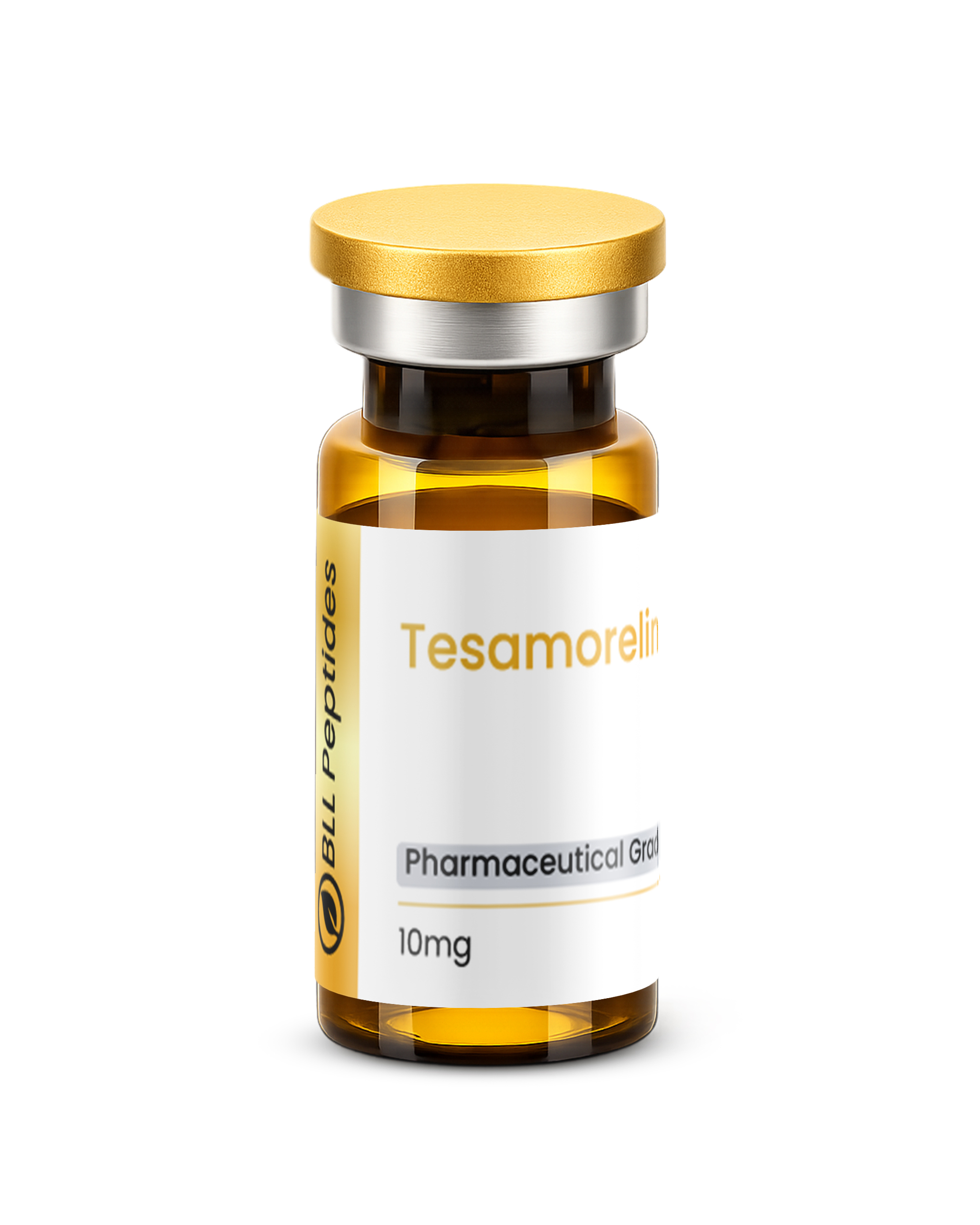
There’s a connection between visceral fat, growth hormone decline, and neurological health that rarely gets discussed outside of academic endocrinology papers. I stumbled onto it while reviewing post-operative metabolic profiles in older patients — noticing how consistently central adiposity correlated with worse recovery trajectories. That curiosity led me to Tesamorelin peptide research, and what I found was surprisingly robust for a compound most people outside of HIV medicine have never heard of.
Tesamorelin is a synthetic analog of growth hormone-releasing hormone (GHRH) — the signal your hypothalamus sends to tell the pituitary to release growth hormone. It’s been studied extensively for its effects on visceral adiposity, IGF-1 normalization, and increasingly, cognitive function in aging populations. It holds the distinction of being the only GHRH analog to receive FDA approval, which means it carries an unusually well-documented clinical research profile compared to most peptides in this space.
What Is Tesamorelin?
Tesamorelin is a 44-amino-acid peptide that mirrors the full sequence of endogenous GHRH, with the addition of a trans-3-hexenoic acid group at the N-terminus. That structural modification isn’t cosmetic — it significantly increases the peptide’s stability in plasma, extending its half-life compared to native GHRH and making it viable for research applications.
Developed by Theratechnologies, Tesamorelin was approved by the FDA in 2010 under the brand name Egrifta for the reduction of excess abdominal fat in HIV-infected patients with lipodystrophy — a condition caused by antiretroviral therapy that leads to pathological visceral fat accumulation. The approval was based on two large Phase 3 randomized controlled trials, giving Tesamorelin one of the most rigorous evidence bases of any GHRH peptide studied to date.
As a neurosurgeon, I became interested in Tesamorelin not primarily for its metabolic effects but for what it tells us about the GH/IGF-1 axis — and how that axis intersects with brain health, cognition, and the biology of aging.
How Tesamorelin Works: The GH/IGF-1 Axis
The mechanism is elegant in its directness. Tesamorelin binds to GHRH receptors on somatotroph cells in the anterior pituitary, stimulating the pulsatile release of growth hormone. GH then travels to the liver, where it drives the production of insulin-like growth factor 1 (IGF-1). This GH/IGF-1 axis governs a remarkable range of physiological processes: protein synthesis, lipolysis, glucose metabolism, immune function, and — critically for my area of interest — neurogenesis and neuroprotection.
What makes Tesamorelin particularly interesting from a research standpoint is its selectivity. Unlike direct GH administration, Tesamorelin works upstream — it amplifies the body’s own pulsatile GH release rather than bypassing the feedback loop entirely. This means the hypothalamic-pituitary-somatotropic axis remains intact, which researchers believe may produce a more physiologically consistent response.
The downstream effect on visceral fat is well-documented: Tesamorelin consistently reduces visceral adipose tissue (VAT) through enhanced lipolysis driven by elevated GH and IGF-1 levels.
What the Research Shows
The Tesamorelin research base is notable for both its breadth and its methodological rigor — a consequence of the FDA approval pathway that required real Phase 3 data:
- Visceral fat reduction: In the pivotal Phase 3 trials published in JAMA (Grunfeld et al., 2010), Tesamorelin produced an approximately 15% reduction in visceral adipose tissue compared to placebo over 26 weeks — a statistically significant and clinically meaningful finding. (PubMed)
- IGF-1 normalization: Across multiple studies, Tesamorelin consistently raised IGF-1 levels toward the normal range in GH-deficient and aging populations — without the supraphysiological spikes associated with exogenous GH administration.
- Cognitive research: A 2012 randomized controlled trial found that Tesamorelin treatment was associated with improved verbal memory and executive function in older adults with mild cognitive impairment — findings that align with the known role of the GH/IGF-1 axis in hippocampal neurogenesis.
- Lipid profile improvements: Research has shown favorable changes in triglyceride levels and trunk fat distribution, with some studies noting improvements in insulin sensitivity markers over extended treatment periods.
Key Findings Worth Knowing
“Tesamorelin is the only GHRH analog with Phase 3 clinical trial data — giving it a uniquely rigorous evidence base compared to most research peptides in the growth hormone space.”
“The GH/IGF-1 axis doesn’t just govern metabolism — it plays a documented role in neurogenesis, synaptic plasticity, and cognitive function, which makes Tesamorelin’s research profile relevant far beyond visceral fat.”
“Unlike exogenous GH, Tesamorelin works upstream — preserving the pulsatile, feedback-regulated nature of growth hormone release rather than overriding it.”
From a neuroscience perspective, the cognitive research is where I think the most underexplored territory lies. IGF-1 crosses the blood-brain barrier, promotes neurogenesis in the hippocampus, and has neuroprotective effects in multiple animal models of neurodegeneration. The fact that Tesamorelin can raise IGF-1 levels in a physiologically controlled manner — without the risks of direct GH injection — makes it a compelling research subject for anyone studying brain aging.
Exploring Tesamorelin Alongside Other Research Peptides
Researchers studying metabolic aging frequently examine multiple pathways simultaneously. NAD+ research explores mitochondrial function and sirtuin activation — complementary mechanisms to GH-axis modulation in the context of metabolic health and cellular aging. For researchers interested in body composition alongside GLP-1 receptor biology, our Tirzepatide research page covers the dual GIP/GLP-1 agonist data in detail.
And for those exploring tissue repair and recovery research in parallel with GH-axis studies, BPC-157 remains one of the most studied peptides for angiogenesis and wound healing at the cellular level.
FAQ: Tesamorelin Peptide Research
- What is Tesamorelin and how does it differ from other GHRH peptides?
- Tesamorelin is a synthetic 44-amino-acid GHRH analog with a trans-3-hexenoic acid modification that increases plasma stability. Unlike shorter GHRH fragments or other secretagogues, it mirrors the full endogenous GHRH sequence and has undergone Phase 3 clinical trials — making it one of the best-documented GHRH research compounds available.
- What is the primary research focus for Tesamorelin?
- The primary research focus has been visceral adipose tissue reduction via GH/IGF-1 axis stimulation. Secondary research areas include cognitive function in aging populations, lipid metabolism, and IGF-1 normalization in GH-deficient subjects.
- How does Tesamorelin compare to direct growth hormone administration in research?
- Tesamorelin works upstream by stimulating the pituitary’s own GH release, preserving the natural pulsatile rhythm and hypothalamic feedback loop. Direct GH administration bypasses this regulatory system, which researchers believe may produce different physiological profiles. Tesamorelin’s approach is considered more physiologically consistent with endogenous GH dynamics.
- What did the Phase 3 clinical trials show?
- The Phase 3 trials published in JAMA demonstrated approximately 15% reduction in visceral adipose tissue compared to placebo over 26 weeks, along with significant increases in IGF-1 levels. These trials formed the basis for FDA approval of Tesamorelin for HIV-associated lipodystrophy.
- Is Tesamorelin available for research purposes?
- Yes. BLL Peptides offers research-grade Tesamorelin for laboratory use. All products are intended strictly for research purposes and are not intended for human consumption.
About the Author: Dr. James is a neurosurgeon and member of the Better Life Lab research team. His clinical work has centered on neurological intervention and post-operative recovery, and he brings a surgeon’s rigor to evaluating the emerging science of peptide research. He writes regularly on topics at the intersection of neuroscience, endocrinology, and longevity biology.
This content is intended for research purposes only. BLL Peptides products are not intended for human consumption.