
GHK-Cu Copper Peptide Research: A Neurosurgeon’s Look at Gene Activation, Tissue Repair, and Antioxidant Signaling
·

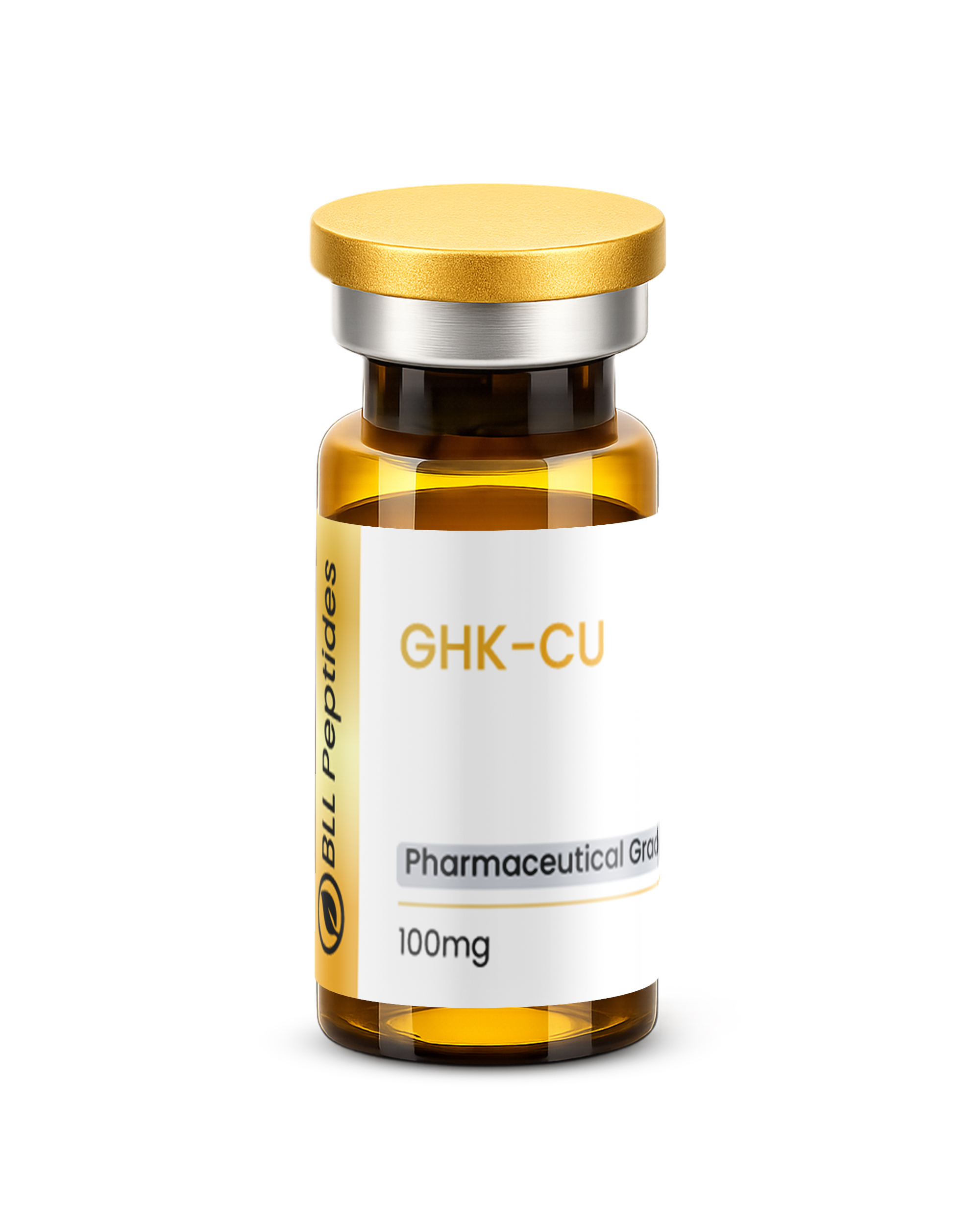
I didn’t expect a molecule my own body produces to stop me cold mid-research session. But that’s what happened with GHK-Cu. I was reviewing post-surgical tissue repair literature — something I do regularly as a neurosurgeon — and I kept running into citations for this small copper-binding tripeptide with an almost absurdly broad reach. The more I pulled the thread, the more remarkable it became.
GHK-Cu copper peptide research is far deeper, and far more surprising, than most people outside specialized labs realize. Here’s what I’ve found.
What Is GHK-Cu? The Direct Answer
GHK-Cu (glycyl-L-histidyl-L-lysine copper complex) is a naturally occurring tripeptide that binds copper (II) ions and acts as a multi-system biological signaling molecule. First isolated from human plasma in 1973 by researcher Loren Pickart, GHK-Cu is endogenous — your body makes it. It appears in plasma, saliva, and urine, and its concentration is highest in young individuals: approximately 200 ng/mL at age 20, declining to roughly 80 ng/mL by age 60. That nearly 60% age-related decline has made GHK-Cu one of the more intriguing subjects in longevity and regenerative biology research.
Unlike purely synthetic research peptides, GHK-Cu belongs to human biology. The research question isn’t whether it’s physiologically relevant — it clearly is. The question researchers are actively exploring is how extensively it acts and what mechanisms drive those actions.
How GHK-Cu Works: Copper Delivery and Gene Regulation
This is the part that made me sit up straight. Most bioactive peptides have a relatively defined mechanism: they bind a specific receptor, activate a downstream pathway, and produce a measurable effect. GHK-Cu operates differently — and at a different scale.
Research published in Biomolecules (Pickart & Margolina, 2018) analyzed GHK-Cu’s effect on human gene expression using microarray analysis. The findings: GHK-Cu appears to modulate over 4,000 human genes. That includes genes governing collagen synthesis, antioxidant defense, anti-inflammatory signaling, stem cell activation, and tissue remodeling. That breadth is genuinely unusual in peptide research literature.
The copper component is central to this activity. GHK forms a high-affinity complex with copper (II) ions, functioning as a copper chaperone — delivering bioavailable copper to enzymes that require it to function:
- Superoxide dismutase (SOD) — a primary antioxidant enzyme
- Lysyl oxidase — essential for collagen and elastin crosslinking
- Cytochrome c oxidase — a mitochondrial enzyme critical for ATP production
In that sense, GHK-Cu isn’t simply a wound-healing peptide — it may be better described as a systems-level repair signal that activates and coordinates multiple biological processes simultaneously.
What GHK-Cu Copper Peptide Research Actually Shows
Let me walk through the most compelling findings across the primary research domains:
Collagen Synthesis and Extracellular Matrix Remodeling
Multiple in vitro and animal studies have documented that GHK-Cu stimulates collagen production in fibroblasts while simultaneously activating matrix metalloproteinases (MMPs) that clear damaged collagen. This dual action — synthesizing new matrix while degrading damaged matrix — is exactly what efficient tissue repair requires. Studies in wound models found GHK-Cu-treated tissue exhibited increased tensile strength and accelerated closure compared to untreated controls.
Antioxidant and Anti-Inflammatory Signaling
Oxidative stress is a primary driver of tissue aging and amplifies post-injury inflammatory cascades. GHK-Cu has demonstrated upregulation of antioxidant gene expression in preclinical models — including SOD and catalase genes — and has been shown to reduce TNF-α, a key pro-inflammatory cytokine, in macrophage culture studies. For anyone managing the biology of surgical recovery and tissue repair, that’s a finding worth tracking carefully.
Neuroprotective Properties and Neural Research
Here’s what specifically put GHK-Cu on my personal research list. Studies exploring neural tissue have found that GHK-Cu promotes neurite outgrowth in culture and upregulates nerve growth factor (NGF) expression. Research also suggests GHK-Cu modulates genes associated with mitochondrial function, protein aggregation, and oxidative stress in neural contexts — all areas of active interest in neurodegenerative disease research.
As a neurosurgeon, I find the intersection of copper metabolism, mitochondrial function, and neural repair genuinely compelling. This comprehensive PubMed review of GHK-Cu’s multi-system biological activity is a solid starting point for researchers who want the full picture.
Key Findings from GHK-Cu Research
- GHK-Cu modulates over 4,000 human genes across inflammatory, antioxidant, repair, and mitochondrial pathways
- Plasma GHK concentrations decline approximately 60% between ages 20 and 60, correlating with reduced repair capacity
- Acts as a copper chaperone feeding SOD, lysyl oxidase, and cytochrome c oxidase — three critical repair and energy enzymes
- In animal wound models, GHK-Cu treatment accelerated wound closure and increased healed tissue strength
- Demonstrated neurite outgrowth promotion and NGF upregulation in neural tissue preclinical research
- Reduced TNF-α in macrophage cultures, suggesting direct anti-inflammatory activity
GHK-Cu in the Context of Peptide Research
Researchers studying tissue repair often look at GHK-Cu alongside other well-characterized peptides. BPC-157 has a well-established preclinical profile centered on angiogenesis and tendon repair via the FAK-paxillin pathway — a mechanism quite different from GHK-Cu’s gene modulation approach. TB-500 (Thymosin Beta-4) promotes actin polymerization and cell migration, representing yet another distinct repair pathway.
What distinguishes GHK-Cu in comparative analysis is the sheer scope of its gene regulatory activity. Most peptides act through a defined receptor-pathway axis. GHK-Cu appears to function more like a systems-level reset signal — influencing gene expression patterns across multiple tissue types. Whether that breadth translates into proportionally broader research applications remains an open and active question.
Research-Grade GHK-Cu from BLL Peptides
For researchers sourcing GHK-Cu for laboratory investigation, formulation consistency and purity verification are non-negotiable variables. BLL Peptides supplies GHK-Cu produced under GMP-certified conditions with third-party quality testing. All products are USA-manufactured and are made available strictly for research purposes.
This content is intended for research purposes only. BLL Peptides products are not intended for human consumption.
Frequently Asked Questions About GHK-Cu
What does GHK-Cu stand for?
GHK-Cu stands for glycyl-L-histidyl-L-lysine copper complex. It is a naturally occurring tripeptide that forms a stable complex with copper (II) ions. Found in human plasma, saliva, and urine, it was first isolated from human albumin in 1973 by researcher Loren Pickart.
Is GHK-Cu the same as “copper peptide”?
“Copper peptide” is a colloquial term — particularly common in cosmetic and skincare research contexts — that refers to GHK-Cu. The compounds are identical. The scientific designation is GHK-Cu or glycyl-L-histidyl-L-lysine-copper(II). The informal name became widespread as GHK-Cu appeared prominently in topical skin and wound healing research literature.
How many genes does GHK-Cu affect?
Gene expression research has found that GHK-Cu modulates over 4,000 human genes, including those involved in collagen synthesis, antioxidant defense, inflammation regulation, stem cell signaling, and mitochondrial function. This breadth of gene regulatory activity is notably large compared to most characterized peptides in research literature.
Why does GHK-Cu decline with age?
GHK-Cu plasma concentrations decline as part of broader shifts in protein metabolism and plasma composition that occur with aging. Levels peak around 200 ng/mL in young adulthood and fall to approximately 80 ng/mL by age 60. Researchers have proposed that this decline may contribute to the reduced tissue repair capacity observed in aging, though the causal relationship has not been definitively established.
What is the difference between GHK and GHK-Cu?
GHK refers to the free tripeptide (glycyl-L-histidyl-L-lysine) without copper. GHK-Cu is the copper-bound complex. Virtually all of the significant biological activity documented in research literature is attributed to the copper-bound form, as the copper component is integral to the compound’s enzyme-activating and gene-regulatory functions.
About the Author
Dr. James is a board-certified neurosurgeon and member of the BLL Peptides research advisory team. With decades of surgical experience and a focused interest in tissue repair, neural regeneration, and the emerging science of signaling peptides, Dr. James regularly reviews preclinical research and translates complex findings for clinicians and researchers.
This content is intended for research purposes only. BLL Peptides products are not intended for human consumption.