

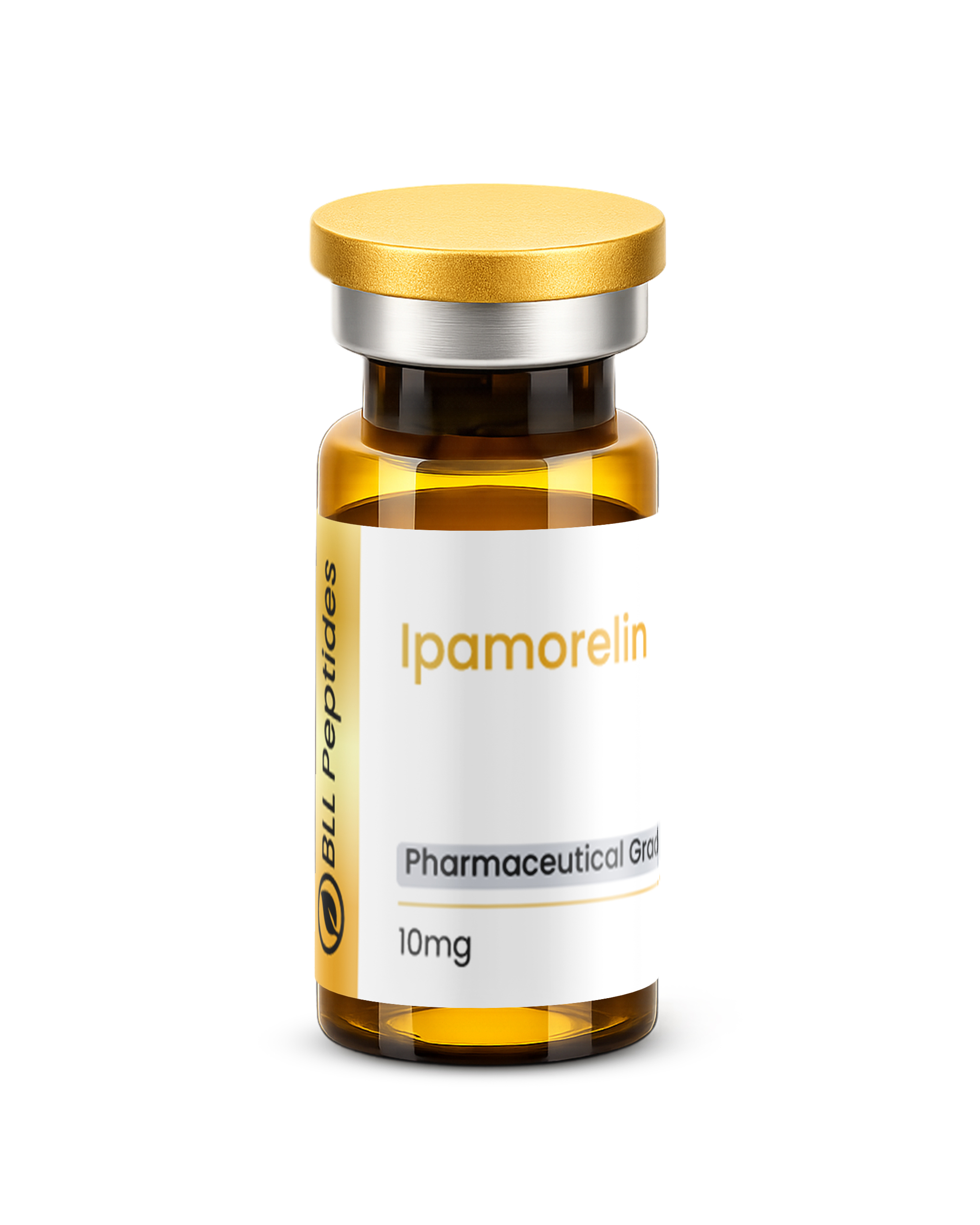
The best recovery tool we have in medicine isn’t a drug or a device. It’s sleep. Every neurosurgeon knows this — sleep is when the brain clears metabolic waste through the glymphatic system, when the immune system consolidates its memory, when growth hormone reaches its daily peak. What researchers have been discovering about Ipamorelin is that this selective growth hormone secretagogue may interact with sleep architecture in ways that extend its research relevance well beyond simple GH stimulation.
Ipamorelin is a pentapeptide (five amino acids) GHRP (growth hormone-releasing peptide) that acts as a selective ghrelin receptor agonist. Unlike first-generation GHRPs that also elevated cortisol and prolactin, Ipamorelin was specifically engineered for selectivity — producing clean GH pulses without the hormonal side-effect profile that complicated earlier compounds in its class. This selectivity has made it one of the most widely used research tools for studying pulsatile GH secretion and its downstream effects.
Ipamorelin Research and the Sleep-GH Connection
The relationship between sleep and growth hormone is not coincidental. The largest daily GH pulse occurs during the first period of slow-wave sleep (SWS, also called deep sleep or stage N3). This isn’t simply a matter of hormonal timing — the GH pulse and slow-wave sleep appear to be mechanistically linked through shared hypothalamic regulatory circuits.
GHRH (the natural signal Ipamorelin partially mimics through ghrelin receptors) is also a sleep-promoting factor. It stimulates SWS when administered to subjects, and its natural release rhythms track closely with sleep-stage cycling. Ghrelin itself — the endogenous hormone that Ipamorelin mimics — has been shown to enhance SWS duration and GH release simultaneously, suggesting the appetite-sleep-GH axis is a unified regulatory system rather than independent parallel processes.
Research examining ghrelin receptor agonists in sleep models has found that activation of this pathway can increase slow-wave sleep duration while simultaneously enhancing nocturnal GH secretion — raising the possibility that compounds like Ipamorelin may influence recovery through sleep quality as well as direct GH effects.
The implications for post-operative and injury recovery contexts — areas I care about professionally — are significant. Both GH pulsatility and slow-wave sleep are disrupted by surgical stress, pain, and hospitalization. If compounds that restore one can simultaneously restore the other, that represents a research angle with meaningful translational potential.
Key Research Findings: Ipamorelin, GH Selectivity, and Recovery
A key study comparing Ipamorelin to other GHRPs found that it produced comparable GH release to GHRP-6 and GHRP-2 without the significant cortisol or prolactin elevations seen with those compounds — confirming its receptor selectivity (PMID: 9849822). This selectivity profile made Ipamorelin particularly valuable as a research compound because it allowed investigators to study isolated GH effects without concurrent cortisol-related confounding.
In animal models of surgical recovery, GHRP administration has been associated with faster healing, reduced muscle wasting, and improved tissue repair — effects consistent with the known anabolic and repair-promoting roles of GH. The sleep dimension has been less directly studied in the context of Ipamorelin specifically, but the ghrelin-SWS link established in human studies provides a mechanistic framework for why this connection is worth investigating.
Body composition research has shown Ipamorelin-related GH elevation produces typical GH metabolic effects: improved fat metabolism, preservation of lean mass, and enhanced protein synthesis. These effects are most pronounced in states of relative GH deficiency — either age-related somatopause or GH deficiency from hypothalamic suppression by chronic stress or illness.
The synergy between Ipamorelin and CJC-1295 (a GHRH analogue that acts on a complementary receptor) has been the subject of significant research interest — the combination appears to produce additive or synergistic GH release by simultaneously activating two distinct regulatory inputs to pituitary somatotrophs.
For researchers investigating GH secretagogues and sleep-recovery connections, BLL Peptides carries Ipamorelin for laboratory research. NAD+ research is complementary here, given NAD+’s roles in circadian rhythm regulation and mitochondrial recovery processes during sleep. BPC-157 represents another research angle on tissue repair and CNS recovery.
Frequently Asked Questions About Ipamorelin and Sleep Research
- What makes Ipamorelin different from other growth hormone secretagogues?
- Ipamorelin is highly selective — it produces GH pulses without the cortisol and prolactin elevations seen with earlier GHRPs like GHRP-6 or GHRP-2. This selectivity makes it a cleaner research tool for studying isolated GH effects.
- What is the connection between sleep and growth hormone?
- The largest daily GH pulse occurs during slow-wave sleep (stage N3). GHRH and ghrelin — the pathways Ipamorelin interacts with — are also sleep-promoting signals, suggesting a unified GH-sleep regulatory axis in the hypothalamus.
- What does the CJC-1295 + Ipamorelin combination research show?
- These two compounds act on complementary receptor pathways (GHRH receptor and ghrelin receptor respectively), and research suggests their combination produces additive or synergistic GH release — making them a frequently studied pairing in GH axis research.
- What body composition effects has Ipamorelin research documented?
- Studies have found improved fat metabolism, lean mass preservation, and enhanced protein synthesis — effects consistent with GH’s known metabolic roles, most prominent in states of relative GH deficiency.
Dr. James Nguyen is a neurosurgeon and research advisor at BLL Peptides. His work focuses on peptide research, neurological recovery, and longevity science. All content is for educational and research purposes only.
This content is intended for research purposes only. BLL Peptides products are not intended for human consumption.