

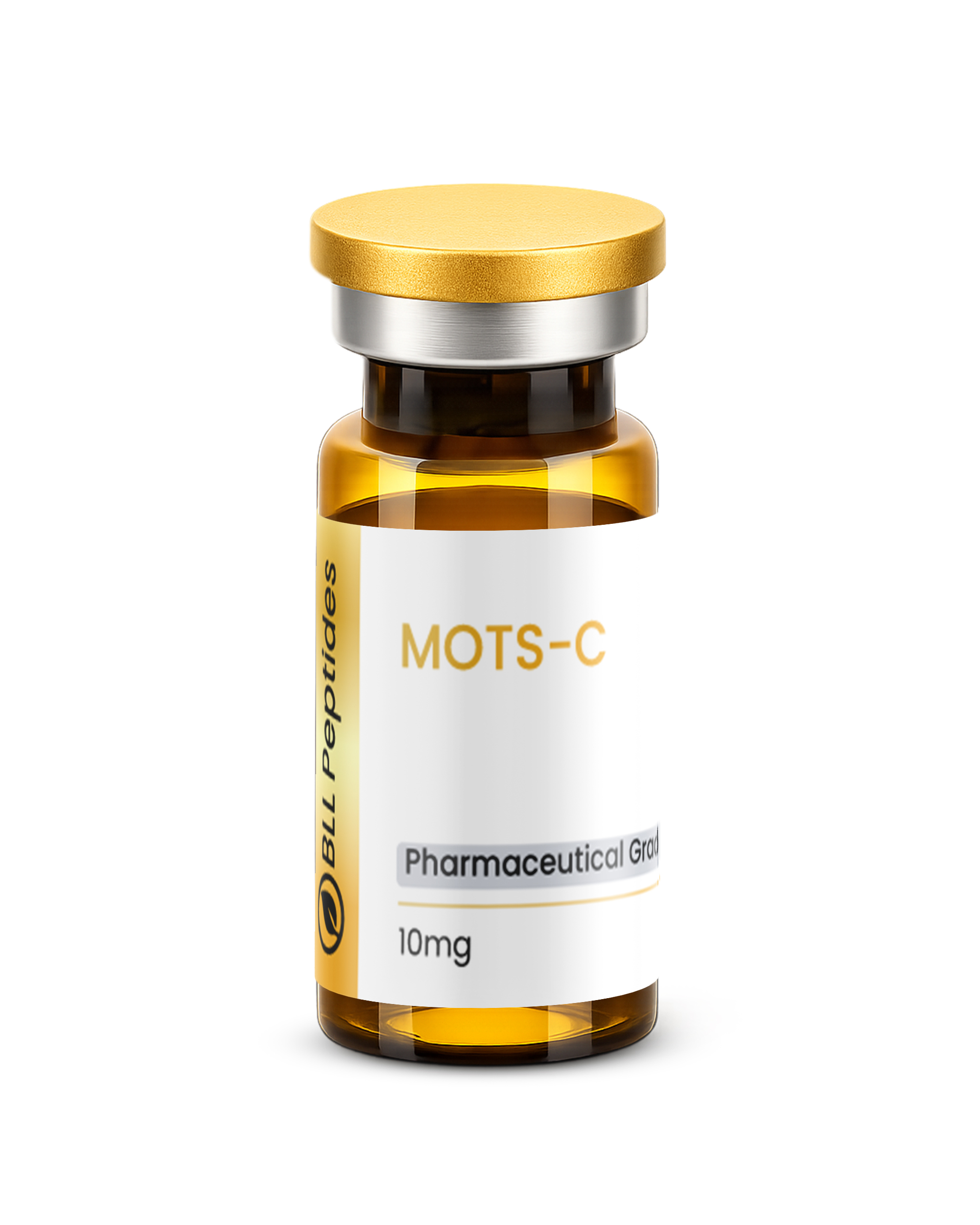
Exercise is medicine — that’s a phrase we say in medicine, but we rarely ask the mechanistic question underneath it: what exactly is the biological language that exercise speaks? Recent research has identified a peptide called MOTS-c that may be part of the answer. It’s produced inside mitochondria — the organelles that power cells — and it appears to act as a molecular signal that tells the body it’s in an active, metabolically engaged state. The implications for how we think about exercise-biology, aging, and metabolic health are genuinely novel.
MOTS-c (Mitochondrial Open Reading Frame of the 12S rRNA-c) is a 16-amino-acid peptide encoded in the mitochondrial genome — a distinction that makes it unusual in the peptide research landscape. Most signaling peptides are encoded in nuclear DNA. MOTS-c is encoded within the 12S ribosomal RNA sequence of mitochondrial DNA, and its discovery in 2015 by the Chang laboratory at USC opened an entirely new research area: mitochondria-derived peptides (MDPs) as systemic metabolic regulators.
MOTS-c Research and Exercise Biology
MOTS-c’s most documented biological effects closely parallel what exercise does to the body at a molecular level — which is not a coincidence. Exercise increases mitochondrial activity and biogenesis, and MOTS-c levels in plasma rise significantly during and after exercise. Research suggests MOTS-c may be one of the molecular signals through which muscle mitochondria communicate their metabolic status to distant tissues including the liver, fat, and brain.
In skeletal muscle, MOTS-c activates AMPK (AMP-activated protein kinase) — often called the cell’s “energy sensor.” AMPK activation triggers a cascade of metabolic effects: increased glucose uptake, enhanced fatty acid oxidation, improved mitochondrial biogenesis, and inhibition of the mTOR pathway (shifting cells from building mode to maintenance and repair mode). These are precisely the metabolic signatures of exercise-trained tissue.
A landmark study published in Cell Metabolism found that exogenous MOTS-c administration in mice improved insulin sensitivity, reduced adiposity, and enhanced exercise tolerance — effects that were comparable to physical exercise in sedentary animals and that required intact AMPK signaling.
Key Research Findings: Aging, Metabolism, and MOTS-c Decline
Like most beneficial peptides in the aging research literature, MOTS-c levels decline with age. A study examining circulating MOTS-c across age groups found that plasma MOTS-c was significantly higher in young, physically active individuals and declined progressively with aging and physical inactivity (PMID: 25738459). This decline tracks closely with the metabolic changes associated with aging: insulin resistance, reduced mitochondrial function, increased adiposity, and declining physical performance.
The obesity and insulin resistance research has shown particularly consistent findings. In rodent models of diet-induced obesity, MOTS-c administration produced robust improvements in insulin sensitivity, significant reductions in body fat, and improved glucose metabolism — without changes in food intake, suggesting the effects were mediated through metabolic efficiency rather than appetite regulation. This mechanism distinguishes MOTS-c from GLP-1 class compounds and places it in a unique research category.
Aging models have examined MOTS-c’s effects on both longevity markers and physical function. Studies in aging mice found that MOTS-c administration improved multiple aging biomarkers, and notably, extended exercise tolerance — suggesting the peptide may partially recapitulate the physiological state of a more physically active biological age.
The concept of MOTS-c as an “exercise mimetic” — a compound that activates some of the molecular pathways normally engaged by physical activity — represents one of the more scientifically grounded applications of this framing, given the direct mechanistic link between mitochondrial activity and MOTS-c production.
The nuclear relocalization of MOTS-c under stress conditions is an additional dimension of its biology that researchers are actively investigating. Under metabolic stress, MOTS-c translocates to the nucleus where it appears to regulate gene expression — suggesting roles beyond cytoplasmic metabolism in cellular stress response and adaptive gene activation.
For exercise biology and metabolic aging researchers, BLL Peptides carries MOTS-c for research purposes. Related research subjects include NAD+ (for mitochondrial energy metabolism) and BPC-157 (for muscle and tissue repair mechanisms).
Frequently Asked Questions About MOTS-c and Exercise Research
- What makes MOTS-c unusual among research peptides?
- MOTS-c is encoded in mitochondrial DNA rather than nuclear DNA — a rare feature among signaling peptides. This makes it one of a small family of mitochondria-derived peptides (MDPs) and connects it mechanistically to mitochondrial activity and energy status.
- How does MOTS-c relate to exercise at the molecular level?
- MOTS-c levels rise during and after exercise, and its mechanism (AMPK activation, increased glucose uptake, enhanced fat oxidation, mitochondrial biogenesis) mirrors the metabolic changes produced by exercise training — making it a focus of “exercise mimetic” research.
- What metabolic effects has MOTS-c research demonstrated?
- Studies have shown improved insulin sensitivity, reduced adiposity, enhanced glucose metabolism, and improved exercise tolerance in both young and aging animal models — without appetite suppression, suggesting metabolic efficiency as the primary mechanism.
- How do MOTS-c levels change with age?
- Plasma MOTS-c declines progressively with aging and physical inactivity, tracking closely with the metabolic deterioration associated with aging: insulin resistance, reduced mitochondrial function, and declining physical performance.
Dr. James Nguyen is a neurosurgeon and research advisor at BLL Peptides. His work focuses on peptide research, neurological recovery, and longevity science. All content is for educational and research purposes only.
This content is intended for research purposes only. BLL Peptides products are not intended for human consumption.