
Ipamorelin Research: What This Selective GHRP Reveals About Growth Hormone Pulse Mechanisms
·

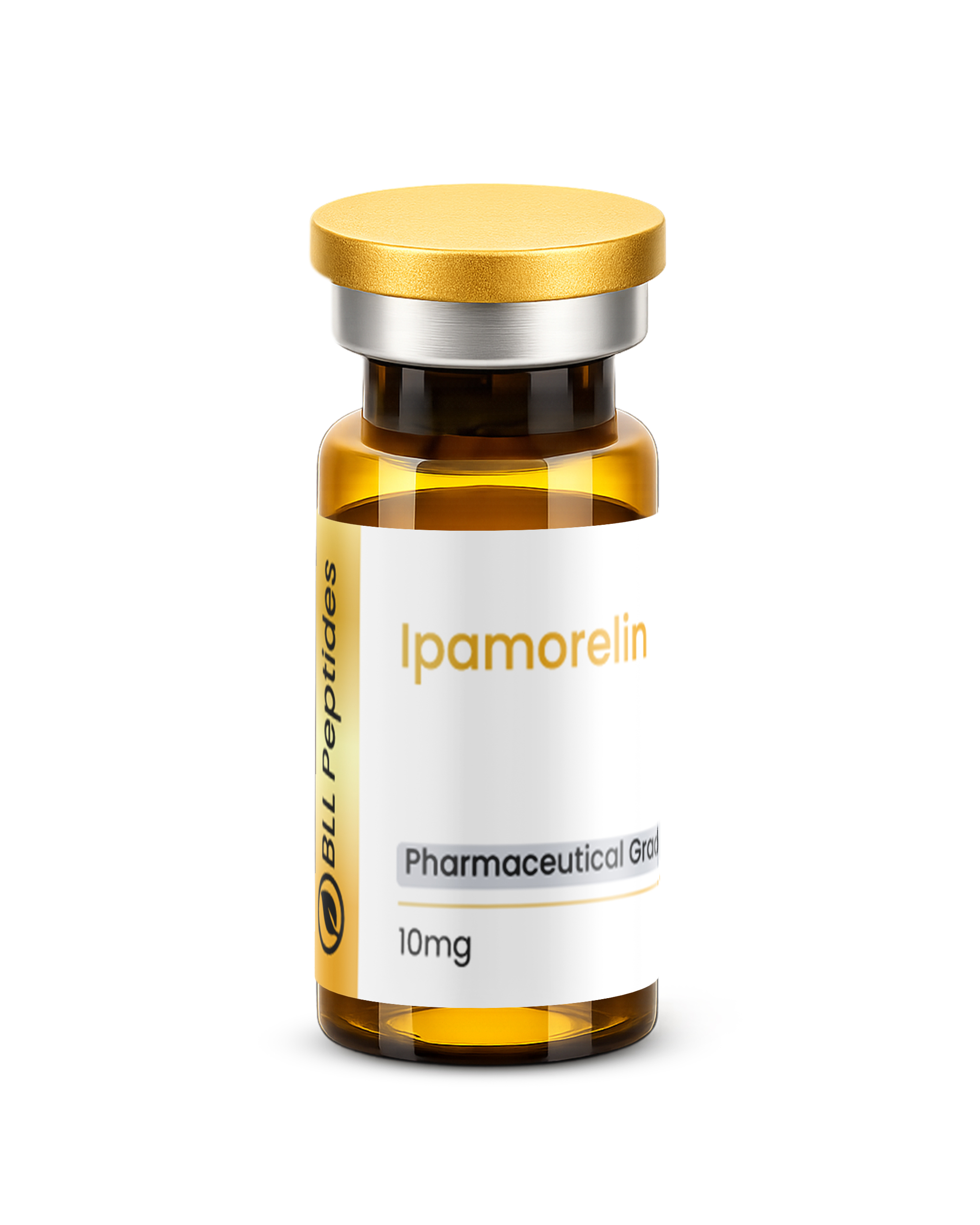
I had a patient in his late forties — a former competitive swimmer — who came to me not for anything neurological, but because his internist had referred him for fatigue workup. Sharp guy, disciplined with sleep and nutrition. His labs were unremarkable. What struck me wasn’t his hormone panel, but a question he asked me: “Why does my body seem to have forgotten how to recover?” That question sent me down a research rabbit hole into growth hormone secretagogues — and specifically into a peptide called ipamorelin.
Ipamorelin research has produced a compelling body of preclinical and early clinical data suggesting this selective growth hormone-releasing peptide (GHRP) may have a uniquely clean stimulatory profile compared to other secretagogues in its class — without the cortisol or prolactin spikes that complicate many of its counterparts.
What Is Ipamorelin?
Ipamorelin is a synthetic pentapeptide — five amino acids — designed to mimic the endogenous signal that tells the pituitary gland to release growth hormone (GH). It belongs to the GHRP (growth hormone-releasing peptide) family, which also includes GHRP-2 and GHRP-6, but researchers have noted it stands apart in one critical way: selectivity.
Most GHRPs activate ghrelin receptors broadly, which can trigger downstream hormonal side effects. Ipamorelin, by contrast, appears to bind the GHS-R1a receptor (the growth hormone secretagogue receptor) with high affinity while producing minimal effects on cortisol, ACTH, and prolactin in animal models. This selectivity profile is precisely what makes it interesting to researchers studying the pulsatile GH axis.
How Ipamorelin Works: The Pulse Mechanism
Growth hormone is not secreted continuously — it pulses. In healthy young adults, the pituitary fires 6–12 GH pulses per day, with the largest occurring during deep sleep. As we age, pulse amplitude declines significantly. This isn’t just about muscle mass or body composition; GH pulses regulate a cascade of downstream processes including IGF-1 production, lipolysis, protein synthesis, and cellular repair pathways.
What ipamorelin research suggests is that this peptide amplifies existing GH pulses rather than overriding the body’s natural feedback mechanisms. In a pivotal study by Raun et al. (1998), ipamorelin demonstrated dose-dependent GH release in rats without suppressing somatostatin rebound — the natural brake on GH secretion. This is mechanistically different from continuous stimulation approaches and may explain why the hormonal side effect profile appears more favorable in preclinical models.
As a neurosurgeon who spends a great deal of time thinking about the hypothalamic-pituitary axis, I find this pulse-preserving mechanism genuinely fascinating. The body’s regulatory architecture exists for a reason — and peptides that work within it rather than around it represent a more elegant research target.
What the Research Shows
The ipamorelin research landscape spans bone density, lean mass composition, GI motility, and pituitary function. Here’s what the data suggests:
Bone Density and Body Composition
A 12-week study in ovariectomized rats found that ipamorelin administration was associated with increased bone mineral content and trabecular bone density comparable to positive controls. The researchers noted that IGF-1 levels rose in parallel — consistent with the expected downstream effect of amplified GH pulsatility. This finding has driven interest in ipamorelin as a research model for bone remodeling under GH-deficient conditions.
Selectivity vs. GHRP-2 and GHRP-6
In comparative studies, ipamorelin has consistently shown a narrower stimulatory fingerprint than GHRP-2 and GHRP-6. Where GHRP-6 notably elevates ghrelin-mediated hunger signals and GHRP-2 raises cortisol and ACTH, ipamorelin research has not replicated these patterns at equivalent GH-stimulating doses. A 1999 paper published in the European Journal of Endocrinology described ipamorelin as “the first GHRP receptor agonist with a selectivity for GH release similar to that of GHRH.” You can read the original Raun et al. research here via PubMed.
GI Motility Research
An often-overlooked area of ipamorelin research involves the gastrointestinal tract. GHS-R receptors are expressed throughout the gut, and animal models have shown ipamorelin may influence GI transit time — a finding with potential relevance to postoperative ileus research. The intersection of the GH axis and gut function is an underexplored frontier that deserves more attention from the research community.
Key Research Findings at a Glance
- Ipamorelin stimulates GH release dose-dependently without significant cortisol or prolactin elevation in animal models
- 12-week bone density studies in rodents show measurable increases in trabecular bone mineral content
- Described in peer-reviewed literature as the “most selective GHRP” studied at the time of publication
- Does not suppress natural somatostatin feedback in preclinical models — preserving pulsatile GH architecture
- GHS-R expression in the gut opens potential GI motility research applications
Ipamorelin in Context: Related Research Areas
Ipamorelin research doesn’t exist in a vacuum. Researchers frequently study it alongside other peptides with complementary mechanisms. BPC-157’s connective tissue repair research is often paired with GH-axis peptides in multi-pathway recovery models, since BPC-157 appears to act locally on injured tissue while GHRPs modulate systemic GH availability. Similarly, researchers exploring metabolic function have examined ipamorelin alongside NAD+ pathways, given their shared relevance to cellular energy and repair signaling.
For researchers sourcing research-grade peptides, BLL Peptides’ BPC-157 is produced in a USA GMP-certified facility — the same standard we apply across our entire catalog. As a veteran-owned operation, quality isn’t optional for us.
Frequently Asked Questions About Ipamorelin Research
What makes ipamorelin different from other GHRPs in research models?
The primary differentiator documented in the literature is selectivity. Unlike GHRP-2 and GHRP-6, ipamorelin research in animal models has not shown significant cortisol, ACTH, or prolactin co-stimulation at GH-releasing doses. This cleaner hormonal profile makes it a valuable research compound for isolating GH-axis-specific effects.
What is the proposed mechanism behind ipamorelin’s bone density effects?
Researchers hypothesize that ipamorelin’s effect on bone is mediated primarily through elevated IGF-1 levels downstream of GH pulse amplification. IGF-1 is a potent driver of osteoblast activity and bone mineral deposition. The 12-week rodent studies showing increased trabecular density support this mechanistic pathway, though human clinical data remains limited.
Does ipamorelin affect natural GH production long-term?
This is one of the most important questions in ipamorelin research. Preclinical data suggests that because ipamorelin amplifies natural pulses rather than overriding feedback mechanisms, somatostatin rebound and desensitization may be less pronounced than with continuous secretagogue approaches. However, long-term human studies are not yet available, and all findings should be interpreted within a preclinical research context.
What does ipamorelin research suggest about GI motility?
GHS-R1a receptors are expressed in gastric and intestinal tissue, and ipamorelin research in animal models has documented effects on GI transit and motility. This has made it an area of interest for researchers studying postoperative gut recovery, though this application is exploratory and not clinically established.
What body composition changes have been observed in ipamorelin animal studies?
Animal models have shown associations between ipamorelin administration and increased lean mass alongside reductions in fat mass, consistent with known GH/IGF-1 metabolic effects. These are preclinical findings and cannot be extrapolated directly to human outcomes without controlled clinical trials.
About the Author
Dr. James is a practicing neurosurgeon and research contributor to the BLL Peptides team. With a clinical background focused on the central nervous system and hypothalamic-pituitary axis, Dr. James brings a neuroscience lens to peptide research — examining how these compounds interact with the body’s most complex signaling systems. All content is written for educational and research purposes only.
This content is intended for research purposes only. BLL Peptides products are not intended for human consumption.