
GHK-Cu: What Research Reveals About Copper Peptide and Tissue Biology
·

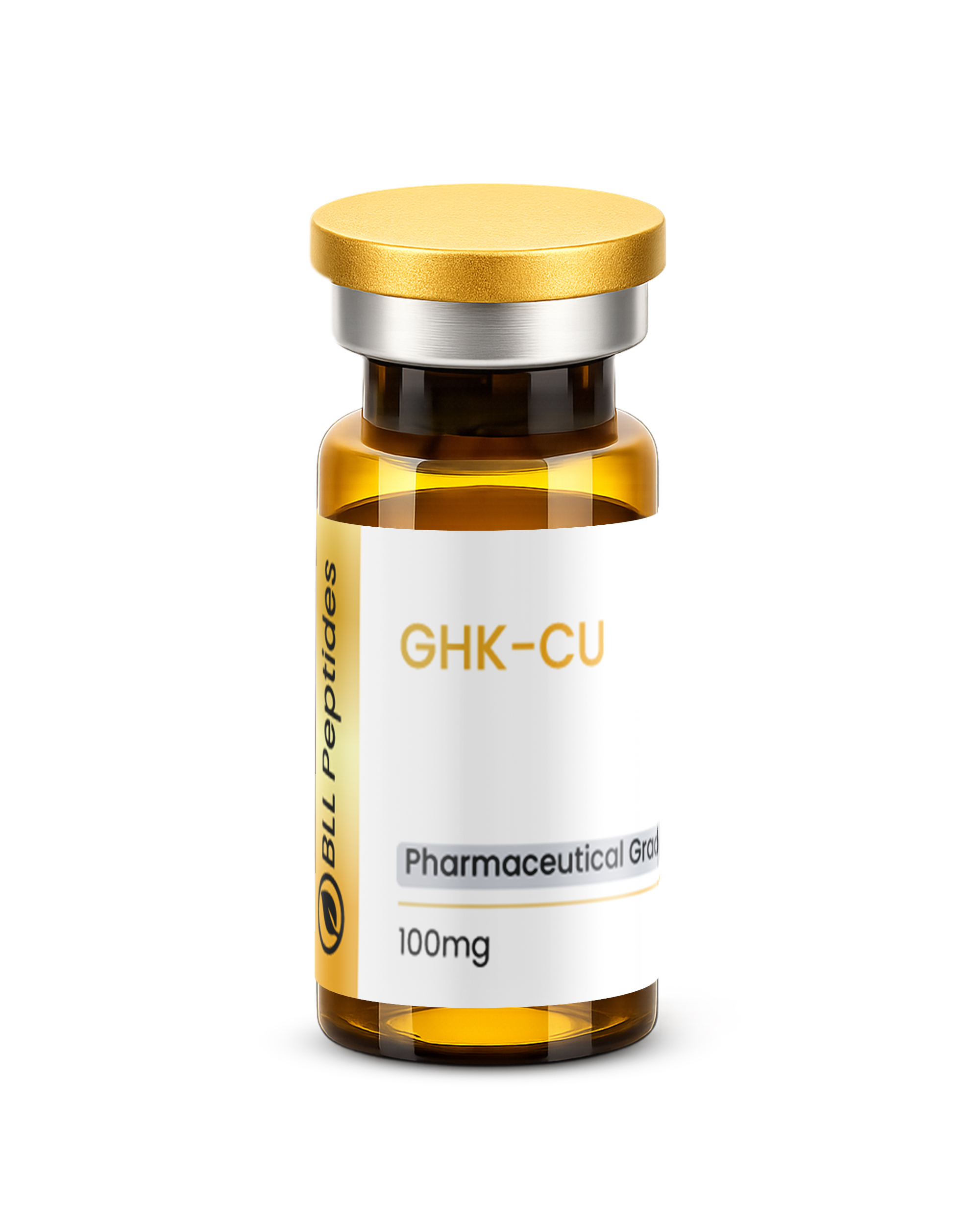
Most peptides interact with a single receptor or pathway. GHK-Cu does something considerably more unusual: research by Loren Pickart and others has demonstrated that this copper-binding tripeptide modulates the expression of over 4,000 human genes, roughly a third of the human genome, by interacting with chromatin remodeling machinery rather than a classical receptor. That breadth of transcriptional influence is, mechanistically, unlike anything else in the peptide literature. My clinical interest in GHK-Cu comes from its tissue-remodeling profile — the upregulation of collagen, elastin, and growth factors — but the full picture of what this molecule does at the genomic level is more complex and more interesting than its reputation as a skin peptide suggests.
What Is GHK-Cu?
GHK-Cu is a naturally occurring tripeptide — glycine-histidine-lysine — complexed with a copper ion (Cu²⁺). It was first isolated from human plasma in the early 1970s by Loren Pickart, who identified its role in promoting liver cell growth and regeneration in research models. Since that initial discovery, the compound has attracted sustained scientific interest because it appears in high concentrations in wound fluid and declines measurably with age.
At a structural level, GHK-Cu is notable for its high affinity for copper ions — a mineral with well-documented roles in enzymatic activity, collagen synthesis, and cellular signaling. The tripeptide’s ability to chelate and transport copper is central to its proposed mechanisms of action, and it’s what distinguishes it from other tissue-focused peptides in the research literature.
Mechanisms of Action in Research Models
Research into GHK-Cu has illuminated several distinct mechanisms that may explain its observed effects in cellular and animal models:
- Copper delivery to enzymes: Copper-dependent enzymes — including lysyl oxidase, which is essential for collagen and elastin crosslinking — require a bioavailable source of Cu²⁺. GHK-Cu appears to function as an efficient copper chaperone, facilitating delivery to these enzymatic targets in tissue environments.
- Upregulation of collagen synthesis: Multiple in vitro studies have demonstrated that GHK-Cu can stimulate fibroblasts to increase collagen and glycosaminoglycan production. This effect has been observed even at low nanomolar concentrations, suggesting high potency at target receptors or signaling nodes.
- Modulation of TGF-beta signaling: Transforming growth factor-beta (TGF-β) is a cytokine heavily involved in wound healing and fibrosis. Research has shown that GHK-Cu can both stimulate TGF-β1 and simultaneously suppress TGF-β2-associated fibrotic signaling — a nuanced, bidirectional interaction that researchers find biologically compelling.
- Antioxidant activity: GHK-Cu has demonstrated the ability to suppress free radical damage in research settings, potentially through modulation of superoxide dismutase activity and reduction of oxidative stress markers in cultured cells.
- Gene expression effects: Pickart and colleagues have published work suggesting that GHK-Cu may influence the expression of hundreds of genes, including those related to inflammation resolution, DNA repair, and metabolic regulation — though much of this work requires further replication in vivo.
Research Overview: Key Findings Across Study Areas
The breadth of GHK-Cu research is genuinely remarkable for a tripeptide. Studies have explored its effects across several domains:
Wound Healing Models: In animal studies, GHK-Cu has consistently been associated with accelerated wound contraction, improved angiogenesis (new blood vessel formation), and increased tensile strength in healing tissue. A 1994 study in Journal of Biomaterials Science found that GHK-Cu incorporated into wound dressings significantly improved wound healing outcomes in rodent models compared to controls. The copper peptide appeared to promote both the proliferative phase of healing and the subsequent remodeling phase.
Dermal and Extracellular Matrix Biology: Dermatological research has shown particular interest in GHK-Cu’s effects on extracellular matrix turnover. In fibroblast cultures, the peptide promotes synthesis of collagen, elastin, and proteoglycans while simultaneously stimulating matrix metalloproteinases (MMPs) that remove damaged proteins — creating what researchers describe as a net restorative effect on connective tissue architecture.
Anti-inflammatory Effects: Research published in Biochemistry and related journals has documented GHK-Cu’s capacity to reduce inflammatory cytokines including TNF-alpha and interleukins in cell culture models. These findings have prompted interest in its potential role in managing chronic inflammatory conditions at the tissue level, though translation to human research remains in early stages.
Nervous System Research: As a neurosurgeon, I find the neurological research on GHK-Cu particularly interesting. Preclinical studies have examined its potential neuroprotective properties, with some data suggesting it may reduce oxidative damage in neural tissue and support nerve growth factor (NGF) expression. While far from clinical application, these findings make GHK-Cu an intriguing candidate for future neuroscience research.
Aging Biology: The observation that plasma GHK levels decline significantly with age — from roughly 200 ng/mL in young adults to below 80 ng/mL after age 60 — has led some researchers to explore whether this decline contributes to age-related decrements in tissue repair capacity. This correlation, while not establishing causality, has motivated ongoing research into GHK-Cu as a tool for studying tissue aging in preclinical models.
Research-Grade GHK-Cu at BLL Peptides
For researchers studying copper peptide biology, tissue remodeling, or antioxidant mechanisms, BLL Peptides provides research-grade GHK-Cu manufactured under strict quality control standards:
- GHK-Cu 100mg / 3mL — Research-grade copper tripeptide complex for in vitro and preclinical study
All BLL Peptides products are USA-manufactured and produced in GMP-certified facilities, ensuring the purity and consistency that research applications demand.
Conclusion
GHK-Cu stands out in the peptide research landscape for several reasons: its natural occurrence in human biology, its age-dependent decline, and the remarkable range of cellular effects documented across decades of in vitro and animal research. The copper-binding tripeptide touches on tissue repair, inflammation, oxidative stress, gene regulation, and potentially neural protection — making it one of the more scientifically multifaceted compounds in current peptide research.
What I find most compelling from a scientific perspective is the mechanistic specificity — this isn’t a broadly acting compound with vague effects, but rather a small molecule with demonstrable interactions at the level of copper enzymology, cytokine signaling, and extracellular matrix biology. That specificity makes it a valuable research tool for investigators working across multiple biological domains.
As always, the goal of publishing this research overview is to help researchers stay current with the literature on this compound. The science is promising, and I expect we’ll see continued investigation into GHK-Cu’s mechanisms and applications in the years ahead.
Further Reading
- Skin Health & Rejuvenation: A Complete Guide to GHK-Cu Peptide
- Injury Recovery & Healing: A Complete Guide to Regenerative Peptides
About the Author: Dr. James is a board-certified neurosurgeon trained at Yale University and medical advisor to BLL Peptides.
Related Research
- GHK-Cu: Complete Research Guide – Copper Peptide Science and Applications
- GHK-Cu: A Beginner’s Guide to the Copper Peptide
- Skin Health & Rejuvenation: A Complete Guide to GHK-Cu Peptide
- Research-grade GHK-Cu at BLL Peptides
Research Disclaimer: This content is intended for research purposes only. BLL Peptides products are not intended for human consumption.