
GHK-Cu Research: What Scientists Are Discovering About This Copper Peptide
·

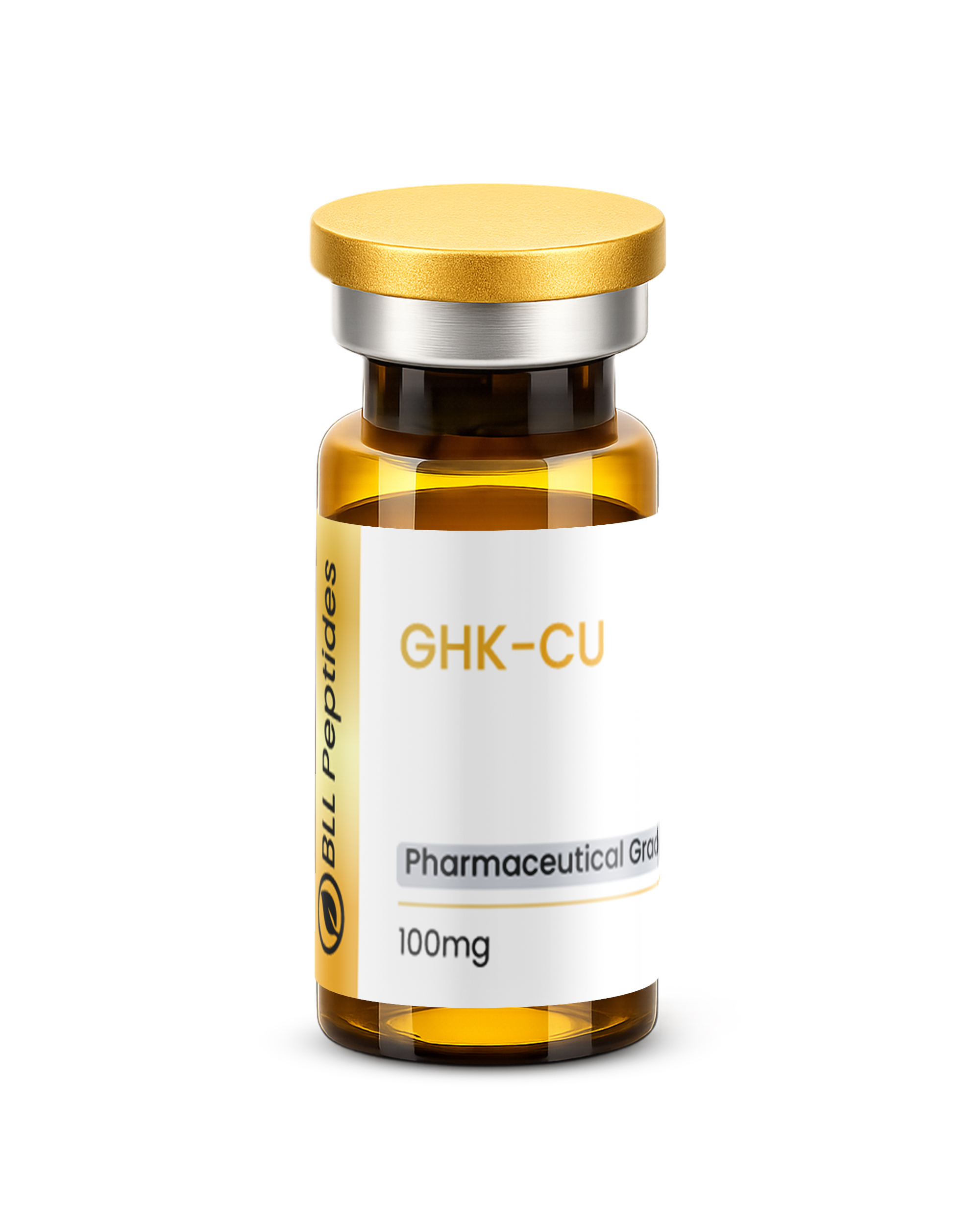
There’s a molecule that’s been quietly accumulating one of the most compelling research profiles in all of peptide science — and most people have never heard of it. I came across GHK-Cu years ago while reviewing literature on wound healing and nerve regeneration, and honestly, the more I dug in, the more surprised I was by the breadth of what researchers had found.
GHK-Cu research has expanded dramatically over the past two decades. This naturally occurring copper tripeptide — formally known as glycyl-L-histidyl-L-lysine copper — has been studied for its effects on tissue repair, neuroprotection, inflammation, and even large-scale gene expression modulation. For those of us tracking the frontier of biological aging science, it’s a fascinating compound.
What Is GHK-Cu?
GHK-Cu is a tripeptide composed of three amino acids — glycine, histidine, and lysine — naturally bound to a copper ion. It was first isolated from human plasma in 1973 by Dr. Loren Pickart, who made an intriguing observation: older human plasma dramatically slowed liver tissue restoration compared to younger plasma. The molecule responsible for that difference? GHK-Cu.
What’s particularly interesting is that GHK-Cu isn’t foreign to the body. It’s endogenous — produced naturally, present in plasma, saliva, and urine. But levels don’t stay stable. Human plasma concentrations of GHK-Cu sit around 200 ng/mL at age 20, dropping to approximately 80 ng/mL by age 60 — a roughly 60% decline that researchers believe may contribute to the reduced regenerative capacity we observe in older populations.
How Does GHK-Cu Work? The Research Mechanisms
Several overlapping mechanisms have been proposed and studied in the GHK-Cu research literature:
- Copper transport and antioxidant enzyme support — GHK binds copper ions, which are essential cofactors for superoxide dismutase (SOD), one of the body’s primary antioxidant enzymes. This copper-chaperoning function appears to potentiate antioxidant defense pathways.
- Large-scale gene expression modulation — A landmark bioinformatics analysis identified GHK-Cu as capable of influencing the expression of over 4,000 human genes, including genes involved in DNA repair, inflammation regulation, oxidative stress response, and cancer suppression. This finding, published in Analytical and Bioanalytical Chemistry, remains one of the most striking in the peptide literature.
- TGF-β and growth factor stimulation — Research shows GHK-Cu activates transforming growth factor-beta (TGF-β) and other growth factors critical for tissue remodeling and repair.
- Proteasome activation — GHK-Cu appears to activate the ubiquitin-proteasome system, which degrades damaged or misfolded proteins — a process that declines with age and is implicated in neurodegenerative diseases.
What GHK-Cu Research Has Found: Key Areas of Study
Wound Healing and Tissue Regeneration
Some of the earliest and most reproducible GHK-Cu findings involve wound healing. Multiple studies have demonstrated its ability to accelerate wound closure and stimulate collagen and glycosaminoglycan synthesis — foundational components of connective tissue. In animal wound models, GHK-Cu consistently reduced healing time and improved the structural quality of repaired tissue.
“GHK-Cu activates a remarkably broad biological repair program — touching wound healing, inflammation modulation, and tissue remodeling in a single integrated cascade.”
Researchers working in this area have noted that GHK-Cu appears to act as a signaling molecule rather than a simple substrate, which helps explain the diversity of its downstream effects.
Neurological and Neuroprotective Research
This is the area that drew me in most deeply as a neurosurgeon. A 2012 study published in PLOS One investigated GHK-Cu’s effect on neurological gene expression and found it upregulated genes associated with BDNF (brain-derived neurotrophic factor) stimulation and suppressed genes linked to neurodegeneration. Separately, GHK-Cu has been studied in the context of nerve growth factor pathways and spinal cord tissue.
“In gene array models, GHK-Cu consistently appeared in neuroprotective pathways — a finding that, from a clinical neuroscience perspective, demands more rigorous follow-up investigation.”
I want to be clear that this is early-stage research. But for a peptide that exists naturally in our bodies and declines with age, the mechanistic signals pointing toward neuroprotection are scientifically compelling.
Anti-Inflammatory Properties
GHK-Cu has demonstrated consistent anti-inflammatory activity across multiple preclinical models. Research points to inhibition of pro-inflammatory cytokines, including TNF-alpha and IL-6, while simultaneously activating repair signals. This dual action — suppressing inflammation while promoting regeneration — is rare in the literature and has made GHK-Cu a subject of ongoing interest in autoimmune and chronic inflammatory disease research.
Gene Expression and Aging
Perhaps the most ambitious claim in GHK-Cu research is its proposed role as a gene expression “resetter.” The large-scale gene array studies suggest the compound may shift transcriptional activity toward patterns more consistent with younger, healthier tissue. Researchers have described it as producing a kind of molecular rejuvenation signal — though this language should be understood in the context of in vitro and animal research, not confirmed human outcomes.
“The scope of GHK-Cu’s influence on human gene expression is unlike almost any other small peptide studied to date — over 4,000 genes, touching virtually every major biological system.”
Key Research Findings at a Glance
- GHK-Cu plasma levels decline approximately 60% between ages 20 and 60
- Shown to modulate the expression of over 4,000 human genes in bioinformatics analyses
- Demonstrated stimulation of collagen and glycosaminoglycan synthesis in wound healing models
- Neuroprotective gene expression patterns identified in PLOS One research
- Consistent anti-inflammatory cytokine suppression across preclinical studies
- Proteasome activation linked to degradation of damaged proteins — a mechanism relevant to aging and neurodegeneration
Explore Related BLL Peptides Research Compounds
If you’re researching GHK-Cu alongside other peptides in the repair and longevity space, BLL Peptides carries several related compounds for licensed research use:
- BPC-157 (10mg/3ml) — Extensively studied for tissue repair and gut-brain axis mechanisms
- TB-500 (10mg/3ml) — Thymosin Beta-4, researched for tissue remodeling and actin regulation
- NAD+ (500mg/10ml) — Studied for cellular energy, mitochondrial health, and longevity signaling
All BLL Peptides products are USA manufactured and GMP-certified, supplied for research purposes only.
Frequently Asked Questions About GHK-Cu Research
What is GHK-Cu made of?
GHK-Cu is a naturally occurring tripeptide composed of three amino acids — glycine, histidine, and lysine — bound to a copper ion. It is found naturally in human plasma, saliva, and urine and is endogenously produced by the body.
How does GHK-Cu research relate to aging?
Researchers have identified a significant age-related decline in GHK-Cu plasma levels — from around 200 ng/mL in young adults to approximately 80 ng/mL by age 60. Combined with its observed role in gene expression modulation and tissue repair signaling, this decline has become a focus of longevity and biological aging research.
Does GHK-Cu affect the brain or nervous system?
Early research, including a 2012 PLOS One study, suggests GHK-Cu may influence neurological gene expression pathways associated with neuroprotection and BDNF stimulation. These are preclinical findings and require further clinical investigation before any conclusions can be drawn for human application.
How does GHK-Cu modulate gene expression?
Large-scale gene array analyses have shown that GHK-Cu can upregulate or downregulate the expression of over 4,000 human genes. The affected pathways include antioxidant defense, DNA repair, inflammation regulation, and cellular cleanup systems like the proteasome. The exact signaling mechanism by which GHK-Cu achieves this breadth of effect is still being studied.
What makes GHK-Cu different from synthetic copper compounds?
GHK-Cu is endogenous — it’s a molecule the human body naturally produces and uses. This distinguishes it from purely synthetic copper complexes and is part of why researchers have been interested in its safety profile and biological compatibility in study models. Its natural occurrence in human tissue is a significant factor in why it has attracted sustained scientific attention.
About the Author
Dr. James is a board-certified neurosurgeon and member of the BLL Peptides research team. He brings a clinical perspective to emerging peptide science, with a particular focus on neuroprotection, neuroregeneration, and longevity research. His involvement with BLL Peptides reflects his belief that the frontier of biological science lies at the intersection of molecular biology and human performance — and that rigorous, curiosity-driven research is the only path forward.
Related Research
If you found this research overview helpful, explore our related guides:
This content is intended for research purposes only. BLL Peptides products are not intended for human consumption.